Product review · Sherwin-Williams · Updated August 7, 2026
Emerald SymmetrySherwin-Williams paint review
8.6/10The zero-VOC claim is the real version — worth $100 a gallon in a room somebody sleeps in tonight, and nowhere else.
Zero-VOC, plant-based, and the priciest wall paint Sherwin-Williams sells. Crews report no smell at all, which is the whole case for a nursery you have to sleep in tonight — and the whole reason to skip it anywhere else.

Maya Patel · Reviews Editor & Product Tester · Updated August 7, 2026
Maya spent five years running comparative product testing at a consumer testing nonprofit before joining CompositePaint. She built the round-up protocol the team uses, and she has priced the same Sherwin-Williams gallons at list and on sale to see what the discount is actually worth. About the testing process →
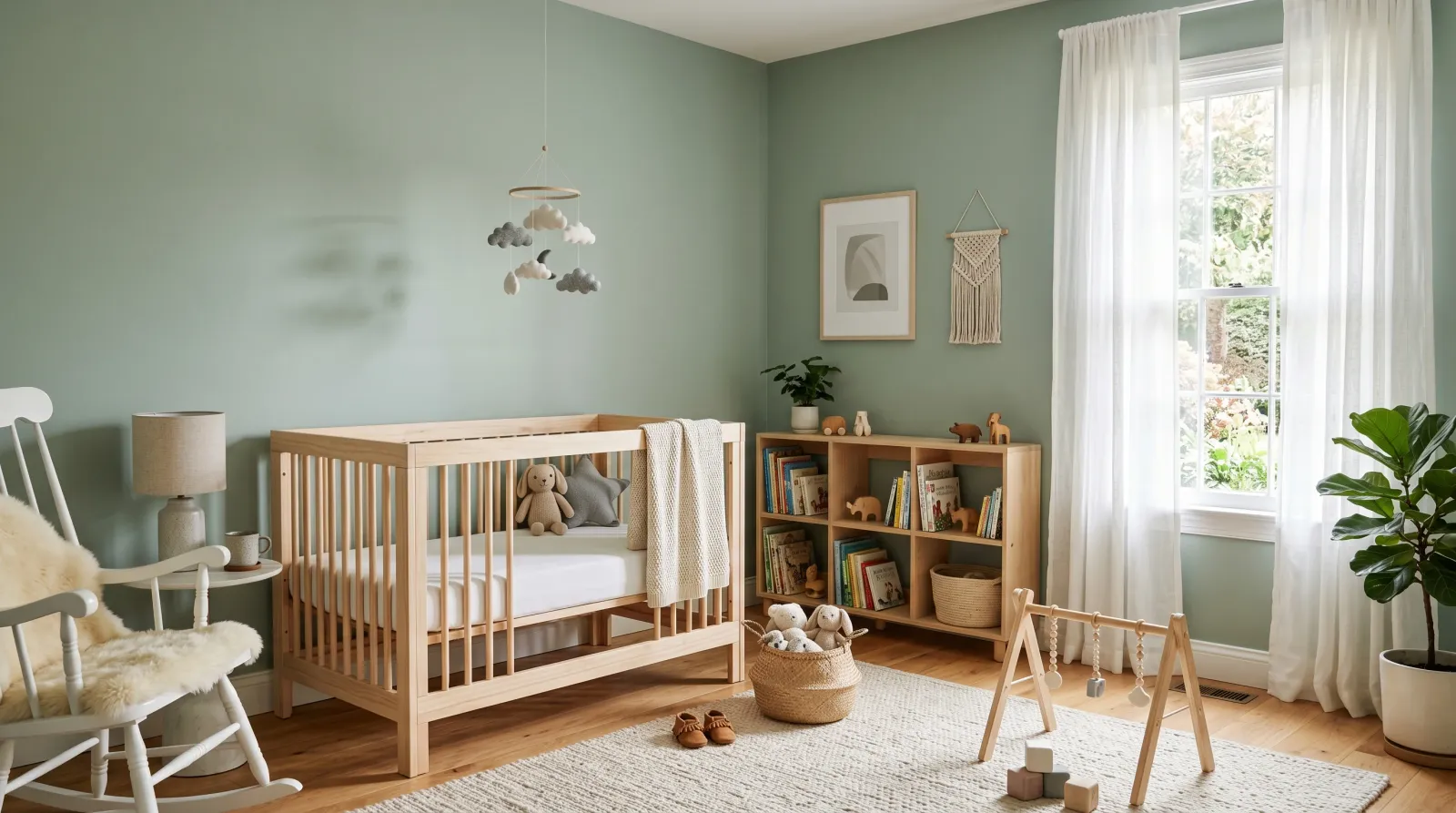
Sherwin-Williams Emerald Symmetry3 sheens
Coverage350–400 sq ft / gal
RecoatAbout 4 hr
VOCZero VOC before tint
Full cure14–30 days for full scrub hardness
Sheens MatteEg-ShelSatin
Read this first
The Fast Verdict
Buy it for a room somebody has to occupy the same evening, painted a white or a light color. That is what the $100 to $115 gallon buys: crews report no smell at all rather than a faint one, backed by a zero-VOC base, GREENGUARD Gold, and USDA-certified biobased content. Washability is genuinely strong once cured. Everywhere else, standard Emerald does nearly the same wall for about $30 less. It is interior only, tops out at satin, and shipped in April 2026, so the durability half of the score is provisional.
Best for
Nurseries and bedrooms · Chemical-sensitive households · LEED-tracked projects · Rooms the family moves back into fast · Whites and light bases
Skip if
You want the best dollar per wall · Trim, doors, or cabinets · Any exterior work · Deep saturated colors · You want a proven track record first
What it's good at
- Genuine zero-VOC before tint, with GREENGUARD Gold — the cert schools and clinics actually spec
- No smell at all on white and light bases, which crews flag as the difference from ordinary zero-VOC marketing
- Washability once cured — crayon, fingerprints, and switchplate scuffs release with mild soap
- Full Sherwin-Williams color access, including deep and ultradeep bases
- A verifiable biobased story at 22 percent minimum plant-based carbon, USDA certified
- Decent open time for a zero-VOC formula, so it does not punish you the way early eco-acrylics did
What it's not good at
- The price — the most expensive paint in SW's homeowner catalog, over $1,000 for a 1,800 sq ft repaint before discount
- Deep and ultradeep tints, which still carry odor because the colorant brings its own VOC load
- Trim, doors, and cabinets — satin is the ceiling, with no semi-gloss or gloss
- Exterior work of any kind, since there is no exterior version
- Proving durability, having shipped in April 2026 with no long-term field record
- Value against standard Emerald, which does nearly the same wall for about $30 less a gallon
Same shelf, different cans
Which Emerald Can Are You Buying?
The Emerald shelf trips buyers up because several lines share the name and overlap on price. This review covers the interior wall paint, Emerald Symmetry. Here is what the siblings do.
Emerald Symmetry (this review)
BaseZero-VOC interior acrylic, minimum 22% biobased carbon
SheensMatte, Eg-Shel, Satin
Buy it if
Interior walls where indoor air quality or a green-building credit is the actual reason you are standing at the counter.
Avoid if
You need a semi-gloss for trim, any exterior work, or the best dollar per wall.
Emerald Interior Acrylic
BaseLow-VOC interior acrylic latex, full SW deck
SheensFlat, Matte, Satin, Semi-Gloss
Buy it if
Premium interior walls with the widest sheen range and a decade of field data behind them, for about $30 less a gallon.
Avoid if
Zero-VOC and biobased certification are non-negotiable for your project.
Emerald Designer Edition
BaseInterior wall paint on a curated 200-color deck
Buy it if
Curated designer color and a low-reflective flat that still wipes clean.
Avoid if
You want the full SW deck or the zero-VOC credentials.
Emerald Urethane Trim Enamel
BaseWaterborne urethane-modified alkyd enamel
Buy it if
Trim, doors, and cabinets that need a hard cured enamel film.
Avoid if
You are painting broad wall fields.
Emerald Exterior
BaseExterior acrylic latex
Buy it if
Siding, exterior masonry, and trim.
Avoid if
The work is indoors — and note there is no exterior version of Symmetry at all.
Numbers, not adjectives
Spec Sheet
- Coverage
- 350–400 sq ft / gal; two coats recommended
- Sheens
- Matte, Eg-Shel, Satin
- Touch dry
- About 1 hr
- Recoat
- About 4 hr
- Full cure
- 14–30 days for full scrub hardness
- VOC
- Zero VOC before tint; GREENGUARD Gold; USDA Certified Biobased (22% minimum biobased carbon)
- Primer
- Self-priming on coated, prepped drywall; bonding primer on glossy or raw surfaces
- Surfaces
- Interior drywall, plaster, primed wood, properly prepped trim
- Bases
- Extra White, Ultra White, Deep Base, Ultradeep Base — full SW color deck
- Sizes
- 1-gallon, 5-gallon
- Price
- $100–115 / gal retail; closer to $75–85 with a sale or pro account
Application Settings That Work
- Brush
- Rolls smooth and holds a workable wet edge, which is not a given in zero-VOC formulas — early eco-acrylics dragged the brush. It is not Aura-buttery, and it sets a touch faster than standard Emerald in a warm room, so keep the room moderate and finish a wall corner to corner rather than stopping mid-field.
- Primer
- Self-priming on coated, prepped drywall. Glossy surfaces and raw substrates still need a bonding primer, and stains still need a stain-blocker. The zero-VOC story belongs to the topcoat, so if low odor is the point, check what your primer is bringing into the room too.
Dry in an Hour, Scrub-Hard in Weeks
Touch dry is about an hour and you can recoat at roughly 4, so two coats fit in a day. Full scrub hardness takes 14 to 30 days, and washability is the attribute you are paying for, so it is worth waiting out. Clean gently with a damp cloth during the first couple of weeks and save the real hallway scrub for after the film has hardened. The odor timeline is the other half of this: the smell is the reason to buy it, and crews rolling white and light bases report none at all, working or after packing up. Deep and ultradeep tints are the exception — the colorant carries its own VOC load no matter what the base does, so a saturated navy still has a little smell.
Mid-project panic
When It Goes Wrong, and How to Fix It
A deep color that still smells after all that money
Why it happens. Zero VOC describes the base before colorant. Tinting adds a small amount back, and deeper colors add more, so a deep-base Symmetry in a saturated navy is not literally zero on the wall. The pros who praise the no-smell experience are describing whites, pastels, and light bases.
The fix. If low odor is the reason you are buying, keep the color light. Going saturated, be honest that you are paying the premium for a benefit you only partly get — standard Emerald does the same wall for about $30 less a gallon, and you can leave the room empty a day either way.
One coat that does not hide
Why it happens. SW markets exceptional hide, not one-coat, and that is the right expectation. A like-over-like repaint over a similar base color can sometimes get away with one, but a color change or fresh drywall will not.
The fix. Plan two coats for honest hide and even sheen, and recoat at about 4 hours so both land in one day. On a big color change, a tinted primer under the first coat does more than a third topcoat would.
It will not hold on glossy trim or raw surfaces
Why it happens. Self-priming here means coated, prepped drywall. Glossy or raw substrates need a bonding primer, and Symmetry is not one.
The fix. Scuff-sand and prime glossy or raw surfaces before the color goes on. And if the surface is trim, doors, or cabinets, step out of this line entirely — satin is the ceiling and a wall paint is the wrong film for millwork.
Buying it for a whole-house sustainable system
Why it happens. It is interior only. There is no exterior Symmetry, and the sheen range stops at satin, so there is no trim or cabinet version either.
The fix. Spec Symmetry for the interior walls, Emerald Urethane Trim Enamel or Benjamin Moore Advance for the woodwork, and Emerald Exterior for anything outside. Price all three before you promise a client one sustainable system.
Side by side
Symmetry vs Emerald Interior vs Cashmere
Everybody cross-shopping Symmetry is really deciding how much the air-quality spec is worth, because on hide and washability these three are closer than the price gaps suggest.
| Emerald Symmetry | Emerald Interior | Cashmere | |
|---|---|---|---|
| Street price per gallon | $100–115 retail, $75–85 with a sale or pro account | About $30 less than Symmetry — roughly $74 with SW's usual discount | About $60 |
| VOC and certifications | Zero VOC before tint, GREENGUARD Gold, USDA Certified Biobased at 22% minimum. | Low-VOC, under 50 g/L. Not zero, not biobased-certified. | Low-VOC. No green certifications to speak of. |
| Odor on application | Crews report none at all on white and light bases. Deep tints still carry a little. | Mild wet-latex note for an evening. | Mild wet-latex note for an evening. |
| Sheens | Matte, Eg-Shel, Satin — satin is the ceiling. | Flat through semi-gloss, the widest range of the three. | Full wall range. |
| Washability | Excellent once cured. Takes a kitchen wipe-down and a hallway scrub. | Excellent — the attribute the line was built on. | Good, gives up ground on repeated cleanings. |
| Color access | Full SW deck including deep and ultradeep bases. | Full SW deck. | Full SW deck. |
| Track record | Shipped April 2026. Durability claims are the lab and the launch. | A decade of field data. | Long-established. |
| Where it wins | Nurseries, chemical-sensitive homes, and green-building projects that have to show their work. | The best all-round Emerald wall for the money, and the only one with a semi-gloss. | The smoothest roll and the smartest dollar for a room that stays pretty. |
Street price per gallon
Emerald Symmetry$100–115 retail, $75–85 with a sale or pro account
Emerald InteriorAbout $30 less than Symmetry — roughly $74 with SW's usual discount
CashmereAbout $60
VOC and certifications
Emerald SymmetryZero VOC before tint, GREENGUARD Gold, USDA Certified Biobased at 22% minimum.
Emerald InteriorLow-VOC, under 50 g/L. Not zero, not biobased-certified.
CashmereLow-VOC. No green certifications to speak of.
Odor on application
Emerald SymmetryCrews report none at all on white and light bases. Deep tints still carry a little.
Emerald InteriorMild wet-latex note for an evening.
CashmereMild wet-latex note for an evening.
Sheens
Emerald SymmetryMatte, Eg-Shel, Satin — satin is the ceiling.
Emerald InteriorFlat through semi-gloss, the widest range of the three.
CashmereFull wall range.
Washability
Emerald SymmetryExcellent once cured. Takes a kitchen wipe-down and a hallway scrub.
Emerald InteriorExcellent — the attribute the line was built on.
CashmereGood, gives up ground on repeated cleanings.
Color access
Emerald SymmetryFull SW deck including deep and ultradeep bases.
Emerald InteriorFull SW deck.
CashmereFull SW deck.
Track record
Emerald SymmetryShipped April 2026. Durability claims are the lab and the launch.
Emerald InteriorA decade of field data.
CashmereLong-established.
Where it wins
Emerald SymmetryNurseries, chemical-sensitive homes, and green-building projects that have to show their work.
Emerald InteriorThe best all-round Emerald wall for the money, and the only one with a semi-gloss.
CashmereThe smoothest roll and the smartest dollar for a room that stays pretty.
The deciding factor is not the wall, it is the room's schedule and paperwork. If the family moves back in tonight, or the spec sheet has to satisfy a LEED reviewer, Symmetry is the answer and the zero-VOC claim here is the real version rather than the marketing one. If neither of those is true, standard Emerald gives you nearly the same hide and washability plus a wider sheen range and a decade of field data for about $30 less a gallon, and Cashmere rolls smoother still for around $60. In a nursery, often yes. In a basement rec room, usually no.
If not this one
Honest Alternatives
SW
Sherwin-Williams Emerald Interior$85–100 / gal list
The direct cross-shop. On raw hide and washability the two are close enough that you would not pick the winner blindfolded, and Emerald adds a wider sheen range up to semi-gloss and a decade of field data. You give up zero-VOC and the biobased certification.
Full review →SW
Sherwin-Williams CashmereAbout $60 / gal
Same store, two tiers down. Low-VOC rather than zero, and famous for a smooth, low-stipple roll. You give up the biobased credentials and a notch of scrubbability, but for a standard bedroom or living room it is a premium-feeling wall at a smart price.
Full review →BM
Benjamin Moore Aura$85–95 / gal
Often less per gallon than Symmetry, and the upgrade on finish and depth rather than green specs. Aura's deep-tone color render is the benchmark and its burnish resistance in high-traffic hallways at year three is best in category. It is low-VOC, not zero, and not biobased-certified.
Full review →DZ
Dedicated zero-VOC eco linesVaries
If sustainability is the whole reason you are shopping, cross-shop the eco brands before committing. Some match the zero-VOC claim for less, with a smaller color deck and no local store to walk into. Check the scrub numbers too, since eco and durable do not always travel together.
Questions people actually ask
Emerald Symmetry Questions, Answered
Is Emerald Symmetry worth it over regular Emerald Interior?
If you want zero-VOC and the plant-based, low-emission story, yes. Symmetry is GREENGUARD Gold and USDA biobased; standard Emerald is low-VOC but not zero. On raw coverage and washability the two are close. You are paying roughly $30 more a gallon for the air-quality and sustainability credentials, not a night-and-day finish.
Does Emerald Symmetry cover in one coat?
Sometimes, in a like-over-like repaint with a tinted primer or a similar base color. In practice, plan on two coats for honest hide and even sheen, especially over a different color or onto fresh drywall. SW markets exceptional hide, not one-coat, and that is the right expectation.
Can I use Emerald Symmetry on kitchen cabinets or trim?
Not the right pick. Symmetry tops out at satin, with no semi-gloss or gloss, so it lacks the harder enamel sheen cabinets and trim want. Use Emerald Urethane Trim Enamel or Benjamin Moore Advance for doors, trim, and cabinets. Symmetry is a wall paint first.
Is zero-VOC paint actually safer for a nursery?
Lower emissions help. Zero-VOC means the base has no measurable volatile organic compounds before tinting, and GREENGUARD Gold tests the finished, applied product for low chemical emissions against thresholds set for classrooms and clinics. Tinting adds a little back. It is a defensible nursery pick, and on light colors crews report no smell at all.
Does it really have no smell?
On whites, pastels, and light bases, that is what the field reports say — one contractor crew rolled a customer's bedroom all day with doors and windows closed and detected nothing while working or after packing up. Deep and ultradeep tints are different, because colorant carries its own VOC load. Buy it for a light room somebody sleeps in that night.
Is there an exterior version?
No. Symmetry is interior only, so a single sustainable system for the whole house is not on the table. For siding you are back to Emerald Exterior or another exterior line, and for trim you need an enamel.
How long until I can wash the walls?
Full scrub hardness takes 14 to 30 days. It is touch dry in about an hour and recoatable at 4, but washability is the attribute you paid for, so wait it out. Wipe gently with a damp cloth in the first couple of weeks and save the hallway scrub for after the film has hardened.
What does the biobased claim actually mean?
A minimum 22 percent of the carbon in the formula comes from plant sources rather than petroleum, and USDA certifies it. That is a verifiable spec rather than a marketing word, and SW says the product is built toward LEED v5 qualification. If you need to show your work on a green-building project, this is one of the few wall paints that can.
Should I worry that it is brand new?
A little, and that is why the durability half of our score is provisional. Symmetry shipped in April 2026, so every color-retention and wear claim is the lab and the launch rather than three years on a real hallway. Standard Emerald has a decade of field data. If you want proof before committing a whole house, wait or buy Emerald.
What should I actually pay for it?
Not the sticker. SW list pricing is theatrical: $100 to $115 retail, but with a sale or a free pro account expect closer to $75 to $85. SW runs 30 to 40 percent promotions several times a year. Walking in and paying full retail on an Emerald-tier gallon leaves about $30 on the counter.
Keep exploring
All Sherwin-Williams paint lines, reviewedBest low-VOC and zero-VOC paintsWhat VOCs actually mean for indoor air
We may earn a commission when you buy through the retailer link above. It never changes the score or the verdict.
Ask a Question