Product review · Sherwin-Williams · Updated August 7, 2026
CaptivateSherwin-Williams paint review
7.0/10The cheapest can with a real Sherwin-Williams label, and the lowest volume solids in their interior lineup.
Captivate runs about 34 percent volume solids in flat against SuperPaint's 44. That one number explains every extra coat you will roll and every dollar you will save.

Maya Patel · Reviews Editor & Product Tester · Updated August 7, 2026
Maya spent five years running comparative product testing at a consumer testing nonprofit before joining CompositePaint. She runs the gallon math on whole-house repaints to find where trading up pays and where the budget can is genuinely the smarter dollar. About the testing process →
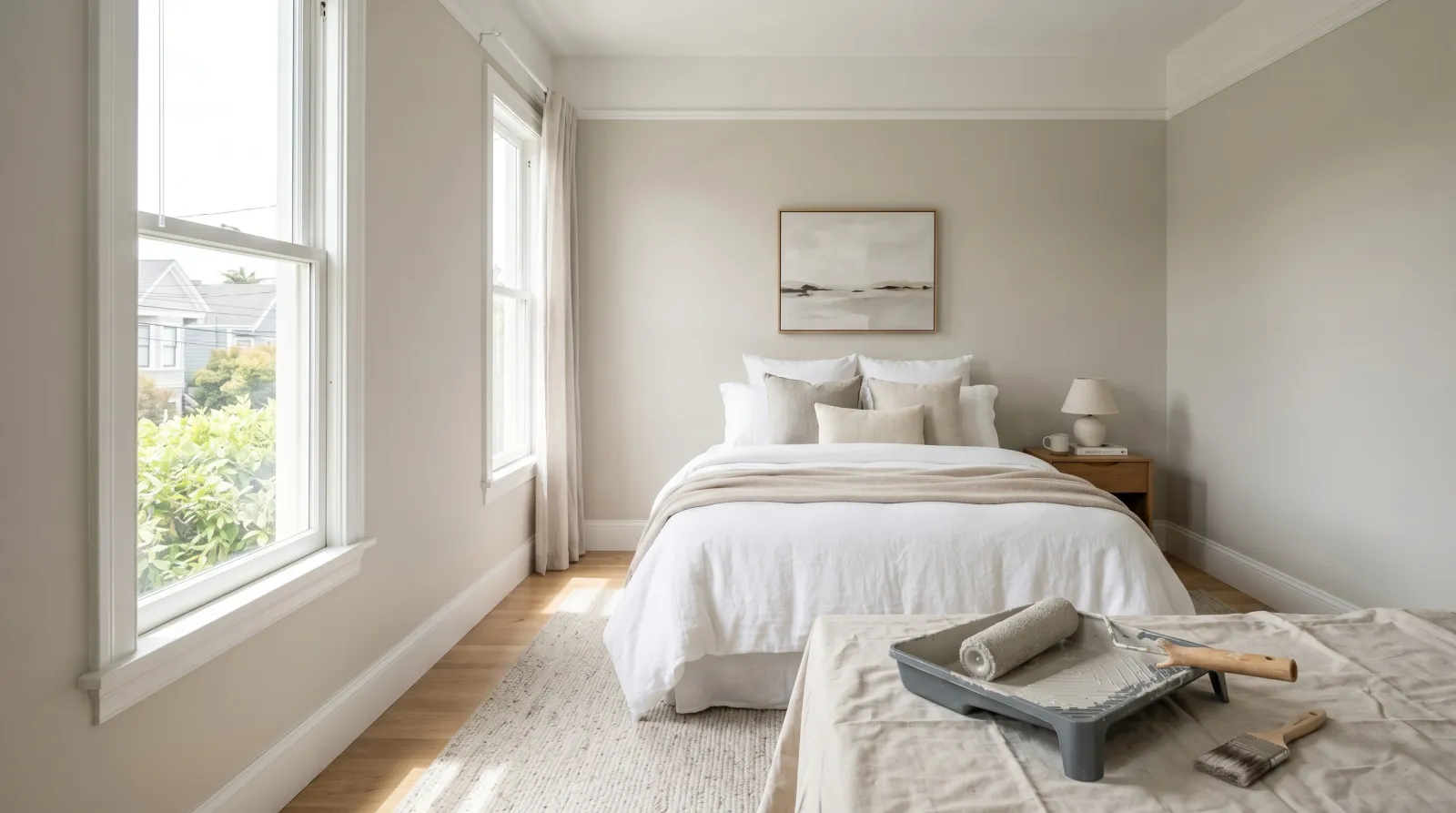
Sherwin-Williams Captivate3 sheens
CoverageUp to 400 sq ft / gal claimed
Recoat2 hr
VOCUnder 50 g/L
Full cureAbout 30 days
Sheens FlatSatinSemi-Gloss
Read this first
The Fast Verdict
Yes for a rental, a flip, or a light-colored room you will repaint inside five years. At $40 to $46 a gallon, and near $25 in a 40-percent-off sale, it is the cheapest can carrying a real SW label, a full-deck tint match, and the lifetime limited warranty. No for a forever room, a deep saturated wall, or anyone who read paint-and-primer as one-coat hide. Plan two full coats plus a third pass on the cut-in edges.
Best for
Rentals and tenant turnovers · Flips going on the market · Light and neutral colors · Closets and guest rooms · Low-to-moderate traffic walls · Buyers timing a 40-percent-off sale
Skip if
A forever room · Deep navy or charcoal · South-facing walls in bright sun · You expect one-coat hide · High-traffic hallways · Paying full list with SuperPaint on the same shelf
What it's good at
- Price — the lowest-cost can with a Sherwin-Williams label and a real SW tint match behind it
- Genuine self-priming on a clean repaint over sound previously painted walls
- Washability in satin, where a wet rag and mild dish soap take off switchplate scuffs at month two
- The full SW color deck and lifetime limited warranty, in a budget can
- Under 50 g/L with a 2-hour recoat, so two coats fit in a day and the room is liveable that night
- Touch-up that blends cleanly inside the first month
What it's not good at
- Hide — two full coats on the field plus a third pass on the cut-in edges
- Volume solids at about 34 percent in flat, the lowest in SW's interior lineup
- Workability; the gel-thick body drags under a roller and leaves more stipple than SuperPaint
- Deep navies and charcoals, which read flatter and chalkier than SuperPaint in the same match
- Bright south-facing walls, where it fades ahead of SuperPaint
- Flat sheen under a rag, which burnishes early
Numbers, not adjectives
Spec Sheet
- Coverage
- Up to 400 sq ft / gal claimed; 300–350 realistic at two coats
- Sheens
- Flat, Satin, Semi-Gloss
- Volume solids
- About 34% in flat, 40% in satin — SuperPaint is 44%
- Touch dry
- About 1 hr
- Recoat
- 2 hr
- Full cure
- About 30 days
- VOC
- Under 50 g/L
- Primer
- Paint-and-primer in one on clean repaints; prime glossy, raw, or stained surfaces
- Surfaces
- Previously painted or primed wallboard, wood, plaster, masonry
- Sizes
- Gallon; quart and 5-gallon vary by store
- Warranty
- Lifetime limited
- Price
- $40–46 / gal; sale dips near $25
Application Settings That Work
- Primer
- Self-priming is real on a clean, previously painted wall in sound condition — light grey over an older off-white gripped without a primer pass. It is not one-coat hide; those are two different promises. On raw drywall, bare wood, glossy trim, or any water or tannin stain, prime first: Zinsser BIN for stains, INSL-X Stix on slick or glossy substrates. Skip that step on a problem surface and the stain ghosts back through in a week.
Mid-project panic
When It Goes Wrong, and How to Fix It
One coat still flashes, even light over light
Why it happens. Volume solids. Captivate runs about 34 percent in flat and 40 in satin against 44 for SuperPaint, the lowest in the SW interior lineup — SW counter staff say so out loud. Volume solids is how much paint is still on the wall after the water leaves, so a third less of it is the mechanical reason the hide comes up short.
The fix. Buy and plan for two full coats on the field plus a third pass to even out the cut-in edges. Budget your gallons at two-coat coverage — call it 300 to 350 sq ft per gallon, not the 400 on the label — or you will come up short on the second wall.
The roller drags and leaves heavy stipple
Why it happens. Captivate has a noticeably thick, gel-like body in the can, and that thickness does not translate to better hide. It grabs under a roller, leaves more stipple than SuperPaint, and fights you on long brush pulls. Workability scores 6 out of 10 and it is the clearest place the price shows.
The fix. Go up a nap to 3/8-inch and slow your pace. Shorter roller runs, more reloads, and do not try to stretch a section. Cut-ins are fine; it is the long pulls that fight you. If the finish quality matters more than the price, this is the specific reason to price out SuperPaint.
A deep navy that reads chalky and will not bury the base
Why it happens. This is an entry paint. In a deep navy or charcoal, Captivate reads flatter and chalkier than SuperPaint in the same match and needs more coats to cover the base. The missing solids show worst exactly where the pigment load is highest.
The fix. Keep Captivate on light and neutral colors. If the room needs a deep saturated accent wall, buy Emerald or Benjamin Moore Aura for that wall and let the extra coats you would have rolled pay for it. Same story on a bright south-facing wall, where Captivate fades ahead of SuperPaint.
The flat burnishes the first time you wipe it
Why it happens. Washability scores 7 out of 10 in the right sheen and lower in flat. Satin and semi-gloss take a wet rag with mild dish soap fine — scuffs and fingerprints around a switchplate come off at month two. Flat is the sheen that polishes under a rag.
The fix. Put satin on any wall that gets touched and save flat for ceilings and rooms nobody handles. In a rental hallway, satin is the sheen that survives the turnover wipe-down.
Side by side
Captivate vs SuperPaint: The Real Step-Up Question
This is the decision most Captivate shoppers are actually making at the counter. SuperPaint runs roughly $15 to $25 more per can. Here is exactly what that money buys, in the numbers rather than the marketing.
| Captivate | SuperPaint | |
|---|---|---|
| Street price per gallon | $40–46 (sale near $25) | $60–72 |
| Volume solids | About 34% flat, 40% satin — the lowest in SW's interior lineup | 44% |
| Coats to a finished wall | Two full coats, plus a third pass on the cut-in edges | Two clean coats |
| Workability | Thick, gel-like body. Drags under a roller, more stipple, fights long brush pulls. | Rolls smoother and brushes easier. |
| Deep colors | Reads flatter and chalkier in the same match; more coats to bury the base. | Holds deep and bright colors better. |
| Color hold on a sunny wall | Visible fade ahead of SuperPaint on a south-facing wall | Keeps deep and bright colors longer in sunny rooms |
| Washability | Satin and semi-gloss wipe fine for a budget line; flat burnishes early. | A surface that survives a high-traffic hallway for years, not months. |
| Cost on an 1,800 sq ft repaint (about 8 gallons) | About $344 at $43 a gallon | About $528 at $66 a gallon |
Coats to a finished wall
CaptivateTwo full coats, plus a third pass on the cut-in edges
SuperPaintTwo clean coats
Workability
CaptivateThick, gel-like body. Drags under a roller, more stipple, fights long brush pulls.
SuperPaintRolls smoother and brushes easier.
Deep colors
CaptivateReads flatter and chalkier in the same match; more coats to bury the base.
SuperPaintHolds deep and bright colors better.
Color hold on a sunny wall
CaptivateVisible fade ahead of SuperPaint on a south-facing wall
SuperPaintKeeps deep and bright colors longer in sunny rooms
Washability
CaptivateSatin and semi-gloss wipe fine for a budget line; flat burnishes early.
SuperPaintA surface that survives a high-traffic hallway for years, not months.
Cost on an 1,800 sq ft repaint (about 8 gallons)
CaptivateAbout $344 at $43 a gallon
SuperPaintAbout $528 at $66 a gallon
On a flip, keep the $184. On a house you are keeping, that gap buys easier application, fewer coats, and years more wear, and it is the better dollar. Captivate is the right call for a rental you repaint between tenants, a flip on the market in ninety days, a closet, and a guest room nobody touches. For anything you plan to live with, price out SuperPaint before you commit. And time the buy — Captivate near $25 in a 40-percent-off sale is a different value proposition than Captivate at $46.
If not this one
Honest Alternatives
BP
Behr Premium Plus$28–35 / gal
Genuinely cheaper than Captivate at list and at every Home Depot. It self-primes a clean repaint and comes in more sheens, including a true eggshell Captivate lacks. The trade is Home Depot's color deck, and it burnishes about as fast as Captivate's flat.
Full review →SW
Sherwin-Williams SuperPaint$60–72 / gal
Same store, same deck, meaningfully better paint. Hides in fewer coats, flows smoother, holds color longer, and scrubs harder. For about $20 more a gallon it is the upgrade most Captivate shoppers should at least price out before committing.
Full review →BM
Behr Marquee$48–58 / gal
If one-coat hide is the thing you actually want, Marquee delivers it inside its One-Coat Hide color list, which Captivate cannot touch at any price. It also carries a lifetime warranty and washes above its tier. The pick when a single-coat result matters and you live near a Home Depot.
Full review →Questions people actually ask
Captivate Questions, Answered
Is Sherwin-Williams Captivate worth it?
For a rental, a flip, or a light-colored room you will repaint inside five years, yes. It is the cheapest can with a real SW label and tint match, $40 to $46 a gallon and near $25 in a 40-percent-off sale, and it self-primes a clean repaint. It is the wrong buy for a keeper room, a deep color, or anyone expecting one-coat hide, because the low volume solids mean two full coats plus a third pass on the cut-in edges.
Is Captivate Sherwin-Williams' cheapest paint?
Among the lines they sell under their own name at SW stores, yes. Captivate sits at the bottom rung, around $40 to $46 a gallon at list and near $25 during a 40-percent-off sale. The HGTV Home by Sherwin-Williams line at Lowe's is also budget, but that is a separate retail brand. Inside an SW store, Captivate is the value pick below SuperPaint.
Does Captivate really cover in one coat?
No. SW calls it paint-and-primer, but in practice it is a two-coat paint, and cut-in edges often want a third pass. Plan and buy for two full coats. If a true one-coat result matters, step up to SuperPaint or Emerald, or look at Behr Marquee's One-Coat Hide colors. The all-in-one label means it self-primes a clean repaint, not that it hides in a single coat.
How does Captivate compare to SuperPaint?
SuperPaint is the better paint and costs $15 to $25 more a gallon. It hides in fewer passes, scrubs harder, and holds color longer in bright rooms. Captivate wins only on price. For a rental, a flip, or a closet you will repaint anyway, Captivate is the smarter dollar. For a room you will keep five-plus years, SuperPaint earns the upgrade.
Does Captivate need a primer?
On previously painted walls in good shape, no. It self-primes there. On raw drywall, bare wood, glossy trim, or water and tannin stains, prime first. Use Zinsser BIN for stains and INSL-X Stix on slick surfaces. The paint-and-primer claim covers a normal repaint, not a problem surface.
Is Captivate the same as HGTV Home by Sherwin-Williams?
No. They are both budget and both carry the SW name in some form, but they are different products on different shelves. Captivate is the line you buy inside a Sherwin-Williams store. HGTV Home by SW is a separate retail brand sold at Lowe's, with different tint bases and resin packages. If you walked into a Lowe's expecting Captivate, you did not buy the same paint.
Why does Captivate drag under the roller?
It has a noticeably thick, gel-like body in the can, and that thickness does not buy you extra hide. It grabs under the nap, leaves more stipple than SuperPaint, and fights long brush pulls. A slightly heavier 3/8-inch nap and a slower pace help. Workability is the clearest place the low price shows.
Can I use Captivate for a deep accent wall?
You can, but this is where the savings evaporate. In a deep navy or charcoal, Captivate reads flatter and chalkier than SuperPaint in the same match and needs more coats to bury the base. On a bright south-facing wall, expect visible fade ahead of SuperPaint. For a statement wall, go Emerald or Aura.
What does a whole-house repaint cost in Captivate?
Run the math on an 1,800 sq ft repaint at about 8 gallons: Captivate at $43 a gallon is roughly $344, SuperPaint at $66 is about $528. That $184 gap buys easier application, fewer coats, and years more wear. On a flip, keep the cash. On a keeper home, take the upgrade.
Keep exploring
Sherwin-Williams brand guide and product linesBest interior wall paint round-upHow many gallons your room actually needsBehr Marquee vs Premium Plus: budget wall paint match-up
We may earn a commission when you buy through the retailer link above. It never changes the score or the verdict.
Ask a Question