Product review · Magnolia Home · Updated August 7, 2026
Chalk Style PaintMagnolia Home paint review
7.8/10The friendliest first-project paint on the shelf, right up until the wax step — and the wax is not optional on anything you touch.
A thick, no-sand furniture paint that grips a varnished side table after one wipe with a damp rag. The whole review turns on the step after the paint: the wax is a separate purchase and a real skill.

Emily Roberts · DIY Editor & First-Timer's Guide · Updated August 7, 2026
Emily painted her first room at 24, hated every minute of it, and got better. She has flipped enough thrifted dressers to know exactly which step people panic at, and chalk paint gives you two of them. About the testing process →
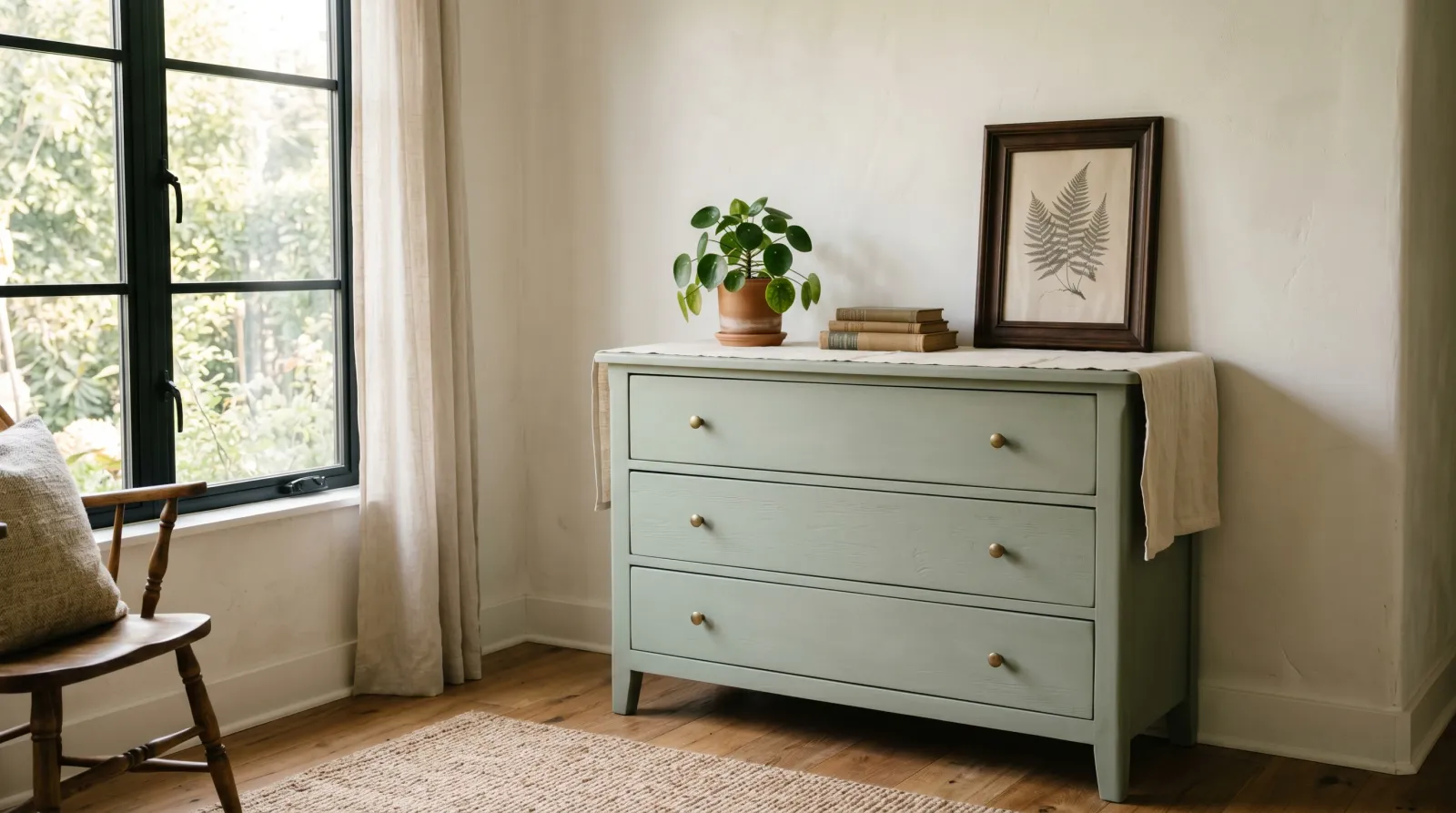
Magnolia Home Chalk Style Paint1 sheen
CoverageAbout 75 sq ft per quart in two coats
Recoat1–2 hr
VOC50 g/L; low odor
Full cureAbout 7 days before heavy use
Sheens Flat chalk finish
Read this first
The Fast Verdict
Buy it for a small piece of furniture you want to repaint without sanding, and buy the wax at the same time. It grips most surfaces after a wipe with a damp rag, covers a dresser in two coats out of one $28 to $34 quart, and the curated Magnolia colors are the real reason to pay over a $18 to $22 Rust-Oleum quart. The catch is the sealing wax: separate purchase, fussy step, and even waxed the finish scuffs on high-touch pieces.
Best for
Thrifted dressers and side tables · Picture frames and small bookshelves · No-sand weekend makeovers · Decorative pieces nobody handles daily · First-time furniture flippers · The soft Magnolia color palette
Skip if
Kitchen cabinets · A dining table you wipe down daily · Kitchen chairs kids climb on · You do not want to learn to wax · You want the cheapest way to repaint furniture · Anything outdoors
What it's good at
- Gripping without sanding — a varnished oak side table took it after one wipe with a damp rag
- A forgiving, thick consistency that lays down smooth on a beginner's first try
- Touch-ups that disappear, because a dead-flat finish has no sheen line to give a repair away
- Curated colors that do the design work for you — muted greens, soft greiges, chalky off-whites
- Low smell at 50 g/L, so you can paint a piece in a spare bedroom
- A half-hour touch-dry, so two coats fit into one afternoon
What it's not good at
- Anything you touch daily — even waxed, it scuffs at the edges within months
- Skipping the wax; bare chalk paint marks and water-spots
- Slick laminate and high-gloss varnish without a scuff sand or bonding primer
- Looking good after one coat — the first pass is blotchy by design
- Price per quart, at $28 to $34 plus the wax on top
- Kitchen cabinets, which want an enamel that cures hard
Same shelf, different cans
Which Can Should You Grab?
Same chalk finish, three formats, and one of them is not paint at all. Here is what each one is for — and yes, the wax on the next shelf is a separate purchase you should walk out with.
Quart can
BaseBrush-on chalk paint, about 75 sq ft in two coats
Buy it if
Your project is a dresser, a side table, a couple of chairs, or a small bookshelf. One quart does a standard dresser with paint left over.
Avoid if
You are only touching up a picture frame — that is a lot of paint to open for a small job.
8-oz sample
BaseSame paint, small size
Buy it if
You want to try the color on the actual piece, in the actual room light, before you commit. Also fine for small decor.
Avoid if
You are painting anything dresser-sized. You will run out mid-project and the second can is another trip.
12-oz sprayable can
BaseSame chalk finish in an aerosol
Buy it if
Small pieces with spindles, carving, or slats where a brush is a nuisance — chair legs, frames, little shelves.
Avoid if
A big flat piece. You will burn through cans and the coverage math stops making sense.
Numbers, not adjectives
Spec Sheet
- Coverage
- About 75 sq ft per quart in two coats
- Finish
- Flat chalk — one matte sheen only
- Touch dry
- About 30 min
- Recoat
- 1–2 hr
- Full cure
- About 7 days before heavy use
- VOC
- 50 g/L; low odor
- Prep
- No sanding or priming on most surfaces
- Surfaces
- Wood, MDF, metal, ceramic, some plastics — interior only
- Topcoat
- Clear or dark sealing wax, sold separately
- Sizes
- 8-oz sample, quart, 12-oz sprayable can
- Price
- $28–34 per quart at Ace Hardware
Application Settings That Work
- Brush
- A regular brush is fine, and the thick consistency does a lot of the work for you. Dip, paint, and let it lay down — it goes on without obvious brush ridges and dries fast, so keep a wet edge and do not overwork a section you have already covered.
- Thinning
- Do not thin it. It is thick, almost like pudding, but it is not gloppy, and unlike some other chalk paints it does not need water to brush out properly.
- Primer
- None on most surfaces — raw wood, painted wood, or a lightly scuffed finish just needs a wipe with a damp rag. The exception is slick stuff: high-gloss varnish, laminate, or anything shiny wants a quick scuff sand or a bonding primer first.
The Wax Step and the 7-Day Cure
Here is the thing about chalk paint: the paint part is the easy part. It is touch dry in about half an hour and recoats in one to two, so two coats fit into one afternoon. Then comes the wax, and that is where projects go sideways. Wipe the wax on thin with a rag or a wax brush, a small section at a time, then wipe the excess off and buff it. Less is more. You will know it when you see it — the surface should feel smooth and lightly satiny, not sticky. If it feels tacky an hour later, you left too much on, so buff harder with a clean cloth. The dark wax dries out in the tin and needs softening before it spreads, so budget an extra hour and practice on the back of the piece. After that, give it about seven days before heavy use. Do not load a waxed dresser with everything you own on day two.
Mid-project panic
When It Goes Wrong, and How to Fix It
The first coat looks blotchy and see-through
Why it happens. That is normal for chalk paint, especially on a dark piece, and it is the moment most first-timers panic. The paint is thick and pigmented, but one coat almost always goes on uneven.
The fix. Do not judge the color until coat two is dry. Plan on two coats from the start, wait the full one to two hours between them, and the second pass evens everything out. If your piece is dark and you are going pale, buy a second quart.
The finish stays sticky after waxing
Why it happens. Too much wax. It goes on thin and gets buffed off — a heavy layer has nothing to soak into, so it just sits there, stays tacky, and grabs dust and fingerprints all summer.
The fix. Buff harder with a clean, dry cloth, working small sections until the surface feels smooth and lightly satiny instead of sticky. If it is badly over-waxed, a rag with a little more wax will re-soften the layer so you can wipe the excess away, then buff again.
Scuffs on a chair seat or a tabletop within months
Why it happens. Even sealed, a waxed chalk finish is softer than a real furniture enamel. This is the single most common complaint in reader reports — light contact scuffs it. A decorative shelf is fine; a kitchen chair the kids climb on is not.
The fix. For anything with daily contact, skip the wax and brush on a water-based polyurethane topcoat instead. It dries harder and protects better. It adds a faint sheen to the dead-flat look, which is a fair trade on a tabletop. For real abuse, the piece wanted a furniture enamel, not chalk paint.
Paint peeling off a shiny piece in sheets
Why it happens. The no-sand promise has one exception and this is it. High-gloss varnish, laminate, and anything slick do not give the paint enough to grip, so it sits on top and lets go later.
The fix. On shiny surfaces, give it a quick scuff sand — enough to dull the shine, not to strip it — or roll on a bonding primer first. Everything else, raw wood, painted wood, a lightly scuffed finish, really does just need a wipe with a damp rag.
Side by side
Magnolia Chalk Style vs Rust-Oleum Chalked vs Annie Sloan
Three chalk paints people cross-shop for the same thrifted dresser. They all skip the sanding. What separates them is price, colors, and how much fussing the paint asks of you.
| Magnolia Chalk Style | Rust-Oleum Chalked | Annie Sloan Chalk Paint | |
|---|---|---|---|
| Price per quart | $28–34 | $18–22 | $40 and up |
| Consistency | Thick like pudding; no thinning needed | Performs well; the finish is a touch more chalky-rough | Often needs thinning with water |
| Colors | Curated Magnolia palette — muted greens, soft greiges, chalky off-whites | Smaller and less curated | Deeper, more saturated; the flipper's favorite |
| Where you buy it | Ace Hardware, plus some Amazon listings | Every Home Depot and hardware store | Stockists and Amazon |
| Topcoat needed | Yes — clear or dark sealing wax, sold separately | Yes, a wax or poly topcoat | Yes, and the wax work is part of the craft |
| Best for | A first project where you want the colors chosen for you | Testing chalk paint or painting on a budget | Heirloom pieces and complex distressed looks |
Consistency
Magnolia Chalk StyleThick like pudding; no thinning needed
Rust-Oleum ChalkedPerforms well; the finish is a touch more chalky-rough
Annie Sloan Chalk PaintOften needs thinning with water
Colors
Magnolia Chalk StyleCurated Magnolia palette — muted greens, soft greiges, chalky off-whites
Rust-Oleum ChalkedSmaller and less curated
Annie Sloan Chalk PaintDeeper, more saturated; the flipper's favorite
Where you buy it
Magnolia Chalk StyleAce Hardware, plus some Amazon listings
Rust-Oleum ChalkedEvery Home Depot and hardware store
Annie Sloan Chalk PaintStockists and Amazon
Topcoat needed
Magnolia Chalk StyleYes — clear or dark sealing wax, sold separately
Rust-Oleum ChalkedYes, a wax or poly topcoat
Annie Sloan Chalk PaintYes, and the wax work is part of the craft
Best for
Magnolia Chalk StyleA first project where you want the colors chosen for you
Rust-Oleum ChalkedTesting chalk paint or painting on a budget
Annie Sloan Chalk PaintHeirloom pieces and complex distressed looks
For a first project, Magnolia is the easiest on-ramp: it does not need thinning, the colors are already edited so you cannot really go wrong, and the matching wax sits on the same shelf. If you just want to try chalk paint or you are watching the budget, Rust-Oleum Chalked does the same job for about ten dollars less a quart and you will not feel bad experimenting on it. And if the piece is an heirloom or you want a proper layered, distressed look, Annie Sloan has the deeper colors and a decade of tutorials behind it. All three still need a topcoat, so plan for that no matter which can you carry home.
If not this one
Honest Alternatives
RO
Rust-Oleum Chalked$18–22 / quart
At every Home Depot and hardware store, and several dollars cheaper. The color range is smaller and less curated and the finish is a touch more chalky-rough, but the paint performs well. The right pick when you are on a budget or want to test chalk paint before paying the Magnolia premium.
Full review →AS
Annie Sloan Chalk Paint$40 and up / quart
The original chalk paint and still the favorite of serious furniture flippers. Deeper, more saturated colors and a huge library of tutorials. It often needs thinning with water and it costs more, but for an heirloom piece or a complex distressed look it is the gold standard.
Full review →BM
Benjamin Moore Advance$80–95 / gal
Not a chalk paint at all — a waterborne alkyd enamel that self-levels like oil and cures rock-hard. Use it when you want furniture or cabinets that survive daily abuse with no wax step. More work to apply, since it likes a bonding primer, and pricier, but it is the durable answer.
Full review →Questions people actually ask
Chalk Style Paint Questions, Answered
Is Magnolia Home Chalk Style paint worth it?
For a small furniture piece, yes. It grips without sanding, covers a dresser in two coats from one $28 to $34 quart, and the curated Magnolia colors are the real reason to pay the premium over an $18 to $22 Rust-Oleum quart. The catch is the sealing wax — a separate purchase and a fussy step — and even waxed the finish scuffs on high-touch pieces. Not worth it for kitchen cabinets or a dining table you wipe down daily.
Do I really not have to sand the furniture first?
Mostly true, and that is the whole point of chalk paint. On raw wood, painted wood, or a lightly scuffed finish, you can wipe it clean and paint. The exception is slick stuff: high-gloss varnish, laminate, or anything shiny. There, a quick scuff sand or a bonding primer keeps the paint from peeling off in sheets later.
Does the chalk paint need a wax or topcoat?
On anything you will touch, yes. Bare chalk paint is porous and marks easily. The Magnolia clear sealing wax or a poly topcoat protects it. A decorative shelf can skip the wax. A kitchen chair or a dresser top cannot, or you will see scuffs within weeks.
Wax or polyurethane — which topcoat should I use?
Wax for decorative pieces, poly for anything that gets daily contact. A water-based polyurethane like a satin Minwax Polycrylic brushes on, dries harder than wax, and protects a tabletop better. It slightly changes the dead-flat look by adding a faint sheen, and on a piece that gets real use that trade is worth it.
How does Magnolia chalk paint compare to Annie Sloan?
Magnolia runs a little thinner, so you do not water it down the way you sometimes do with Annie Sloan. Pigment and coverage are close, and Magnolia's quart is usually a few dollars cheaper. Annie Sloan still has the deeper hobbyist following and more tutorials. For a first project, Magnolia is the easier on-ramp.
Is one quart enough for a dresser?
Usually, yes. A quart covers roughly 75 square feet in two coats, which is enough for a standard dresser or a couple of chairs with paint left over. Buy two quarts only if your piece is large, dark, or you are going from a deep color to a pale one, which always drinks more paint.
Why does the first coat look so patchy?
Because that is what chalk paint does, especially over dark wood. The first coat almost always goes on uneven and a little see-through. Nothing is wrong. Plan on two coats from the start, wait one to two hours between them, and do not judge the color until the second coat is dry.
Is chalk paint the same thing as chalkboard paint?
No, and it is an easy mix-up. Chalkboard paint is the stuff you write on with chalk. Chalk paint is a thick water-based decorative furniture finish with a built-in flat look — think of a wall so matte it almost looks like suede. This is the furniture one.
How long before I can use the piece?
It is touch dry in about half an hour and recoats in one to two, but give it about seven days before heavy use. Wax and then wait — loading a freshly waxed dresser with everything you own on day two is how the edges start scuffing early.
Can I use it on kitchen cabinets?
Do not. Cabinets need a finish that cures hard and takes grease, hands, and cleaning every week, and a wax-sealed chalk finish is not that. Use a cabinet enamel instead. Chalk paint is for furniture and decor, where the soft matte look is the point and nobody is scrubbing it.
Keep exploring
Magnolia Home paint brand overviewBest chalk paint for furniture round-upWhat chalk paint actually isBest furniture paint, all types compared
We may earn a commission when you buy through the retailer link above. It never changes the score or the verdict.
Ask a Question