Product review · Krylon · Updated August 7, 2026
CamouflageKrylon paint review
7.8/10The best no-glare aerosol on the shelf, as long as you only need solid earth tones.
The flattest, least reflective finish on a hardware shelf, with Fusion-for-Plastic grip that bites clean decoys and polymer stocks without sanding. What you do not get is a pattern.

Maya Patel · Reviews Editor & Product Tester · Updated August 7, 2026
Maya spent five years running comparative product testing at a consumer testing nonprofit before joining CompositePaint. She built the round-up protocol the team uses, and she has sprayed enough rattle cans side by side to know which ones earn the extra two dollars. About the testing process →
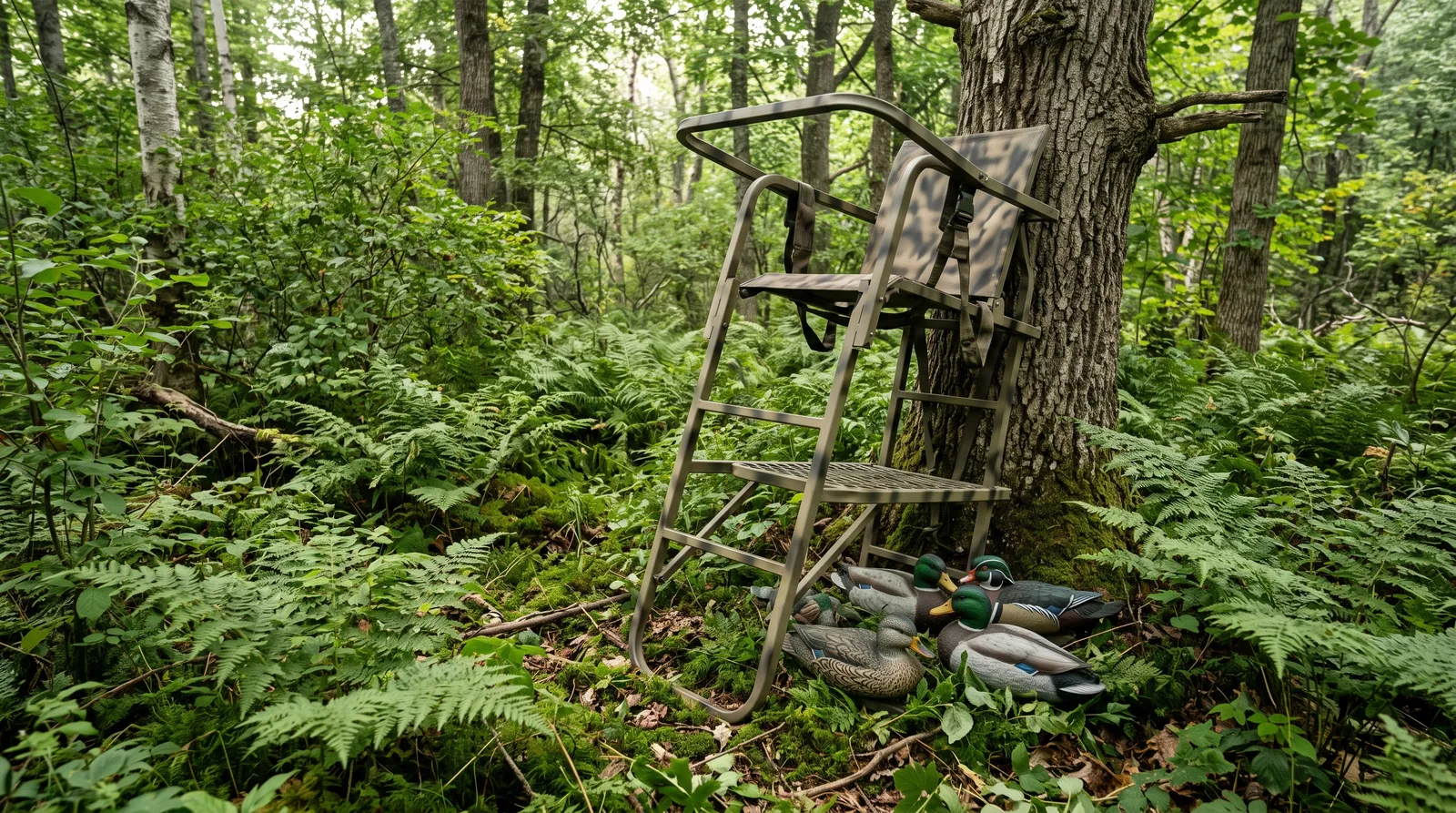
Krylon Camouflage
Dry / HandleTouch in 15 min or less
Read this first
The Fast Verdict
Buy it if the job is killing glare. At $9 to $12 an 11-oz can this is the flattest, least reflective finish in a general hardware aisle, and Fusion-for-Plastic adhesion lets it grip clean, unsanded rigid plastic, PVC, and hard vinyl with no primer. Decoys, polymer stocks, tree stands, blind frames. Skip it if you wanted a sprayed camo pattern, because you get six solid earth tones and nothing else, or if the piece gets handled hard, because a dead-flat film shows every scuff.
Best for
Hunting gear and firearms furniture · Tree stands and ground blinds · Decoys and plastic gear · Mixed-material outdoor rigs · Anything that flashes sunlight
Skip if
You need a real broken-pattern camo · High-wear surfaces you handle daily · You want satin or gloss · You are painting a large area on a budget
What it's good at
- Killing glare completely — no sheen to catch sun off a stand rail or a barrel
- Gripping clean, unsanded rigid plastic, PVC, and hard vinyl with no primer step
- Covering a mixed-material rig — metal, wood, wicker, ceramic, glass — with one can
- Turning gear around fast: touch dry in 15 minutes, handleable in an hour
- Earth tones tuned to disappear into natural backdrops rather than match a sofa
- Refreshing decoys, where the no-prep grip is the whole feature you are paying for
What it's not good at
- Patterns — six solid colors is the entire deck, with no bark, leaf, or grass break-up
- Hiding scuffs, because dead-flat has no sheen to disguise abrasion or fingerprints
- Covering much ground: 20 to 25 sq ft a can, and a few decoys eat one fast
- Surviving constant contact — high-wear spots burnish and want annual touch-ups
- Even coverage in one heavy coat; overlap lines and blotching show on flat
- Choice, if you want any sheen other than ultra-flat
Numbers, not adjectives
Spec Sheet
- Coverage
- 20–25 sq ft per 11-oz can across two to three light passes
- Finish
- Ultra-Flat only — non-reflective, no-glare (no satin or gloss option)
- Colors
- Olive, Khaki, Brown, Black, Sand, Woodland Light Green
- Dry / Handle
- Touch in 15 min or less · handle in 1 hr
- Chip-resistant
- After a 7-day cure
- Adhesion
- Fusion-for-Plastic; no sand, no prime on rigid surfaces
- Surfaces
- Most plastics, PVC, hard vinyl, ceramic, glass, wood, metal, wicker
- Paint type
- Acrylic-alkyd, water-based aerosol
- VOC
- Aerosol; not GREENGUARD or CARB rated. Check your state's aerosol rules before ordering online
- Sizes
- 11-oz aerosol can only
- Best conditions
- 55–75°F, humidity under 60%
- Price
- $9–12 per 11-oz can
Application Settings That Work
- Primer
- No primer on clean, dull, rigid surfaces — that is what the Fusion-for-Plastic adhesion is buying you, and it covers rigid plastic, PVC, hard vinyl, metal, wood, ceramic, and glass. Wipe the gear down first so you are not spraying over dirt or oils. The only real exception is flexible polyethylene and polypropylene, which want a scuff with a maroon pad and an alcohol wipe before you shoot them.
Dry Times in the Real World
The fast numbers are real, but they are not the whole story. Touch dry lands at 15 minutes or less and the piece is handleable in an hour, so you can flip a decoy or hit the back of a stand the same afternoon. That speed is the reason this can works for gear prep the week before an opener. What it is not is finished. The film is only chip-resistant after a full 7-day cure, and until then a dead-flat surface picks up fingerprints, drag marks, and rub spots with nothing to hide them. Spray your gear a week out, not the night before, and keep it off the truck bed until day seven.
Mid-project panic
When It Goes Wrong, and How to Fix It
Blotchy coverage and visible overlap lines
Why it happens. Dead-flat has no sheen to blend passes together, so every band edge and every heavy spot reads as a stripe. People try to save a can by laying one thick coat, and on a dark or glossy base that is exactly when it goes patchy.
The fix. Two to three light passes, not one heavy one. Keep the can moving at a steady distance, overlap each pass by about half, and let the fast touch-dry work for you — you can come straight back with the next pass. Budget 20 to 25 sq ft per can and buy one more can than the math says.
The coat peels off flexible plastic
Why it happens. Fusion-for-Plastic grips clean, unsanded rigid plastic, PVC, and hard vinyl. Waxy flexible plastics — polyethylene and polypropylene — are the exception, and they are the ones no aerosol sticks to straight out of the can.
The fix. Scuff the surface with a maroon abrasive pad, wipe it down with alcohol, and let it flash off before you spray. Rigid plastic, metal, and wood need no prep beyond a clean, dry, dull surface.
Runs and drips on a stand rail or a barrel
Why it happens. It is a thin aerosol film, so a run means the can lingered in one place. Vertical tube shapes are the usual culprits because the paint has nowhere to sit.
The fix. Keep the can moving and start the pass before the gear and end it after. On a rail, spray along the length rather than holding one spot. A run in wet flat paint can be feathered out with a light pass; a cured one has to be sanded back.
Wear spots showing on contact points after a season
Why it happens. The flat film burnishes where it takes constant abrasion — a rail your boots scrape, a sling edge, a decoy keel dragged across gravel. Nothing is wrong with the paint; a matte coat simply has no gloss to wear off first.
The fix. Treat it as an annual touch-up finish. Hit the contact points with a light pass each preseason. If a spot genuinely takes daily wear, put a harder enamel there and keep this can for the surfaces that only need to stop shining.
Side by side
Krylon Camouflage vs Rust-Oleum Camouflage vs a Hydrographic Kit
Three ways to make gear disappear, at three very different prices. The real question is whether you need flat solid tones or an actual pattern, because that decides everything else.
| Krylon Camouflage | Rust-Oleum Camouflage | Hydrographic dip or DuraCoat | |
|---|---|---|---|
| Finish | Ultra-flat, truly non-reflective. Flat is the product, not one sheen option. | Similar ultra-flat, non-reflective earth tones. | A true multi-color, photo-grade pattern — bark, leaf, or a branded scheme. |
| Plastic adhesion | Best of the three out of the can — Fusion-for-Plastic grips clean rigid plastic with no sanding. | Multi-surface reach, but Krylon edges it on plastic straight from the can. | Depends on the system, and all of them expect real prep first. |
| Color deck | Six: Olive, Khaki, Brown, Black, Sand, Woodland Light Green. | Army Green, Khaki, Brown, Sand, Black, plus a couple of pattern-friendly greens in the commercial-grade line. | Full pattern schemes rather than a color list. |
| Durability | Chip-resistant after a 7-day cure; flat film burnishes on high-wear spots. | A hair tougher by most accounts, with a slightly thicker build per coat. | Far tougher film than any rattle can. |
| Effort | Spray and go. Two to three light passes, handleable in an hour. | Spray and go, same ballpark. | Real prep, multiple steps, and a much longer process. |
| Price | $9–12 per 11-oz can | $8–11 per can | $30+ per kit |
Finish
Krylon CamouflageUltra-flat, truly non-reflective. Flat is the product, not one sheen option.
Rust-Oleum CamouflageSimilar ultra-flat, non-reflective earth tones.
Hydrographic dip or DuraCoatA true multi-color, photo-grade pattern — bark, leaf, or a branded scheme.
Plastic adhesion
Krylon CamouflageBest of the three out of the can — Fusion-for-Plastic grips clean rigid plastic with no sanding.
Rust-Oleum CamouflageMulti-surface reach, but Krylon edges it on plastic straight from the can.
Hydrographic dip or DuraCoatDepends on the system, and all of them expect real prep first.
Color deck
Krylon CamouflageSix: Olive, Khaki, Brown, Black, Sand, Woodland Light Green.
Rust-Oleum CamouflageArmy Green, Khaki, Brown, Sand, Black, plus a couple of pattern-friendly greens in the commercial-grade line.
Hydrographic dip or DuraCoatFull pattern schemes rather than a color list.
Durability
Krylon CamouflageChip-resistant after a 7-day cure; flat film burnishes on high-wear spots.
Rust-Oleum CamouflageA hair tougher by most accounts, with a slightly thicker build per coat.
Hydrographic dip or DuraCoatFar tougher film than any rattle can.
Effort
Krylon CamouflageSpray and go. Two to three light passes, handleable in an hour.
Rust-Oleum CamouflageSpray and go, same ballpark.
Hydrographic dip or DuraCoatReal prep, multiple steps, and a much longer process.
Price
Krylon Camouflage$9–12 per 11-oz can
Rust-Oleum Camouflage$8–11 per can
Hydrographic dip or DuraCoat$30+ per kit
For solid earth tones on gear you want to stop shining, Krylon and Rust-Oleum are close enough to be a coin flip — buy whichever color is in stock, and lean Krylon if a lot of what you are spraying is plastic. Step up to a hydrographic dip or a DuraCoat system only when you want a permanent, pattern-accurate finish on a stock or a bow and you are willing to pay in prep, steps, and money for it.
If not this one
Honest Alternatives
RO
Rust-Oleum Camouflage$8–11 per can
The direct rival, sold right beside it. Similar ultra-flat earth tones and comparable surface reach, with a slightly thicker build per coat and a hair more durability. Krylon wins on plastic adhesion out of the can. Buy whichever color and stock you find first.
HD
Hydrographic dip or DuraCoat camo system$30+ per kit
The answer when you want a real photo-grade pattern instead of solid tones. A water-transfer film or a stencil-based firearm coating lays down true multi-color camo and a much tougher film, at the cost of real prep, multiple steps, and a higher price. Right for a stock or a bow, not a quick gear refresh.
KF
Krylon Fusion All-In-One Matte$6–9 per can
Same no-sand plastic adhesion in a flat sheen with a much wider everyday color range. It is not as dead-flat as Camouflage and the colors are not earth-tone-tuned, so it loses on pure concealment. The better one-can buy if the same paint also has to handle non-hunting projects.
Full review →Questions people actually ask
Camouflage Questions, Answered
Will Krylon Camouflage bond to plastic?
Yes, and it is the main reason to buy this can over a generic flat black. It carries Fusion-for-Plastic technology, so on rigid plastics, PVC, and hard vinyl — plastic decoys, gun-stock furniture, a polymer rifle case — it grips clean, unsanded surfaces with no separate primer. The one catch is the same one every spray paint has: flexible, waxy polyethylene and polypropylene still need a quick scuff with a maroon pad and an alcohol wipe, or the coat peels.
Is it really no-glare?
Yes. This is a true ultra-flat, non-reflective finish, dead-matte with zero sheen, and on that one job it is excellent. A standard flat decorator spray still throws a faint sheen at an angle and this one does not. There is no satin or gloss option because shine is exactly what the product exists to kill.
Does it spray an actual camo pattern?
No, and this is the honest knock. You get six solid earth tones — Olive, Khaki, Brown, Black, Sand, and Woodland Light Green — and no bark, leaf, or grass pattern in the can. For true broken-pattern camo you are layering the colors freehand, spraying over netting or a stencil system, or moving to a hydrographic dip.
Is Krylon Camouflage worth it?
Yes, if the job is killing glare. At $9 to $12 a can it lays the flattest, least reflective finish on a hardware shelf, and the built-in adhesion grips decoys, polymer stocks, and PVC with no sanding and no primer. It is worth less if you wanted a real pattern, since you only get six solid earth tones, or a finish that survives constant handling, because the dead-flat film scuffs and burnishes on high-wear spots.
How durable is it on gear left outdoors?
Good, not bulletproof. The film is fully chip-resistant after a 7-day cure and shrugs off rain and dew well on metal and rigid plastic. On high-wear spots — a rail your boots scrape, a sling edge, a decoy keel dragged over gravel — the flat finish scuffs and shows wear faster than a glossy enamel would. For season-after-season gear, plan on touching up the contact points each year.
How many cans do I need?
More than you would guess. One 11-oz can covers 20 to 25 sq ft across two to three light passes, and a few decoys or a single tree stand can swallow a can quicker than you expect. Measure the job before you buy a multi-pack of one tone, and grab a spare rather than running dry on the last pass.
Do I need to sand or prime first?
Not on most rigid surfaces. It is self-priming through the Fusion-for-Plastic bonding, so rigid plastic, PVC, hard vinyl, metal, wood, ceramic, and glass just need to be clean, dry, and dull. Flexible plastics are the exception and want a scuff plus an alcohol wipe first.
What conditions should I spray it in?
Aim for 55 to 75°F with humidity under 60%. Cold or damp air slows the film and makes even coverage harder to hold on a finish that already shows every overlap line. Outdoors on a dry, still morning is ideal; a breezy day wastes paint and lands dust in the coat.
How soon can I use the gear?
It is dry to touch in 15 minutes or less and handleable in about an hour, so you can flip a decoy or move a stand the same afternoon. Full chip resistance takes 7 days, though, so keep painted gear from rubbing against anything hard during that first week.
Keep exploring
Krylon brand and product line overviewKrylon Fusion All-In-One — honest reviewBest spray paint for plastic — tested round-up
We may earn a commission when you buy through the retailer link above. It never changes the score or the verdict.
Ask a Question