Product review · KILZ · Updated August 8, 2026
Kitchen & Bath PrimerKILZ paint review
7.6/10Buy it for the enamel holdout in a steamy room, not for the mold promise in the name.
The reason a bathroom repaint goes blotchy at month two is enamel holdout, not the topcoat. This primer fixes that for about $30 a gallon — and it does not fix mold, whatever the name suggests.

David Chen · Formulation Lead & Resident Chemist · Updated August 8, 2026
Polymer chemist by training, six years in industrial coatings R&D before joining CompositePaint's formulation team. David writes the film-formation pieces — why a patched wall flashes dull under a satin, and why a mildewcide in a primer film cannot protect the paint on top of it. About the testing process →
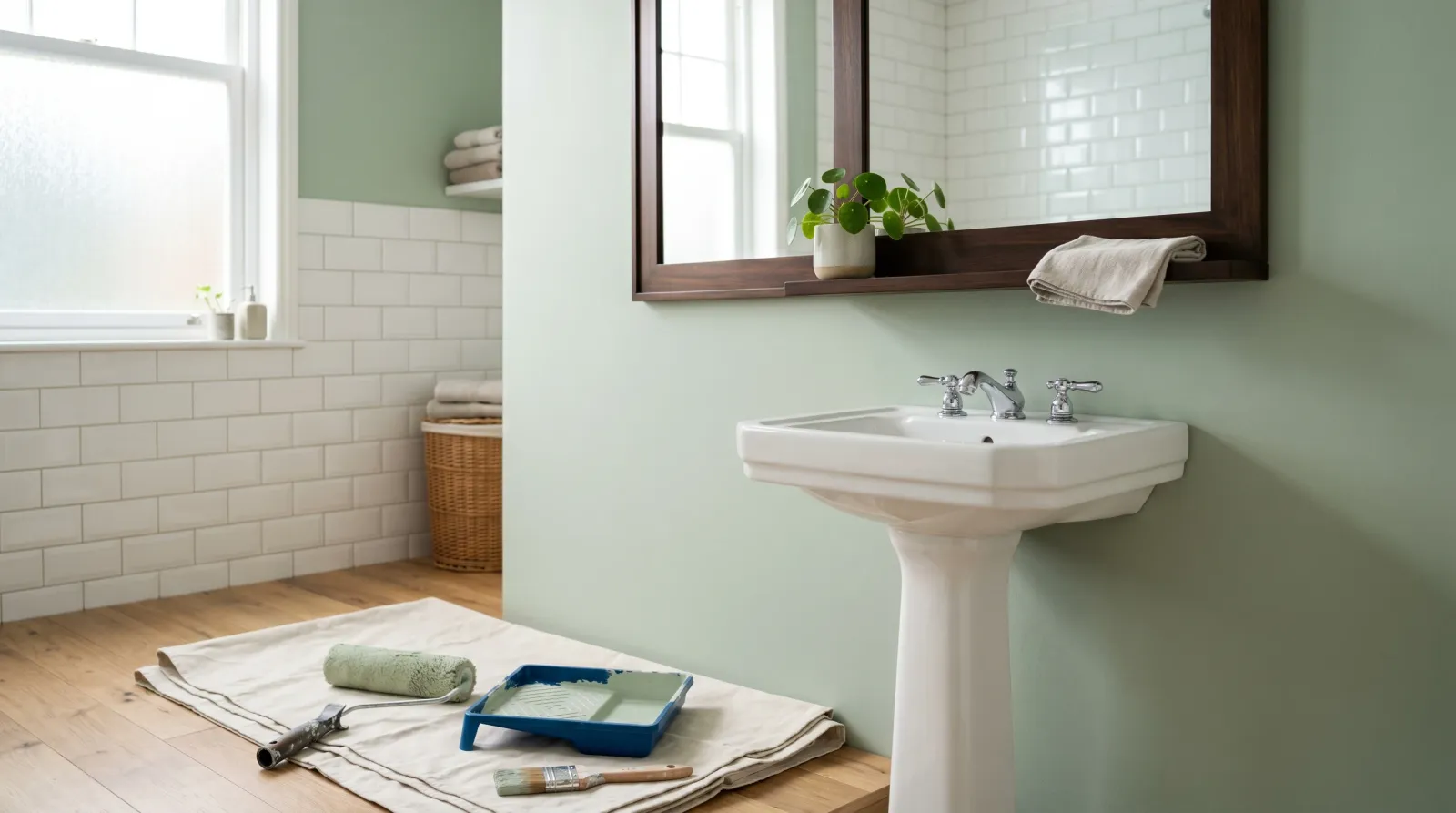
KILZ Kitchen & Bath Primer1 sheen
Coverage300–400 sq ft / gal
Recoat1 hr
VOCAbout 5 g/L
Sheens Flat
Read this first
The Fast Verdict
Buy it for a sound, clean bathroom, kitchen, or laundry room. Around $30 a gallon buys excellent enamel holdout, so your finish coat keeps its sheen instead of flashing dull over every spackled screw hole, plus a mildew-resistant film and about 5 g/L of VOC you can live with in a windowless room. It does not kill live mold, it will not bridge roller stipple, and a deep set-in water ring wants a shellac spot-prime first.
Best for
Bathrooms and powder rooms · Kitchen walls · Laundry rooms · Patched and skim-coated walls under a satin or semi-gloss · Hairspray haze, soap film, and light grease · Small windowless rooms where odor matters
Skip if
Live mold you have not washed off · Deep set-in water rings · Rough walls that need leveling · Shower pans and tub surrounds · Dry bedrooms and hallways · Exterior surfaces
What it's good at
- Enamel holdout — it seals a patchwork of old paint, spackle, and skim coat to one porosity so the finish keeps its sheen instead of flashing dull
- Very low odor at about 5 g/L, which matters most in a small windowless bathroom
- Blocking the common offenders in one coat: hairspray haze, soap film, light grease, pencil, and most water stains
- Holding back tannin bleed from a wood trim repair
- Handling cleanly — low spatter off a 3/8-inch roller, soap-and-water cleanup
- A one-hour recoat that lets a bathroom be primed and finish-coated the same day
What it's not good at
- Anything about live mold, which the name implies and the chemistry does not do
- Bridging texture — it follows roller stipple and trowel ridges instead of leveling them
- Deep set-in water rings, which can ghost faintly back through any single water-base coat
- Exterior work or surfaces in constant standing-water contact
- Earning its premium in dry bedrooms and hallways, where plain KILZ 2 costs less and does the same job
Numbers, not adjectives
Spec Sheet
- Type
- Water-base latex primer / sealer / stainblocker
- Coverage
- 300–400 sq ft / gal
- Finish
- Flat — top it with your chosen finish sheen
- Touch dry
- About 30 min
- Recoat
- 1 hr
- Mildew-resistant film
- Develops over the first 7 days as the film cures
- VOC
- About 5 g/L; very low, meets SCAQMD limits
- Stains blocked
- Felt marker, grease, ink, pencil, tannin, water
- Surfaces
- Drywall, plaster, previously painted walls and ceilings, properly prepped glossy trim
- Cleanup
- Soap and water
- Sizes
- Quart, gallon, 5-gallon
- Price
- $28–40 / gal street
Application Settings That Work
- Brush
- Brushes and rolls without fighting you and spatters very little off a 3/8-inch roller. Cleanup is soap and water, and the one-hour recoat means a bathroom gets primed and finish-coated in a single day.
- Primer
- The surface has to be sound and clean first: wash live mold off with a bleach or detergent solution and let it dry, and sand or skim any stipple and ridges, because this primer follows texture rather than filling it. Spot-prime deep water rings with a shellac sealer before you roll. Then topcoat with an interior bathroom paint in eggshell, satin, or semi-gloss — the flat primer is not a finish.
The Cure Reality
Touch dry runs about 30 minutes and you can topcoat at an hour, which is why a bathroom gets primed and finish-coated in a single day. The mildew resistance is on a slower clock. That property comes up as the film cures over roughly the first 7 days, so the protection you paid for is a week out, not an hour out. Nothing about that changes your painting schedule — you still topcoat on the one-hour window — but it is worth knowing before you judge the primer by how the room behaves on day two. Cold rooms and high humidity, which is most bathrooms, stretch every one of these numbers, so give the surface longer than the label if it still feels cool to the back of your hand.
Mid-project panic
When It Goes Wrong, and How to Fix It
Black mold comes back through the fresh paint
Why it happens. The mildew resistance lives in the dried primer film, not in anything that kills what is behind it. Priming over live mold traps it and gives it a food source under a new coat.
The fix. Wash the mold off first with a bleach or detergent solution, let the surface dry, then prime. If the wall keeps producing growth after cleaning, KILZ Mold & Mildew carries an actual antimicrobial in the wet film and is the closer match.
A brown ceiling ring ghosts faintly back through one coat
Why it happens. A stain bleeds when the staining compound is soluble in the binder of the coat above it. This film blocks the everyday bathroom stains well, but a heavy ring that soaked deep keeps diffusing and can overwhelm a single thin water-base film.
The fix. Spot-prime the ring with a shellac-base sealer — the stain is not soluble in alcohol-cut shellac resin, so it has nowhere to go — then roll this primer over the whole ceiling for the mildew-resistant film.
Roller stipple and trowel ridges still show after priming
Why it happens. This is a thin sealer, not a high-build filler. It follows every contour of the surface instead of leveling it.
The fix. Sand the wall, and skim-coat it if the texture is bad, before you prime. No primer saves a bad substrate, and this one does not pretend to.
The coating fails at a shower pan edge or inside a tub surround
Why it happens. This is an interior product for humid air and splash, not for surfaces in chronic liquid contact.
The fix. Use a proper waterproofing system in the wet zone and keep this primer for the walls and ceiling around it.
Side by side
KILZ Kitchen & Bath vs KILZ Mold & Mildew vs Zinsser Perma-White
Three cans get bought for the same steamy room, and they are not even the same category — one is a sealer, one is a mildew-focused primer, one is a finish paint.
| KILZ Kitchen & Bath | KILZ Mold & Mildew | Zinsser Perma-White | |
|---|---|---|---|
| What it is | Water-base primer-sealer-stainblocker for humid rooms | Primer with an EPA-registered antimicrobial in the wet film, rated exterior too | A self-priming finish paint, not a primer |
| Mildew defense | Mildew-resistant dried film; develops over the first 7 days | Antimicrobial in the wet film — the closer match under real mold pressure | 5-year mildew-resistant warranty on the finish |
| Stain blocking | Marker, grease, ink, pencil, tannin, and most water stains | Built for humid-room stains as well | Gives up the deep stain blocking a dedicated primer brings |
| Enamel holdout | The real strength — sealed patches stop flashing under a satin | Not what you buy it for | It is the finish, so holdout is not the question |
| VOC | About 5 g/L, meets SCAQMD limits | Very low, water-base | Not the deciding factor here |
| Price per gallon | $28–40 | $25–40 | $35–45 |
What it is
KILZ Kitchen & BathWater-base primer-sealer-stainblocker for humid rooms
KILZ Mold & MildewPrimer with an EPA-registered antimicrobial in the wet film, rated exterior too
Zinsser Perma-WhiteA self-priming finish paint, not a primer
Mildew defense
KILZ Kitchen & BathMildew-resistant dried film; develops over the first 7 days
KILZ Mold & MildewAntimicrobial in the wet film — the closer match under real mold pressure
Zinsser Perma-White5-year mildew-resistant warranty on the finish
Stain blocking
KILZ Kitchen & BathMarker, grease, ink, pencil, tannin, and most water stains
KILZ Mold & MildewBuilt for humid-room stains as well
Zinsser Perma-WhiteGives up the deep stain blocking a dedicated primer brings
Enamel holdout
KILZ Kitchen & BathThe real strength — sealed patches stop flashing under a satin
KILZ Mold & MildewNot what you buy it for
Zinsser Perma-WhiteIt is the finish, so holdout is not the question
VOC
KILZ Kitchen & BathAbout 5 g/L, meets SCAQMD limits
KILZ Mold & MildewVery low, water-base
Zinsser Perma-WhiteNot the deciding factor here
For a sound, clean bathroom or kitchen you are repainting, Kitchen & Bath is the right rung: the holdout is what keeps the finish from going blotchy over patches, and that is the thing people actually complain about a year later. If the wall keeps producing mold after you clean it, the Mold & Mildew can carries the real antimicrobial and is the closer match. And if you would rather prime and finish out of one bucket and accept weaker stain blocking, Perma-White is the stronger single-product system for a bathroom.
If not this one
Honest Alternatives
K2
KILZ 2 All-Purpose$20–28 / gal
The general-purpose water-base KILZ primer, a few dollars less. It primes drywall fine and has decent stain blocking, but no mildew-resistant film and weaker holdout in a steamy room. The right call for a dry bedroom or hallway.
Full review →ZP
Zinsser Perma-White Bathroom Paint$35–45 / gal
A different category — a self-priming finish paint with a 5-year mildew-resistant warranty, not a primer. For a bathroom you can prime and finish in one product it is the stronger system, though you give up the deep stain blocking a dedicated primer brings.
ZB
Zinsser B-I-N Shellac Primer$45–55 / gal
The can to keep on the shelf for the stains this one cannot fully seal. Shellac blocks deep water rings, nicotine, and smoke that defeat a water-base primer. Higher odor and alcohol cleanup, so use it to spot-prime the worst areas rather than the whole room.
Questions people actually ask
Kitchen & Bath Primer Questions, Answered
Is KILZ Kitchen & Bath primer worth it?
In a steamy room, yes. Around $30 a gallon buys excellent enamel holdout, so your bathroom topcoat keeps its sheen instead of flashing dull over patches, plus a mildew-resistant film and a very low VOC you can live with in a small unventilated room. It is not worth it if the wall has live mold — clean it first, then look at KILZ Mold & Mildew — or if you are chasing a deep set-in water ring, which wants a shellac spot-primer.
Does KILZ Kitchen & Bath primer kill mold?
No. The film resists mildew growing on the primer itself; it does not kill spores already in the wall. Clean active mold with a bleach or detergent solution and let the surface dry first. If you want a primer with an actual antimicrobial in the wet film, KILZ Mold & Mildew is the one to reach for.
Do I still need a topcoat over it?
Yes. This is a flat sealing primer, not a finish. It blocks stains and evens out the surface, then you topcoat with an interior bathroom paint in eggshell, satin, or semi-gloss. The primer's enamel holdout is its real strength: your finish coat lays down evenly and keeps its sheen instead of going patchy over fresh patches.
Will it block old water stains on a bathroom ceiling?
Most of them, yes. It seals felt marker, grease, ink, pencil, tannin, and water stains. For a heavy brown water ring that has soaked deep, one coat sometimes ghosts back through. The reliable fix there is a shellac- or solvent-base stainblocker on the ring itself, then this primer over the whole ceiling for the mildew-resistant film.
Is it worth it over plain drywall primer?
In a steamy room, yes. A standard PVA primer has no mildew-resistant film and weaker stain blocking, so soap scum, hairspray, and water marks bleed through sooner. For a bedroom or hallway, plain primer is fine and cheaper. The Kitchen & Bath formula earns the small premium only where humidity and stains are the actual problem.
Why does bathroom paint go blotchy near the shower?
That is flashing, and it is a substrate story rather than a paint story. A bathroom wall is a patchwork of old paint, spackled screw holes, and skim-coated repairs, and each pulls water out of a wet topcoat at a different rate, so the binder does not coalesce evenly everywhere. Sealing the wall to one consistent porosity is exactly what this primer does, and it is the reason to buy the can.
How long before I can topcoat it?
One hour, with touch dry at about 30 minutes, so a bathroom can be primed and finish-coated in a single day. The mildew-resistant film keeps developing for about 7 days after that, which does not change your painting schedule but is worth knowing before you judge the result on day two.
What sheen should I topcoat with?
Eggshell, satin, or semi-gloss for a bathroom, kitchen, or laundry room. The primer goes on flat and is not a finish, so the sheen decision belongs entirely to the topcoat. The holdout the primer gives you is what keeps that sheen even across patched areas.
Keep exploring
Every KILZ primer, ranked and explainedWhat primer actually does, in plain termsHow to block water stains on a ceiling
We may earn a commission when you buy through the retailer link above. It never changes the score or the verdict.
Ask a Question