Product review · HGTV Home by Sherwin-Williams · Updated August 7, 2026
All-Purpose Power PrimerHGTV Home by Sherwin-Williams paint review
7.6/10The right default can for the everyday repaint, and the wrong one the moment the stain is concentrated.
A high-hiding waterborne primer-sealer that evens out patched drywall and keys onto scuff-sanded gloss for roughly $20 to $28 a gallon. The ceiling on it is chemistry: a waterborne film only blocks so much stain.
Buy at Lowe's Roughly $20 to $28 / gal at Lowe'sSee HGTV Home by Sherwin-Williams colors on your wall

David Chen · Formulation Lead & Resident Chemist · Updated August 7, 2026
Polymer chemist by training, six years in industrial coatings R&D before joining CompositePaint's formulation team. David writes the primer pieces, including the one nobody wants to read until a stain has already bled through the finish coat. About the testing process →
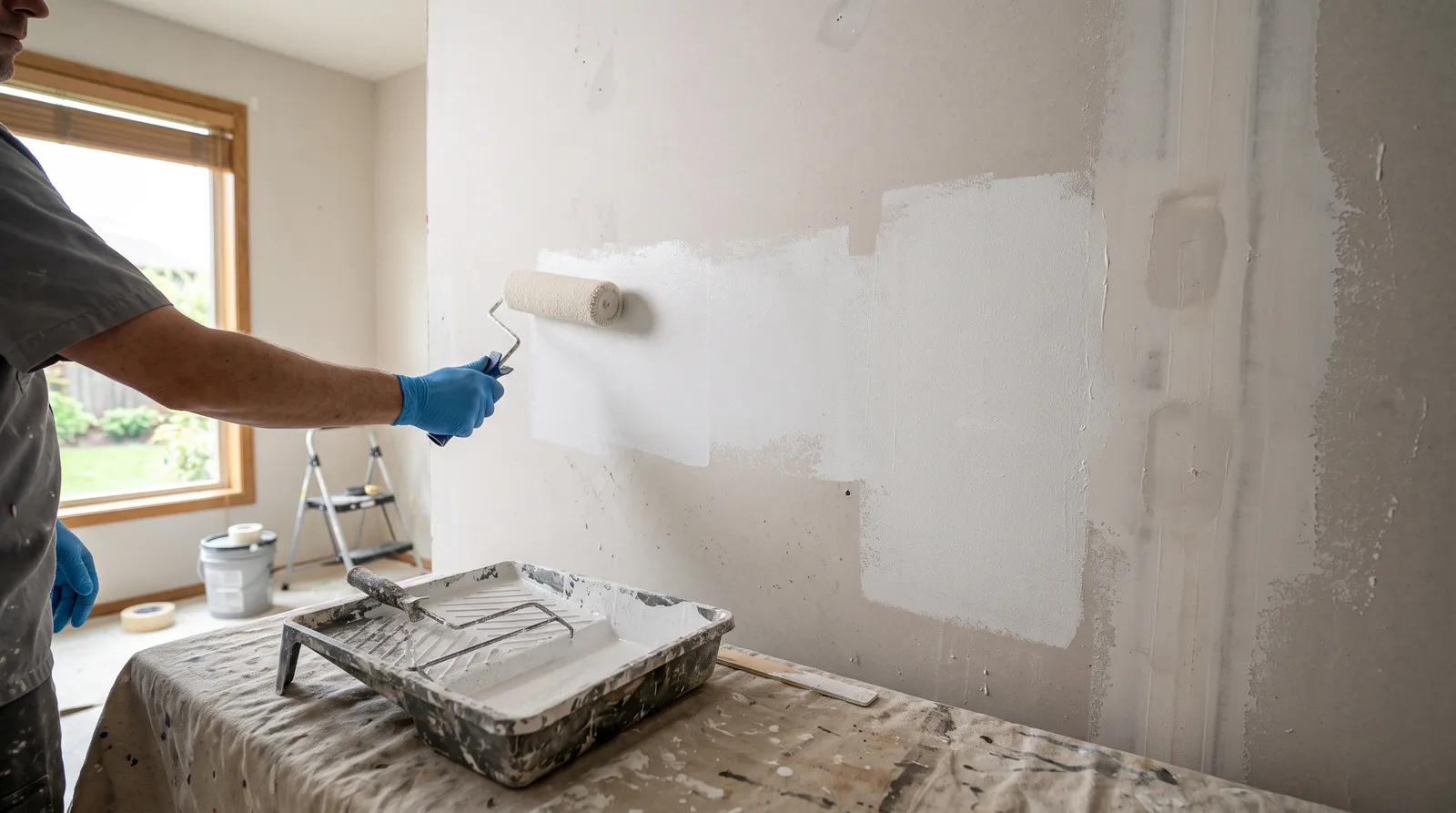
HGTV Home by Sherwin-Williams All-Purpose Power Primer
Coverage300 to 400 sq ft / gal
BlocksCommon household stains
Read this first
The Fast Verdict
Buy it as the default can for an ordinary repaint. One waterborne gallon seals new and patched drywall, keys onto scuff-sanded gloss, blocks common household stains, and leaves a mold- and mildew-resistant film, inside or out, with soap-and-water cleanup and a recoat fast enough to topcoat the same day. The limit is the binder: a water-soluble stain can migrate up through a waterborne layer. Deep water rings, nicotine, and smoke want shellac or the oil-based sibling.
Best for
New and patched drywall · Evening out repairs before a topcoat · Scuff-sanded glossy doors and trim · Mixed interior and exterior jobs · Dark topcoats, using the pre-tinted gray · Budget repaints with a bit of everything
Skip if
Deep set-in water rings · Nicotine or fire smoke · Slick melamine, laminate, or factory cabinet enamel · You need a true deep-base undercoater · Your store is a Home Depot or a Sherwin-Williams
What it's good at
- Sealing new and patched drywall so the finish coat reads uniform in raking light instead of ghosting the repairs back at you
- Covering a mixed budget job with one can: walls, trim, and ceilings across drywall, plaster, wood, masonry, and primed metal, inside or out
- Keying onto glossy and previously painted surfaces once they are scuff-sanded, so new latex has something to bond to
- Low-fuss application: waterborne, low odor, soap-and-water cleanup, and a recoat fast enough to prime and topcoat the same day on a clean wall
- Leaving a tight, mildew-resistant dry film that holds up in a humid bathroom or outside on a wall
- The pre-tinted high-hiding Gray, which can cut a coat off a saturated or near-black finish
What it's not good at
- Deep set-in water rings, nicotine, and fire smoke, which can reactivate and bleed up through any waterborne film
- Slick melamine, laminate, and hard factory cabinet enamel, where a purpose-built bonding primer keys on with a firmer grip and less prep
- Serving as a deep-tint undercoater; beyond the factory Gray it is not a base you load with colorant
- Standing in for SW's pro-counter primers like ProBlock or Multi-Purpose Latex, which are a different lane and price
- Being on the same trip as the rest of your supplies, since it is Lowe's-exclusive
Same shelf, different cans
White, Gray, or the Oil-Based Extreme
HGTV Home expanded its primer shelf to nine lines in 2025, and three of those choices matter at the counter. Two are the same waterborne formula in different starting colors. The third is a different chemistry entirely, and it exists because a waterborne film has a ceiling that no amount of extra coats will raise.
All-Purpose Power Primer, White
BaseWaterborne acrylic-class primer-sealer
Buy it if
The topcoat is white, light, or mid-tone. This is the default for sealing new and patched drywall and for gripping scuff-sanded gloss.
Avoid if
The finish coat is dark or saturated, where a white ground makes the color work harder and costs you a coat.
All-Purpose Power Primer, High-Hiding Gray
BaseThe same waterborne formula, pre-tinted gray
Buy it if
The topcoat is saturated or near-black. The gray ground cuts the number of color coats you need on top, which is real money and time on a deep accent wall.
Avoid if
You are going white or pastel on top, where a gray ground fights you instead of helping.
Oil-Based Power Primer Extreme
BaseOil-based, from the same nine-line range
Buy it if
The problem is a set-in water ring, nicotine, smoke, tannin, or grease. A non-aqueous film gives the stain nothing to dissolve into on the way up.
Avoid if
The job is ordinary sealing and you would rather have low odor, soap-and-water cleanup, and a same-day recoat.
Numbers, not adjectives
Spec Sheet
- Full name
- HGTV Home by Sherwin-Williams All-Purpose Power Primer
- Type
- Water-based interior and exterior primer-sealer, multi-surface
- Coverage
- 300 to 400 sq ft / gal
- Blocks
- Common household stains; high-hide; mold- and mildew-resistant dry film
- Surfaces
- Walls, trim, ceilings; drywall, plaster, wood, masonry, primed metal; glossy surfaces sanded first
- Use
- Interior and exterior
- Tint
- Sold white, plus a pre-tinted high-hiding Gray for dark topcoats
- Cleanup
- Soap and water
- Sizes
- Quart, 1-gallon, 2-gallon, 5-gallon
- Made by
- Sherwin-Williams, in SW plants
- Where to buy
- Lowe's only, in store and online
- Price
- Roughly $20 to $28 / gal at Lowe's
Mid-project panic
When It Goes Wrong, and How to Fix It
A faint brown shadow creeping up through the finish coat a day later
Why it happens. This is the waterborne ceiling, and it is chemistry rather than a defect. When you topcoat, water re-enters the primed surface. A water-soluble stain, a reactivating water ring, nicotine, smoke residue, can partly dissolve and migrate up through the waterborne layer as that water evaporates, surfacing in your finish. Every water-based stain blocker does this.
The fix. Spot-prime the stain with a different chemistry: shellac like Zinsser B-I-N, or HGTV Home's own Oil-Based Power Primer Extreme. Both dry to a tight, non-aqueous barrier the stain cannot dissolve its way through. Then carry on with Power Primer or the topcoat over everything else.
New latex sheeting off a glossy door at the first knock
Why it happens. The topcoat met the substrate without the right layer in between. An acrylic-class film keys onto glossy and previously painted surfaces far better than a soft PVA sealer would, but it still needs mechanical tooth to bite into. A factory-slick, unsanded gloss gives it nothing.
The fix. Scuff-sand the gloss first, dust it off, then prime. That combination is exactly what this primer is built for, and it is why the adhesion score is good rather than exceptional: it is an all-rounder that rewards ten minutes of prep.
Primer letting go on cabinet doors
Why it happens. Melamine, laminate, glazed tile, and hard factory cabinet enamel are past what an all-purpose acrylic film grips reliably. Those substrates are not just glossy, they are chemically uninviting, and the resin was never formulated for that specific bite.
The fix. Use a dedicated bonding primer built around a resin for slick substrates. If cabinets are the whole job, that is the better tool, with a firmer grip and less prep. Keep Power Primer for the walls, trim, and ceilings around them.
Still needing three coats to bury a near-black topcoat
Why it happens. Beyond the factory Gray, this is not a deep-tint undercoater you load with colorant. A white ground under a very dark finish means the finish coat is doing all the burying by itself, and saturated colorants are exactly the ones with the weakest hide.
The fix. Buy the pre-tinted high-hiding Gray version instead. Under a saturated or near-black topcoat it can take a coat off the finish, which is real money and time saved on a deep accent wall.
Patches ghosting back in raking light after the finish coat
Why it happens. Spackle and skim-coat repairs are more porous than the wall around them. A porous patch pulls water out of the wet paint faster, so the binder does not get the time it needs to coalesce evenly, and you end up with a film that is chemically the same paint but optically duller over the repair.
The fix. Prime the repairs, or the whole wall if there are many of them. This is the primer's core job and it does it well for the money: the high-hide film equalizes the substrate so the topcoat forms one uniform film. Do not rely on a paint-and-primer topcoat over bare or patched drywall.
Side by side
Power Primer vs KILZ 2 vs Zinsser B-I-N
Two of these are close cousins in the same chemical family and the same price bracket. The third is the opposite chemistry on purpose, and knowing which problem you have decides the whole thing.
| HGTV Home Power Primer | KILZ 2 All-Purpose | Zinsser B-I-N | |
|---|---|---|---|
| Chemistry | Waterborne, acrylic-class binder | Waterborne all-purpose primer-sealer | Shellac dissolved in alcohol; non-aqueous film |
| Price | Roughly $20 to $28 / gal | About $20 to $26 / gal | About $22 to $26 / qt |
| Sealing porous and patched substrate | Its strongest suit; high-hide film equalizes repairs | Comparable | Seals, but you are overpaying for the job |
| Stain-blocking ceiling | Common household stains and tannin; heavy stains get past it | The same ceiling; same chemical family | The benchmark; locks down nicotine, smoke, set-in rings, and odors |
| Adhesion to gloss | Good once scuff-sanded; an all-rounder, not a bonding specialist | Comparable | Strong, but it is bought for stains rather than grip |
| Cleanup and odor | Soap and water, low odor | Water cleanup | Ammonia or alcohol; it smells and wants ventilation |
| Best for | The everyday repaint with a bit of everything | The same job when KILZ is what is on the shelf in front of you | Spot-priming the stains nothing waterborne will hold |
Chemistry
HGTV Home Power PrimerWaterborne, acrylic-class binder
KILZ 2 All-PurposeWaterborne all-purpose primer-sealer
Zinsser B-I-NShellac dissolved in alcohol; non-aqueous film
Price
HGTV Home Power PrimerRoughly $20 to $28 / gal
KILZ 2 All-PurposeAbout $20 to $26 / gal
Zinsser B-I-NAbout $22 to $26 / qt
Sealing porous and patched substrate
HGTV Home Power PrimerIts strongest suit; high-hide film equalizes repairs
KILZ 2 All-PurposeComparable
Zinsser B-I-NSeals, but you are overpaying for the job
Stain-blocking ceiling
HGTV Home Power PrimerCommon household stains and tannin; heavy stains get past it
KILZ 2 All-PurposeThe same ceiling; same chemical family
Zinsser B-I-NThe benchmark; locks down nicotine, smoke, set-in rings, and odors
Adhesion to gloss
HGTV Home Power PrimerGood once scuff-sanded; an all-rounder, not a bonding specialist
KILZ 2 All-PurposeComparable
Zinsser B-I-NStrong, but it is bought for stains rather than grip
Cleanup and odor
HGTV Home Power PrimerSoap and water, low odor
KILZ 2 All-PurposeWater cleanup
Zinsser B-I-NAmmonia or alcohol; it smells and wants ventilation
Best for
HGTV Home Power PrimerThe everyday repaint with a bit of everything
KILZ 2 All-PurposeThe same job when KILZ is what is on the shelf in front of you
Zinsser B-I-NSpot-priming the stains nothing waterborne will hold
Power Primer and KILZ 2 are close cousins, and SW's own marketing benchmarks itself against KILZ 2 with a 2025 blind-test claim. In practice the real tiebreaker is which store you are standing in: at Lowe's, Power Primer; if KILZ is what is in front of you, it does the same broad job. B-I-N is not competing with either one. It is the answer to a different question, and the correct move is usually both: spot-prime the bad stains with shellac, then prime the rest of the wall with the cheaper waterborne can.
If not this one
Honest Alternatives
ZB
Zinsser B-I-N Shellac-BasedAbout $22 to $26 / qt
The opposite chemistry, on purpose. Shellac dissolved in alcohol dries to a tight, non-aqueous film that locks down heavy nicotine, smoke, set-in water rings, and odors that any waterborne primer eventually lets pass. It smells and wants ventilation. Use it as a spot primer over the bad stains, then Power Primer or your topcoat over everything else.
KA
KILZ Adhesion Bonding PrimerAbout $28 to $34 / gal
The adhesion specialist where Power Primer is the all-rounder. It is built around a resin formulated to grip melamine, laminate, glazed tile, and hard factory enamel with minimal prep, which is exactly where maximum bite is the whole concern. The right pairing when you are repainting cabinet doors and stain-blocking is beside the point.
Full review →K2
KILZ 2 All-PurposeAbout $20 to $26 / gal
The budget cross-shop, and the very product HGTV's marketing benchmarks itself against. Same chemical family, same price bracket, stocked at every big-box store. In practice they are close cousins and the real tiebreaker is which store you are standing in.
Full review →Questions people actually ask
All-Purpose Power Primer Questions, Answered
Is HGTV Home Power Primer worth it?
For ordinary priming, yes. At roughly $20 to $28 a gallon one waterborne can seals new and patched drywall, grips glossy or previously painted surfaces once they are scuff-sanded, blocks common household stains, and works inside or out with soap-and-water cleanup. It is not worth it as a specialist: deep water rings, nicotine, and smoke want shellac or the oil-based Power Primer Extreme, and slick factory cabinet doors want a dedicated bonding primer.
Is HGTV Home Power Primer the same as Sherwin-Williams primer?
It is Sherwin-Williams chemistry sold under the HGTV name, Lowe's-exclusive. SW makes every can; HGTV lends the badge and the retail home. It is a waterborne all-purpose primer-sealer aimed at the KILZ 2 shelf, not the same product as the pro-counter SW primers, ProBlock and Multi-Purpose Latex, you would buy at a Sherwin-Williams store. Same maker, different lane and price.
Can I skip primer and use a paint-and-primer paint instead?
On a sound, already-painted wall, yes. A paint-and-primer is a topcoat with enough binder to self-seal, and it saves you a step. On bare or patched drywall, over stains, or on glossy and previously oil-painted surfaces, it fails, and you want a real primer first. Match the layer to the substrate, not to the label.
Will it block heavy water stains and smoke?
Light, common household stains and tannin, yes, and it leaves a mildew-resistant surface as well. Heavy water rings, nicotine, and fire smoke are past a waterborne primer's ceiling. When you topcoat, water re-enters the primed surface and a water-soluble stain can dissolve and migrate up as that water leaves. For those, step up to the Oil-Based Power Primer Extreme or spot-prime with shellac before you topcoat.
Do I have to sand a glossy surface first?
Yes, and it is ten minutes well spent. The acrylic-class film keys onto glossy and previously painted surfaces reliably once they are scuff-sanded, and it has very little to grip on a factory-slick, unsanded gloss. Scuff, dust off, then prime, and the new latex has a surface it can actually bond to instead of sliding off.
Does the gray version really save a coat?
Under a saturated or near-black topcoat, often yes. Saturated colorants are the ones with the weakest hide, so a white ground makes the finish coat do all the burying by itself. The pre-tinted high-hiding Gray gives the color a head start and can take a coat off the finish, which is real money and time on a deep accent wall.
Can I use it outside?
Yes. It is rated for interior and exterior use across drywall, plaster, wood, masonry, and primed metal, and the dry film is formulated to resist mold and mildew, which is exactly what matters on an exterior wall or a humid bathroom ceiling. That breadth is the headline feature of the can.
Is it a bonding primer for cabinets?
Not the best one. It adheres well to scuff-sanded gloss, but on the slickest substrates, melamine, laminate, and hard factory cabinet enamel, a purpose-built bonding primer keys on with a firmer, longer-lasting grip and less prep. If cabinets are the whole job, buy the specialist and keep this for the walls and trim around them.
How fast can I topcoat it?
On a clean wall you can prime and topcoat the same day. It is waterborne, so it is low odor, it rolls and brushes smooth without much fight, it cleans up with soap and water, and the recoat is quick. That workability is a real part of why it works as a default can for a weekend repaint.
Where do I buy it?
Lowe's, and only Lowe's, in quart, 1-gallon, 2-gallon, and 5-gallon, white and pre-tinted gray, in store and online. HGTV Home cans are not at Home Depot, where that aisle is Behr, or at Sherwin-Williams company stores, which sell SW's own primers instead. The quart suits a single door or a handful of stains, and the 5-gallon drops the per-gallon cost on a whole-house prime.
Keep exploring
HGTV Home brand hub — all lines reviewedHGTV Home Infinity reviewedPrimer vs paint-and-primer-in-one: the real difference
We may earn a commission when you buy through the retailer link above. It never changes the score or the verdict.
Ask a Question