Product review · Glidden · Updated August 7, 2026
Porch & FloorGlidden paint review
7.4/10Smart, affordable floor paint for a porch, a patio, or a basement slab. Keep it off a garage floor.
Porch paint, not garage paint. About $36 a gallon turns a tired wood or concrete floor into a clean satin surface in a weekend — if you clean and etch first.

Mark Thompson · Pro Contractor & Field Editor · Updated August 7, 2026
22 years running residential and light commercial repaints across the Midwest. Mark has etched, rolled, and back-rolled more porch slabs than he can count, and he still reads the garage-floor line on the can out loud to customers. About the testing process →
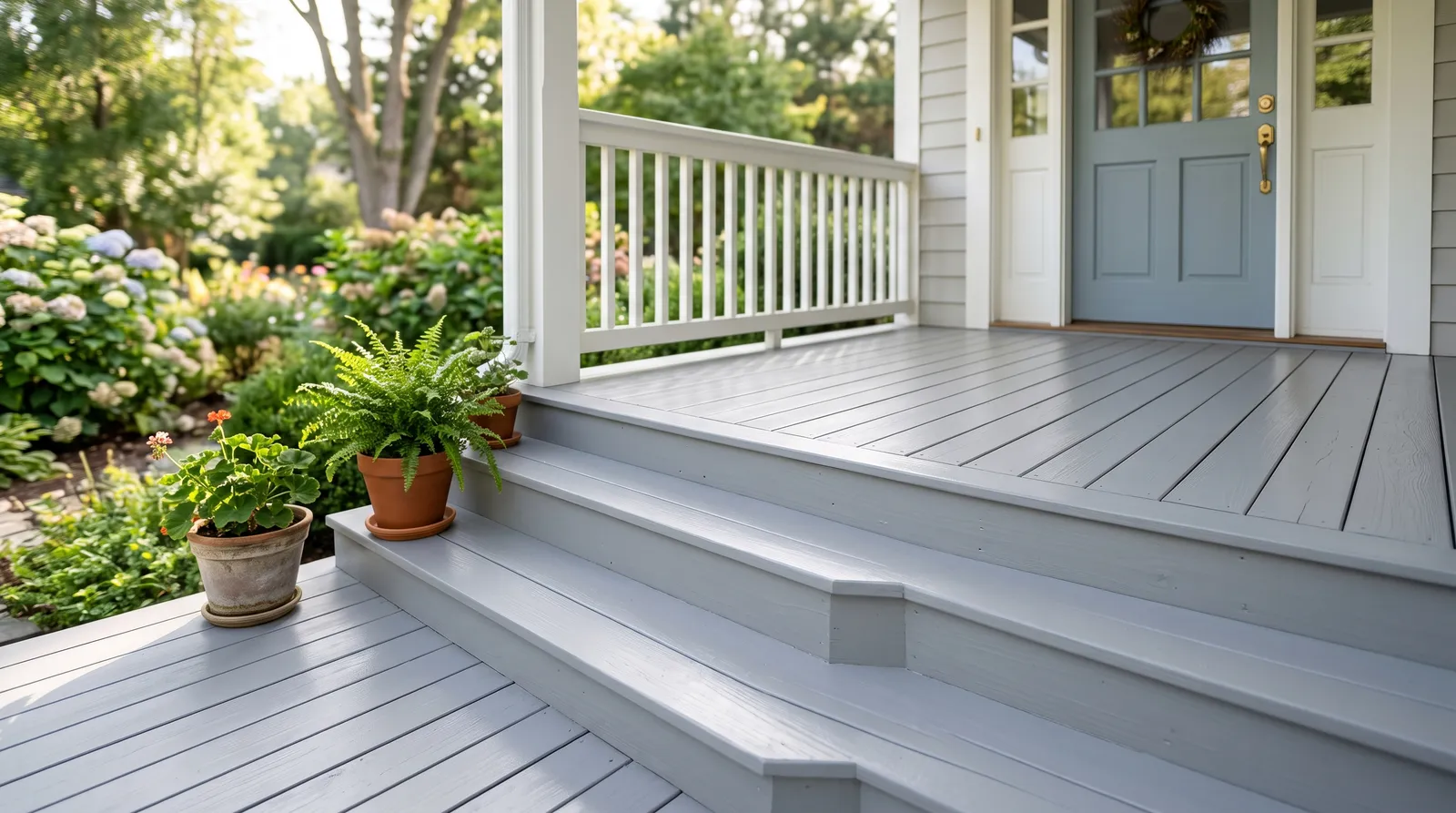
Glidden Porch & Floor3 sheens
CoverageUp to 350 sq ft / gal claimed
Recoat8 hr
VOCLow, water-based
Sheens SatinGlosstextured
Read this first
The Fast Verdict
Yes on a porch, a patio, steps, or a basement slab, if you will do the prep. About $36 a gallon buys an easy water-cleanup acrylic latex satin that resists scuffs, oil, and washing, evens out a blotchy floor, and runs cooler underfoot thanks to Cool Surface Technology. Clean, de-gloss, and acid-etch the concrete, then two coats 8 hours apart, and a week before heavy traffic. It is not worth it on a garage floor at any price — hot tires lift it.
Best for
Covered porches · Patios · Steps and railings · Sound basement slabs · Painted wood floors · Dark patios you walk barefoot in July
Skip if
A garage floor that parks hot tires · A slick slab you will not etch · Wet stairs that need grip · Commercial walkways · Concrete poured less than 30 days ago
What it's good at
- Going down easy — stir, cut in, roll, back-roll, water cleanup, no pot life
- Real foot-traffic toughness for the money; it resists abrasion, oil, and washing
- Running cooler underfoot on a dark patio, thanks to Cool Surface Technology
- Hiding a tired floor — the satin film evens out grey blotch, old stains, and patch shadows
- Flexing with a wood porch through the seasons instead of cracking off it
- Being a one-can, one-weekend job on a covered porch
What it's not good at
- Forgiving skipped prep — no clean, no de-gloss, no etch means no bond
- Garage floors, where hot tires lift the film in the lanes
- Traction when wet; smooth satin plus rain is a slip risk on steps
- Holding the high-traffic line — the top step and doorway wear first
- Rewarding impatience; recoat is 8 hours and full hardness takes days
- Cold or damp weather, which stretches every dry and recoat number
Same shelf, different cans
Latex, Oil, or Anti-Skid?
Glidden puts Porch & Floor on more than one product and they do not all do the same job. Sort it before you check out. Cool Surface Technology is a feature baked into the current satin cans, not a separate paint.
Porch & Floor Interior/Exterior Latex Satin (this review)
Base100% acrylic latex, water cleanup, low odor
SheensSatin
HardnessFlexible film — moves with a wood porch instead of cracking off it
Recoat8 hr
Buy it if
Most porches, patios, basements, and wood floors. The default, easiest choice, and the one you can recoat in a few years without a fight.
Avoid if
A garage floor, or a wet staircase where a smooth satin is a slip risk.
Porch & Floor Oil/Alkyd Polyurethane Gloss
BaseSolvent-based alkyd polyurethane, mineral-spirits cleanup
SheensGloss
HardnessHarder and slicker than the latex — genuinely tougher underfoot
RecoatSlow. Plan the day around it.
YellowingYes, it ambers over time
Buy it if
Stairs, railings, and boat decks you want hard and shiny, and the fumes do not bother you.
Avoid if
A wood porch that swells and shrinks with the seasons, or any job where you want an easy recoat later.
Porch & Floor Anti-Skid
BaseLatex with grit broadcast in, plus Cool Surface Technology; no separate primer needed
SheensTextured
Buy it if
Pool decks, ramps, and wet steps — anywhere bare feet need traction.
Avoid if
A smooth, easy-to-sweep porch floor. Grit is grit.
Numbers, not adjectives
Spec Sheet
- Type
- 100% acrylic latex (water-based); separate oil/alkyd polyurethane gloss variant
- Coverage
- Up to 350 sq ft / gal claimed; 250–300 realistic on porous concrete, over two coats
- Coats
- Two
- Sheens
- Satin (latex) · Gloss (oil) · textured (Anti-Skid)
- Touch dry
- 2–4 hr
- Recoat
- 8 hr
- Full hardness
- Builds over days — a week before heavy traffic and furniture
- VOC
- Low, water-based; the oil variant is solvent-based and higher
- Prep
- Clean, de-gloss, and acid-etch slick concrete; self-priming once prepped
- Cool Surface Technology
- Yes on current satin cans — runs cooler underfoot than the same color without it
- Surfaces
- Wood, concrete, masonry, metal, interior and exterior. Not garage floors.
- Sizes
- Gallon; 5-gallon for larger floors
- Price
- About $36 / gal at Home Depot
Application Settings That Work
- Brush
- One bucket, stir, cut in the edges, roll, back-roll. No part A and part B, no pot life racing a clock, water cleanup, low odor. Back-roll the second coat in one direction to even the sheen. A two-coat porch is a weekend, not a project.
- Primer
- Self-priming on previously painted floors, bare wood, and fully cured concrete — but self-priming is not a license to skip prep. Degrease, de-gloss, and acid-etch a slick or power-troweled slab for a profile. New concrete cures a full 30 days first, and a basement slab gets a plastic-sheet moisture test before anything goes down.
Dry, Recoat, and When the Furniture Goes Back
Touch dry at 2 to 4 hours fools people. Recoat is 8 hours, and full hardness builds over days, not hours. Give it a week before heavy traffic and before the porch furniture comes back. Drag a grill across it or set a chair down the same afternoon and you dent and scar a film that has not cured. Cold or damp weather stretches every one of those numbers. Two coats is the plan, not a suggestion: the first soaks into and primes the wood or concrete, the second builds the film that carries the color and the wear. Back-roll the second coat in one direction to even the sheen. One coat looks thin and wears through at the traffic lanes fast.
Mid-project panic
When It Goes Wrong, and How to Fix It
The coating sheets off the slab within a season
Why it happens. Skipped prep. Self-priming makes people think they can roll it onto a dirty, sealed, or power-troweled floor. No profile means no bond. This is where every bad review comes from.
The fix. Degrease the slab, kill any sealer or sheen, and acid-etch a slick or troweled floor so the coating has tooth to grab. New concrete cures a full 30 days first. Run a plastic-sheet moisture test before you coat a basement slab. Buy the etcher on the same trip as the paint.
It lifted in the tire lanes
Why it happens. You put porch paint on a garage floor. Glidden says so on the can: not recommended for garage floors, because it will not adhere well in the tire-lane areas. Hot rubber grabs the latex film and takes it with it.
The fix. Nothing saves it. Strip the lanes and recoat with a 1-part epoxy-acrylic at minimum, a true 2-part epoxy kit if it is a working garage. Behr Premium 1-Part Epoxy is the direct swap.
The floor is slick when wet
Why it happens. Smooth satin plus rain or pool splash. Any smooth floor paint does this, and it matters most at the top of a staircase.
The fix. Use the Anti-Skid variant on steps, ramps, and pool decks, or broadcast an anti-slip additive into the topcoat. Do not put a glassy floor at the top of a wet staircase.
A worn path at the doorway and the top step
Why it happens. A satin film is thin compared to a built-up epoxy. The most-walked line — the top step, the doorway, the spot in front of the chair — burnishes and wears before the rest of the floor does.
The fix. Expect it and plan a maintenance recoat of the traffic lanes every few years. Clean and scuff-sand, then roll the lanes. Cheaper than resurfacing the whole porch.
The new coat failed with the old paint under it
Why it happens. A coating is only as good as what it is gripping. Rolled over peeling paint, a sealer, or anything already lifting, it comes off with the layer underneath.
The fix. Recoat only over a sound, well-bonded finish that you have cleaned and scuff-sanded to kill the gloss. Where the old finish is flaking, scrape and sand back to a sound surface first.
Side by side
Glidden Porch & Floor vs KILZ Porch & Patio vs Behr 1-Part Epoxy
Two porch paints and the coating you buy when the floor is actually a garage. Pick by the surface, not by the price.
| Glidden Porch & Floor | KILZ Porch & Patio | Behr Premium 1-Part Epoxy | |
|---|---|---|---|
| Price per gallon | About $36 | $30–38 | $45–50 |
| What it is | 100% acrylic latex satin for wood and concrete | Low-lustre latex enamel for wood and concrete | 1-part epoxy-fortified acrylic for concrete |
| Garage floors and hot tires | No. The can says not recommended — it lifts in the tire lanes. | No. Same caveat, same chemistry lane. | Yes. This is the one built to survive hot-tire pickup. |
| Prep required | Clean, de-gloss, acid-etch. Non-negotiable on concrete. | Same etch-and-roll routine. | Still needs the etch, still wants two coats. |
| Real-world durability | Holds season after season on a covered porch once it is bonded. | A wash with the Glidden — no meaningful performance gap. | Survives the tire lanes, which is the whole point of the upcharge. |
| Where it wins | Porches, patios, steps, basements — and Cool Surface Technology on a hot dark patio. | Same jobs, a few dollars cheaper. Pick on color and price. | Garages, and any slab that parks a car. |
Price per gallon
Glidden Porch & FloorAbout $36
KILZ Porch & Patio$30–38
What it is
Glidden Porch & Floor100% acrylic latex satin for wood and concrete
KILZ Porch & PatioLow-lustre latex enamel for wood and concrete
Behr Premium 1-Part Epoxy1-part epoxy-fortified acrylic for concrete
Garage floors and hot tires
Glidden Porch & FloorNo. The can says not recommended — it lifts in the tire lanes.
KILZ Porch & PatioNo. Same caveat, same chemistry lane.
Behr Premium 1-Part EpoxyYes. This is the one built to survive hot-tire pickup.
Prep required
Glidden Porch & FloorClean, de-gloss, acid-etch. Non-negotiable on concrete.
KILZ Porch & PatioSame etch-and-roll routine.
Behr Premium 1-Part EpoxyStill needs the etch, still wants two coats.
Real-world durability
Glidden Porch & FloorHolds season after season on a covered porch once it is bonded.
KILZ Porch & PatioA wash with the Glidden — no meaningful performance gap.
Behr Premium 1-Part EpoxySurvives the tire lanes, which is the whole point of the upcharge.
Where it wins
Glidden Porch & FloorPorches, patios, steps, basements — and Cool Surface Technology on a hot dark patio.
KILZ Porch & PatioSame jobs, a few dollars cheaper. Pick on color and price.
Behr Premium 1-Part EpoxyGarages, and any slab that parks a car.
On a porch, a patio, or a basement slab the Glidden and the KILZ are effectively a coin flip — buy on color and shelf price, and spend the difference on the etcher. If your floor parks a car, neither one belongs on it: buy the Behr 1-Part Epoxy and accept the extra $10 a gallon. And if the surface is wet steps or a pool deck, jump sideways to the Anti-Skid version instead of arguing about brands.
If not this one
Honest Alternatives
KP
KILZ Porch & Patio Latex Floor Paint$30–38 / gal
The closest direct rival and a few dollars cheaper. Same idea — a low-lustre latex enamel for interior and exterior wood and concrete porches, patios, and steps, with the same etch-and-roll routine and the same garage caveat. Durability is a wash. Pick on color and price.
BP
Behr Premium 1-Part Epoxy$45–50 / gal
The coating Glidden Porch & Floor tells you it cannot be. A 1-part epoxy-fortified acrylic for concrete garage floors, basements, and patios, with real hot-tire resistance. Still needs the etch, still wants two coats. If your porch is actually a garage, buy this.
Full review →GP
Glidden Porch & Floor Anti-Skid$36–40 / gal
The textured sibling, same brand and aisle. Grit is built into the film, Cool Surface Technology is included, and it needs no separate primer. The right call for pool decks, ramps, and wet steps where smooth satin would be a slip hazard.
Questions people actually ask
Porch & Floor Questions, Answered
Is Glidden Porch & Floor worth it?
On a porch, patio, steps, or basement slab, yes. About $36 a gallon buys an easy water-cleanup acrylic latex satin that resists scuffs, oil, and washing, evens out a blotchy floor, and runs cooler underfoot thanks to Cool Surface Technology. It is only worth it if you do the prep: clean, de-gloss, and acid-etch the concrete, two coats 8 hours apart, and a week before heavy traffic. It is not worth it on a garage floor at any price.
Latex or oil — which Glidden porch paint should I buy?
Latex for almost everyone. The 100% acrylic latex satin rolls easy, cleans up with water, is low odor, and stays flexible so it moves with a wood porch through the seasons instead of cracking. Reach for the oil polyurethane gloss only when you want a harder, slicker, higher-shine film on stairs, railings, or a boat deck and you can live with the solvent fumes, the slow recoat, and the amber it picks up over time.
Does it need a primer or an etch on concrete?
It is self-priming on fully cured, clean concrete, so no separate primer in most cases — but self-priming is not a license to skip prep. Degrease the slab, kill any sealer or sheen, and acid-etch a power-troweled or slick floor so the coating has a profile to bite. New concrete cures a full 30 days first, and run a plastic-sheet moisture test before you coat a basement slab. No etch, no profile, no bond.
Can I use it on a garage floor?
No. Glidden says so on the can: not recommended for garage floors because it will not adhere well in the tire-lane areas. Hot tires grab the film and lift it. For a garage you want a 1-part epoxy-acrylic or a true 2-part epoxy kit built for hot-tire pickup. Use this paint on the porch, the patio, and the basement instead, where tires never park.
How many coats, and how long between them?
Two. The first coat soaks into and primes the wood or concrete; the second builds the film that gives you the color and the wear. Recoat after 8 hours, once the first has flashed off. One coat looks thin and wears through at the traffic lanes fast. Back-roll the second coat in one direction to even the sheen.
Can I roll it over an old painted porch floor?
Only over a sound, well-bonded coating you have cleaned and scuff-sanded to kill the gloss. Over peeling paint, a sealer, or anything already lifting, it fails with the layer underneath it. When the old finish is flaking, scrape and sand back to a sound surface — a coating is only as good as what it is gripping.
Does the Cool Surface Technology actually do anything?
Yes, more than you would expect on a dark color in direct sun. It reflects more of the heat-building part of sunlight, so the surface runs cooler than the same shade without it. On a shaded north porch you will never notice. On a south-facing patio you walk barefoot in summer, it is a real comfort difference.
How long before I can put the furniture back?
Give it a week. Touch dry at 2 to 4 hours and an 8-hour recoat make it feel finished long before it is hard. Full hardness builds over days, so dragging a grill or setting the porch chairs back the same afternoon dents and scars the film. Cold or damp weather stretches all of it.
Keep exploring
Glidden brand overview and product linesGlidden Premium Interior — the budget wall paint, reviewedBest porch and floor enamel, tested and ranked
We may earn a commission when you buy through the retailer link above. It never changes the score or the verdict.
Ask a Question