Product review · Glidden · Updated August 7, 2026
Gripper Primer-SealerGlidden paint review
7.8/10The right default primer for the wall that has a little of everything wrong with it.
One roughly $24 gallon bonds to glossy or oil-painted trim, blocks everyday water and tannin stains, and seals raw drywall — inside or out. Its limits are the ones every waterborne primer has.

David Chen · Formulation Lead & Resident Chemist · Updated August 7, 2026
Polymer chemist by training, six years in industrial coatings R&D before joining CompositePaint's formulation team. David writes the adhesion pieces — why a primer wets out on a slick door, and why the wrong one lets go in a curl. About the testing process →
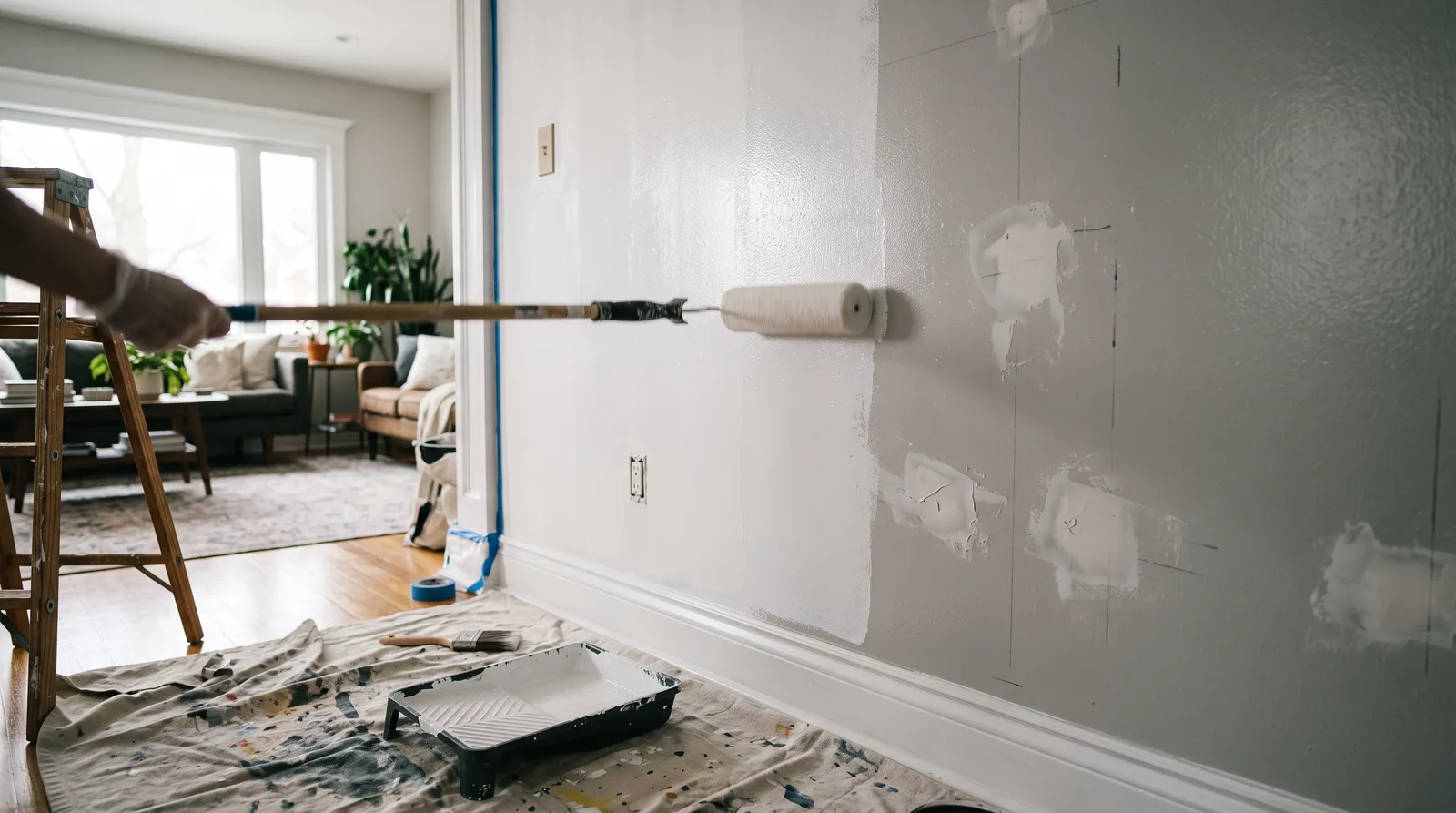
Glidden Gripper Primer-Sealer1 sheen
Coverage350–400 sq ft / gal practical
Recoat1 hr at 77°F / 50% RH
VOC100 g/L max
Sheens Flat
Read this first
The Fast Verdict
For a mixed repaint, yes. One roughly $24 gallon bonds to glossy or oil-painted trim, blocks everyday water, tannin, ink, and crayon stains, and seals raw drywall, interior or exterior, with water cleanup — a combination that usually costs more from a dedicated bond-and-block primer. It stops being the right buy when the problem is concentrated: heavy nicotine, fire smoke, or a deep set-in water ring wants shellac, and slick factory cabinet doors handled daily hold longer under a hard-bonding specialist.
Best for
Glossy or oil-painted trim · New drywall, fresh patches, and cured plaster · Water, smoke, ink, marker, and crayon stains · Tannin and knot bleed on cedar and redwood · Laminate, tile, paneling, and wallpaper · Aluminum, galvanized metal, and glazed brick · Bare exterior plywood and T1-11
Skip if
Heavy nicotine or fire smoke · A deep, set-in water ring · Slick factory cabinet doors handled every day · You need a grey undercoat off a big-box shelf · You want a high-build primer that fills texture
What it's good at
- Bonding to glossy and oil-painted trim, aluminum, galvanized metal, glazed brick, and cement board
- Gripping laminate, tile, paneling, and wallpaper with only light sanding
- Blocking everyday water rings, smoke, ink, marker, crayon, and lipstick
- Resisting tannin and nail-head bleed over redwood, cedar, and sappy knots
- Sealing new drywall, fresh joint compound, and cured plaster so the topcoat lays uniform
- Covering interior and exterior in one can, with a mildew-resistant dry film
- Value — about $24 a gallon for a bond, block, and seal combination that usually costs more
What it's not good at
- The worst stains — heavy nicotine, fire smoke, and deep reactivating water rings still bleed through
- The slickest factory finishes, where melamine and hard cabinet enamel want a dedicated bonding primer
- Vertical trim, where the lighter body can drip if you load it heavy
- Filling — it will not bury deep texture the way a high-build block filler does
- Cold, damp conditions, which stretch the 1-hour recoat well past the label
- Dark topcoats, since the retail can is ready-mix white with no tint base and no grey
Same shelf, different cans
Which Gripper Are You Buying?
Gripper is a PPG trademark sold under two labels through two channels. The chemistry does not change with the badge — but one channel has a color the other does not, and a third Glidden primer sits next to it on the shelf doing a different job.
Glidden Gripper Interior/Exterior Primer-Sealer (this review)
Base100% acrylic latex; ready-mix white only on the current consumer spec panel
SheensFlat
Recoat1 hr at 77°F / 50% RH; about 2 hr on slick laminate
Buy it if
Home Depot or Walmart is your store and white is fine, which it is for most repaints. Best price and the only place the 5-gallon is easy to get.
Avoid if
You want a grey undercoat under a deep topcoat. There is no tint base and no grey retail can.
PPG Gripper Interior/Exterior Primer + Sealer (White 3210-1200, Grey 3210-1300)
BaseSame primer family, white and pastel base — and this is where grey lives
SheensFlat
RecoatSame 1-hour label window
Buy it if
You want the grey undercoat to save a topcoat under navy, oxblood, or charcoal, or a PPG Paints dealer is simply closer.
Avoid if
Nothing performance-related. If a paint store hands you this can, it is the same tool.
Glidden Multi-Purpose Primer & Sealer
BaseLow-VOC interior/exterior primer
Buy it if
The everyday wall primer job — sealing a sound surface and hiding a previous color on a general repaint.
Avoid if
Adhesion is part of the problem. Gripper is the one built to key onto glossy and hard-to-stick surfaces.
Numbers, not adjectives
Spec Sheet
- Binder
- 100% acrylic latex
- Coverage
- 350–400 sq ft / gal practical (up to 704 sq ft / gal theoretical at 1 mil dry)
- Sheen
- Flat
- Recoat
- 1 hr at 77°F / 50% RH; longer when cool or humid, about 2 hr on slick laminate
- Blocks
- Water, smoke, ink, marker, crayon, lipstick, tannin and sap or knot bleed; resists nail-head and tannin staining over redwood and cedar
- Adhesion
- Glossy surfaces, aluminum, galvanized metal, glazed brick, cement board
- VOC
- 100 g/L (0.84 lb/gal) max
- Base / tint
- Retail can is ready-mix white only; grey lives in the pro channel (PPG Gripper Grey, GliddenPro 3210-1300)
- Surfaces
- Drywall, cured plaster, wood, masonry, brick, stucco, cement board, aluminum, galvanized metal, painted or unpainted tile, paneling, wallpaper, plastic and wood laminates; interior and exterior
- Sizes
- Quart, gallon, 5-gallon
- Home Depot SKUs
- GPG-0090-01 gallon (item 100391295); newer GLNGRP100-01 gallon (item 338585549) and GLNGRP100-04 quart (item 338585548)
- Price
- About $24 / gal, about $108 for the 5-gallon at Home Depot
Application Settings That Work
- Brush
- Rolls and brushes cleanly with low odor and water cleanup, and it recoats in about an hour under normal conditions. Watch the vertical surfaces — the body is a touch thin, so trim and door edges will run if you load it heavy.
- Primer
- This is the primer, so the prep is the whole conversation. Scuff-sand the slickest finishes before priming; the resin keys onto gloss but sanding gives it help it can use. Spot-prime heavy nicotine, fire smoke, and deep water rings with shellac first, then Gripper over everything. New drywall, fresh joint compound, and cured plaster want the full flat coat so the topcoat lays uniform instead of flashing dull over the thirsty spots.
Recoat Times in the Real World
The label says recoat in 1 hour, and that number carries a condition most people skip past: 77°F at 50 percent relative humidity. A waterborne film cannot form faster than the water can leave it, so a cool, damp exterior morning stretches that window, sometimes well past double. Slick laminate is its own case — independent hands-on testing found about 2 hours is the realistic wait there rather than the 1-hour label number, because a non-absorbent substrate gives the water nowhere to go but up. The failure mode when you rush is quiet: you trap a film that has not finished coalescing under a topcoat, and the softness stays there. Wait for the film to feel genuinely hard and cool, not just dry to a fingertip, and the acrylic will have done what you bought it for.
Mid-project panic
When It Goes Wrong, and How to Fix It
A brown ring still ghosting up through the finish coat
Why it happens. This is the waterborne ceiling, and every water-based stain blocker has it. Heavy nicotine, fire smoke, and a deep, reactivating water ring redissolve and migrate through even a tight acrylic barrier as the water in the next coat carries them upward.
The fix. Spot-prime the bad areas with a shellac primer such as Zinsser B-I-N first — a non-aqueous film has nothing for those stains to dissolve into — then Gripper or your topcoat over everything. Do this before the finish coat, not after you have watched it print through.
Fresh paint letting go of cabinet doors
Why it happens. Gripper adheres well to ordinary gloss, but the slickest factory finishes — melamine, high-gloss laminate, hard cabinet enamel handled every day — sit at the edge of what its resin can key onto. The same laminate testing that praised its easy grip gave best-overall bite to shellac B-I-N, named INSL-X STIX the pick for high-gloss laminate, and put KILZ Adhesion ahead for laminate cabinets specifically.
The fix. Sand the gloss first — on these substrates that matters more, not less. If kitchen cabinets are the whole job, buy the specialist: STIX or B-I-N for high-gloss, KILZ Adhesion for laminate cabinets.
Drips and runs down vertical trim
Why it happens. The body is on the lighter side compared with premium primers. A thinner-bodied film flows more readily on a vertical surface, and it will not bury heavy texture or fill the way a high-build block filler does either.
The fix. Roll it at a sensible film thickness rather than stretching it thin, and hold to the practical 350 to 400 square feet a gallon instead of the theoretical number. Catch runs while the film is still wet; once it flashes, you are sanding.
The topcoat feels soft over an exterior prime
Why it happens. The 1-hour recoat is a 77°F, 50-percent-humidity number. Prime a wall on a cool, damp morning and that window grows, and a topcoat over an acrylic that has not coalesced traps softness underneath.
The fix. Give it more time than the label when the air is cool or wet, and more again on slick, non-absorbent surfaces. There is no way to speed film formation other than warmth and moving air.
Side by side
Gripper vs KILZ Adhesion vs Zinsser B-I-N
Three primers, three different resin systems, three different jobs. The chemistry explains the split better than the price does.
| Glidden Gripper | KILZ Adhesion | Zinsser B-I-N | |
|---|---|---|---|
| Chemistry | 100% acrylic latex | Modified-acrylic bonding primer | Shellac dissolved in alcohol |
| Price | About $24 / gal | $28–34 / gal | $40–48 / qt equivalent |
| Stain blocking | Strong on water rings, tannin, ink, marker, and crayon. Ceiling at heavy nicotine and smoke. | Not its job — it does not block heavy stains or tannin the way Gripper does. | The benchmark. Nicotine, smoke, set-in water rings, and odors. |
| Grip on slick laminate | Grips with only minimal sanding — good, not best in class. | Ahead of Gripper for laminate cabinets specifically. | Best-overall bite in the same hands-on testing. |
| How you use it | Whole-surface primer, interior or exterior, across mixed substrates. | Whole-surface bonding primer, interior-leaning. | Spot primer over the worst stains, then topcoat everything. It smells and demands ventilation. |
| Where it wins | The mixed repaint — glossy trim, patched drywall, ordinary stains, inside or out. | A slick cabinet or tile surface that just needs to hold. | Raw stain-blocking power, and grip on the hardest substrates. |
Chemistry
Glidden Gripper100% acrylic latex
KILZ AdhesionModified-acrylic bonding primer
Zinsser B-I-NShellac dissolved in alcohol
Stain blocking
Glidden GripperStrong on water rings, tannin, ink, marker, and crayon. Ceiling at heavy nicotine and smoke.
KILZ AdhesionNot its job — it does not block heavy stains or tannin the way Gripper does.
Zinsser B-I-NThe benchmark. Nicotine, smoke, set-in water rings, and odors.
Grip on slick laminate
Glidden GripperGrips with only minimal sanding — good, not best in class.
KILZ AdhesionAhead of Gripper for laminate cabinets specifically.
Zinsser B-I-NBest-overall bite in the same hands-on testing.
How you use it
Glidden GripperWhole-surface primer, interior or exterior, across mixed substrates.
KILZ AdhesionWhole-surface bonding primer, interior-leaning.
Zinsser B-I-NSpot primer over the worst stains, then topcoat everything. It smells and demands ventilation.
Where it wins
Glidden GripperThe mixed repaint — glossy trim, patched drywall, ordinary stains, inside or out.
KILZ AdhesionA slick cabinet or tile surface that just needs to hold.
Zinsser B-I-NRaw stain-blocking power, and grip on the hardest substrates.
The split is clean once you name the actual problem. Stained, mixed, or exterior surfaces go to Gripper, which covers more ground per dollar than either rival. A slick cabinet or tile surface that only needs to hold goes to KILZ Adhesion. And the worst stains — nicotine, fire smoke, a deep water ring — go to B-I-N as a spot primer, with Gripper or your topcoat over the whole surface afterward. Buying two cans for a bad wall is cheaper than repainting it twice.
If not this one
Honest Alternatives
ZB
Zinsser B-I-N Shellac-Based$40–48 / qt equivalent
The opposite chemistry on purpose. Shellac in alcohol dries to a tight, non-aqueous film that locks down heavy nicotine, smoke, set-in water rings, and odors that any waterborne primer eventually lets pass. It smells and demands ventilation. Use it as a spot primer over the bad stains, then Gripper or your topcoat over everything.
K2
KILZ 2 All-Purpose$20–26 / gal
A waterborne primer-sealer in the same acrylic-family lane, stocked everywhere and usually a couple of dollars under Gripper. It seals, hides, and bonds for routine interior and exterior priming. Its grip on the glossiest surfaces is a notch below Gripper's, so it is the value play when the wall is mostly sound and the stains are light.
Full review →KA
KILZ Adhesion$28–34 / gal
The closest waterborne bonding rival. A modified-acrylic built for the same slick list — tile, glass, laminate, vinyl, PVC, fiberglass, chalky paint, glossy trim — and in hands-on laminate testing it came out ahead of Gripper for laminate cabinets. What it gives up is the other half: it does not block heavy stains or tannin, and it is interior-leaning.
Full review →IX
INSL-X STIX (or Zinsser B-I-N Advanced)$35–45 / gal
The hard-bonding specialist, engineered around a grippier resin for the slickest substrates — laminate, melamine, glazed tile, hard factory cabinet enamel — with the firmest long-term hold and minimal prep. Laminate testing puts STIX at the top for high-gloss laminate. Right when you are repainting cabinet doors and adhesion, not stain-blocking, is the entire concern.
Full review →Questions people actually ask
Gripper Primer-Sealer Questions, Answered
Is Glidden Gripper primer worth it?
For a mixed repaint, yes. One roughly $24 gallon bonds to glossy or oil-painted trim, blocks everyday water, tannin, ink, and crayon stains, and seals raw drywall, interior or exterior, with water cleanup — a combination that usually costs more from a dedicated bond-and-block primer. It stops being the right buy when the problem is concentrated: heavy nicotine, fire smoke, or a deep set-in water ring wants shellac such as Zinsser B-I-N, and slick factory cabinet doors that get handled daily hold longer under INSL-X STIX or KILZ Adhesion.
Does it block stains and bond to glossy surfaces at the same time?
Yes, and that combination is the whole reason it exists. The 100% acrylic binder is built to key onto slick, non-porous surfaces a plain sealer would slide off, and the same tight, water-repellent film is one that water-soluble stains struggle to migrate through. One chemistry, both jobs — which is why a single coat handles the two failures people hit most, peeling over glossy trim and stains ghosting up through fresh paint. The limit is the worst stains, which want shellac on the spot first.
Gripper or a paint-and-primer-in-one — which do I need?
Different tools. A paint-and-primer-in-one is a topcoat carrying extra binder so it can self-seal a wall that is already sound and previously painted. It is not a barrier: it cannot block a stain and it will not bond to a glossy or slick surface. Gripper is a dedicated primer you put down first. Reach for it when the surface is the problem — new drywall, glossy or oil-painted trim, stains, tannin-rich wood. When the wall is clean, sound, and a similar color, the paint-and-primer is fine on its own.
Can I tint Glidden Gripper for a dark topcoat?
Not at the retail counter anymore. Glidden's current spec panel for the consumer can lists the base as ready-mix white only — no tint base and no grey variant. Grey Gripper still exists in the professional channel: PPG publishes a Gripper Grey data sheet and GliddenPro carries white (3210-1200) and grey (3210-1300). If you are going navy, oxblood, or charcoal and want a grey undercoat to save a topcoat, ask a PPG Paints dealer, or use a separate tintable deep-base undercoater over the Gripper.
Is Glidden Gripper the same as PPG Gripper?
Yes — Gripper is a PPG trademark sold under two labels. Home Depot and Walmart carry it as Glidden Gripper; PPG Paints dealers sell the same primer family as PPG Gripper Interior/Exterior Primer + Sealer in a white and pastel base, flat, in quart, gallon, and 5-gallon. The professional data sheets list White 3210-1200 and Grey 3210-1300. If a paint store hands you the PPG-labeled can, it is the same tool.
Does it stick to laminate and tile without sanding?
Independent laminate testing found Gripper grips with only minimal sanding, and PPG's pro literature rates it for painted or unpainted tile, paneling, wallpaper, and plastic and wood laminates. Two practical notes: plan on roughly 2 hours before recoating on slick laminate rather than the 1-hour label number, and for high-gloss laminate cabinet doors that get handled daily, a dedicated bonding primer such as INSL-X STIX or KILZ Adhesion holds a firmer long-term grip.
Why do some people call Glidden Gripper glue?
Two reasons. Prop and set builders genuinely use it as an adhesive for foam: rolled onto both faces and weighted overnight, the acrylic film bonds foamboard and bead foam without melting them the way solvent glues do, and cosplayers use it to seal EVA foam before painting. The rest is a name collision — craft glue sticks are also marketed as gripper glue, which is a completely different product. Glidden does not market this can as an adhesive; for anything structural, use a real one.
How long before I can topcoat it?
One hour at 77°F and 50 percent relative humidity, which is the lab-fair condition on the data sheet. A cool or damp room stretches it, sometimes a lot, because a waterborne film cannot form faster than the water can leave it. On slick laminate give it about 2 hours. Rushing a topcoat over an acrylic that has not coalesced traps softness underneath, and you will not see that mistake until later.
Which Gripper SKU is current at Home Depot?
Home Depot lists two generations of the same primer: the long-running GPG-0090-01 gallon (item 100391295) and the newer GLNGRP100 line — gallon GLNGRP100-01 (item 338585549) and quart GLNGRP100-04 (item 338585548). They are the same Gripper formula family, so buy whichever your store stocks. Both sit in the same rough $24-a-gallon tier, with the 5-gallon around $108.
Keep exploring
Glidden brand hub — all lines reviewedGlidden Premium Interior reviewedGlidden cabinet, door & trim paint reviewedPPG Seal Grip / Gripper primer reviewedKILZ Adhesion bonding primer reviewed
We may earn a commission when you buy through the retailer link above. It never changes the score or the verdict.
Ask a Question