Product review · Glidden · Updated August 7, 2026
Cabinet, Door & TrimGlidden paint review
7.8/10The fastest route to a durable enamel job — as long as one of its narrow color choices is the one you wanted.
This is PPG Break-Through! 50 wearing a cheaper label — touch-dry in 20 minutes and bonded to laminate, tile, and fiberglass with no separate primer. The color menu is where you pay for it.

Maya Patel · Reviews Editor & Product Tester · Updated August 7, 2026
Maya spent five years running comparative product testing at a consumer testing nonprofit before joining CompositePaint. She judges a cabinet enamel the only way that settles an argument: six inches away, under raking light, a week after the last coat. About the testing process →
Glidden Cabinet, Door & Trim2 sheens
Coverage75–110 sq ft / qt
RecoatAbout 1 hr
Full cure7–14 days
Sheens SatinSemi-Gloss
Read this first
The Fast Verdict
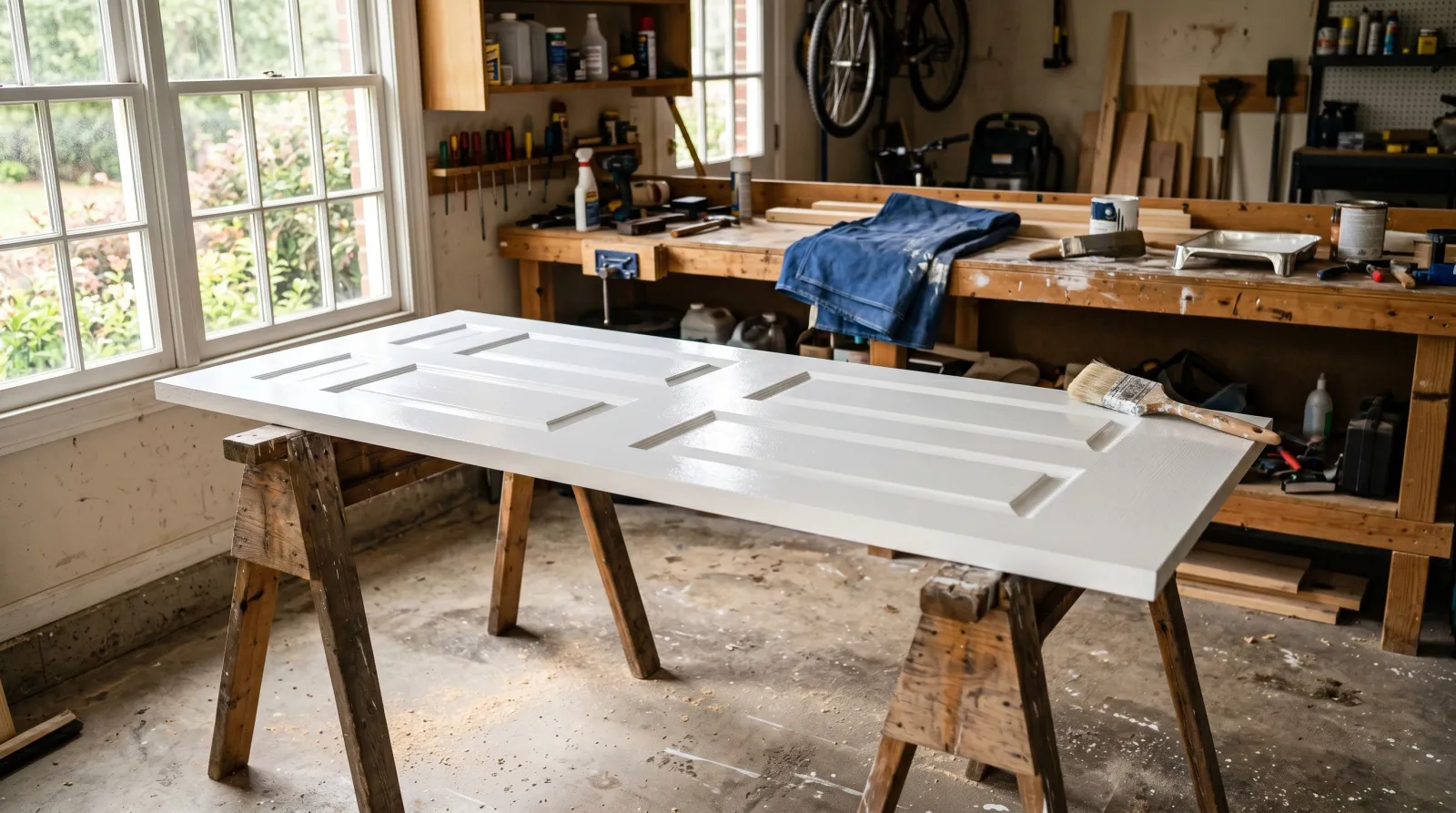
Buy it for speed. It is PPG Break-Through! 50 under a cheaper label: touch-dry in 20 minutes, recoat in about an hour, and it grips laminate, ceramic tile, and fiberglass without a separate bonding primer, at $35 to $48 a gallon. Six doors go on sawhorses in the morning and back on their hinges that evening. What you give up is the color menu, which is narrow and heavy on whites, grays, and blacks, and the last ten percent of the leveling.
Best for
Cabinet doors and boxes · Interior and exterior doors · Trim and shelving · Laminate, tile, and fiberglass · Rental turns on a deadline · Weekend kitchen refreshes
Skip if
You want an exact designer tint · A brush-mark-free showpiece finish · Deep blues, greens, or true blacks in one coat · You would rather have a waterborne alkyd's open time
What it's good at
- Speed that changes the project — touch-dry in 20 minutes, recoat in about an hour
- Bonding to laminate, melamine, ceramic tile, and fiberglass with no separate primer
- Early block resistance, so doors go back on their hinges the same evening
- One can for the interior vanity and the exterior front door
- Spraying clean through an HVLP or a small airless, with less time for dust to land
- Low odor, so the room stays livable while you work
- Costing a few dollars less than the identical PPG Break-Through can on the same shelf
What it's not good at
- Color range — a narrow retail menu against the 3,000-plus tints of the premium cabinet enamels
- Leveling to a glass finish; a waterborne alkyd lays flatter side by side
- Long brush pulls, which show faint stroke texture if you overwork them
- One-coat hide on deep blues, greens, true blacks, and bare or repaired wood
- Stain blocking on raw wood, cedar, or bare metal — that still needs a spot primer
- Shelf clarity, with a custom-tint, a Grab-N-Go, and an oil gloss under similar names
Same shelf, different cans
Which Glidden Trim Product Are You Buying?
Glidden puts nearly the same name on three different cans and the shelf tag does not sort them out. This review covers the waterborne acrylic enamel, the Break-Through twin. Buyers grab the oil gloss by mistake all the time.
Glidden Cabinet, Door & Trim Waterborne Acrylic Enamel (this review)
BaseWaterborne acrylic on the PPG Break-Through! 50 platform
SheensSatin, Semi-Gloss
RecoatAbout 1 hr
YellowingMild warming on a south-facing white run over a few years; interior and north-facing trim stays close to true white
Buy it if
Default pick. Custom tint at the counter, and the only version that gets you a color outside the ready-mix list.
Avoid if
You need an exact match to a specific designer color. The base fights you there.
Glidden Cabinet, Door & Trim Grab-N-Go Enamel
BaseSame chemistry, pre-tinted in popular colors
RecoatAbout 1 hr — identical formula
Buy it if
One of its stock colors is exactly what you want and you do not feel like waiting at the tint counter.
Avoid if
You want anything off the short ready-mix list.
Glidden Trim & Door Oil Gloss (GEL-FLOW)
BaseTraditional oil
SheensGloss
RecoatSlow dry — not a same-day two-coat product
YellowingYes, it ambers over time
Buy it if
You want the glassier high-shine trim look and mineral-spirits cleanup does not bother you.
Avoid if
White or off-white anything, or a room you need to live in the same day. It smells like a real oil, because it is one.
Numbers, not adjectives
Spec Sheet
- Chemistry
- Waterborne acrylic enamel — PPG Break-Through! 50 platform
- Coverage
- 75–110 sq ft / qt (about 300–440 sq ft / gal)
- Sheens
- Satin, Semi-Gloss
- Touch dry
- 20 min
- Stick-free doors
- About 1 hr
- Recoat
- About 1 hr
- Full cure
- 7–14 days
- VOC
- Low VOC, under 50 g/L on the Break-Through! 50 platform
- Primer
- Self-bonding on many glossy and slick surfaces; spot-prime raw wood, tannin-prone cedar, and bare metal
- Surfaces
- Cabinets, doors, windows, trim, shelving, railings, fiberglass, laminate, ceramic tile, architectural plastic, concrete floors
- Sizes
- Quart, gallon
- Price
- $35–48 / gal; about $15–20 / qt at big-box
Application Settings That Work
- Brush
- Quality synthetic brush, and a fine foam or microfiber mini-roller for the flats. Keep the passes short, lay it on, and leave it alone — you cannot go back and re-tip a section after it starts to set without dragging it. Brushed satin on a vanity is forgiving. Brushed semi-gloss under kitchen lights tells on you.
- Airless
- A small airless sprays it clean as well. The roughly one-hour recoat means you can knock out both coats in a single session instead of coming back the next day.
- HVLP
- It atomizes fine through an HVLP and the fast dry gives dust less time to land in the wet film. The finish reads smooth and tight, close to a factory door. For a full kitchen, spraying is the move.
- Primer
- Self-bonding on many glossy and slick surfaces — laminate, melamine, ceramic tile, fiberglass — so no separate bonding coat there. Light scuff-sand glossy factory cabinets first. Raw wood, tannin-heavy cedar, and bare metal still need spot-priming with a stain-blocker; the adhesion claim is not a stain-blocking claim.
Dry, Recoat, and When You Get the Kitchen Back
This is the reason to buy it, so plan around the numbers. Touch dry at 20 minutes, stick-free on doors at about an hour, recoat at about an hour. That means both coats fit in one morning instead of one weekend. The early block resistance — block being two fresh painted surfaces fusing to each other, a door to its jamb — is what lets you rehang doors and put hardware back within a few hours instead of tomorrow. Light use is fine in a day or two. Hold off on hard scrubbing and full kitchen abuse for 7 to 14 days while the film finishes hardening. For scale: Benjamin Moore Advance wants 16 hours between coats and a full 30 days before you trust it, which turns the same set of doors into a three-day job.
Mid-project panic
When It Goes Wrong, and How to Fix It
Stroke texture showing in the dried film
Why it happens. The fast grab that buys you the dry time also shortens your open time. A long brush pull, or going back to re-tip a section that has already started to set, drags a skin around instead of leveling it. Side by side with a waterborne alkyd, the alkyd lays down flatter every time.
The fix. Quality synthetic brush, fine foam or microfiber mini-roller on the flats, short passes, and do not overwork it. Done right the brushed finish passes at conversational distance. For semi-gloss on a sunlit kitchen run, spray it — through an HVLP or a small airless it reads close to a factory door.
Deep color looks thin and uneven after one coat
Why it happens. The fast-dry, thin-film character is honest on previously finished surfaces and optimistic everywhere else. Deep blues, greens, and true blacks need a second coat to pull even, and bare or repaired wood drinks the first pass.
The fix. Plan two coats and stop worrying about it. The one-hour recoat means the extra pass costs you an afternoon, not a day. Buy by the two-coat math, not the headline coverage number.
Bleed or flash rust coming up through the paint
Why it happens. The self-bonding claim covers adhesion, not stain block. Raw wood, tannin-heavy cedar, and bare metal still push discoloration up through a film that was never built to stop it.
The fix. Spot-prime those areas with the right stain-blocker before you topcoat, and light scuff-sand glossy factory cabinets so the bond has help. Slick laminate, tile, and fiberglass genuinely do not need a separate bonding primer.
You got home with the wrong can
Why it happens. Glidden sells a custom-tint version, a Grab-N-Go version, and a separate oil gloss under similar names on the same aisle. The labels blur at a glance.
The fix. Read the can. Waterborne acrylic enamel is the one reviewed here. If it says oil gloss or GEL-FLOW, you bought the slow-drying, ambering, mineral-spirits version instead.
Side by side
Glidden Cabinet, Door & Trim vs Advance vs Cabinet Coat
Three cabinet enamels, three different priorities. Schedule, finish, and price do not point at the same can.
| Glidden Cabinet, Door & Trim | Benjamin Moore Advance | INSL-X Cabinet Coat | |
|---|---|---|---|
| Price per gallon | $35–48 | $80–95 | $50–55 |
| Recoat window | About 1 hr. Two coats before lunch. | 16 hr. A two-coat kitchen becomes a three-day job. | Cures slower than the Glidden. Not a same-day two-coat paint. |
| Leveling under raking light | Good, not glass. Overwork it and stroke texture shows. | Self-levels flatter than either. Reads like furniture once cured. | Better than the Glidden, short of Advance. |
| Color range | Narrow retail menu, heavy on whites, grays, and blacks. | The full Benjamin Moore deck. | Fuller than the Glidden. |
| Slick surfaces (laminate, tile, fiberglass) | Bonds without a separate primer. This is the Break-Through inheritance. | Not the reason to buy it. | Does not bond as readily without a primer underneath. |
| Full cure | 7–14 days | About 30 days | Slower than the Glidden |
| Where it wins | Deadlines, rental turns, and any surface that would otherwise cost you a bonding primer. | A statement kitchen in an exact deep color where the finish is the whole point. | A near-Advance finish at a friendlier price when you are not racing the clock. |
Price per gallon
Glidden Cabinet, Door & Trim$35–48
Benjamin Moore Advance$80–95
INSL-X Cabinet Coat$50–55
Recoat window
Glidden Cabinet, Door & TrimAbout 1 hr. Two coats before lunch.
Benjamin Moore Advance16 hr. A two-coat kitchen becomes a three-day job.
INSL-X Cabinet CoatCures slower than the Glidden. Not a same-day two-coat paint.
Leveling under raking light
Glidden Cabinet, Door & TrimGood, not glass. Overwork it and stroke texture shows.
Benjamin Moore AdvanceSelf-levels flatter than either. Reads like furniture once cured.
INSL-X Cabinet CoatBetter than the Glidden, short of Advance.
Color range
Glidden Cabinet, Door & TrimNarrow retail menu, heavy on whites, grays, and blacks.
Benjamin Moore AdvanceThe full Benjamin Moore deck.
INSL-X Cabinet CoatFuller than the Glidden.
Slick surfaces (laminate, tile, fiberglass)
Glidden Cabinet, Door & TrimBonds without a separate primer. This is the Break-Through inheritance.
Benjamin Moore AdvanceNot the reason to buy it.
INSL-X Cabinet CoatDoes not bond as readily without a primer underneath.
Full cure
Glidden Cabinet, Door & Trim7–14 days
Benjamin Moore AdvanceAbout 30 days
INSL-X Cabinet CoatSlower than the Glidden
Where it wins
Glidden Cabinet, Door & TrimDeadlines, rental turns, and any surface that would otherwise cost you a bonding primer.
Benjamin Moore AdvanceA statement kitchen in an exact deep color where the finish is the whole point.
INSL-X Cabinet CoatA near-Advance finish at a friendlier price when you are not racing the clock.
If the timeline matters more than chasing a designer color, the Glidden wins outright and costs half of Advance. If the finish is the point — a specific deep tint, the flattest possible brushed surface, a kitchen people will study — Advance is the honest can and you pay in money and patience. Cabinet Coat is the middle rung: better leveling and a fuller color range than the Glidden for $50 to $55, as long as your surfaces are not slick and your schedule is not tight.
If not this one
Honest Alternatives
RO
Rust-Oleum Cabinet Transformations Kit$25–40 / kit
The budget door into cabinet refinishing. A deglosser is in the box so you skip sanding, and the kit covers a small kitchen. The trade-off is a thicker, slightly plasticky feel and a real cure-patience requirement. Right for a first-timer who does not own a sprayer.
Full review →BM
Benjamin Moore Advance$80–95 / gal
The default brush-and-roll cabinet enamel. Self-levels flatter, carries the full BM deck, reads like furniture once cured. You pay in money and in patience: 16 hours between coats and 30 days to fully harden.
Full review →IX
INSL-X Cabinet Coat$50–55 / gal
The middle-ground specialist. Better leveling than the Glidden, a fuller color range, and a price between the two. It cures slower and does not grip slick surfaces as readily without a primer — the exact things the Break-Through chemistry wins on.
Full review →Questions people actually ask
Cabinet, Door & Trim Questions, Answered
Is Glidden Cabinet, Door & Trim worth it?
Yes, if speed is what you are buying. It is PPG Break-Through! 50 under a cheaper label — touch-dry in 20 minutes, recoat in about an hour, and it bonds to laminate, tile, and fiberglass without a separate bonding primer, for $35 to $48 a gallon. What you give up is the color menu, which is narrow and heavy on whites, grays, and blacks, and the last bit of leveling. For a showpiece kitchen in an exact designer color, a waterborne alkyd like Benjamin Moore Advance is the better buy.
Is it the same as PPG Break-Through?
Functionally, yes. Both are PPG's waterborne acrylic enamel on the same Break-Through! 50 platform, sold under different names. Glidden is the retail consumer version at Home Depot and Walmart; Break-Through! is the pro-store SKU. Same fast dry, same block resistance, same adhesion. If your store stocks both, price-check them side by side — the Glidden can usually rings up a few dollars cheaper for identical chemistry.
Does this paint need a primer?
Often no. The Break-Through chemistry bonds to slick surfaces — laminate, tile, fiberglass — that normally demand a bonding primer. But raw wood, tannin-heavy cedar, and bare metal still need spot-priming with a stain-blocker, or you get bleed and flash rust. Light scuff-sand glossy factory cabinets first. The self-bonding claim covers adhesion, not stain block.
How long before I can use the cabinets?
You can rehang doors and add hardware within a few hours thanks to the early block resistance. Light use is fine in a day or two. Hold off on hard scrubbing and full kitchen abuse for 7 to 14 days while the film finishes hardening. It cures faster than Benjamin Moore Advance, which wants a full 30 days before you trust it.
Should I brush it or spray it?
Spray it if you can. Through an HVLP or a small airless it atomizes fine, the fast dry gives dust less time to land, and the finish reads smooth and tight. Brushed and rolled it is competent but not flawless — the fast grab means less working time, so short passes and no going back over a setting section. For a quiet satin on a vanity, brushing is forgiving. For semi-gloss on a sunlit kitchen run, spray it.
How many coats does it need?
One pass hides well on previously painted surfaces. Deep blues, greens, and true blacks need two, and bare or repaired wood drinks the first pass, so plan two there as well. The one-hour recoat keeps the second coat cheap in time — it costs you an afternoon, not another day.
Will the white yellow over time?
Less than an oil enamel, more than a premium waterborne alkyd. As an acrylic enamel it holds white better than old-school oil trim paint. On a south-facing run of white cabinets in direct sun, expect mild warming over a few years. North-facing or interior trim stays close to true white. Dropping to satin slows it slightly.
Can I use it on an exterior door?
Yes. It is rated interior and exterior, and the acrylic resin holds up outdoors, so one low-odor can covers the interior vanity and the exterior front door. That crossover is a real saving on a trim-and-door package around the house — you are not buying two products.
Grab-N-Go or the custom-tint can?
Same formula, different color menu. Grab-N-Go is pre-tinted in a short list of popular colors, so there is no tint wait. Buy it only if one of those stock colors is exactly what you want. Otherwise take the custom-tint can and pick from the wider retail list at the counter.
Keep exploring
Glidden brand hub — every line, rankedBest no-sand cabinet paintsLatex vs acrylic for cabinetsWhat a bonding primer actually does
We may earn a commission when you buy through the retailer link above. It never changes the score or the verdict.
Ask a Question