Product review · Farrow & Ball · Updated August 7, 2026
Modern EggshellFarrow & Ball paint review
8.4/10Washable F&B color on woodwork and metal — as long as you do not expect a self-leveling brushed face.
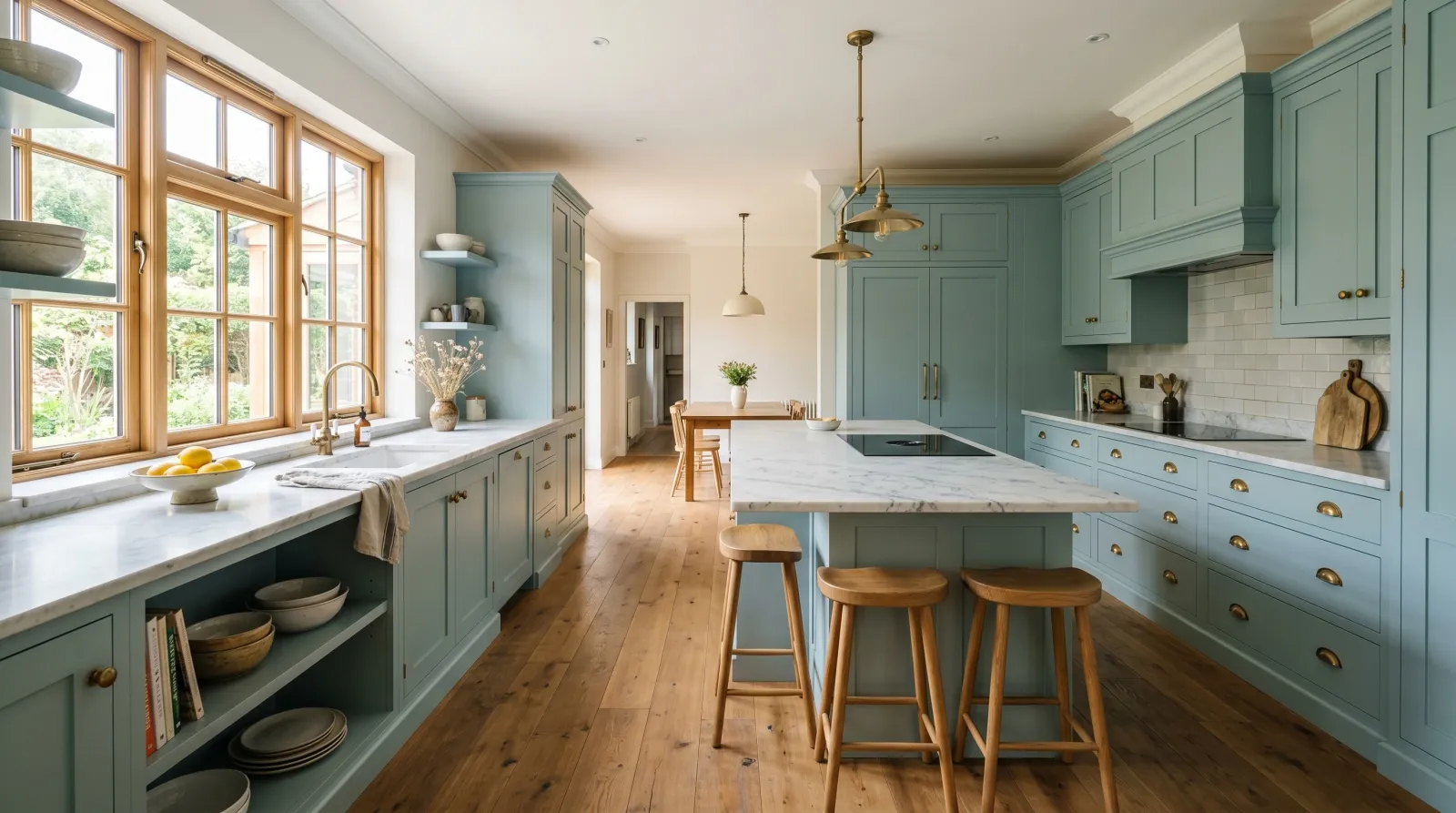
The Farrow & Ball you put on the surfaces that get touched: cabinets, doors, stairs, radiators. About 40 percent sheen, scrubbable, and built not to yellow on a white.

Jessica Williams · Color Stylist & Interior Editor · Updated August 7, 2026
Jessica spent eight years styling residential interiors in Chicago and Charleston before moving into editorial work. She has watched a satin cabinet run read moody at noon and almost lacquered at five o'clock, which is why she tells people to sample a door, not a chip. About the testing process →
Farrow & Ball Modern Eggshell2 sheens
CoverageUp to about 480 sq ft / gal per coat
RecoatAbout 4 hr
VOCWater based
Full cureSeveral weeks before hard use
Sheens One finish — mid-sheen~40%
Read this first
The Fast Verdict
This is the F&B finish for the parts of a room that live a harder life. About 40 percent sheen, scrubbable and scuff resistant, the satin flatters metal, and whites hold their tone instead of ambering by year three. Two real catches: at $135 to $150 a gallon it adds up fast across a kitchen, and it does not self-level the way a waterborne alkyd does, so a fine roller or a sprayer beats a brush on cabinet doors.
Best for
Kitchen cabinets · Doors and woodwork · Radiators and interior metal · Stairs and floors · White trim that has to stay white · Anything you need to wipe
Skip if
You want a dead-matte trim look · You want a mirror gloss · You are brushing cabinets by hand and expect a factory face · A budget enamel would do the job
What it's good at
- Farrow & Ball color on a cabinet run you can wipe down weekly
- Metal — the satin gives a radiator a warm, solid look a chalky flat cannot
- Whites that still read clean at year three under warm LED
- Touch-ups that dab in from the same can and blend
- Holding a complicated undertone honestly instead of flattening it
- Surviving hands, damp cloths, and grabby fingers at the pulls
What it's not good at
- Self-leveling — a brushed door face keeps some of the stroke
- Budget jobs; three gallons for a kitchen in a deep color is real money
- Deep colors over a wrong-tone primer, which want a third coat
- Early foot traffic on stairs and floors, which prints the soft film
- A dead-matte trim look, or a high-gloss statement door
Numbers, not adjectives
Spec Sheet
- Coverage
- Up to about 480 sq ft / gal per coat, color-dependent
- Sheen
- One finish — mid-sheen, about 40% (reads as a soft satin)
- Touch dry
- About 2 hr
- Recoat
- About 4 hr
- Full cure
- Several weeks before hard use
- Washability
- Scrubbable, scuff resistant, stain resistant
- Yellowing
- Built not to yellow; holds tone on whites
- VOC
- Water based, low VOC; A+ indoor air quality rating
- Primer
- F&B Wood & Metal Primer & Undercoat in the matched light/mid/dark tone on bare, glossy, or color-jumping surfaces
- Surfaces
- Woodwork, trim, cabinets, doors, metal, floors, stairs, concrete
- Sizes
- 100ml sample pot, gallon (2.5L), 5L
- Price
- $135–150 / gal in the US
Application Settings That Work
- Brush
- It brushes and rolls fine but does not self-level, so a long brush pull shows texture. On door faces and cabinet flats use a fine microfiber roller or a sprayer, and keep the sash brush for profiles, edges, and radiator sections.
- Primer
- Sand the doors, then prime glossy or factory surfaces with the F&B Wood & Metal Primer & Undercoat in the tone that matches your color. On bare wood, fresh metal, or a big color jump it is not optional, and matching the base tone is what keeps a deep color to two finish coats.
Cure Time on Stairs and Floors
Touch dry in about two hours, recoat at four, and then several weeks of the film quietly getting harder. That gap is where floors and stairs get ruined. Walk a freshly painted tread too soon and you print it, and a dent set before full cure will not recover. On cabinets it is the same rule with lower stakes: two coats, then let it sit before you start banging pans around. Nothing about the surface tells you which stage it is in, because it feels finished long before it is. Stage the job so the traffic stays off, and the finish repays you.
Mid-project panic
When It Goes Wrong, and How to Fix It
Brush texture on cabinet doors
Why it happens. It does not self-level the way a waterborne alkyd does. A paint like Benjamin Moore Advance flows out and the brush marks melt as it dries. Modern Eggshell holds a little more of the stroke, and raking light finds that fine texture up close.
The fix. Do not brush a door face and expect a factory finish. Use a fine microfiber roller or a sprayer on the flats and keep the brush for profiles and edges.
A deep color still uneven after two coats
Why it happens. A rich shade over the wrong primer tone will not bury in two. A Hague Blue or an Off-Black eats a third coat to read evenly.
The fix. Buy the F&B Wood & Metal Primer & Undercoat in the tone that matches your color, light, mid, or dark. Budget the primer as part of the job rather than as an extra.
Footmarks printed into freshly painted stairs
Why it happens. It is touch-dry in a couple of hours, but the film stays soft for weeks. Traffic before full cure presses into the surface, and a dent set that early does not come back.
The fix. Stage the job so the stairs are out of use, or paint alternate treads in two passes, and keep hard traffic off until the film has had its weeks.
The satin reads glossier than expected at 5pm
Why it happens. Sheen is not just a number on a can. In a north-facing kitchen the cool light keeps 40 percent quiet and the color deep. In a south- or west-facing room, late sun catches the sheen and lifts the same color half a tone warmer, almost lacquered for an hour.
The fix. Paint a sample door, prop it where the real cabinets will sit, and look at it at the hour you actually cook. If the glow at five o'clock bothers you, the answer is the lower-sheen Flat Eggshell, not a different brand.
Side by side
Modern Eggshell vs Benjamin Moore Advance
Two very different ways to get durable color onto woodwork. One is bought for the pigment, the other for the way it lays down under a brush.
| Modern Eggshell | Benjamin Moore Advance | |
|---|---|---|
| Sheen and look | About 40 percent satin; color reads deep with a quiet glow | A waterborne alkyd that flows out closer to glass |
| Brushed face | Holds some of the stroke; fine texture shows in raking light | Self-levels like oil, so brush marks melt as it dries |
| Best tool | A fine microfiber roller or a sprayer on door faces | A brush is enough for a smooth face |
| On metal and radiators | The finish F&B points you to; the satin reads warm and solid | Not what it is known for; it is the cabinet-and-trim pick |
| Color | The full F&B deck; the satin lets a complicated undertone sit and breathe | A large deck, but you give up F&B's exact pigments |
| Washability | Scrubbable, scuff and stain resistant; survives a weekly kitchen wipe | Cures hard enough for a working kitchen |
| Price per gallon | $135–150 | $80–95 |
| Where it wins | Cabinets, doors, stairs, radiators, and floors where you want F&B color you can scrub, and whites that stay white | Brushed cabinet doors on a budget, when a smooth face matters more than the F&B deck |
Sheen and look
Modern EggshellAbout 40 percent satin; color reads deep with a quiet glow
Benjamin Moore AdvanceA waterborne alkyd that flows out closer to glass
Brushed face
Modern EggshellHolds some of the stroke; fine texture shows in raking light
Benjamin Moore AdvanceSelf-levels like oil, so brush marks melt as it dries
Best tool
Modern EggshellA fine microfiber roller or a sprayer on door faces
Benjamin Moore AdvanceA brush is enough for a smooth face
On metal and radiators
Modern EggshellThe finish F&B points you to; the satin reads warm and solid
Benjamin Moore AdvanceNot what it is known for; it is the cabinet-and-trim pick
Color
Modern EggshellThe full F&B deck; the satin lets a complicated undertone sit and breathe
Benjamin Moore AdvanceA large deck, but you give up F&B's exact pigments
Washability
Modern EggshellScrubbable, scuff and stain resistant; survives a weekly kitchen wipe
Benjamin Moore AdvanceCures hard enough for a working kitchen
Where it wins
Modern EggshellCabinets, doors, stairs, radiators, and floors where you want F&B color you can scrub, and whites that stay white
Benjamin Moore AdvanceBrushed cabinet doors on a budget, when a smooth face matters more than the F&B deck
If the Farrow & Ball color is the reason for the project and the surface gets handled — cabinets, doors, stairs, radiators — Modern Eggshell is the buy, provided you roll or spray the flats instead of brushing them. If you are brushing cabinet doors by hand and want them to read like glass, Advance does that for roughly half the money, and what you give up is the F&B pigments and the way the satin behaves on metal. Want a dead-matte trim look instead? That is Flat Eggshell, not either of these.
If not this one
Honest Alternatives
BM
Benjamin Moore Advance$80–95 / gal
The default brush-and-roll cabinet enamel, and it does the one thing Modern Eggshell cannot: it self-levels like oil, so the brush marks melt as it dries. You give up F&B's exact pigments and that quiet satin character on metal, and you save real money.
Full review →FB
Farrow & Ball Full GlossSimilar to higher per gallon
Same color library, far more drama. About 95 percent shine turns a paneled door or a staircase into a statement, and it shrugs off cleaning. It is unforgiving of a less-than-perfect surface, so prep has to be flawless.
Full review →FB
Farrow & Ball Flat EggshellSimilar per gallon
The sibling to choose when you want the matte trim look instead of satin. It carries the low 20 percent character of the old Estate Eggshell with a faster cure. Use it on baseboards and casing in a quiet room where the woodwork should recede rather than glow.
Full review →Questions people actually ask
Modern Eggshell Questions, Answered
Is Farrow & Ball Modern Eggshell worth it?
If you want F&B color on cabinets, doors, stairs, radiators, or floors, yes. It is scrubbable and scuff-resistant, the satin flatters metal, whites hold their tone instead of ambering, and touch-ups blend. What you do not get for $135 to $150 a gallon is a self-leveling brushed face — it holds more of the stroke than a waterborne alkyd like Benjamin Moore Advance, so use a fine roller or a sprayer for cabinets.
Is Modern Eggshell washable?
Yes. It is scrubbable, scuff-resistant, and stain-resistant, which is the whole reason to reach for it over the chalkier flats. A damp cloth with mild soap lifts fingerprints around cabinet pulls and splashes near a stove without polishing the surface. That toughness is why it belongs on cabinets, doors, and stairs rather than on quiet bedroom walls.
What is the difference between Modern Eggshell and the old Estate Eggshell?
Sheen and toughness. Modern Eggshell sits at about 40 percent, reads as a soft satin, and is built to be washed. The old Estate Eggshell was a chalkier 20 percent finish, and Farrow & Ball retired it in favor of Flat Eggshell, a low-sheen trim finish with a shorter cure. Modern Eggshell was never the one being replaced. If a stockist tells you Estate Eggshell is gone, they are right, and Flat Eggshell is its replacement, not this.
Can I use Modern Eggshell on kitchen cabinets?
Yes, and it is one of the better brush-and-roll cabinet finishes for the look. Sand the doors, prime glossy or factory surfaces with F&B Wood & Metal Primer & Undercoat in the right tone, then two coats of Modern Eggshell. Let it cure several weeks before you bang pans around. It will not level quite like a waterborne alkyd, so a fine roller or a sprayer gives the smoothest face.
Does Modern Eggshell level like Benjamin Moore Advance?
No, and this is its honest weakness. Advance flows out so the brush marks melt as it dries, while Modern Eggshell holds a little more of the stroke, and up close in raking light you can see fine texture where Advance reads like glass. A fine microfiber roller or a sprayer closes most of that gap. A brush and high hopes will not.
Does Modern Eggshell yellow over time?
No. The formula is built not to yellow, which matters on white and off-white woodwork in a warm room or under LED. A white waterborne enamel that ambers at year three reads dingy against fresh trim. Modern Eggshell holds its tone, so the Wimborne White on your baseboards still looks like the chip three years in.
Can I use Modern Eggshell on floors and stairs?
Yes — it is rated for floors, stairs, and concrete as well as woodwork and metal. The thing to respect is the cure. It is touch-dry in a couple of hours but the film stays soft for weeks, so walk a stair too soon and you print it, and a dent set before full cure will not recover.
How many coats of Modern Eggshell do I need?
Two on most colors, over the matched primer and undercoat. A deep shade over the wrong primer tone will not bury in two and can eat a third coat, which is why F&B sells the Wood & Metal Primer & Undercoat in light, mid, and dark. Budget the primer, not just the finish.
Modern Eggshell or Flat Eggshell for trim?
Depends what you want the woodwork to do. Modern Eggshell at 40 percent gives trim a little life and a quiet glow in low afternoon light, and it is the tougher of the two. Flat Eggshell at 20 percent lets the woodwork recede instead of glow, which is the better call in a calm room where you would rather the color carried the wall and the trim together.
Keep exploring
Farrow & Ball brand guide and product line-upBest cabinet paint, tested and rankedEggshell vs satin — which sheen for which surface
We may earn a commission when you buy through the retailer link above. It never changes the score or the verdict.
Ask a Question