Product review · Farrow & Ball · Updated August 8, 2026
LimewashFarrow & Ball paint review
7.6/10The loveliest wall Farrow & Ball sells, on the only surfaces it will actually bond to.
An ultra-matt lime finish that clouds and drifts across a wall instead of lying flat. It belongs on lime render and mineral surfaces only, and it can never be washed.

Jessica Williams · Color Stylist & Interior Editor · Updated August 8, 2026
Jessica spent eight years styling residential interiors in Chicago and Charleston before moving into editorial work. She specifies plaster and mineral finishes for rooms where the wall is meant to be the thing you look at, and she has watched enough of them go wrong to be careful about who she recommends them to. About the testing process →
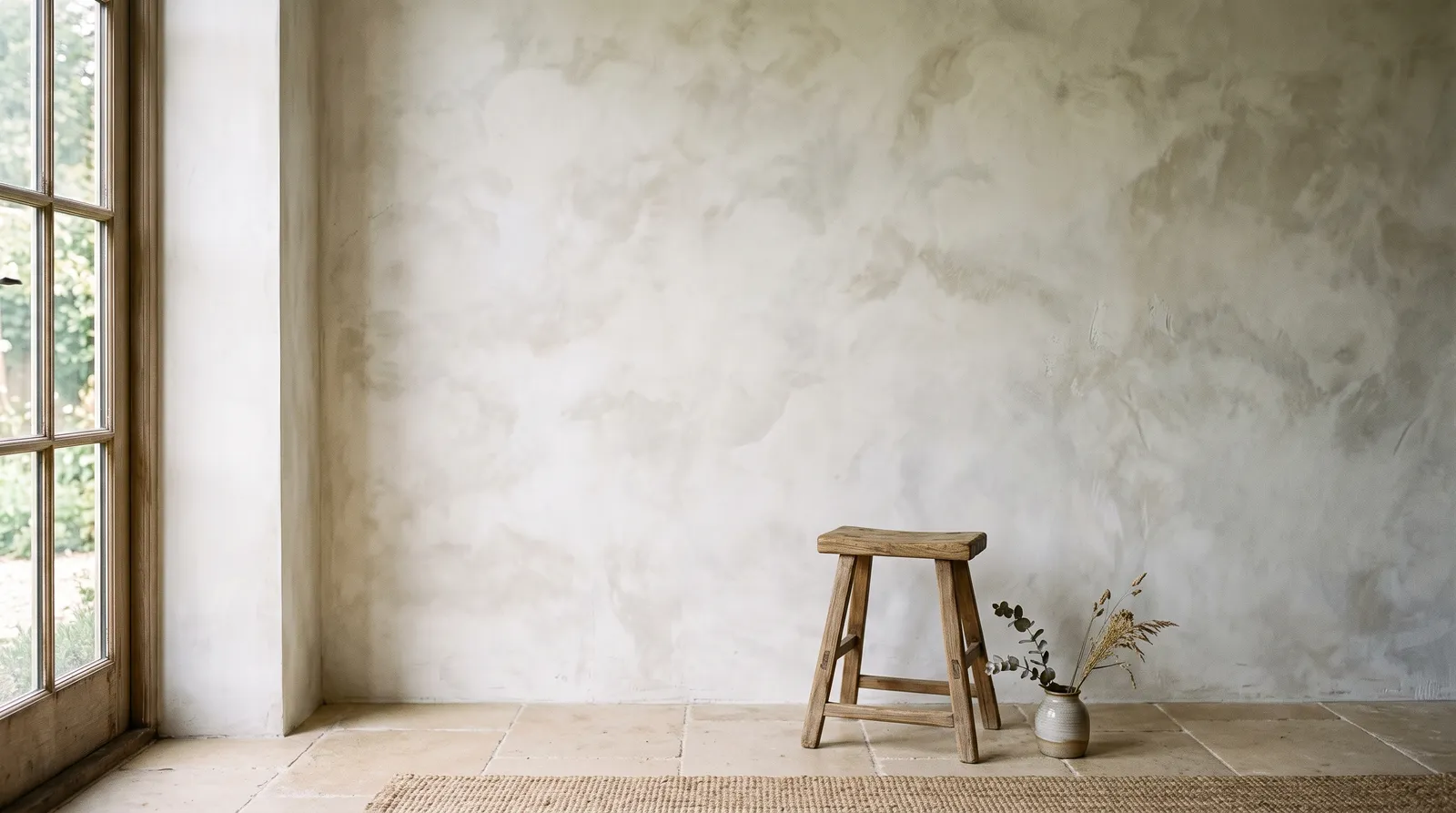
Farrow & Ball Limewash1 sheen
CoverageNot published
RecoatAbout 12 hr
Full cureCarbonation builds over weeks
Sheens ~2% sheen
Read this first
The Fast Verdict
Start with the wall, not the color card. On lime render, lime plaster, brick, or raw masonry, Limewash gives a cloudy, breathing, hand-finished depth that no ordinary paint imitates, inside or out. On standard drywall or gypsum plaster it will not bond, and it is not worth buying at any price. It cannot be washed or wiped, the high-pH application is genuinely finicky, and Farrow & Ball themselves recommend an experienced hand lay it on.
Best for
Lime render and lime plaster · Brick, stone and raw masonry · Period interiors · Exterior render that needs to breathe · Calm, low-contact walls
Skip if
Drywall or gypsum plaster · Kitchens and hallway scuff zones · Walls that get wiped or touched · A roll-it-on-yourself weekend
What it's good at
- Depth and movement no flat paint can fake — the wall shifts from soft and warm at breakfast to luminous when the light is full on it
- Genuine breathability, letting damp move out of a lime or masonry wall instead of trapping it behind a film
- Working inside and out, so a lime-rendered garden wall can wear the same finish as the room indoors
- Period authenticity, because on an old building limewash is the correct finish rather than an impersonation of one
- The 2026 move toward plaster, lime, and troweled texture, which is exactly this finish's moment
- Color that sits in the plaster rather than on it, so the depth changes with whatever lies beneath
What it's not good at
- Drywall and gypsum plaster — the most common wall in an American home is the one wall it does not belong on
- Being cleaned; it cannot be washed or wiped, and a damp cloth marks it rather than lifts anything
- Forgiving a heavy hand — the changeable surface shows every inconsistency in how it was laid on
- DIY confidence, since the high-pH formula and thin-coat build really do want an experienced applicator
- High-contact rooms: not a kitchen splashback, not a hallway scuff zone
- Fast schedules — about twelve hours between coats, with carbonation settling over weeks after that
Numbers, not adjectives
Spec Sheet
- Sheen
- One finish only — ultra-matt, around 2 percent
- Look
- Mottled, gently textured, changeable; depth varies with the surface beneath
- Breathability
- Highly breathable
- Surfaces
- Lime-rendered and mineral surfaces, interior and exterior — not gypsum plaster or drywall
- Application
- Multiple thin coats; high-pH, so gloves and eye protection; experienced professional application recommended
- Washability
- Not washable or wipeable
- Dry
- About 3 hr
- Recoat
- About 12 hr
- Full cure
- Carbonation builds over weeks
- Coverage
- Not published; varies with substrate porosity and number of coats
- Sizes
- 5L tin
- Price
- $$$$ — top of the Farrow & Ball range
Application Settings That Work
- Brush
- Multiple thin coats, brushed on, with about twelve hours between them. Not one confident pass. High-pH formula, so gloves and eye protection go on before the tin opens, and Farrow & Ball recommend an experienced hand for an even result.
- Primer
- No conventional primer. It bonds directly to bare lime render, lime plaster, brick, stone, and raw masonry as it carbonates. The thin build-up coats are what create the depth, so the surface underneath is the whole preparation.
How Limewash Dries and Carbonates
It dries in about three hours but wants roughly twelve before the next coat, which makes a limewashed room a multi-day job rather than an afternoon. The real cure is carbonation: the lime sets back into the surface over weeks, so the color goes on looking one way and settles into another. That is also where the mottling comes from — lime carbonates unevenly across a porous wall, so the clouding arrives with the cure rather than off the brush. Build it in multiple thin coats and let each one have its full window. Judging the finish on day one will only make you want to fix something that is still becoming itself.
Mid-project panic
When It Goes Wrong, and How to Fix It
A powdery, patchy coat that dusts off the wall
Why it happens. The wall is gypsum plaster or standard drywall. Limewash needs a porous, alkaline, mineral surface to bond with as it carbonates, and drywall's paper-and-gypsum face gives it nothing to key into.
The fix. There is no rescue coat for this — it is a surface mismatch, not an application error. For the chalky Farrow & Ball matte on drywall, use Estate Emulsion instead. Find out what your walls actually are before you fall for the look.
Blotchy heavy patches instead of soft clouds
Why it happens. The changeable surface shows every inconsistency in how it was laid on. One confident thick pass reads as a stain rather than a drift, because the lime cannot settle evenly where it went on heavy.
The fix. Build it in multiple thin coats, respecting the roughly twelve-hour recoat between them. Farrow & Ball recommend an experienced professional for an even result, and on a whole wall that is genuinely the right advice rather than a disclaimer.
Marks where someone tried to wipe the wall
Why it happens. It is not washable, by design. The surface is porous and powdery, so a damp cloth or any scrubbing smudges and dulls it rather than lifting anything off.
The fix. Keep it to calm, low-contact walls — not a kitchen splashback, not a hallway scuff zone. Plan on an occasional re-coat rather than a clean, and site it where hands and bags do not pass.
Skin or eye irritation while you are applying it
Why it happens. Limewash is a high-pH alkaline formula. That alkalinity is part of how it bonds and carbonates, but it is not kind to skin or eyes.
The fix. Gloves and eye protection throughout, and keep them on for the whole session rather than the first coat. This is one of the reasons Farrow & Ball point you at a professional for a full wall.
Side by side
Limewash vs Estate Emulsion vs Romabio Classico Limewash
The three finishes people weigh up when they want the chalky, mineral look. Which one is right almost always comes down to what the wall is made of.
| F&B Limewash | F&B Estate Emulsion | Romabio Classico Limewash | |
|---|---|---|---|
| Surfaces it bonds to | Lime render, lime plaster, brick, stone, raw masonry — inside or out. Not gypsum plaster or drywall. | Ordinary drywall and gypsum plaster, with no lime-only rule. | Brick, masonry, and render. |
| The look | Mottled, cloudy, changeable; the color sits in the wall rather than on it. | Flat and quietly rich in low light, but it will not mottle. | Genuine mottled, mineral character on the right surface. |
| Breathability | Highly breathable — the whole point on a mineral wall. | Not the reason to choose it; it is a drywall finish. | Breathable, and made for brick, masonry, and render. |
| Application | High-pH, multiple thin coats, professional application recommended. | An ordinary wall paint to put on, with the full F&B color card behind it. | A more forgiving DIY reputation, sold online and through big-box channels. |
| Where it wins | A period interior or an exterior render where you want the authentic, breathing, hand-finished wall. | You love the chalky F&B matte but your walls are the drywall you actually have. | You want the real mottled lime look and the name on the tin does not matter. |
Surfaces it bonds to
F&B LimewashLime render, lime plaster, brick, stone, raw masonry — inside or out. Not gypsum plaster or drywall.
F&B Estate EmulsionOrdinary drywall and gypsum plaster, with no lime-only rule.
Romabio Classico LimewashBrick, masonry, and render.
The look
F&B LimewashMottled, cloudy, changeable; the color sits in the wall rather than on it.
F&B Estate EmulsionFlat and quietly rich in low light, but it will not mottle.
Romabio Classico LimewashGenuine mottled, mineral character on the right surface.
Breathability
F&B LimewashHighly breathable — the whole point on a mineral wall.
F&B Estate EmulsionNot the reason to choose it; it is a drywall finish.
Romabio Classico LimewashBreathable, and made for brick, masonry, and render.
Application
F&B LimewashHigh-pH, multiple thin coats, professional application recommended.
F&B Estate EmulsionAn ordinary wall paint to put on, with the full F&B color card behind it.
Romabio Classico LimewashA more forgiving DIY reputation, sold online and through big-box channels.
Where it wins
F&B LimewashA period interior or an exterior render where you want the authentic, breathing, hand-finished wall.
F&B Estate EmulsionYou love the chalky F&B matte but your walls are the drywall you actually have.
Romabio Classico LimewashYou want the real mottled lime look and the name on the tin does not matter.
If the wall is lime render, lime plaster, brick, or raw masonry and you want the authentic finish with the Farrow & Ball palette behind it, Limewash is the one worth the top-of-range price. If your walls are drywall or gypsum plaster, stop here and buy Estate Emulsion — you get most of that velvet depth on the surface you actually have. If the mineral character matters more than the F&B name, Romabio gives you a real slaked-lime wash for far less per coverage and a more forgiving hand.
If not this one
Honest Alternatives
FB
Farrow & Ball Estate EmulsionStandard F&B wall pricing
The answer if you love the chalky, light-absorbing F&B matte but your walls are ordinary drywall or gypsum plaster. It will not mottle the way true limewash does, but it sits flat and quietly rich in low light, takes the full F&B color card, and skips the lime-only rule entirely.
Full review →RC
Romabio Classico LimewashA fraction of the F&B price per coverage
A real slaked-lime wash, breathable and made for brick, masonry, and render, sold online and through big-box channels. It gives the genuine mottled, mineral character on the right surface for far less, with a more forgiving DIY reputation. The sensible pick when the finish matters more than the name on the tin.
KM
KEIM mineral or silicate paintSpecifier pricing
For an exterior render or masonry facade where you want maximum breathability and decades of durability rather than a decorative wash. It chemically bonds to mineral substrates and weathers far harder than limewash outdoors — less soft cloudy artistry, far more long-term toughness on a working wall.
Questions people actually ask
Limewash Questions, Answered
Is Farrow & Ball Limewash worth it?
On lime render, lime plaster, brick, or raw masonry, yes — nothing in a normal paint range gives that cloudy, breathing, hand-finished depth, and on an old wall it is the historically correct finish rather than an imitation. On standard drywall or gypsum plaster it is not worth buying at any price, because it cannot bond there. It also cannot be washed, and the high-pH application really does want an experienced hand.
Can I put Farrow & Ball Limewash on regular drywall?
No. Limewash is a high-pH mineral finish made to bond with lime-rendered and mineral surfaces, and Farrow & Ball state plainly it is not suitable for gypsum plaster — which is the facing on standard drywall. On drywall it will not key in or read right. If you want the chalky F&B matte on drywall, use Estate Emulsion instead.
Can you wash or wipe a limewash wall?
No. Farrow & Ball list Limewash as unsuitable for wiping or cleaning. The surface is porous and powdery by design, so a damp cloth or any scrubbing marks it rather than cleans it. Keep it for walls that stay out of harm's way, and plan on the occasional re-coat rather than a wash.
Can you use Farrow & Ball Limewash outside?
Yes. It is one of the few F&B finishes rated for both interior and exterior use, as long as the surface is lime-rendered or mineral. The high breathability is exactly what an exterior render wants — it lets damp move out of the wall instead of sealing it in. Farrow & Ball recommend experienced professional application for an even result.
Why does a limewash wall look mottled instead of even?
Because it does not form a film on top of the wall. As it dries it carbonates back into the surface, and lime cures unevenly across anything porous, so the color ends up sitting in the plaster rather than on it. That is the effect people are buying — the wall clouds and drifts, lighter here and deeper there, and shifts as the light moves through the day.
How many coats does it need, and how long between them?
Multiple thin coats, not one confident pass. It dries in about three hours but wants roughly twelve before the next coat, so plan a multi-day job. The depth is built up gradually, and a heavy coat reads as a blotch rather than a soft drift. Carbonation keeps settling for weeks after the last coat goes on.
Do I need a primer under Limewash?
No conventional primer. It bonds directly to bare lime render, lime plaster, brick, stone, and raw masonry as it carbonates, which is why the surface matters so much more than any product you could put under it. If the wall is not mineral, no primer makes it suitable.
Can I apply Farrow & Ball Limewash myself?
You can, but Farrow & Ball recommend an experienced professional and there is a reason we scored ease of application 4 out of 10. The formula is alkaline enough to need gloves and eye protection, and the changeable surface shows every inconsistency in the way it is laid on. On a feature wall you care about, hire the hand that has done it before.
Which rooms suit limewash best?
North- and east-facing rooms flatter it most, because the texture comes alive in raking indirect light and the surface reads softer and warmer at breakfast. Keep it to calm, low-contact walls — a period living room, a bedroom, a hallway wall nobody brushes past — and away from splashes and scuffs.
How should I sample it before committing?
Not from a chip. Because the depth changes with the surface beneath, a card will mislead you here more than usual. Have a small section laid on the actual wall, or on a loose piece of the same render, and live with it through a full day — checking at the hour you actually use the room — before you commit the whole wall.
Keep exploring
Farrow & Ball brand guide and product line-upFarrow & Ball Estate Emulsion reviewWhat limewash actually is, and how it behaves
We may earn a commission when you buy through the retailer link above. It never changes the score or the verdict.
Ask a Question