Product review · Farrow & Ball · Updated August 8, 2026
Exterior EggshellFarrow & Ball paint review
8.0/10Buy it for the color, not the chemistry. Excellent on a door, brutal by the square foot.
A 20 percent sheen water-based exterior for wood and metal, at boutique money. On a front door it earns the price. On a 200-foot fence the math falls apart fast.

Mark Thompson · Pro Contractor & Field Editor · Updated August 8, 2026
22 years running residential and light commercial repaints across the Midwest. Mark has brushed boutique exterior enamels onto doors and gates and stripped the ones that went on over damp, unprimed wood. About the testing process →
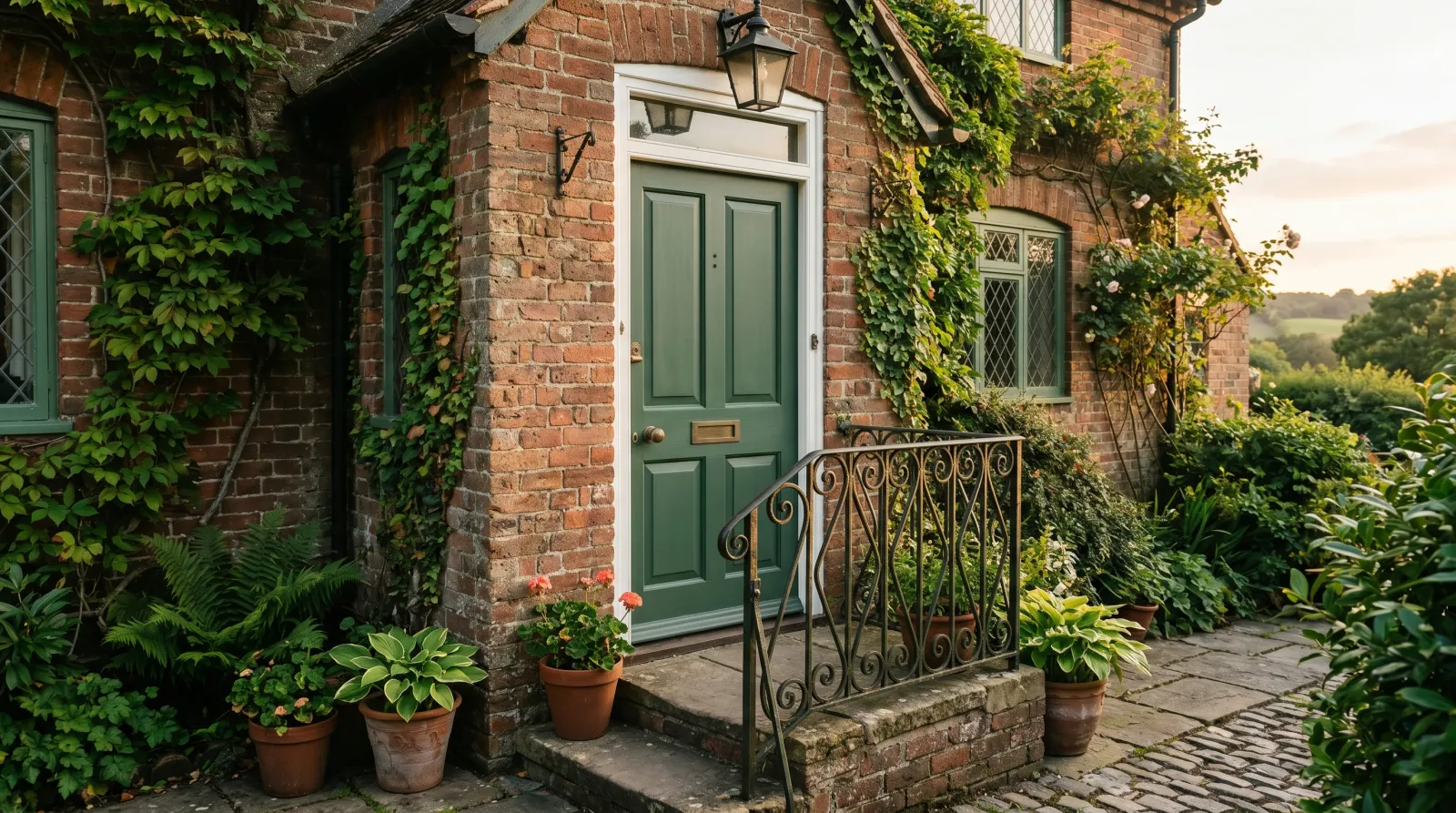
Farrow & Ball Exterior Eggshell
CoverageUp to 530 sq ft / US gal per coat
Recoat4 hr
VOCLow-VOC water base
Full cure2 to 4 weeks to full weather hardness
Read this first
The Fast Verdict
Buy Exterior Eggshell for the color. The 20 percent sheen is genuinely good on a front door, and the Farrow & Ball deck reads richer outdoors than anything you will mix at a big box. It protects fine. It does not protect better than a $50 acrylic costing a third as much. It is not self-priming on bare wood or metal, there is one sheen and no gloss option, and no Home Depot to save you mid-job. Small and visible, worth it. Long fences, no.
Best for
Front doors · Garden gates · Metal railings and gutters · Window frames · Short runs of exterior trim · A feature fence
Skip if
Whole-house siding · Long boundary fences · Jobs decided by square-foot cost · You want a high-gloss door · You cannot wait on a mail order mid-job
What it's good at
- Color depth on a door — a deep green or near-black reads with a softness a big-box deck does not match
- Brushing for a water-based exterior; it opens up under a sash brush and feathers clean
- Hiding brush texture, because the soft 20 percent sheen does not broadcast it the way a satin does
- Low odor — fully water-based with an A+ indoor air quality rating, which matters on an enclosed porch
- Slowing algae and mildew on a shaded, damp north fence thanks to real built-in preservatives
- Staying flexible on wood that swells and shrinks, so it does not split at the rails as fast
What it's not good at
- Square-foot economics — about $110–120 per 2.5L tin, roughly 350 sq ft at two coats
- Bare wood and bare metal on its own; it is not self-priming and never claims to be on the can
- Choice — one sheen at 20 percent, so there is no glassy traditional door option
- Holding deep color on a full-sun south or west elevation, where three to four years is realistic
- Availability; no Home Depot, no Lowe's, so running short mid-job means waiting on an order
- Anything decided by budget per square foot, where a good acrylic protects just as long
Same shelf, different cans
Which Farrow & Ball Eggshell Are You Buying?
Farrow & Ball sells several products with Eggshell in the name, and they are close enough that people grab the wrong tin at the counter. This review is the exterior one. Match the product to the surface before you match it to the color.
Exterior Eggshell (this review)
SheensOne sheen only, 20 percent soft eggshell
Buy it if
The surface is outdoor wood or metal: doors, gates, cladding, window frames, railings, gutters.
Avoid if
The surface is a masonry wall, or you want a higher-gloss traditional door.
Modern Eggshell
SheensLow sheen, washable
Buy it if
Interior wood, trim, and high-traffic walls that get wiped.
Avoid if
Anything outdoors. It is not built for weather.
Estate Eggshell
SheensLower sheen than Modern
Buy it if
Interior woodwork where you want a softer, quieter glow.
Avoid if
Hard-wear interior surfaces, or exterior work in a hard climate.
Exterior Masonry
Sheens2 percent ultra-matt
Buy it if
The surface is brick, render, stucco, or concrete — the wall itself.
Avoid if
You are painting the wood and metal that frames the house. That is Eggshell's job.
Numbers, not adjectives
Spec Sheet
- Coverage
- Up to 530 sq ft / US gal per coat, about 130 sq ft per 750ml tin
- Sheen
- Single sheen only, 20 percent soft eggshell
- Touch dry
- 2 hr
- Recoat
- 4 hr
- Full cure
- 2 to 4 weeks to full weather hardness
- VOC
- Low-VOC water base; rated A+ for indoor air quality
- Primer
- Not self-priming on bare substrate. F&B Exterior Wood Primer & Undercoat, or a rust-blocking metal primer
- Surfaces
- Exterior wood and metal — doors, fences, cladding, window frames, railings, gutters
- Durability claim
- Up to 6 years against flaking, peeling, and fading
- Color deck
- About 290 colors in this finish
- Sizes
- Sample pot, 750ml, 2.5L (the US sells metric tins, not a true gallon)
- Price
- About $110–120 per 2.5L tin, roughly $90–115 per US gallon equivalent
Application Settings That Work
- Brush
- A good sash brush is what this finish is built for. It opens up under the brush and feathers cleanly at the edge, and the 20 percent sheen hides the brush texture a satin would broadcast. Two coats, always.
- Airless
- Worth it on a fence you want speed on. Thin per the can and back-brush the first coat into the grain so it bites. On the door-and-gate jobs this paint is really made for, the payoff over a brush is small.
- Primer
- Not self-priming on bare substrate. Use Farrow & Ball Exterior Wood Primer & Undercoat on raw or knotty wood and a rust-blocking primer on bare ferrous metal. Over a sound exterior coat in good shape, scuff-sand it dull and go straight to two topcoats.
The Cure Reality
Touch dry in two hours and recoatable at four, so two coats fit in a day if the weather cooperates. Full weather hardness takes two to four weeks, and that gap is where jobs get ruined. A door recoated in the morning and rained on that afternoon is not a cured film. Do not paint below 50°F, and do not paint onto damp wood — either one will peel long before the resin gives up, no matter how good the paint is. Watch the forecast, start early enough that the second coat has real drying time before evening damp, and leave gates and doors gently handled for the first couple of weeks.
Mid-project panic
When It Goes Wrong, and How to Fix It
Tannin bleed and early peeling on bare wood
Why it happens. It is not self-priming, whatever the marketing implies. Raw cedar, knotty pine, and bare ferrous metal give the topcoat nothing to grip, and tannins push right through a direct-to-wood coat.
The fix. Prime first. Farrow & Ball Exterior Wood Primer & Undercoat on raw or knotty wood, a rust-blocking metal primer on bare ferrous metal. Over a sound, scuff-sanded existing exterior coat you can go straight to two topcoats.
Peeling a year or two in on wood that looked fine
Why it happens. Almost always the conditions, not the can. A glossy old coat that was not scuff-sanded, paint applied below 50°F, or paint applied onto wood that was still damp. Any of those fails years before the resin does.
The fix. Scuff-sand the old coat until it is dull all over, make sure the wood is genuinely dry, and paint above 50°F with a dry stretch in the forecast. Two full coats, and let the first have its four hours.
Color fading on the sunny side of the house
Why it happens. UV fades deep saturated colors first, and the rich blues and greens are exactly the ones people buy this paint to use. The six-year claim is an up-to number that assumes shade.
The fix. Plan by elevation, not by the can. Six years is believable on a shaded door or a north-facing fence with good prep. Budget three to four on a south or west face, and keep a part-tin so the sunny side can be refreshed on its own schedule.
A touch-up that flashes on a sunny elevation
Why it happens. It blends well early. After a season of UV the surrounding paint has already moved, so a fresh dab reads brighter than the wall around it — normal exterior behavior, not a bad batch.
The fix. Do your touch-ups early, in the first weeks, when they still blend. Once a season has gone by, recoat to a natural break instead: a full rail, a whole door face, a run of trim to the corner.
Side by side
Exterior Eggshell vs Behr Solid Stain vs BM Aura Exterior
These three come up on every exterior wood job, and they split cleanly by how much area you are covering and how much the exact color matters.
| F&B Exterior Eggshell | Behr Premium Solid Color Weatherproofing Stain & Sealer | Benjamin Moore Aura Exterior | |
|---|---|---|---|
| Price per gallon | About $90–115 equivalent | About $40–48 | $95–110 |
| Sheen options | One only — 20 percent soft eggshell. | Solid color; built to bury grain and old color in two coats. | Multiple sheens, so a higher-gloss door is on the table. |
| The look | Soft, hand-finished depth that catches raking afternoon light without going plasticky. | A workmanlike solid color. Fine on a fence nobody studies from six inches. | Flawless modern acrylic rather than hand-finished English door. |
| Color retention in sun | Fades on south and west faces; deep saturated colors go first. | Not the reason to buy it. It is the value play for real square footage. | Beats Exterior Eggshell on UV color retention and film toughness. |
| Where you buy it | farrow-ball.com or a stockist. No big box. | Any Home Depot. | A Benjamin Moore dealer network you can actually drive to. |
| Where it wins | A front door, a gate, a railing, a short run of trim where the exact color is the project. | Fences, gates, and rough exterior wood where you are covering real square footage. | A sunny elevation where you want the longest color life and a bigger US deck. |
Price per gallon
F&B Exterior EggshellAbout $90–115 equivalent
Behr Premium Solid Color Weatherproofing Stain & SealerAbout $40–48
Benjamin Moore Aura Exterior$95–110
Sheen options
F&B Exterior EggshellOne only — 20 percent soft eggshell.
Behr Premium Solid Color Weatherproofing Stain & SealerSolid color; built to bury grain and old color in two coats.
Benjamin Moore Aura ExteriorMultiple sheens, so a higher-gloss door is on the table.
The look
F&B Exterior EggshellSoft, hand-finished depth that catches raking afternoon light without going plasticky.
Behr Premium Solid Color Weatherproofing Stain & SealerA workmanlike solid color. Fine on a fence nobody studies from six inches.
Benjamin Moore Aura ExteriorFlawless modern acrylic rather than hand-finished English door.
Color retention in sun
F&B Exterior EggshellFades on south and west faces; deep saturated colors go first.
Behr Premium Solid Color Weatherproofing Stain & SealerNot the reason to buy it. It is the value play for real square footage.
Benjamin Moore Aura ExteriorBeats Exterior Eggshell on UV color retention and film toughness.
Where you buy it
F&B Exterior Eggshellfarrow-ball.com or a stockist. No big box.
Behr Premium Solid Color Weatherproofing Stain & SealerAny Home Depot.
Benjamin Moore Aura ExteriorA Benjamin Moore dealer network you can actually drive to.
Where it wins
F&B Exterior EggshellA front door, a gate, a railing, a short run of trim where the exact color is the project.
Behr Premium Solid Color Weatherproofing Stain & SealerFences, gates, and rough exterior wood where you are covering real square footage.
Benjamin Moore Aura ExteriorA sunny elevation where you want the longest color life and a bigger US deck.
Buy Exterior Eggshell for a front door, a garden gate, a metal railing, or a short run of trim, where the specific Farrow & Ball color is the point and the per-tin price stops mattering. Buy the Behr solid stain when you are covering a long fence or rough exterior wood and the job is decided by square-foot cost. Buy Aura Exterior when the elevation is sunny, you want the longest color life, and you would rather have multiple sheens and a dealer down the road than the F&B deck.
If not this one
Honest Alternatives
BP
Behr Premium Solid Color Weatherproofing Stain & Sealer$40–48 / gal
The value play for fences, gates, and rough exterior wood. Half the price or less, on the shelf at any Home Depot, and the solid-color formula buries grain and old color in two coats. You lose the F&B deck and the hand-finished look, which on a fence is an easy trade.
BM
Benjamin Moore Aura Exterior$95–110 / gal
A premium exterior acrylic that beats Exterior Eggshell on UV color retention and film toughness, with a far larger US deck and a dealer network you can drive to. It comes in multiple sheens, so a higher-gloss door is possible. The look is modern acrylic rather than hand-finished.
Full review →CA
Cabot Australian Timber Oil$45–55 / gal
Not a paint. A penetrating oil for bare or weathered exterior wood you want to keep looking like wood. If the gate or cladding is a nice cedar or hardwood, this feeds the grain instead of hiding it. It needs more frequent maintenance coats, but it never peels because there is no film to peel.
Full review →Questions people actually ask
Exterior Eggshell Questions, Answered
Is Farrow & Ball Exterior Eggshell worth the price over a hardware-store exterior paint?
For a front door, a gate, or a small run of trim where you want a specific Farrow & Ball color and a soft 20-percent sheen, yes. The color depth is the reason people buy it. For full siding or a big fence, no — you are paying boutique money for color, not for outperforming a good acrylic, and a $50 gallon will protect the wood just as long.
Does Exterior Eggshell need a primer?
On bare wood or bare metal, yes. It is not self-priming. Use Farrow & Ball's own Exterior Wood Primer & Undercoat on raw or knotty wood, and a rust-blocking metal primer on bare ferrous metal. Over a sound, scuff-sanded existing exterior coat in good shape, you can usually go straight to two topcoats.
How long does Farrow & Ball Exterior Eggshell actually last outside?
Farrow & Ball claims up to six years of resistance to flaking, peeling, and fading. On a door or a north-facing fence with proper prep, that is believable. On a south or west elevation taking full sun, plan to recoat sooner — closer to three or four years on the high-UV faces. The prep underneath decides more than the can does.
Can I spray Exterior Eggshell, or is it brush only?
Brush is what the finish is built for, and the 20-percent sheen hides brush texture well. You can spray it thinned per the can, but the payoff is small on the door-and-gate jobs this paint is made for. For a fence you want speed on, an airless makes sense — back-brush the first coat into the grain so it bites.
How many coats do I need?
Two, always, and the second one is non-negotiable on deep colors. One coat looks thin and uneven, and the six-year claim assumes a full two-coat film. Coverage runs up to 530 sq ft per US gallon per coat, or about 130 sq ft from a 750ml tin, so buy for two coats plus a little spare.
What temperature can I paint in?
Above 50°F, onto dry wood, with a dry stretch in the forecast. Paint below that or onto damp wood and it will peel long before the resin gives up. Touch dry is two hours and recoat is four, but full weather hardness takes two to four weeks, so give a fresh door a gentle first fortnight.
Can I use Exterior Eggshell on brick or stucco?
No, that is the wrong product. Exterior Eggshell is for the wood and metal that frames the house — doors, fences, cladding, window frames, railings, gutters. Brick, render, stucco, and concrete walls are Exterior Masonry's job. Putting eggshell on masonry gets you a film that does not suit the wall.
Does it come in a gloss for a traditional front door?
Not in this line. Exterior Eggshell is one sheen at 20 percent, take it or leave it. If you want the wet, glassy traditional door look in a Farrow & Ball color, you are looking at Full Gloss instead, which is rated for exterior wood and metal too.
Keep exploring
Farrow & Ball brand overview and product linesBest exterior door paint round-upBest fence paint, testedWhat eggshell sheen actually means
We may earn a commission when you buy through the retailer link above. It never changes the score or the verdict.
Ask a Question