Product review · Farrow & Ball · Updated August 7, 2026
Flat EggshellFarrow & Ball paint review
8.2/10The soft Farrow & Ball look on trim and cabinets, with the slow-cure asterisk finally gone.
Flat Eggshell is the reformulated successor to Estate Eggshell: the same soft 20 percent drape on woodwork, now Class 1 scrubbable and hard in about two weeks instead of nearly four.

Jessica Williams · Color Stylist & Interior Editor · Updated August 7, 2026
Jessica spent eight years styling residential interiors in Chicago and Charleston before moving into editorial work. She judges a woodwork finish by what late-afternoon side light does to a door, which is where a soft sheen either glows or gives itself away. About the testing process →
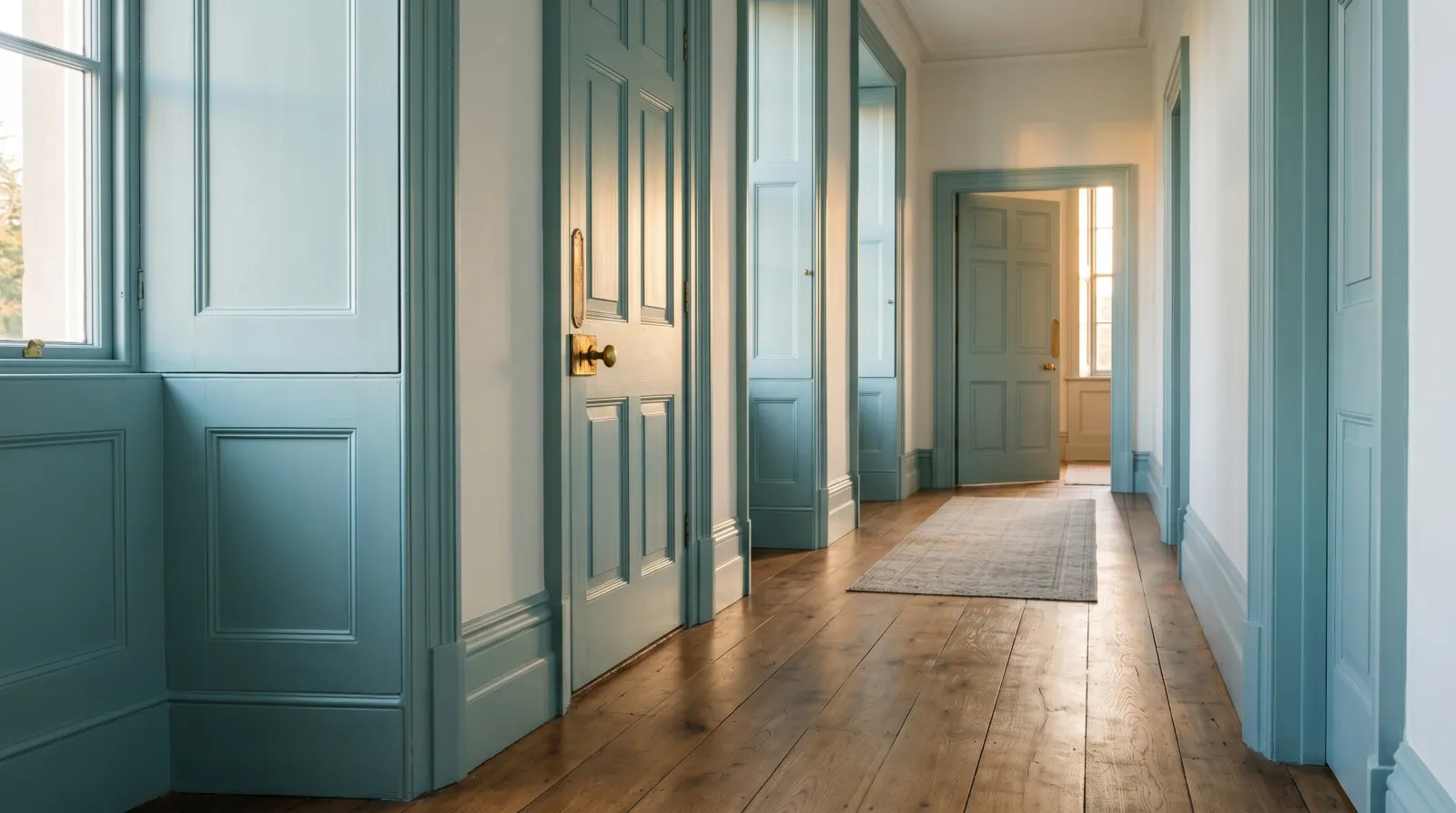
Farrow & Ball Flat Eggshell1 sheen
CoverageUp to 12 sq m per liter per coat
RecoatAbout 4 hr
VOCMinimal; low odour
Full cureAbout 2 weeks
Sheens 20 percent sheen
Read this first
The Fast Verdict
If you went looking for Estate Eggshell, this is it under a new name and a better formula. Flat Eggshell keeps the 20 percent drape that makes a deep door read as color first and surface second, and the reformulation fixed the one honest objection: it is now Class 1 scrubbable and reaches full hardness in about two weeks rather than close to four. At $120 to $155 a gallon, ordered direct, it earns its money on a few visible surfaces, not on a whole house of woodwork.
Best for
Interior trim, doors, and skirting · Kitchen and bathroom cabinets · Painted furniture · Interior wood and metal · Wall-to-trim color continuity inside the F&B deck
Skip if
You want big-box price and Sunday availability · You need the hardest, brightest film · Floors, radiators, and busy hallway trim · You cannot wait out a two-week cure
What it's good at
- The 20 percent drape — a deep door glows in raking afternoon light instead of glaring
- Color continuity with F&B walls, so skirting and wall read as one quiet move
- Class 1 scrubbable now, which makes it a real cabinet and floor paint
- Low odour and toy-safe, so you can paint a bedroom door and sleep in the room that night
- Hiding minor brush texture better than a high-gloss does
- Reaching full hardness in about two weeks instead of nearly four
What it's not good at
- Price — roughly three times a big-box trim enamel, with no Sunday quart run
- Bare or knotty wood without the matched primer and undercoat system
- The first couple of weeks, while the film is still hardening
- Maximum toughness on floors, radiators, and busy hallway trim
- Standing alone — the wall-to-trim depth only happens inside the F&B deck
Same shelf, different cans
Flat Eggshell vs the Old Estate Eggshell
Farrow & Ball retired Estate Eggshell and shipped Flat Eggshell in its place, reformulated and rolled out in late 2025. The face is the same — the brand says the applied result is virtually indistinguishable — and everything that changed is under the surface.
Flat Eggshell (current)
Sheens20% low satin, soft drape
HardnessClass 1 scrubbable, the highest washability rating, plus scuff and stain resistance and good block resistance early. Full hardness in about two weeks.
RecoatAbout 4 hr
Buy it if
This is the one to buy. Trim, doors, skirting, painted furniture, floors, and kitchen and bathroom cabinets, in the full F&B color deck.
Avoid if
You need the hardest, brightest film for radiators, floors, or busy hallway trim. That is Modern Eggshell at about 40 percent.
Estate Eggshell (discontinued)
Sheens20% low satin — an identical look
HardnessWashable once cured, but soft for close to four weeks getting there, which is exactly what the reformulation set out to fix.
RecoatAbout 4 hr
Buy it if
Nothing left to buy new. If you loved the Estate look, Flat Eggshell gives you the same face with a better constitution.
Avoid if
Old third-party stock. Aging eggshell sits thick in the can, and you inherit the slow cure along with it.
Numbers, not adjectives
Spec Sheet
- Coverage
- Up to 12 sq m per liter per coat (about 480 sq ft / gal)
- Sheen
- One finish only — low satin, 20%
- Touch dry
- About 2 hr
- Recoat
- About 4 hr
- Full cure
- About 2 weeks, down from the old Estate Eggshell's near-four
- Washability
- Class 1 scrubbable; scuff and stain resistant
- VOC
- Minimal; low odour, toy-safe, A+ indoor air quality rating
- Primer
- F&B wood primer and undercoat in the matched light/mid/dark tone; knot and resin blocker on softwood
- Surfaces
- Interior wood, metal, concrete, floors, and kitchen and bathroom cabinets
- Sizes
- 750ml, 2.5L, 5L
- Status
- Current — replaced Estate Eggshell, reformulated 2025
- Price
- $120–155 / gal in the US
Application Settings That Work
- Brush
- Brushes and lays off nicely with a good sash brush. It is not as glassy as an alkyd, but the soft 20 percent sheen forgives a little texture, and a small lap mark does not flash the way it would in a semi-gloss.
- Primer
- On bare wood, knotty pine, or a big color change, prime first: the F&B knot and resin blocker on resinous softwood, then the Interior Wood Primer & Undercoat in the matched light, mid, or dark tone. Over sound, similarly colored existing paint, two coats of Flat Eggshell alone usually covers.
The Two-Week Cure
People judge a finish by how it feels to the hand, and the hand lies. Touch dry at two hours is not the same as hard. The film keeps cross-linking and hardening for days after it stops feeling tacky, and even a reformulated finish like this one needs about two weeks to get fully there. That gap between feeling done and being done is where chips and dents happen, because nobody treats a door they painted three days ago as fragile. Flat Eggshell shortened the wait dramatically, roughly two weeks instead of close to four, but the smart move has not changed: keep hard traffic and heavy handling off the surface until it sets. A cabinet door loaded hard on day three can still mark.
Mid-project panic
When It Goes Wrong, and How to Fix It
Knots bleeding through a painted softwood door
Why it happens. Resinous softwood pushes color up through a water-based finish, and Flat Eggshell is not self-priming on bare or knotty wood.
The fix. Seal first with the F&B Wood Knot & Resin Blocking Primer, then the Interior Wood Primer & Undercoat in the tone that matches your color. Skip that step and you buy a third coat now and a bleed later.
A bold color still uneven after two coats
Why it happens. About 12 sq m per liter is fair for a pigment-heavy finish, but a deep color over a wrong-tone undercoat has to do all the burying itself.
The fix. Match the undercoat tone — light, mid, or dark — to the topcoat. That is what gets a bold color there in two finish coats instead of three, and it is cheaper than the extra coat.
A cabinet door marked in the first fortnight
Why it happens. The reformulated film hardens far faster than Estate's, but it is not instant. For roughly two weeks it keeps building, and a door loaded hard on day three can still print.
The fix. Rehang doors but go gently. No heavy handling, nothing stacked pressing on a fresh face, and give it the full two weeks before you treat it as a working kitchen.
Thick, gluey paint out of a third-party tin
Why it happens. Listings for this line tend to be marked-up resale, sometimes aging Estate Eggshell stock, and old eggshell sits thick in the can.
The fix. Order direct from Farrow & Ball for fresh Flat Eggshell and the full color archive. If a listing does not clearly say Flat Eggshell, assume you are looking at the old finish.
Side by side
Flat Eggshell vs Modern Eggshell vs BM Advance
Two Farrow & Ball woodwork finishes and the enamel most people are quietly comparing them against on price.
| Flat Eggshell | Modern Eggshell | Benjamin Moore Advance | |
|---|---|---|---|
| Sheen | 20%, a soft low satin | About 40%, brighter satin | Glossier than 20 percent in satin |
| Look on woodwork | Color first, surface second; a deep door glows rather than glares | Bright and hard-wearing | Levels nearly like oil for a smoother, shinier face |
| Washability | Class 1 scrubbable, scuff and stain resistant | Built for knocks and scrubbing | Cures hard enough for a working kitchen |
| Best surfaces | Trim, doors, cabinets, painted furniture, floors | Floors, radiators, busy hallway trim | Cabinets and trim in a working kitchen |
| Buying it | Order direct from Farrow & Ball | Order direct from Farrow & Ball | A BM dealer can also match many F&B colors |
| Price per gallon | $120–155 | $120–155 | $80–95 |
| Where it wins | A few visible surfaces where the soft F&B drape is the point | Hard-knock surfaces where toughness beats softness | Budget, plus a smoother brushed face |
Sheen
Flat Eggshell20%, a soft low satin
Modern EggshellAbout 40%, brighter satin
Benjamin Moore AdvanceGlossier than 20 percent in satin
Look on woodwork
Flat EggshellColor first, surface second; a deep door glows rather than glares
Modern EggshellBright and hard-wearing
Benjamin Moore AdvanceLevels nearly like oil for a smoother, shinier face
Washability
Flat EggshellClass 1 scrubbable, scuff and stain resistant
Modern EggshellBuilt for knocks and scrubbing
Benjamin Moore AdvanceCures hard enough for a working kitchen
Best surfaces
Flat EggshellTrim, doors, cabinets, painted furniture, floors
Modern EggshellFloors, radiators, busy hallway trim
Benjamin Moore AdvanceCabinets and trim in a working kitchen
Buying it
Flat EggshellOrder direct from Farrow & Ball
Modern EggshellOrder direct from Farrow & Ball
Benjamin Moore AdvanceA BM dealer can also match many F&B colors
Where it wins
Flat EggshellA few visible surfaces where the soft F&B drape is the point
Modern EggshellHard-knock surfaces where toughness beats softness
Benjamin Moore AdvanceBudget, plus a smoother brushed face
Buy Flat Eggshell for trim, doors, cabinets, and painted furniture in a room you care about, where you want the soft drape and color that runs continuous with the walls. Step up to Modern Eggshell when the surface is a floor, a radiator, or hallway trim that takes knocks and toughness matters more than softness. Take Advance when the F&B look is not the reason for the job: it costs roughly half, levels nearly like oil, and a BM dealer can match many F&B colors. You get more shine and less drape, and for a lot of kitchens that is a fair trade.
If not this one
Honest Alternatives
BM
Benjamin Moore Advance$80–95 / gal
A waterborne alkyd that levels nearly like oil and cures hard enough for a working kitchen. It runs glossier than 20 percent in satin, so the look is less soft, but the durability and color range are excellent and a BM dealer can match many F&B colors.
Full review →FB
Farrow & Ball Modern Eggshell$120–155 / gal
The tougher sibling at about 40 percent sheen: brighter and harder, built to take knocks and scrubbing on floors, radiators, and trim in a busy hallway. Choose it when durability beats drape.
Full review →SW
Sherwin-Williams Emerald Urethane Trim Enamel$95–110 / gal
If the F&B look is not the point and you want a hard, smooth cabinet finish for less. It levels beautifully and cures to a tough, washable film, but reads brighter and more enamel-like than the soft 20 percent drape.
Full review →Questions people actually ask
Flat Eggshell Questions, Answered
Is Farrow & Ball Flat Eggshell worth it?
On trim, doors, cabinets, and painted furniture, yes. The soft 20 percent drape gives woodwork a depth a big-box enamel flattens out, and the reformulation made the film Class 1 scrubbable with a two-week cure instead of nearly four. At $120 to $155 a gallon, ordered direct, it is roughly three times the price of a hardware-store trim paint, so it pays off on a few visible surfaces rather than a whole house of woodwork.
Is Flat Eggshell the same as Estate Eggshell?
Effectively yes. Flat Eggshell is the reformulated version of Estate Eggshell: same 20 percent sheen, same soft low-satin look, same F&B color depth on woodwork. What changed is underneath — a faster cure, about two weeks instead of nearly four, and a tougher, Class 1 scrubbable film. Farrow & Ball says the applied result is virtually indistinguishable, so if you loved the Estate look you get it here without the long soft phase.
Why was Estate Eggshell discontinued?
It looked beautiful and cured too slowly. The old finish stayed soft for close to four weeks, which made it risky on the high-contact jobs people wanted it for. Farrow & Ball retired it and shipped Flat Eggshell with the same face and a far better constitution, adding floors and kitchen and bathroom cabinets to the rated surfaces.
What is the difference between Flat Eggshell and Modern Eggshell?
Sheen and feel. Flat Eggshell sits at 20 percent, a soft low satin with more drape and a quieter look, and it is now scrubbable enough for cabinets and floors. Modern Eggshell sits at about 40 percent, a brighter satin built for radiators, floors, and hard-knock trim where you want maximum toughness over softness.
Is Flat Eggshell durable enough for kitchen cabinets?
Now, yes. Farrow & Ball rates it for kitchen and bathroom cabinets, and it is Class 1 scrubbable with good block resistance, so it stands up to wiping and daily handling once it sets. The old Estate Eggshell soft-cure problem is the thing the reformulation fixed. Even so, let it cure before you load cabinet doors hard.
How long does Flat Eggshell take to cure?
About two weeks to full hardness, down from close to four with the old Estate Eggshell. It is touch dry in about two hours and recoatable at four, which is what fools people. Treat the surface gently until the two weeks are up, especially on cabinet doors and anything that takes traffic.
Can I use Flat Eggshell on floors?
Yes. Farrow & Ball now lists it for floors as well as wood, metal, concrete, and kitchen and bathroom cabinets, which the old Estate cure made risky. For a floor or a stair run in a busy hallway, where toughness matters more than the soft look, Modern Eggshell at 40 percent is still the harder option.
Does Flat Eggshell need a primer?
On bare wood, knotty pine, or a big color change, yes. Farrow & Ball makes a tinted wood primer and undercoat in light, mid, and dark tones, plus a knot-and-resin blocker for resinous softwoods. Matching the undercoat tone to the topcoat cuts you to two finish coats. Over sound, similarly colored existing paint, two coats alone usually covers.
Where can I buy Flat Eggshell?
Order direct from Farrow & Ball, which is where you get fresh stock and the full color archive. Third-party listings tend to be marked-up resale, sometimes aging Estate Eggshell, and old eggshell can sit thick in the can.
Keep exploring
Farrow & Ball brand guide and product line-upBest interior trim paint, tested and rankedWhy dry time and cure time are not the same thing
We may earn a commission when you buy through the retailer link above. It never changes the score or the verdict.
Ask a Question