Product review · Dunn-Edwards · Updated August 7, 2026
Ultra-Grip PremiumDunn-Edwards paint review
8.0/10One ultra-low-VOC can that bonds, seals, and blocks stains, as long as you still dull the gloss first.
Ultra-Grip Premium is the can a Dunn-Edwards rep reaches for when you describe a surface paint will not stick to. It does three primer jobs out of one bucket, and it is honest that it still wants you to dull the gloss first.

David Chen · Formulation Lead & Resident Chemist · Updated August 7, 2026
Polymer chemist by training, six years in industrial coatings R&D before joining CompositePaint's formulation team. David writes the adhesion pieces: why a primer wets out on a slick door, and why the wrong one lets go in a curl. About the testing process →
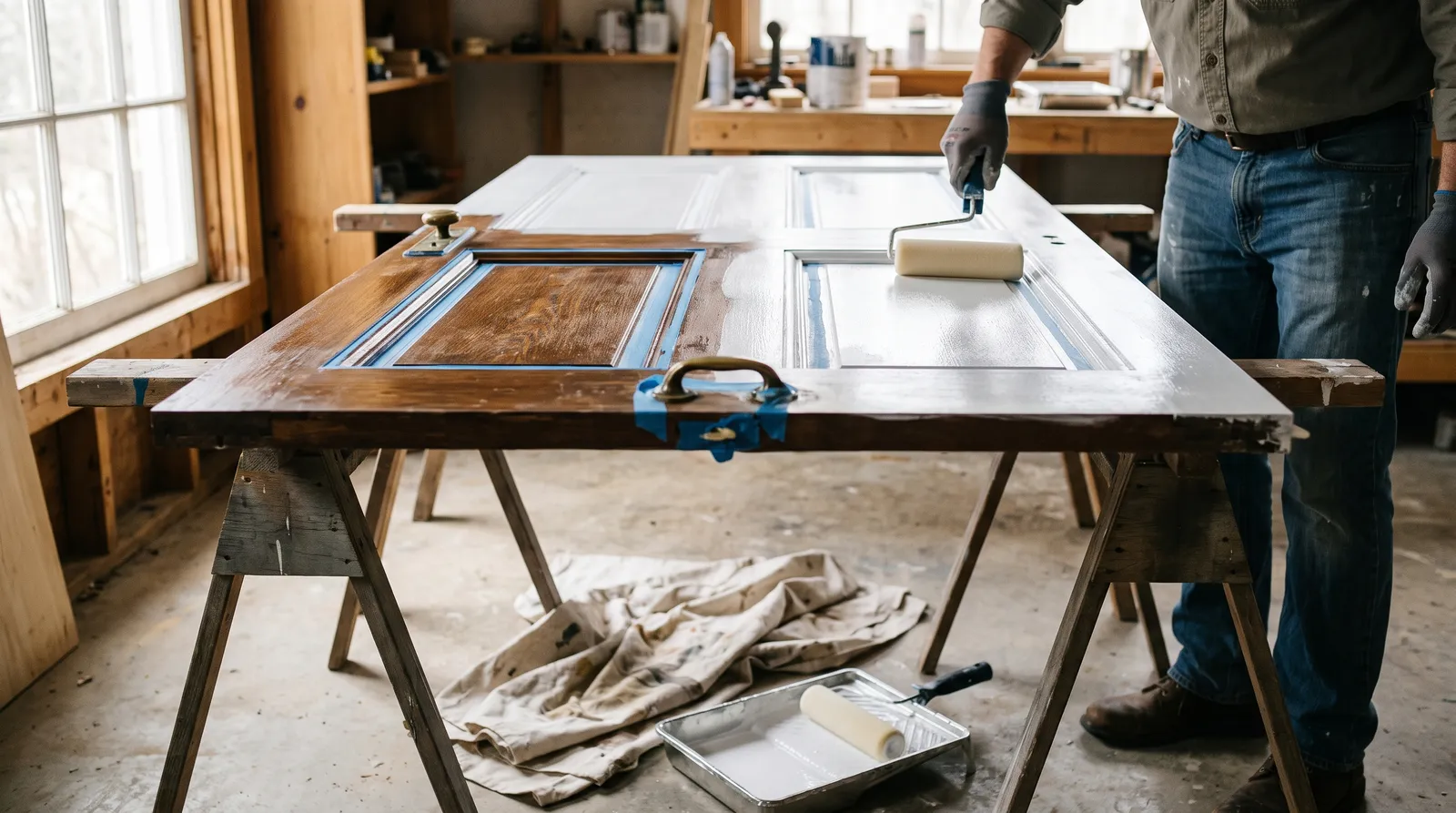
Dunn-Edwards Ultra-Grip Premium
Coverage275–325 sq ft / gal at 2.0 mils dry
Dry / RecoatTouch 30–60 min
VOC50 g/L or less as supplied
Read this first
The Fast Verdict
Buy it when the surface is aged glossy alkyd, slick trim and doors, aluminum, vinyl, fiberglass, or tannin-prone wood, and especially when it is both slick and stained. About $19 a quart or $64 to $66 a gallon buys one ultra-low-VOC primer that grips, seals most household stains, resists tannin bleed, and gives excellent enamel holdout under Dunn-Edwards latex and alkyd finishes. It is not for glazed tile, glass, or melamine, and it expects a scuff rather than promising a no-sand shortcut.
Best for
Aged glossy alkyd · Slick painted trim and doors · Cabinets · Aluminum, vinyl, and fiberglass · Cedar, redwood, and knotty pine · Crayon, ink, and marker stains · Masonry up to pH 13
Skip if
Glazed tile, glass, or melamine · Exterior galvanized or exterior plastic · Severe set-in water stains · A one-hour recoat schedule · Below 50°F
What it's good at
- Gripping a wide range of hard-to-stick substrates: aged glossy alkyd, aluminum, vinyl, fiberglass, hardboard, and masonry up to pH 13
- Doing three jobs in one can, bonding plus stain sealing plus tannin resistance, where a pure bonder makes you buy a second product
- Excellent enamel holdout, so the topcoat lays down at a uniform sheen instead of flashing dull over thirsty spots
- Sealing crayon, pencil, ink, and felt marker, and holding back bleed from cedar, redwood, and knotty pine
- Clean air and cleanup: 50 g/L, EG-free, Green Wise Gold, and warm soapy water
- Crossing the threshold, since it is rated interior and exterior on drywall, masonry, and wood
- Sanding to a smooth base, because the low-sheen film knocks down easily before topcoating
What it's not good at
- No-sand work, since Dunn-Edwards' own prep tells you to dull the gloss first
- The slickest factory finishes, with glazed tile, glass, and melamine off the substrate list
- Exterior metal and plastic, where plastics and bare ferrous are interior-only and galvanized is incidental
- Fast schedules, at a 2-to-4-hour recoat against about an hour from Extreme Bond
- Severe set-in water stains, which it defers to a solvent-based shellac
- Cold work, with a hard 50°F floor on air and surface temperature
Same shelf, different cans
Premium or Select?
Dunn-Edwards sells two Ultra-Grip primers and the shelf tag does not spell out the gap. They aim at the same general territory; the difference is how much stain blocking and holdout you are paying for. This review covers Premium.
Ultra-Grip Premium (this review)
BaseWaterborne acrylic multi-surface primer
SheensLow sheen, 7 to 14% at 60 degrees
Recoat2 to 4 hr
Buy it if
The surface is slick and stained at the same time, or the wood is tannin-prone. This is the higher stain-block, higher enamel-holdout tier, and that combination is where one product genuinely replaces two.
Avoid if
The job is plain porous drywall with nothing to block, where you are paying for capability you will not use.
Ultra-Grip Select
BaseWaterborne acrylic multi-surface primer
Buy it if
You want a Dunn-Edwards multi-surface primer at a value price on general work, and the surface is not carrying stains or tannin.
Avoid if
The surface is stained or tannin-prone, or you need the strongest enamel holdout under a gloss enamel. That is what the Premium tier is for.
Numbers, not adjectives
Spec Sheet
- Coverage
- 275–325 sq ft / gal at 2.0 mils dry (4.9 mils wet)
- Chemistry
- Waterborne acrylic multi-surface primer
- Finish
- Low sheen, 7–14% at 60 degrees
- Dry / Recoat
- Touch 30–60 min · recoat 2–4 hr, depending on temperature, humidity, and film thickness
- Topcoat
- All Dunn-Edwards latex and alkyd finishes; strong enamel holdout
- VOC
- 50 g/L or less as supplied; RAVOC 20 g/L; EG-free
- Surfaces
- Drywall, stucco, concrete, brick, interior and exterior wood, hardboard, aged alkyd, aluminum, vinyl, fiberglass; select plastics interior-only; galvanized and bare ferrous incidental or interior
- Stain blocking
- Crayon, pencil, ink, felt marker; strong tannin resistance
- Color / tint
- White base; tintable with up to 2 fl oz Dunn-Edwards ZTC zero-VOC colorant per gallon
- Application temp
- Do not apply below 50°F air or surface temperature
- Cleanup
- Warm, soapy water
- Certifications
- Green Wise Certified Gold; CARB 2007 SCM and CALGreen 2016; MPI #17 and #134; CHPS 01350; LEED v4 EQ Credit 2
- Sizes
- Quart, gallon, 5-gallon
- Price
- About $19 / qt and $64–66 / gal at Dunn-Edwards stores
Application Settings That Work
- Brush
- Brushes, rolls, and sprays cleanly, tack-free in 30 to 60 minutes, low odor, and it washes out with warm soapy water. The low-sheen film sands easily, so knock down nibs before the topcoat goes on.
- Primer
- This is the primer, so the prep is the whole job. Clean and degrease so the primer can wet the surface, dull any gloss to give the acrylic mechanical tooth, prime at 2.0 mils dry (4.9 wet), and let it dry the full 2 to 4 hours before topcoating. Do not work below 50°F air or surface temperature. It tints with up to 2 fl oz of ZTC colorant per gallon if you want it closer to a deep topcoat.
Recoat Timing, and Why the Wait Matters
It is tack-free in 30 to 60 minutes, which is fast enough that people assume they can topcoat right after lunch. Recoat is 2 to 4 hours, and where you land in that window depends on temperature, humidity, and how heavy the film went on. Give it the full window in a cool or damp room. The point of waiting is that the topcoat should key to a properly dried primer film rather than a half-dried one, and that is also what protects the enamel holdout you paid for. The floor matters as much as the clock: do not apply below 50°F air or surface temperature, which rules out an unheated garage in January. And know the schedule cost before you plan a one-day cabinet job. Sherwin-Williams Extreme Bond recoats in about an hour. Ultra-Grip's 2-to-4-hour window can be the difference between two topcoat coats today and one.
Mid-project panic
When It Goes Wrong, and How to Fix It
The new topcoat lifts off a glossy door in a continuous skin
Why it happens. A cured high-gloss alkyd, an anodized aluminum profile, or a vinyl shutter is a dense, low-surface-energy substrate. Ordinary waterborne paint beads on it instead of wetting out, and the film dries into a skin that is resting on the surface rather than bonded to it. Priming without dulling the gloss leaves the chemistry carrying a load it was not designed to carry alone.
The fix. Clean and degrease first so the primer can wet the surface, then dull the gloss to give the acrylic mechanical tooth, then prime and let it dry the full 2 to 4 hours. Dunn-Edwards' own surface prep says to roughen glossy surfaces, and that is the design talking, not a disclaimer.
It fails on a tile backsplash or a melamine cabinet box
Why it happens. Glazed ceramic tile, glass, and melamine laminate are not on the substrate list. People reach for the Dunn-Edwards bonding primer for those jobs, but this is a general-purpose multi-surface primer, not a maximum-grip specialist, and those are the slickest factory films there are.
The fix. Use a dedicated bonder there. INSL-X Stix runs an acrylic-urethane binder tuned for glass, glazed tile, and melamine, and Sherwin-Williams Extreme Bond reaches glass, PVC, and tile as well. Save Ultra-Grip for the substrates it lists.
A water ring ghosts back through the primer
Why it happens. It seals most household stains, crayon, pencil, ink, and felt marker, and it holds back tannin from cedar, redwood, and knotty pine. Severe or set-in water stains are a different problem. They need a non-aqueous barrier that water in the primer cannot re-dissolve and carry upward.
The fix. Spot-prime the ring with a solvent-based pigmented shellac such as Zinsser B-I-N first, then prime and topcoat over it. After priming any stain, brush a little topcoat over a test patch before you commit the whole surface.
The coating fails on exterior galvanized metal or plastic
Why it happens. Select plastics and bare ferrous metal are rated interior-only, and galvanized is incidental use. The lowest-energy plastics and weather-cycled exterior metal stress an acrylic bond past where a general-purpose primer holds up outdoors.
The fix. Use Dunn-Edwards' Ultrashield galvanized metal primer plus an etch for galvanized work. Read the substrate and the exposure before you assume one primer covers an exterior metal job.
Side by side
Ultra-Grip Premium vs INSL-X Stix vs SW Extreme Bond
These three get cross-shopped as bonding primers, but only two of them are bonders first. The useful question is whether your surface is slick, stained, or both.
| Ultra-Grip Premium | INSL-X Stix | SW Extreme Bond | |
|---|---|---|---|
| Binder | Waterborne acrylic, general-purpose multi-surface | Acrylic-urethane, tuned for maximum grip | Wetting-tuned acrylic |
| Sanding the gloss | Expected. The prep says to dull glossy surfaces first. | Grips the slickest films with minimal sanding. | Built around a claim that sanding may not be necessary. |
| Slickest substrates | Aged alkyd, aluminum, vinyl, fiberglass. Glass, glazed tile, and melamine are not listed. | Glass, glazed tile, melamine, and hard factory enamels. | Reaches glass, PVC, and tile. |
| Stain and tannin blocking | Yes: crayon, pencil, ink, marker, plus strong tannin resistance. | Not a stain sealer. Spot-block tannin separately. | Not a stain blocker either. |
| Recoat | 2–4 hr | Bonder-grade dry times | About 1 hr |
| Topcoat range | All Dunn-Edwards latex and alkyd finishes, with strong holdout. | Broad, and it stays a touch more flexible. | One of the widest in the category: latex, alkyd, epoxy, urethane, even lacquer. |
| Price | About $19 / qt, $64–66 / gal | $50–65 / gal | $55–70 / gal |
Binder
Ultra-Grip PremiumWaterborne acrylic, general-purpose multi-surface
INSL-X StixAcrylic-urethane, tuned for maximum grip
SW Extreme BondWetting-tuned acrylic
Sanding the gloss
Ultra-Grip PremiumExpected. The prep says to dull glossy surfaces first.
INSL-X StixGrips the slickest films with minimal sanding.
SW Extreme BondBuilt around a claim that sanding may not be necessary.
Slickest substrates
Ultra-Grip PremiumAged alkyd, aluminum, vinyl, fiberglass. Glass, glazed tile, and melamine are not listed.
INSL-X StixGlass, glazed tile, melamine, and hard factory enamels.
SW Extreme BondReaches glass, PVC, and tile.
Stain and tannin blocking
Ultra-Grip PremiumYes: crayon, pencil, ink, marker, plus strong tannin resistance.
INSL-X StixNot a stain sealer. Spot-block tannin separately.
SW Extreme BondNot a stain blocker either.
Topcoat range
Ultra-Grip PremiumAll Dunn-Edwards latex and alkyd finishes, with strong holdout.
INSL-X StixBroad, and it stays a touch more flexible.
SW Extreme BondOne of the widest in the category: latex, alkyd, epoxy, urethane, even lacquer.
Price
Ultra-Grip PremiumAbout $19 / qt, $64–66 / gal
INSL-X Stix$50–65 / gal
SW Extreme Bond$55–70 / gal
If the surface is slick and stained at once, Ultra-Grip Premium is the one that replaces two cans, and that is the case for it. If the surface is purely an adhesion problem on a glass-hard factory film, glazed tile, or melamine, buy the specialist: Stix if you want the flexible acrylic-urethane, Extreme Bond if you are already at a Sherwin-Williams counter and want the faster recoat and the wider topcoat list. And if the real enemy is a set-in water ring or a knot, neither bonder wins. Shellac does.
If not this one
Honest Alternatives
IX
INSL-X Stix Bonding Primer$50–65 / gal
The pro default for the genuinely slickest surfaces. An acrylic-urethane binder tuned to wet out and grip glass, glazed tile, melamine, and hard factory enamels with minimal sanding, exactly the substrates Ultra-Grip leaves off its list. It stays a touch more flexible. It is a bonder first, not a stain-and-tannin sealer, so on stained tannin-prone wood you still spot-block separately.
Full review →SW
Sherwin-Williams Extreme Bond Primer$55–70 / gal
A waterborne acrylic gripper built around a claim that sanding may not be necessary, with one of the widest topcoat ratings in the category: latex, alkyd, epoxy, urethane, even lacquer. It recoats in about an hour and reaches glass, PVC, and tile. Like Stix, it is not a stain blocker.
Full review →ZB
Zinsser B-I-N Shellac-Based Primer$25–35 / quart
The opposite chemistry on purpose. Shellac in alcohol dries into a tight, non-aqueous barrier that locks down tannin, knots, nicotine, water rings, and odors, including the severe set-in stains Ultra-Grip itself defers to shellac. It also grips glossy surfaces, so on a door that is slick and badly stained it can cover both jobs. The trade is alcohol fumes, serious ventilation, and a more brittle film.
Questions people actually ask
Ultra-Grip Premium Questions, Answered
Is Dunn-Edwards Ultra-Grip Premium worth it?
If the surface is aged glossy alkyd, slick trim and doors, aluminum, vinyl, fiberglass, or stained tannin-prone wood, yes. About $19 a quart or $64 to $66 a gallon buys one ultra-low-VOC can that bonds, seals most household stains, and resists tannin bleed, with excellent enamel holdout under Dunn-Edwards latex and alkyd finishes. It is not worth it for glazed ceramic tile, glass, or melamine laminate, which Dunn-Edwards does not list, or for exterior galvanized and plastic work, and it expects you to dull the gloss first rather than promising a no-sand shortcut.
Do I need a bonding primer or can I just scuff-sand?
On a slick surface, do both, and that is exactly how Ultra-Grip is meant to be used. Dunn-Edwards tells you in the surface prep to dull glossy surfaces first, then prime, because the acrylic grips best when it has a little mechanical tooth plus its own chemical wetting. Scuff-sanding alone gives you tooth on the broad faces but none in the routed profiles and inside corners where a door actually wears. Dull the gloss, then let the primer reach where the sandpaper could not.
Can I topcoat Ultra-Grip with any paint?
Dunn-Edwards rates it as compatible with all of their own latex and alkyd finishes, which covers nearly every interior and exterior job you would pair it with. It is not advertised for the exotic topcoats, lacquers and high-performance epoxies, that a dedicated bonder like Stix or Extreme Bond explicitly lists. For a normal latex or alkyd enamel it is a clean, high-holdout base. Recoat it after the 2-to-4-hour window so the topcoat keys to a properly dried primer film.
Does Ultra-Grip Premium block stains and tannin?
Yes, and that is one of its real edges over a pure bonding primer. It is built to seal most household stains, crayon, pencil, ink, and felt marker, and it carries strong tannin resistance, so it holds back the bleed from cedar, redwood, and knotty pine that would ghost up through a plain wall primer. The one limit: severe or set-in water stains still want a solvent-based pigmented shellac first. After priming any stain, brush a little topcoat over a test patch before you commit the whole surface.
What is the difference between Ultra-Grip Premium and Ultra-Grip Select?
Select is the newer acrylic multi-surface primer aimed at the same general territory at a value price. Premium is the higher stain-block, higher enamel-holdout tier of the two. If the surface is slick and stained at the same time, or the wood is tannin-prone, buy Premium. For general multi-surface priming with nothing to block, Select is the cheaper can.
Can I use it on melamine, glazed tile, or glass?
No. Those are not on the substrate list, and they are the slickest factory films you will meet. People reach for the Dunn-Edwards bonding primer for a tile backsplash or a melamine cabinet box, and that is outside what the data sheet covers. Use a dedicated no-sand bonder such as INSL-X Stix or Sherwin-Williams Extreme Bond there.
How far does a gallon go?
275 to 325 sq ft a gallon at 2.0 mils dry, which is 4.9 mils wet. That primes more surface than most people expect. For a single set of cabinet faces or a few doors, the quart at about $19 is the smart buy, since a bonding-class primer is not what you want aging half-used in the garage. For a whole-house exterior or a big cabinet run, the 5-gallon saves real money per gallon.
Can Ultra-Grip Premium be tinted?
Yes, within limits. It is a white base and takes up to 2 fl oz of Dunn-Edwards ZTC zero-VOC colorant per gallon. That is enough to shade it toward a deep topcoat so the finish coat has less work to do, not enough to make the primer a color coat.
How cold is too cold to apply it?
Do not apply below 50°F air or surface temperature, and note that both matter. A 55-degree garage with a 45-degree slab is still too cold. Cold also stretches the 2-to-4-hour recoat window, so give it the long end before you topcoat.
Why does paint peel off a glossy door in one sheet?
Surface energy. A cured high-gloss alkyd, an anodized aluminum profile, or a vinyl shutter is dense and low-energy, so ordinary waterborne paint beads on it the way water beads on a waxed hood instead of wetting out. The film dries into a skin resting on the substrate rather than bonded to it, and it peels back like a sticker. A bonding primer lowers the contact angle so it spreads into intimate contact, and dulling the gloss adds the mechanical half of the bond.
Keep exploring
Dunn-Edwards brand guide and product lineupDunn-Edwards Aristoshield — the durable interior/exterior topcoatDunn-Edwards Everest — the flagship interior wall paint
We may earn a commission when you buy through the retailer link above. It never changes the score or the verdict.
Ask a Question