Product review · Sherwin-Williams · Updated August 3, 2026
Extreme Bond PrimerSherwin-Williams paint review
8.6/10The most reliable way to get a topcoat to hold on laminate, tile, or cured cabinet gloss — as long as you know it is not a stain blocker.
A bonding primer does one narrow job: it makes paint hold on surfaces paint slides off. Here is the chemistry behind that, plus the two limits — no stain blocking, and a 14-day clock — that decide whether it belongs on your job.

David Chen · Formulation Lead & Resident Chemist · Updated August 3, 2026
Polymer chemist by training, six years in industrial coatings R&D before joining CompositePaint's formulation team. David writes the adhesion pieces — why a primer wets out on a slick door, and why the wrong one lets go in a curl. About the testing process →
Sherwin-Williams Extreme Bond Primer
Coverage450–500 sq ft / gal at 3.1 mils wet
Dry / RecoatTouch 30 min
VOCUnder 50 g/L
Read this first
The Fast Verdict
If the real question is whether your topcoat will stick to laminate, glass, tile, PVC, or cured cabinet gloss, buy it. At $55 to $70 a gallon it is cheap insurance against a finish that peels off in a sheet, and it takes almost any topcoat over it — latex, oil/alkyd, epoxy, urethane, even lacquer. It is not a stain blocker and not a filler. Budget two coats over dark colors, and topcoat within 14 days.
Best for
Glossy factory cabinets · Laminate and melamine · Ceramic tile and glazed block · PVC, fiberglass, aluminum · Varnished or slick trim · Under ProClassic or Emerald Urethane
Skip if
Bare drywall, plaster, raw lumber · Water, smoke, ink, or grease stains · Cedar and knotty-pine tannin · Floors and wet areas · Polypropylene or polyethylene · You cannot topcoat within 14 days
What it's good at
- Wetting and gripping the genuinely slick — laminate, glass, ceramic tile, PVC, aluminum, fiberglass, varnished wood, glazed block, cured gloss
- The widest topcoat acceptance in the category, lacquer included
- Fast turnaround: tack-free in 30 minutes, recoat as a primer in an hour
- Low odor and water cleanup, under 50 g/L and GREENGUARD Gold, so an occupied kitchen stays liveable
- One can for inside and out, so a job that crosses the threshold primes from a single bucket
- Being stocked and tinted at the same counter that sells the enamel you will topcoat with
What it's not good at
- Stain blocking — heavy water, smoke, ink, and grease marks and wood tannin migrate straight through it
- Hiding a dark existing color in one pass; it lays down about 0.9 mils dry and often needs two coats
- Filling or levelling anything — it bonds, it does not bury grain, sand scratches, or dings
- Sanding back easily once cured, compared with a soft high-build primer
- Sitting around — the 14-day topcoat window is a hard clock, not a suggestion
- Polypropylene, polyethylene, and thermoplastic polyolefins, plus floors and wet areas
Numbers, not adjectives
Spec Sheet
- Coverage
- 450–500 sq ft / gal at 3.1 mils wet (about 0.9 mils dry)
- Chemistry
- Waterborne acrylic bonding primer
- Finish
- Flat (0–5 units at 60 degrees)
- Dry / Recoat
- Touch 30 min · recoat as primer 1 hr · over a stain seal 4 hr · before a high-performance finish 24 hr
- Topcoat window
- Within 14 days — oil/alkyd, latex, epoxy, urethane, lacquer
- VOC
- Under 50 g/L; GREENGUARD Gold, CARB compliant
- Cleanup
- Soap and warm water
- Application temp
- Down to 35°F, and 5°F above dew point
- Surfaces
- PVC, plastic, glass, laminate, glossy and varnished, aluminum, fiberglass, ceramic tile, glazed block, cabinets, previously painted
- Color / tint
- White base; tintable to a light P shade with up to 2 oz ColorCast Ecotoner per gallon
- Sizes
- Quart, gallon, 5-gallon
- Price
- $55–70 / gal at SW stores before pro pricing
Application Settings That Work
- Brush
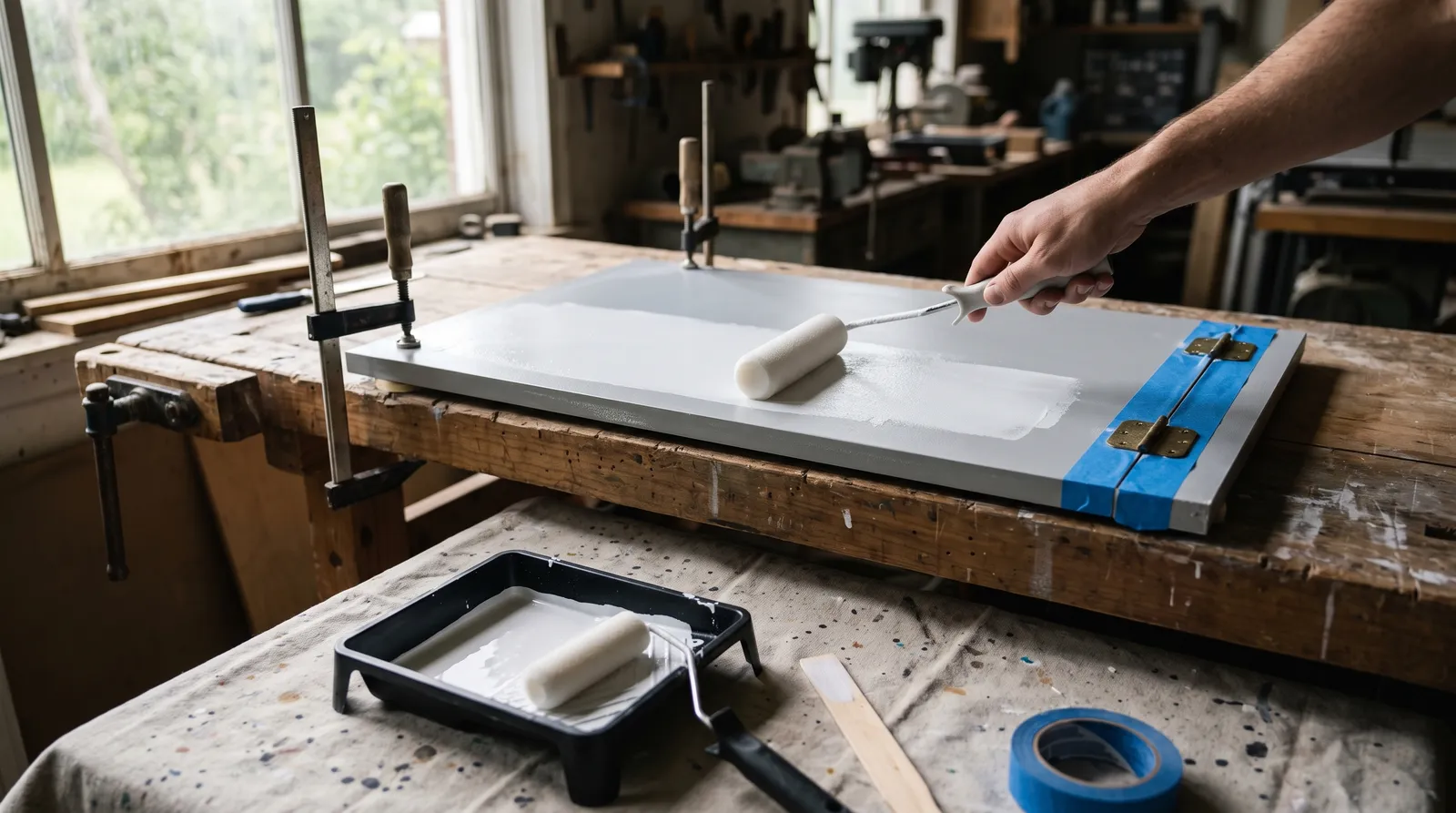
- Brushes, rolls, and sprays cleanly. A 3/8-inch nap roller is the working cover for cabinet doors and flat panels; it lays a thin even film without ridges. Tack-free in about 30 minutes and low odor at under 50 g/L, so a second coat an hour later is realistic in an occupied kitchen. Cleanup is soap and warm water.
- Primer
- This is the bond coat, so the prep under it is short but not optional. Clean and degrease first — the primer has to wet the surface, and it cannot wet grease. Dull the worst of the gloss for margin. Where the surface is also stained — knots, water rings, old nicotine — spot-prime those areas with shellac first, then bond-coat over everything.
The 14-Day Topcoat Window
This primer runs on a clock, and the clock is the part people miss. It is tack-free in about 30 minutes and recoats as a primer in an hour, so priming in the morning and enamelling in the afternoon is a normal day. Where it slows down is when you are leaning on it: allow 4 hours over a sealed stain, and 24 hours before a high-performance finish like an epoxy or urethane goes over it. Then the hard rule — topcoat within 14 days. The bond your finish makes is to a clean, fresh primer film, and a bonding coat left for weeks collecting dust quietly loses the grip the topcoat depends on. Prime when you are ready to paint, not weeks ahead of it. If the job stalls past two weeks, scuff and re-prime before you topcoat.
Mid-project panic
When It Goes Wrong, and How to Fix It
A thin, patchy prime coat over a dark color
Why it happens. The data sheet sells 0.9 mils dry as a virtue, and chemically it is one — a tight bonding film that grips without building. On the job that same number reads as a coverage problem. Crews describe it going on very thin even after the store tints it to the light P shade that is supposed to help it hide, and one pass over a dark or rich existing color leaves a streaky, uneven undercoat.
The fix. Budget two coats and the extra hour of recoat time instead of one, especially on cabinet doors where a thin prime coat telegraphs straight through the enamel. If your surface is a mild off-white and coverage is your only worry, a cheaper sealing primer hides more per pass — but it will not do the gripping.
A stain ghosting back through the finished topcoat
Why it happens. Extreme Bond is a bonding primer, not a stain blocker, and those are different formulation jobs. The waterborne acrylic film seals light everyday marks, but Sherwin-Williams tells you plainly to lock down heavy water, smoke, ink, pencil, and grease stains with a dedicated primer/sealer first. Tannin from cedar or knotty pine and set-in water rings migrate straight up through it.
The fix. Spot-prime the stains with a shellac primer such as Zinsser B-I-N, which dries from alcohol into a non-aqueous barrier the stain has no solvent path to cross, then bond-coat over the whole surface. On a slick door that is also nicotine-stained, BIN can cover both jobs on its own.
Topcoat peeling off a glossy door months later
Why it happens. Two causes, and both are about wetting. Either the bonding coat was skipped and the finish is a skin resting on a low-energy surface, or the primer was contaminated before it could wet out — a coating cannot bond to a substrate it is not in intimate contact with, and it cannot make contact through grease.
The fix. Clean and degrease first so the primer can wet the surface, dull the worst of the gloss for margin, prime, then topcoat inside the 14 days. Sherwin-Williams says sanding may not be necessary on most clean, paintable surfaces, and the wetting chemistry is why — but the degrease is not optional.
It will not grip a plastic part at all
Why it happens. The substrate list is wide but it is not universal. Polypropylene, polyethylene, and thermoplastic polyolefins are excluded, and no amount of prep changes that — those polymers are so low in surface energy that the acrylic cannot develop specific adhesion across the interface.
The fix. Identify the plastic before you buy. Extreme Bond is also ruled out for floors and for wet areas such as showers and around tubs. For large exterior pre-finished metal siding, Sherwin-Williams points you to DTM Bonding Primer instead.
Nibs and dust specks that fight the sandpaper
Why it happens. The cured film does not sand as easily as other primers. That is the flip side of what makes it work: it is a thin, tight, firm acrylic film built to grip, not a soft high-build coat designed to be cut back.
The fix. Knock nibs down with a fine grit and a light hand, then vacuum before the topcoat. If the real problem is a surface that needs levelling — grain, sand scratches, dings — use a high-build sanding primer in addition to the bond coat, not instead of it.
Side by side
Extreme Bond vs INSL-X Stix vs Zinsser B-I-N
These three get cross-shopped for the same slick cabinet door, and they are not interchangeable. Two are bonding primers with different binders; the third is a stain blocker that happens to bond well. Match the primer's chemistry to the problem you actually have.
| Extreme Bond | INSL-X Stix | Zinsser B-I-N | |
|---|---|---|---|
| Binder chemistry | Waterborne acrylic with wetting agents and adhesion promoters. | Acrylic-urethane, waterborne. | Shellac dissolved in alcohol — non-aqueous film. |
| Grip on the hardest factory films | Very good across laminate, glass, tile, PVC, aluminum, and cured gloss. | A hair more reliable on the very hardest factory films; the urethane binder wets out a notch better. | Bonds well to glossy surfaces, though bonding is not what it was built for. |
| Stain and tannin blocking | Weak. Seals light marks only; heavy water, smoke, ink, grease, and wood tannin pass through. | Not its job either. | The benchmark. Locks down tannin, knots, nicotine, water rings, and odors. |
| Topcoat range | The widest in the category — latex, oil/alkyd, epoxy, urethane, and lacquer. | Broad, but most waterborne bonders tell you to avoid lacquer. | Takes most finishes; it is a spot and full-prime workhorse. |
| Film character | Cures a touch firmer and less flexible — a good trade on rigid cabinets, tile, and trim. | Stays a little more flexible. | More brittle than either acrylic film. |
| Odor and cleanup | Low odor, under 50 g/L, GREENGUARD Gold, soap and water. | Waterborne, water cleanup. | Alcohol fumes; needs serious ventilation. |
| Price | $55–70 / gal | $50–65 / gal | $25–35 / quart |
| Where it wins | Slick cabinets and trim primed and topcoated from one SW counter, under any finish including lacquer. | The pro default when the substrate is the hardest thing you have ever tried to paint. | Anything stained — and a slick surface that is stained too. |
Binder chemistry
Extreme BondWaterborne acrylic with wetting agents and adhesion promoters.
INSL-X StixAcrylic-urethane, waterborne.
Zinsser B-I-NShellac dissolved in alcohol — non-aqueous film.
Grip on the hardest factory films
Extreme BondVery good across laminate, glass, tile, PVC, aluminum, and cured gloss.
INSL-X StixA hair more reliable on the very hardest factory films; the urethane binder wets out a notch better.
Zinsser B-I-NBonds well to glossy surfaces, though bonding is not what it was built for.
Stain and tannin blocking
Extreme BondWeak. Seals light marks only; heavy water, smoke, ink, grease, and wood tannin pass through.
INSL-X StixNot its job either.
Zinsser B-I-NThe benchmark. Locks down tannin, knots, nicotine, water rings, and odors.
Topcoat range
Extreme BondThe widest in the category — latex, oil/alkyd, epoxy, urethane, and lacquer.
INSL-X StixBroad, but most waterborne bonders tell you to avoid lacquer.
Zinsser B-I-NTakes most finishes; it is a spot and full-prime workhorse.
Film character
Extreme BondCures a touch firmer and less flexible — a good trade on rigid cabinets, tile, and trim.
INSL-X StixStays a little more flexible.
Zinsser B-I-NMore brittle than either acrylic film.
Odor and cleanup
Extreme BondLow odor, under 50 g/L, GREENGUARD Gold, soap and water.
INSL-X StixWaterborne, water cleanup.
Zinsser B-I-NAlcohol fumes; needs serious ventilation.
Where it wins
Extreme BondSlick cabinets and trim primed and topcoated from one SW counter, under any finish including lacquer.
INSL-X StixThe pro default when the substrate is the hardest thing you have ever tried to paint.
Zinsser B-I-NAnything stained — and a slick surface that is stained too.
If the surface is slick and clean, Extreme Bond and Stix are close enough that the deciding factor is which counter you are standing at, with Stix holding a small edge on the very hardest factory films and Extreme Bond holding the wider topcoat rating and the one-hour recoat. If the surface is stained, neither one is the answer on its own — spot-prime with BIN, then bond-coat. And if the surface is bare drywall, plaster, or raw lumber, skip all three and buy a cheaper sealing primer, because you are paying for adhesion you do not need.
If not this one
Honest Alternatives
IX
INSL-X Stix Bonding Primer$50–65 / gal
The pro default and the closest head-to-head rival. Its acrylic-urethane binder stays a little more flexible and wets out a hair more reliably on the very hardest factory films. Extreme Bond answers with a faster one-hour recoat and a wider topcoat rating.
Full review →ZB
Zinsser B-I-N Shellac-Based Primer$25–35 / quart
The opposite chemistry on purpose. Alcohol-borne shellac dries to a tight non-aqueous barrier that locks down tannin, knots, nicotine, water rings, and odors Extreme Bond lets pass, and it bonds to gloss too. The trade is fumes, ventilation, and a more brittle film.
KA
KILZ Adhesion Bonding Primer$25–35 / gal
The value bonder, aimed at the same slick substrates and easy to grab at a big-box store. It grips glossy and laminate surfaces well and is the sensible pick when you are nowhere near a Sherwin-Williams. The SW and BM bonders wet out a notch more consistently on the toughest factory finishes.
Full review →Questions people actually ask
Extreme Bond Primer Questions, Answered
Is Sherwin-Williams Extreme Bond Primer worth it?
If your surface is slick — laminate, glass, tile, PVC, or cured cabinet gloss — yes. At roughly $55 to $70 a gallon it is the cheapest insurance there is against a topcoat that peels off in a sheet, and it accepts almost any finish over it, including epoxy, urethane, and lacquer. It is not worth it on ordinary drywall or as a stain blocker, where a cheaper sealing primer or shellac does more. Budget two coats over dark colors, because it lays down thin.
Do I need a bonding primer or can I just scuff-sand?
On a factory finish — laminate, cured cabinet enamel, glazed tile — scuff-sanding alone rarely holds. You can rough the broad faces, but not the routed profiles and inside corners where doors actually wear, and a glass-hard film barely develops tooth. Extreme Bond is built to wet and grip those low-energy surfaces chemically. Sand to clean and dull the gloss, then let the primer do the gripping the sandpaper cannot reach.
Can I topcoat Extreme Bond with any paint?
Effectively yes. Sherwin-Williams rates it for oil/alkyd, latex, epoxy, urethane, and even lacquer topcoats, which is wider than most waterborne bonding primers allow. The cured acrylic is solvent-tolerant enough not to lift when a hot lacquer solvent hits it, which is a real formulation strength. The one discipline that matters is timing: topcoat within 14 days.
How soon do I have to topcoat Extreme Bond Primer?
Within 14 days, per Sherwin-Williams. As a primer it recoats in about an hour, so you can prime in the morning and enamel in the afternoon. Letting a bonding primer sit for weeks collecting dust quietly weakens the bond the topcoat depends on. If a job stalls past two weeks, scuff and re-prime before you topcoat.
Does Extreme Bond block stains?
Not really, and this is its honest limitation. The waterborne acrylic film seals light everyday marks, but Sherwin-Williams tells you to lock down heavy water, smoke, ink, pencil, and grease stains with a dedicated primer/sealer first. Tannin from cedar or knotty pine and set-in water rings will migrate up through it. Spot-prime those with shellac, then bond-coat over the whole surface.
How many coats of Extreme Bond do I need?
One coat is enough for adhesion. Two coats is what you need for coverage over a dark or rich existing color, because the film is only about 0.9 mils dry and stays thin even after the store tints it to the light P shade. On cabinet doors, budget two — a patchy prime coat telegraphs straight through the enamel.
Extreme Bond or INSL-X Stix?
They are close. Stix runs an acrylic-urethane binder that stays a little more flexible and grips a hair more reliably on the very hardest factory films. Extreme Bond recoats faster at one hour and carries a wider topcoat rating that includes lacquer. If you are already standing at a Sherwin-Williams counter buying the enamel, Extreme Bond is the one in front of you.
Can I use Extreme Bond on a floor or in a shower?
No. Sherwin-Williams excludes floors and wet areas such as showers and around tubs. Those are different service conditions with abrasion and standing water, and a thin bonding film is not built for either. Look at a floor coating or a wet-area system instead.
Can Extreme Bond be tinted?
Only lightly. It is a white base and takes up to 2 oz of ColorCast Ecotoner per gallon, which shades it toward a light P range. That helps a little under a light topcoat, but it does not turn it into a colored undercoat, and crews still describe it as looking thin once tinted. Plan two coats over dark colors rather than expecting the tint to do the hiding.
Does Extreme Bond work on plastic?
On many plastics, yes — PVC, fiberglass, and general plastics are on the rated list. It will not adhere to polypropylene, polyethylene, or thermoplastic polyolefins. Those polymers are too low in surface energy for the acrylic to develop adhesion across the interface, and no prep fixes that. Identify the plastic before you buy.
Keep exploring
Sherwin-Williams brand guide and product lineupSherwin-Williams ProClassic — the trim and cabinet enamel this primes forEmerald Urethane Trim Enamel — the harder cabinet topcoat
We may earn a commission when you buy through the retailer link above. It never changes the score or the verdict.
Ask a Question