Product review · Dunn-Edwards · Updated August 7, 2026
DecogloDunn-Edwards paint review
8.2/10The most focused cabinet enamel Dunn-Edwards makes, and the wrong $81 the moment the job touches metal or the outdoors.
Decoglo is the one Dunn-Edwards product built only for cabinets, doors, and trim, and the roughly 7-day full cure is the reason to care: a kitchen back to normal use in a week instead of most of a month.

Maya Patel · Reviews Editor & Product Tester · Updated August 7, 2026
Maya spent five years running comparative product testing at a consumer testing nonprofit before joining CompositePaint. She has lined Decoglo up against the national cabinet enamels on the same Shaker doors, and she reads the block-resistance panel before she reads the box copy. About the testing process →
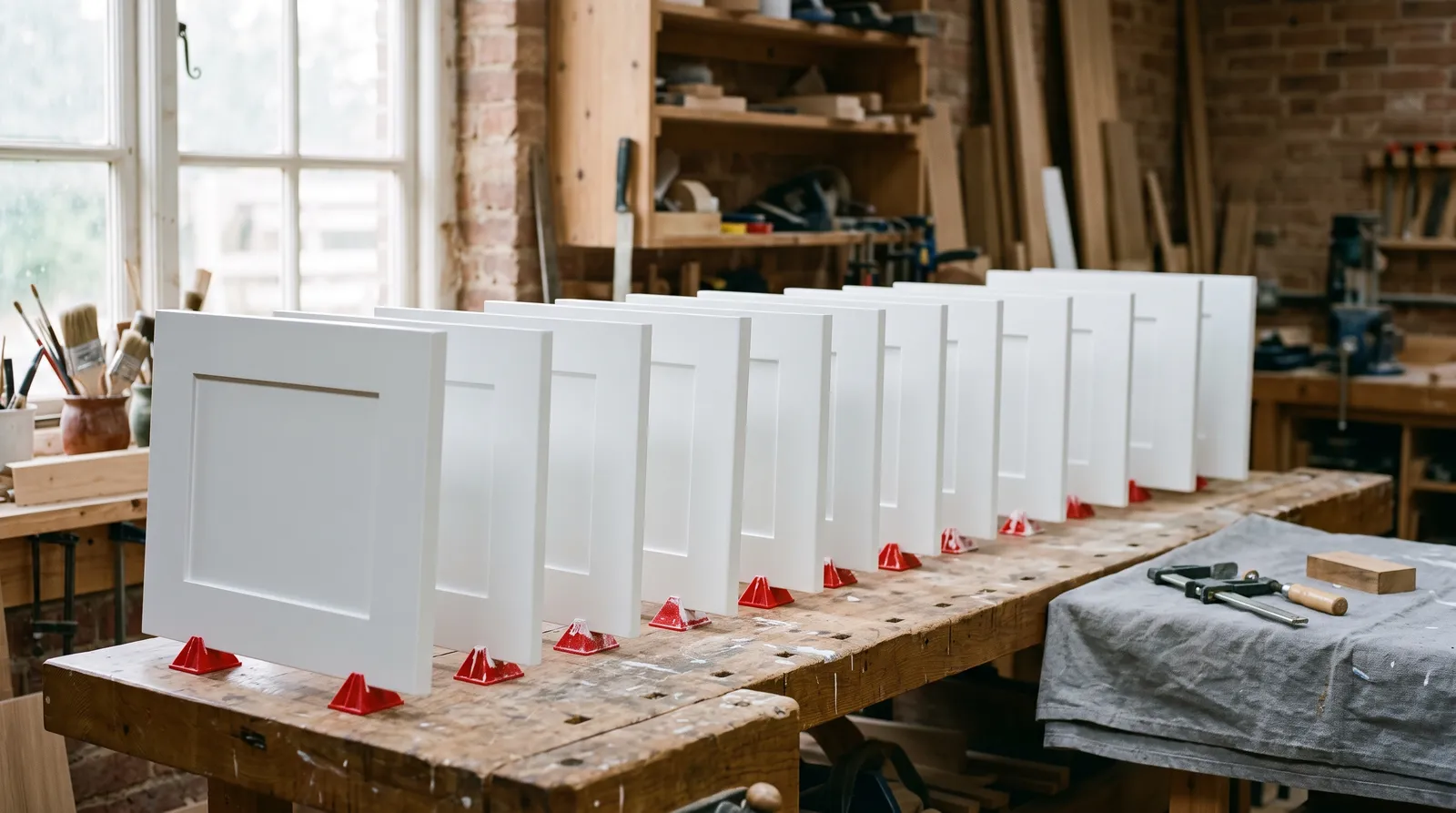
Dunn-Edwards Decoglo2 sheens
Dry / RecoatTouch about 1 hr
VOCUltra-low: 50 g/L or less
Full cureAbout 7 days at 77°F and 50% RH
Sheens EggshellSemi-Gloss
Read this first
The Fast Verdict
Buy it if the job is interior cabinets, doors, or trim and a Dunn-Edwards store is reachable. The urethane-modified acrylic flows out to a lacquer-like film, the block and scuff numbers beat the national cabinet enamels it lines up against, and the roughly 7-day cure puts a kitchen back to use in a week instead of a month. It self-primes on most sound repaints. It is the wrong pick the moment the same project also has metal or an exterior surface.
Best for
Interior kitchen cabinets · Doors and trim · Crown molding · Furniture · Sound repaints where self-priming saves a day · Spraying
Skip if
The job also has metal or exterior surfaces · You need a 5-gallon pail · Brushing a full kitchen in one day · No Dunn-Edwards store nearby · You want a true high gloss
What it's good at
- Flowing out to a lacquer-like film with real depth on Shaker and raised-panel doors
- A roughly 7-day full cure, half or less what a waterborne alkyd wants
- Block resistance, backed by a lab panel that beats the national cabinet enamels it lines up against
- Scuff resistance, so a knuckle or a dragged pan leaves less of a mark
- Self-priming on most sound repaints, which saves a product and a day
- An honest ultra-low VOC at 50 g/L or less, mild enough for a kitchen you still live in
- Chemical resistance, rated Excellent across most of the KCMA and MPI panel
What it's not good at
- Brush-and-roll recoat, at 6 hours and ideally 24, which makes a hand-brushed kitchen a two-day job
- Bare new wood and slick factory surfaces, which still need a separate primer
- Metal and exterior work, which it is not rated for at all
- Big cabinet packages, since there is no 5-gallon pail and no bulk break
- Availability outside California, Arizona, Nevada, Texas, and New Mexico
- High gloss, which the line does not offer
Numbers, not adjectives
Spec Sheet
- Coverage
- 335–385 sq ft / gal at recommended film build
- Sheens
- Eggshell, Semi-Gloss (semi-gloss reads 40–50% on a 60-degree meter)
- Resin
- Waterborne urethane-modified acrylic
- Dry / Recoat
- Touch about 1 hr · recoat 2 hr by spray, 6 hr by brush and roll (24 hr for best)
- Full cure
- About 7 days at 77°F and 50% RH
- VOC
- Ultra-low: 50 g/L or less, RAVOC 40 g/L; EG-free and TAC/HAP-free, uses propylene glycol
- Primer
- Self-priming on most prepped surfaces; Decoprime on new wood, Ultra-Grip Premium on slick or factory-finished
- Surfaces
- Interior wood cabinets, doors, trim, crown molding, furniture
- Application
- Brush, roller (1/4 to 3/8-inch nap), airless 1,800–2,500 psi with a .013 to .015 tip
- Sizes
- Quart and gallon; no 5-gallon
- Certifications
- CARB 2007 SCM and CALGreen 2019; CDPH v1.2; LEED v4/v4.1; MPI #141 and #153; GreenWise Certified
- Price
- About $81 / gal, quart about $23 at Dunn-Edwards stores
Application Settings That Work
- Brush
- A quality sash brush is all it asks for, and the leveling is the reason to pay up. On flat slab doors, a 1/4 to 3/8-inch nap roller works if you tip off immediately while the film is open. Work short sections and keep a wet edge, because it sets fast.
- Airless
- 1,800 to 2,500 psi with a .013 to .015 tip. Spraying is how you get the most out of this product: a flatter film and a 2-hour recoat instead of 6.
- Primer
- Self-priming on most properly prepped, previously painted surfaces, where a single coat can be enough. Two exceptions: Decoprime on bare new wood for sandability and holdout, and Ultra-Grip Premium on slick or factory-finished laminate and melamine.
The 7-Day Cure, and the Recoat That Slows You Down
The cure is the reason to buy it and the recoat is the reason to plan. Decoglo is touch dry in about an hour and recoats in 2 hours if you spray. Brush and roll wants 6 hours, and Dunn-Edwards recommends a full 24 for best results, so a hand-brushed kitchen is a two-day job no matter how good the first coat looks at lunchtime. Full cure lands at roughly 7 days at 77°F and 50% relative humidity, against the 14 to 30 days a waterborne alkyd like Aristoshield or Benjamin Moore Advance wants. That week is the practical win: you rehang doors and use the cabinets gently within a day or two, and by the following weekend the film is done hardening. During that first week, close doors gently and keep heavy items off fresh shelves so you do not print or block a film that is still soft.
Mid-project panic
When It Goes Wrong, and How to Fix It
The brush drags and tears a half-set coat
Why it happens. The same fast-setting film that levels so well turns against you if you go back into it. Going over a section that has started to set pulls the film instead of flowing it.
The fix. Work in short sections and keep a wet edge. Do not recoat before 6 hours by brush and roll, and give it the full 24 if the finish matters. If you own or can rent a sprayer, that is the happy path here: a 2-hour spray recoat and a flatter lay-down.
The finish peels off laminate or melamine doors
Why it happens. Self-priming on most prepped surfaces is true, but it has limits. Slick, factory-finished laminate and melamine give an enamel nothing to key into.
The fix. Prime those surfaces with Ultra-Grip Premium first. The self-priming claim covers sound previously painted repaints, not glossy factory panels.
Bare new wood sands rough and drinks the enamel
Why it happens. Raw wood has no holdout, so the first coat soaks in unevenly and does not sand back clean.
The fix. Prime new bare wood with Decoprime, which is the companion product for exactly this: sandability and enamel holdout under the topcoat. Budget the primer and the extra step on raw substrates.
A touched-up spot flashes on semi-gloss
Why it happens. Every gloss enamel does this. A dabbed repair dries at a different sheen and film thickness than the cured film around it, and raking light finds it.
The fix. Recoat the whole door, drawer front, or run of trim rather than dabbing. If you expect touch-ups on a busy kitchen, the eggshell sheen blends repairs cleanly and is the safer choice.
Side by side
Decoglo vs Aristoshield vs Benjamin Moore Advance
Cross-shopping Decoglo against Aristoshield is the most common Dunn-Edwards mistake, and the answer is not which is better but what else is on your list. Advance is the national yardstick both get measured against.
| Decoglo | Aristoshield | BM Advance | |
|---|---|---|---|
| Chemistry | Urethane-modified acrylic | Waterborne urethane alkyd | Waterborne alkyd |
| What it is rated for | Interior wood cabinets, doors, trim, crown molding, furniture | Interior and exterior, plus direct-to-metal on prepared plain steel | Interior trim, doors, and cabinets |
| Full cure | About 7 days | Roughly 14–30 days | 14–30 days |
| Priming | Self-priming on most prepped repaints; Decoprime on new wood, Ultra-Grip on slick | Not self-priming; a substrate-matched primer on nearly everything | Bonding primer on slick or bare substrates |
| Sheens | Eggshell and Semi-Gloss | Eggshell through High Gloss | Deeper color deck across its sheens |
| Sizes | Quart and gallon only, no 5-gallon | Quart and gallon online; 5-gallon through a store | Widely stocked at Benjamin Moore dealers |
| Price per gallon | About $81 | $92–102 online, roughly $75 in-store | $80–95 |
| Where it wins | A straight interior cabinet, door, and trim refinish with the fewest prime steps and the fastest cure | A whole-house job that also touches metal, the outdoors, or a true high gloss | Anywhere outside the Dunn-Edwards footprint, on a deeper color deck |
Chemistry
DecogloUrethane-modified acrylic
AristoshieldWaterborne urethane alkyd
BM AdvanceWaterborne alkyd
What it is rated for
DecogloInterior wood cabinets, doors, trim, crown molding, furniture
AristoshieldInterior and exterior, plus direct-to-metal on prepared plain steel
BM AdvanceInterior trim, doors, and cabinets
Priming
DecogloSelf-priming on most prepped repaints; Decoprime on new wood, Ultra-Grip on slick
AristoshieldNot self-priming; a substrate-matched primer on nearly everything
BM AdvanceBonding primer on slick or bare substrates
Sheens
DecogloEggshell and Semi-Gloss
AristoshieldEggshell through High Gloss
BM AdvanceDeeper color deck across its sheens
Sizes
DecogloQuart and gallon only, no 5-gallon
AristoshieldQuart and gallon online; 5-gallon through a store
BM AdvanceWidely stocked at Benjamin Moore dealers
Where it wins
DecogloA straight interior cabinet, door, and trim refinish with the fewest prime steps and the fastest cure
AristoshieldA whole-house job that also touches metal, the outdoors, or a true high gloss
BM AdvanceAnywhere outside the Dunn-Edwards footprint, on a deeper color deck
For a clean kitchen cabinet refinish inside the Dunn-Edwards footprint, Decoglo wins on focus: faster cure, fewer prime steps, and a film tuned for the exact abuses cabinets take. Reach for Aristoshield when the cabinet job is really a whole-house job that also has railings, a steel door, or an exterior surface on it. Outside the footprint, Advance is the easier buy, and it asks you to baby the doors for weeks rather than days.
If not this one
Honest Alternatives
BM
Benjamin Moore Advance$80–95 / gal
The national equivalent and the default cabinet enamel for most of the country. A waterborne alkyd with a deeper color deck and far broader store coverage. It levels superbly, arguably a hair smoother on long pulls, but it wants 14 to 30 days to fully harden where Decoglo is done in about 7.
Full review →SW
Sherwin-Williams Emerald Urethane Trim Enamel$95–110 / gal
The hardest cured film in the trim-and-cabinet category, with a 4-hour recoat that can collapse a job to a single weekend, stocked nationally. Smaller color reach into deep tones and a faint ammonia smell that wants ventilation.
Full review →IX
INSL-X Cabinet Coat$50–55 / gal
Cabinets on a budget: a waterborne alkyd-style enamel at roughly two-thirds Decoglo's price and much easier to find. You give up some of the block and chemical resistance and the fast cure, but on white cabinets in an indirect-light kitchen it is most of the finish for less money.
Full review →Questions people actually ask
Decoglo Questions, Answered
Is Dunn-Edwards Decoglo worth it?
For interior cabinets, doors, and trim, yes. It is the purpose-built pick in the Dunn-Edwards line, with lacquer-like flow and leveling, lab-backed block and scuff resistance that beats the national cabinet enamels, and a roughly 7-day full cure that puts a kitchen back to use in a week. At about $81 a gallon it is premium money, and it asks for a slow 6-to-24-hour recoat if you brush rather than spray. It is not worth it if the job also includes metal or an exterior surface, if you need a 5-gallon pail, or if you are far from a Dunn-Edwards store.
Decoglo or Aristoshield for cabinets?
For cabinets specifically, Decoglo. It is the urethane-modified acrylic Dunn-Edwards engineered around cabinet abuse, it reaches full cure in about 7 days versus the 14 to 30 a waterborne alkyd wants, and it self-primes on most prepped repaints. Choose Aristoshield instead when the same job includes metal, an exterior surface, or a true high gloss. For a straightforward interior refinish, Decoglo is the more focused tool.
Do I need Decoprime primer?
Not always. Decoglo is self-priming on most prepped, previously painted surfaces, and on a sound repaint that has been cleaned and scuff-sanded one coat can be enough. You do want a primer in two cases: on new bare wood, where Decoprime gives the best sandability and enamel holdout, and on slick or factory-finished surfaces like laminate and melamine, where Ultra-Grip Premium is the bonding primer Dunn-Edwards specs.
How soon can I use the cabinets after painting Decoglo?
It is touch dry in about an hour and recoatable in 2 hours by spray, or 6 hours (ideally 24) by brush and roll. You can rehang doors and use the cabinets gently within a day or two, but the film keeps hardening until full cure at roughly 7 days at 77°F. For that first week, close doors gently and keep heavy items off fresh shelves so you do not print or block the soft film.
Should I spray Decoglo or can I brush it?
Both work, and the leveling is good enough that a brushed Shaker door reads close to sprayed. The difference is schedule. Spray recoats in 2 hours; brush and roll wants 6, with 24 recommended for the best result. Spraying is how you get the most out of it. If you are brushing a full kitchen, plan two days rather than one long one.
Which sheen should I pick, eggshell or semi-gloss?
Semi-gloss is the classic wipeable cabinet sheen and reads 40 to 50% on a 60-degree meter. Eggshell is the softer look, and it has one practical advantage: it blends repairs cleanly, where semi-gloss flashes at a patch under raking light. If the kitchen is busy and you expect touch-ups, eggshell is the more forgiving choice.
Does Decoglo come in a 5-gallon?
No. It is sold in quarts and gallons only. For a whole-house cabinet package that means buying gallons by the handful with no bulk break, which is one of the few places Aristoshield has the advantage, since it has a 5-gallon in its packaging list. For a single bathroom vanity, the quart at about $23 is the smarter buy.
How does Decoglo compare to Benjamin Moore Advance?
Advance is the national default and levels superbly, arguably a hair smoother on long pulls, with a deeper color deck and far more dealers. The trade is cure time: Advance wants 14 to 30 days to fully harden, where Decoglo is done in about 7, so Advance asks you to baby the doors much longer. Pick Advance if you are outside Dunn-Edwards territory.
Can I use Decoglo on a metal cabinet or an exterior door?
No. Decoglo is rated for interior wood cabinets, doors, trim, crown molding, and furniture. Metal and exterior surfaces are outside what it covers. That is the job Aristoshield does, since it is rated interior and exterior and goes direct to metal on properly prepared plain steel.
Keep exploring
Dunn-Edwards brand guide and product linesDunn-Edwards Aristoshield reviewBest paint for kitchen cabinets
We may earn a commission when you buy through the retailer link above. It never changes the score or the verdict.
Ask a Question