Product review · Clare · Updated June 10, 2026
Trim & Door PaintClare · Subtle Semi-Gloss
8.0/10Yes on trim and doors, no on a hard-use kitchen — the restraint in the sheen is what you're paying for.
Run your hand down a baseboard in Clare's Subtle Semi-Gloss and the first thing you notice is what it does not do. It does not throw a hard reflection back at the window.

Jessica Williams · Color Stylist & Interior Editor · Updated June 10, 2026
Jessica spent eight years styling residential interiors in Chicago and Charleston before moving into editorial work. She judges a trim finish by how a window casing reads at five o'clock, when the low west sun rakes across it. About the testing process →
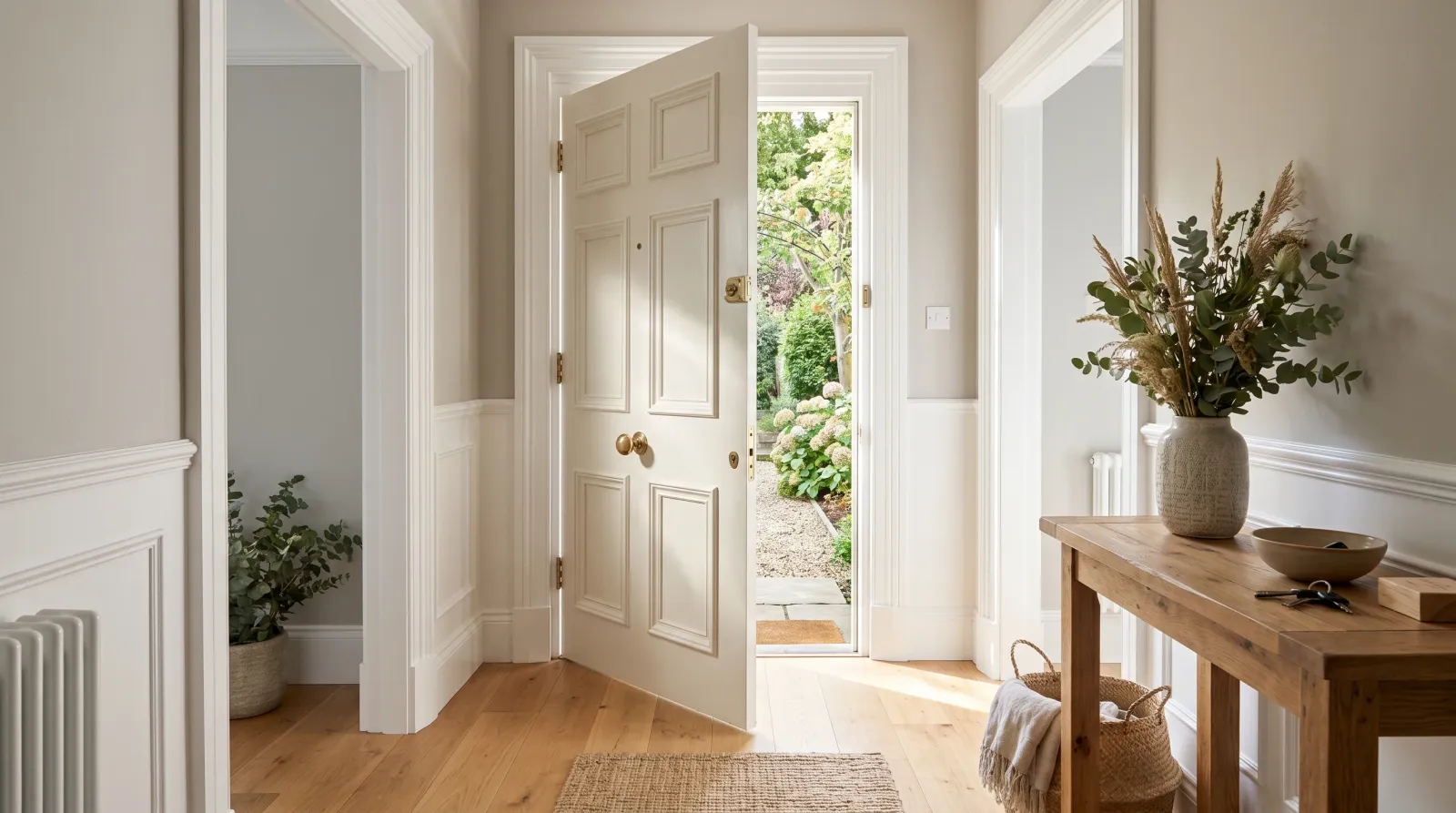
Clare Trim & Door Paint1 sheen
Coverage375–425 sq ft / gal
Dry / RecoatTouch dry 30–60 min
VOC2 g/L, sold as zero-VOC
Full cureAbout 2 weeks
Sheens Subtle Semi-Gloss only
Read this first
The Fast Verdict
Buy it when your walls are already Clare and you want the same shade carried onto the millwork in a quieter sheen than the big box sells. It reads as polished rather than shellacked, it is tinted from the same deck as the Wall Paint, and at 2 g/L with GREENGUARD Gold you can repaint a bedroom door with the windows barely cracked. It is a 100 percent acrylic, not a waterborne alkyd, so a full kitchen of hard-use cabinets is the wrong job for it.
Best for
Trim and baseboards · Interior doors and casings · Window frames · Small cabinet runs · Matching Clare walls · Low-odor work in an occupied home
Skip if
A full kitchen of hard-use cabinets · You want a self-levelling alkyd · You need to buy locally or return it · You already have a trim white from another brand
What it's good at
- A sheen that reads as soft polish rather than glare on millwork
- Carrying one shade from wall to trim with no cross-brand color shift
- Zero-VOC at 2 g/L and GREENGUARD Gold, so trim work in an occupied house stays liveable
- Brushing forgivingly on baseboards and casings, with honest two-coat hide
- Wiping clean — vacuum scuffs, fingerprints around a pull, and a mudroom splash all come off with mild soap
- Being mildew-resistant, which matters on bathroom and mudroom millwork
What it's not good at
- Levelling like a waterborne alkyd; long door panels keep light brush texture
- Hard-use kitchen cabinets, where edge wear shows at the pulls sooner
- Being ready fast — full hardness takes the whole two-week cure
- Flexibility: no store, no 5-gallon, quart sizes that cycle in and out of stock, everything final sale
- Matching a Benjamin Moore or Sherwin-Williams trim white you already love
Same shelf, different cans
Picking the Right Clare Finish
Clare sells under one umbrella, and the finish you choose at checkout decides what shows up at your door. This review is the Subtle Semi-Gloss Trim Paint.
Clare Trim Paint
SheensSubtle Semi-Gloss
Buy it if
Trim, doors, baseboards, moldings, window frames, and small cabinet runs.
Avoid if
Flat walls — the higher sheen shows every roller line and surface flaw.
Clare Wall Paint
SheensEggshell
Buy it if
Interior walls, in the same color.
Avoid if
A door you grab fifty times a day; it burnishes at the knob.
Clare Ceiling Paint
SheensFlat
Buy it if
Ceilings.
Avoid if
Anything you will need to wipe down.
Clare Primer
Buy it if
Dark, glossy, or stained surfaces and factory-finished cabinet doors, before the color.
Avoid if
Previously painted trim in good shape going to a similar tone.
Numbers, not adjectives
Spec Sheet
- Coverage
- 375–425 sq ft / gal, two coats factored in
- Finish
- Subtle Semi-Gloss only — one finish for trim, doors, and cabinets
- Resin
- 100 percent acrylic (not a waterborne alkyd)
- Dry / Recoat
- Touch dry 30–60 min · recoat 4–6 hr
- Full cure
- About 2 weeks
- VOC
- 2 g/L, sold as zero-VOC; GREENGUARD Gold certified
- Primer
- Self-priming on prepped, similarly toned surfaces; Clare Primer or a bonding primer on glossy, dark, or factory-finished cabinets
- Surfaces
- Trim, doors, baseboards, moldings, cabinets, window frames, high-touch walls
- Color deck
- About 60 curated colors, tinted from the same library as the Wall Paint
- Sizes
- Quart and gallon; $3 peel-and-stick swatches. No 5-gallon
- Where
- Clare.com direct; final sale; free shipping over $200, flat $10 under
- Price
- $77 / gal direct from Clare
Application Settings That Work
- Brush
- Brushes out cleanly enough that a careful weekend painter gets a respectable trim line without lap marks. It does not self-level like an alkyd, so keep coats thin and do not rework a section that has begun to set.
- Primer
- Previously painted trim in good shape going to a similar tone does not need it. Prime over dark colors, bare or porous wood, stains, and glossy factory cabinet finishes — on slick surfaces, skipping a bonding primer is where adhesion fails later.
The Cure Reality
Touch-dry in under an hour and recoatable at four to six, which is fine for getting a second coat on. Full hardness is a different clock: about two weeks. Hang a freshly painted door too soon and it can stick to the stop or print a fingernail. On cabinets that means keeping hands off the doors and not stacking anything against them for the better part of a month. People rush this and regret it, then blame the paint for a mark that is really a cure problem. Plan the job so the doors have somewhere to sit and the room can go unused, and the finish will reward the patience.
Mid-project panic
When It Goes Wrong, and How to Fix It
Light brush texture on a long door panel
Why it happens. It is a 100 percent acrylic, not a waterborne alkyd. An alkyd like Benjamin Moore Advance levels its own brush marks flat as it sets; an acrylic does not flow out as far, so a long flat panel keeps a little texture in raking light.
The fix. Thin coats, a good brush, and no going back into a section that has begun to set. If a glass-flat panel is the goal, the fix is chemistry, not technique — buy an alkyd for that surface.
A freshly painted door sticks to the stop or takes a fingernail print
Why it happens. The film is touch-dry in under an hour but does not reach full hardness for about two weeks, and people rehang and use doors well inside that window.
The fix. Give it as long as the schedule allows before the door goes back into daily service, and keep hands off cabinet faces and nothing stacked against them for the better part of a month.
Edge wear at the cabinet pulls in a busy kitchen
Why it happens. The sheen is right for cabinets and Clare markets it for them, but the acrylic stays softer than a cured waterborne alkyd, so a kitchen taking daily nails-and-knuckles abuse shows wear at the pulls sooner.
The fix. Use it on a small cabinet run, a vanity, or doors that see normal use. For a full daily-driver kitchen, a self-levelling alkyd like Advance is the tougher finish at similar money.
The sheen is highlighting a wavy old door
Why it happens. Any semi-gloss highlights an uneven plane more than a flat or an eggshell would. Clare's sits lower than most, so it forgives a little more, but only a little — Clare itself notes the finish is not the one for textured or uneven surfaces.
The fix. Sand tired millwork flat before you paint. Prep decides the outcome here more than the can does, and no sheen this side of a dead flat will hide a plane that is not true.
A touch-up patch flashes under raking light
Why it happens. Semi-gloss touches up better than the eggshell, but the higher sheen still shows a patch when the light rakes across it, and the same casing reads two ways between flat midday light and a low west sun at five.
The fix. Recoat the whole piece — the full door, the run of base to the corner — rather than dabbing. Test on a sample board in the actual room before you commit, the way Clare wants you to test the color.
Side by side
Clare Semi-Gloss vs BM Advance vs Behr Cabinet, Door & Trim
Same surfaces, three different bets: a quiet designer sheen, a hard alkyd, or a hardware-store price with a return counter.
| Clare Subtle Semi-Gloss | Benjamin Moore Advance | Behr Premium Cabinet, Door & Trim Enamel | |
|---|---|---|---|
| Price per gallon | $77 | $80–95 | $45–50 |
| Chemistry | 100 percent acrylic | Waterborne alkyd | Store-brand cabinet and trim enamel |
| Levelling out of a brush | Light brush texture on long panels | Levels its own brush marks flat | Brushes acceptably |
| Cured hardness and cure time | Softer; full hardness at about 2 weeks | Harder and more abuse-resistant; longer recoat window | Softer, with a 60-to-90-day cure and yellowing risk on whites in sun |
| Color deck | About 60 curated colors, matched to your Clare walls | The full 3,400-color deck mixed at a store | The Behr deck at Home Depot |
| Buying and returns | Clare.com only, final sale, no 5-gallon | At a Benjamin Moore dealer | Same-day pickup and a return counter |
| Where it wins | A few doors or a small run that must match Clare walls, quietly | A full kitchen of cabinets that has to stay hard | Budget jobs where pickup and returns matter |
Price per gallon
Clare Subtle Semi-Gloss$77
Benjamin Moore Advance$80–95
Behr Premium Cabinet, Door & Trim Enamel$45–50
Chemistry
Clare Subtle Semi-Gloss100 percent acrylic
Benjamin Moore AdvanceWaterborne alkyd
Behr Premium Cabinet, Door & Trim EnamelStore-brand cabinet and trim enamel
Levelling out of a brush
Clare Subtle Semi-GlossLight brush texture on long panels
Benjamin Moore AdvanceLevels its own brush marks flat
Behr Premium Cabinet, Door & Trim EnamelBrushes acceptably
Cured hardness and cure time
Clare Subtle Semi-GlossSofter; full hardness at about 2 weeks
Benjamin Moore AdvanceHarder and more abuse-resistant; longer recoat window
Behr Premium Cabinet, Door & Trim EnamelSofter, with a 60-to-90-day cure and yellowing risk on whites in sun
Color deck
Clare Subtle Semi-GlossAbout 60 curated colors, matched to your Clare walls
Benjamin Moore AdvanceThe full 3,400-color deck mixed at a store
Behr Premium Cabinet, Door & Trim EnamelThe Behr deck at Home Depot
Buying and returns
Clare Subtle Semi-GlossClare.com only, final sale, no 5-gallon
Benjamin Moore AdvanceAt a Benjamin Moore dealer
Behr Premium Cabinet, Door & Trim EnamelSame-day pickup and a return counter
Where it wins
Clare Subtle Semi-GlossA few doors or a small run that must match Clare walls, quietly
Benjamin Moore AdvanceA full kitchen of cabinets that has to stay hard
Behr Premium Cabinet, Door & Trim EnamelBudget jobs where pickup and returns matter
For a few doors, a window's worth of casing, or a small cabinet run where matching your Clare walls is the point, Clare is the buy and the quieter sheen is the reason. For a full kitchen that takes daily abuse, Advance costs about the same and is simply the tougher finish. For a budget job, Behr's enamel gets you same-day pickup and a return counter, at the cost of a longer, softer cure. Prep decides the outcome either way — any semi-gloss highlights an uneven plane, so sand tired millwork flat first.
If not this one
Honest Alternatives
BP
Behr Premium Cabinet, Door & Trim Enamel$45–50 / gal
Roughly $30 less a gallon, stocked at every Home Depot, and returnable. It brushes acceptably and the price is hard to argue with for a few doors. The trade is a softer 60-to-90-day cure and a higher yellowing risk on whites in direct sun.
BM
Benjamin Moore Advance$80–95 / gal
The default brush-and-roll cabinet paint. Its waterborne alkyd levels its own brush marks flat and cures to a harder, more abuse-resistant film than Clare's acrylic, which is what a daily-driver kitchen needs, plus the full 3,400-color deck. Similar cost, longer recoat window.
Full review →BS
Backdrop Semi-GlossAbout $59 / gal
The closest cross-shop to Clare's whole model: another direct-to-consumer brand with a curated deck, peel-and-stick swatches, and low-VOC paint shipped to your door, at a little less per gallon and with a slightly different palette.
Questions people actually ask
Trim & Door Paint (Subtle Semi-Gloss) Questions, Answered
Is Clare's semi-gloss too shiny for trim and doors?
No. Clare calls it a subtle semi-gloss, and the sheen sits lower than a hardware-store semi-gloss. It reads as a soft, polished trim rather than a glassy one — the light catches it gently along a baseboard or a door edge instead of bouncing. If you wanted a sharp, reflective enamel look, this finish will feel quieter than you expect.
Can I use Clare semi-gloss on kitchen cabinets?
Yes, with prep. It is the right sheen for cabinets and Clare markets it for them. The catch is cure: it is a 100 percent acrylic, not a waterborne alkyd, so it will not level or harden like Benjamin Moore Advance. Prime glossy or factory-finished doors with a bonding primer first, brush thin coats, and keep hands off for the full two-week cure.
Does Clare semi-gloss need primer?
Often no on previously painted trim in good shape going to a similar tone. Prime first when you are covering a dark color, bare or porous wood, stains, or a glossy factory cabinet finish. Going light over dark without primer, the old color ghosts through for several coats. On slick surfaces, skipping a bonding primer is where adhesion fails later.
Is it worth $77 a gallon?
For a few doors, a window's worth of trim, or a small cabinet run where the color match to your Clare walls matters, yes. You get a zero-VOC enamel in the same shade as the wall paint, shipped to your door. For a full kitchen of cabinets that takes daily abuse, a self-levelling alkyd like Advance is the harder-wearing pick at a similar price.
How long until the trim is fully hard?
About two weeks. It is touch-dry in under an hour and recoatable at four to six, which is fine for a second coat, but the film keeps hardening the whole fortnight. Rehang a door too early and it can stick to the stop or print a fingernail, and cabinet doors should not have anything stacked against them for the better part of a month.
Will the trim paint match my Clare wall color?
Yes. The Trim Paint is tinted from the same color library as the eggshell Wall Paint, so one shade runs from wall to trim with no cross-brand shift — the same warm white, just a touch more reflective. For anyone matching trim to a Clare wall, that is the cleanest way to do it.
Can I return Clare paint if I order the wrong color?
No. Everything is final sale, so a wrong-color order is money gone. That is the strongest argument for spending $3 on the peel-and-stick swatches first and living with them on the actual trim for a couple of days before you commit to a gallon.
What sizes does Clare Trim Paint come in?
Quart and gallon, plus $3 peel-and-stick swatches. There is no 5-gallon, so a whole-house trim package means stacking gallons, and the quart sizes cycle in and out of stock. Free shipping starts at $200 and it is a flat $10 below that.
Will it hide a wavy old door?
Only a little. Clare pulls the sheen down a notch from a traditional semi-gloss, so it scatters more of the light it catches and forgives more of the surface underneath. But any semi-gloss highlights an uneven plane, and on a wavy old door or an unsanded baseboard the sheen will tell on you. Sand it flat first.
Keep exploring
Clare paint brand overviewBest interior trim paint round-upWhat a semi-gloss finish actually doesSatin vs semi-gloss for trim and doors
We may earn a commission when you buy through the retailer link above. It never changes the score or the verdict.
Ask a Question