C2 Guard Wood & Masonry SealerC2 paint review
It soaks into the wood instead of filming over it, so there is nothing to peel. The second time you finish the deck is a wash-and-recoat instead of a strip job.

22 years running residential and light commercial repaints. Mark has stripped enough peeling film stains off pressure-treated decks to have strong opinions about penetrating finishes, and he still takes side jobs to keep the numbers honest. About the testing process →
The Fast Verdict
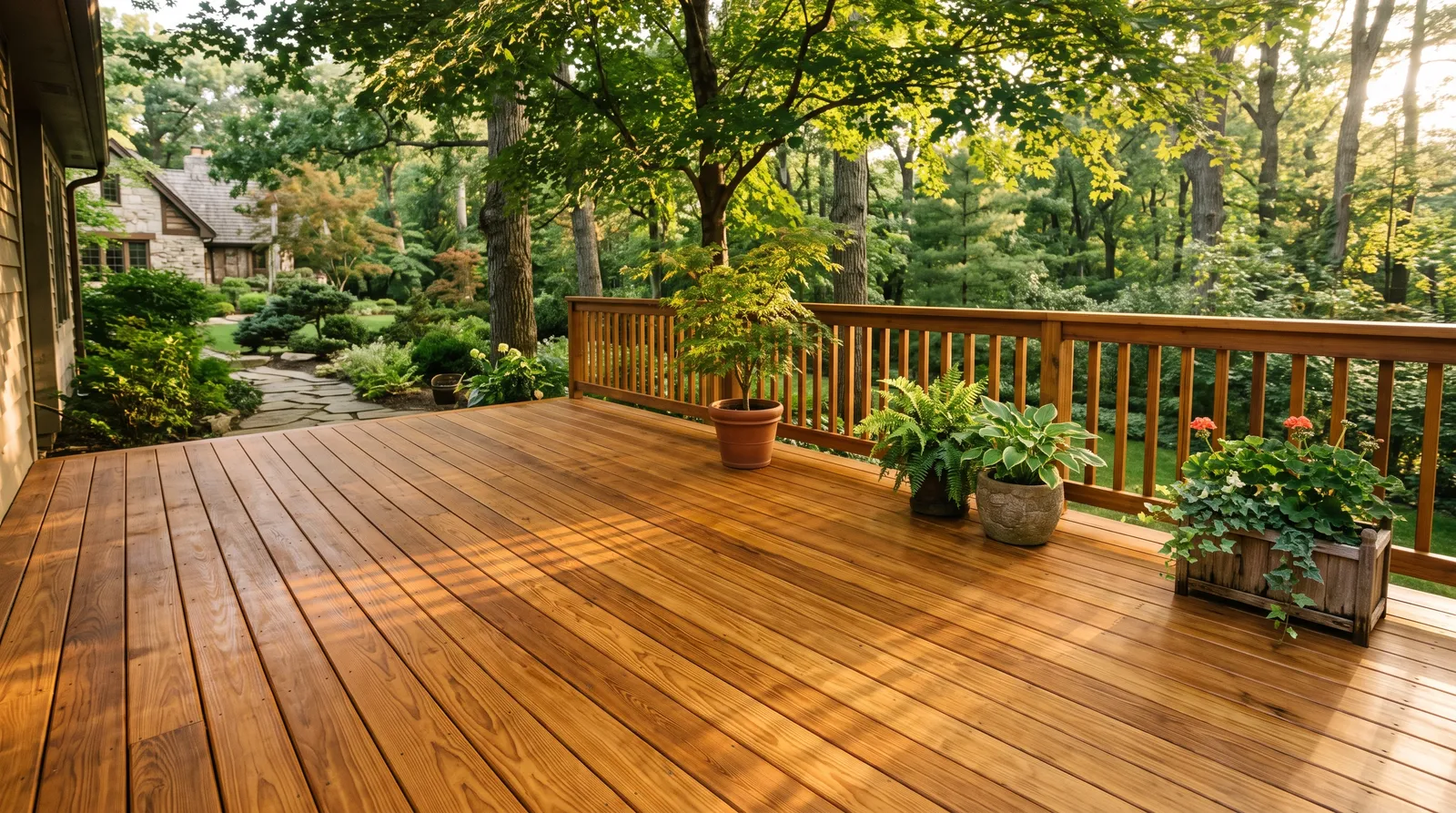
Penetrating sealer, not a film. Guard soaks past the surface and protects from inside, so there is nothing on top to crack, lift, or peel. When the color tires you wash with C2 Wood Cleaner and recoat — no sanding, no stripping, no rented sander. That lifecycle is the whole value case, and it pays you back the second time you finish the deck. What the label glosses over: it is translucent only, coverage is thin, and the up-to-6-years number is a best case.
Cedar, redwood, pressure-treated, and hardwood decks in good shape · Fences and siding · Shingles and docks · Concrete, brick, stone, and stucco · Anyone who has stripped a peeling deck once
Gray, blotchy, sun-trashed boards you need to bury · You want solid color · Your deck already wears a film stain you will not strip · You are shopping on sticker price · No C2 dealer in range
What it's good at
- Not peeling, because there is no film to crack or lift
- Recoating as a wash-and-go — clean, dry, fresh coat, no sander
- Crossing substrates: soft cedar, rock-hard ipe, concrete, brick, stone, and stucco
- Staying low odor and yard-safe at under 50 g/L, around dogs, gardens, and water
- Blending without lap marks on a wet-on-damp second coat
- Showing the grain instead of masking it, with a soft satin look on good wood
What it's not good at
- Hiding gray, weathered, or blotchy boards — it is translucent only
- Coverage, at about 300 sq ft a gallon with bare wood eating well past that
- Living up to the up-to-6-years claim on a sun-blasted horizontal deck
- Dense oily woods like ipe and teak if you over-apply — the surplus stays tacky
- Going over an existing film stain, which has to be stripped first
- Being the cheapest gallon on the shelf, or being on a shelf at all
Spec Sheet
- Type
- Penetrating wood and masonry sealer; semi-transparent, no film
- Surfaces
- Cedar, pine, pressure-treated, redwood, ipe, teak, exotic hardwoods; concrete, brick, stone, stucco
- Coverage
- About 300 sq ft / gal; new and porous wood drinks more
- Coats
- Two, wet-on-damp — second coat while the first is still damp
- Dry time
- Touch dry about 1 hr; 24 hr before foot traffic
- Color
- Clear plus 16 semi-transparent stains — all translucent
- VOC
- Under 50 g/L; non-toxic and safe around kids, pets, plants, and aquatic life. Soap-and-water cleanup
- Conditions
- Above 35F, no rain coming
- Protection claim
- Up to 6 years horizontal, up to 10 vertical (maker claim)
- Prep
- C2 Wood Cleaner first, then a water-droplet absorption test
- Sizes
- Free sample, quart, gallon, 5-gallon
- Price
- Quart about $33; gallon and 5-gallon quoted at the dealer
Application Settings That Work
- Brush
- Brush or roll two coats wet-on-damp, second coat while the first is still damp. Because it penetrates instead of building a film, you do not fight lap marks the way you do with a film stain — keep a wet edge and feather it.
- Airless
- Sprays fine, but back-roll the sprayed coat into the wood. Spray-and-back-roll lays out clean and keeps the product in the board instead of sitting on it.
- Primer
- No primer and no film. Prep is the whole job: wash with C2 Wood Cleaner, let the wood dry, then run a water-droplet absorption test. If the drop beads instead of soaking in, the wood is not ready.
Dry Time, Recoat, and the Two Clocks
Touch dry runs about an hour, and you keep off the boards for 24 hours before foot traffic. Both coats go on wet-on-damp — the second while the first is still damp — which is why lap marks are barely a thing with this stuff. Then there are two clocks running on the deck, and the label only talks about one. Waterproofing is the first: the seal can shed water for years. Color is the second, and it fades under UV a lot sooner. So up to 6 years horizontal means the protection, not the looks. A south-facing deck that bakes all summer wants a refresh coat for looks around year two or three even while the seal underneath is still working. A north-side fence coasts closer to the big number.
When It Goes Wrong, and How to Fix It
The deck stays sticky on ipe, teak, or another dense hardwood
Why it happens. Over-application. Dense oily wood cannot drink what a soft cedar board takes, so the surplus sits on top and never soaks in. It stays gummy and picks up dirt.
The fix. Less is more on hardwood. Wipe the excess off before it sets, right after the second coat goes on. On dense boards, plan on wiping every section rather than hoping it absorbs.
The color lands blotchy on gray weathered boards
Why it happens. Guard is translucent. It tints over whatever you give it, and old gray wood is not the same color everywhere, so the stain reads uneven.
The fix. Clean and brighten the wood first with C2 Wood Cleaner or a brightener, and run a water-droplet absorption test before you coat. If the boards are too far gone to bring back, you want a solid-color stain or a deck coating instead — Guard shows the wood, it does not hide it.
It will not soak in over the old finish
Why it happens. There is a film in the way. Guard has to penetrate into bare wood, and it cannot get through somebody else's plastic skin from a film stain or a solid-color deck coating.
The fix. Strip the old film off first and get back to bare wood, then clean and coat. If the old finish is C2 Guard, none of this applies — clean, dry, recoat, done.
You run out of product mid-job
Why it happens. About 300 sq ft a gallon is optimistic, and it assumes wood that is not thirsty. Bare or new boards drink the first coat and ask for more, and you need two coats every time.
The fix. Measure the real footage and buy past the chart, especially on bare wood. Ordering the C2 Wood Cleaner in the same trip saves a second run, because the prep step is not optional.
Honest Alternatives
A penetrating oil semi-transparent and about as forgiving as a stain gets — no lap marks, no wet-line, no primer. Cheaper and easier for a weekend DIYer. You give up Guard's longer protection claim and its masonry range.
The contractor favorite for penetrating deck protection — proven, oil-based, EPA-registered, with good UV pigment in the semi-transparent tones. Higher VOC, stronger smell, and wood-only. Cross-shop it if track record beats yard-safe chemistry for you.
A water-based semi-transparent with zinc nano-particle UV defense, closest in spirit to Guard: low odor, penetrating, easy cleanup. Neck-and-neck on a wood deck. Guard's edge is masonry coverage and dealer advice; Defy's edge is you can have it tomorrow.
The honest budget floor. A cheap clear waterproofer that sheds water for a season. Bare-minimum protection on a fence you do not care much about. Not in the same durability conversation.
C2 Guard Wood & Masonry Sealer Questions, Answered
How long does C2 Guard really last on a deck?
C2 claims up to 6 years horizontal and up to 10 vertical. Read those as best case. Waterproofing and looks are two different clocks — the water protection can hold for years while the stain color fades under full sun, so a deck that bakes all summer wants a refresh coat for looks around year two or three. A fence on the north side will coast closer to the big number.
Do I have to strip the old finish before recoating?
Not if the old finish is C2 Guard. That is the whole point of a penetrating sealer — there is no film to peel, so when the color tires you clean the wood with C2 Wood Cleaner, let it dry, and put down a fresh coat. But if your boards already wear a film stain or a solid-color deck coating, that has to come off first. Guard cannot penetrate through somebody else's film.
Is C2 Guard worth it?
On sound wood you want to keep showing, yes. It penetrates instead of forming a film, so there is nothing to crack or peel, and when the color tires you clean and recoat — no sanding, no stripping, no rented sander. That saved labor is where the dealer price comes back to you, usually the second time you finish the deck. It is not worth it if your boards are gray and beat and need solid color to bury them.
Can C2 Guard hide gray, weathered boards?
No, and you should not expect it to. Guard is translucent — clear or one of 16 semi-transparent stains. On clean, sound boards that is exactly what you want. On gray, blotchy, or sun-trashed wood you have to bring the color back first with the C2 Wood Cleaner or a brightener, because Guard will tint over whatever you give it. To cover ugly wood completely you want a solid-color stain.
How do I prep before coating?
Wash with C2 Wood Cleaner, let the wood dry, then run a water-droplet absorption test. Drop water on the boards: if it soaks in, the wood is ready to drink the sealer. If it beads, it is not. Skip that step and you are coating a surface that will not take the product.
How many coats, and how do I apply them?
Two, wet-on-damp — put the second coat on while the first is still damp. Brush, roll, or spray and back-roll. Because it penetrates rather than building a film, the second coat blends in and lap marks are barely an issue. On dense oily wood, wipe the surplus before it sets.
How much do I need?
About 300 sq ft a gallon, and that number is optimistic. New or thirsty wood drinks the first coat and asks for more, and you need two coats every time. Measure the real footage and buy past the chart, especially on bare boards, or you will be back at the dealer mid-job.
Is it safe around plants and pets?
That is one of its selling points. Under 50 g/L, non-toxic, and rated safe around kids, pets, plants, and aquatic life, with soap-and-water cleanup. When you are working over grass, garden beds, or a pond, that matters more than it sounds on a data sheet.
Can I use it on concrete and masonry too?
Yes. The same can covers concrete, brick, stone, and stucco alongside the wood list, so the deck, the fence, and the front walk can all take the same product. That cross-substrate range is one of the things it has over most deck-only penetrating stains.
Where do I buy C2 Guard?
Independent paint dealers and c2paint.com, with online C2 stockists as a backup. Start at the store locator on the brand site, and order the C2 Wood Cleaner in the same trip because the prep step is not optional. A quart runs about $33; get a real per-gallon and 5-gallon quote before you commit a whole deck.
We may earn a commission when you buy through the retailer link above. It never changes the score or the verdict.
Ask a Question