Product review · Benjamin Moore · Updated August 7, 2026
WoodluxeBenjamin Moore paint review
7.8/10Best color deck in the category at premium money, and the same 2-to-3-year clock every semi-transparent gets on a deck floor.
Woodluxe replaced Arborcoat in 2024 and the light opacities dropped from about 26 percent solids to about 18. That one change explains almost everything people notice, good and bad.

Mark Thompson · Pro Contractor & Field Editor · Updated August 7, 2026
22 years swinging a brush on decks, fences, and cedar siding across the Midwest. Mark has stripped and stained more boards than he cares to count, and he still buys the sample quart first. About the testing process →
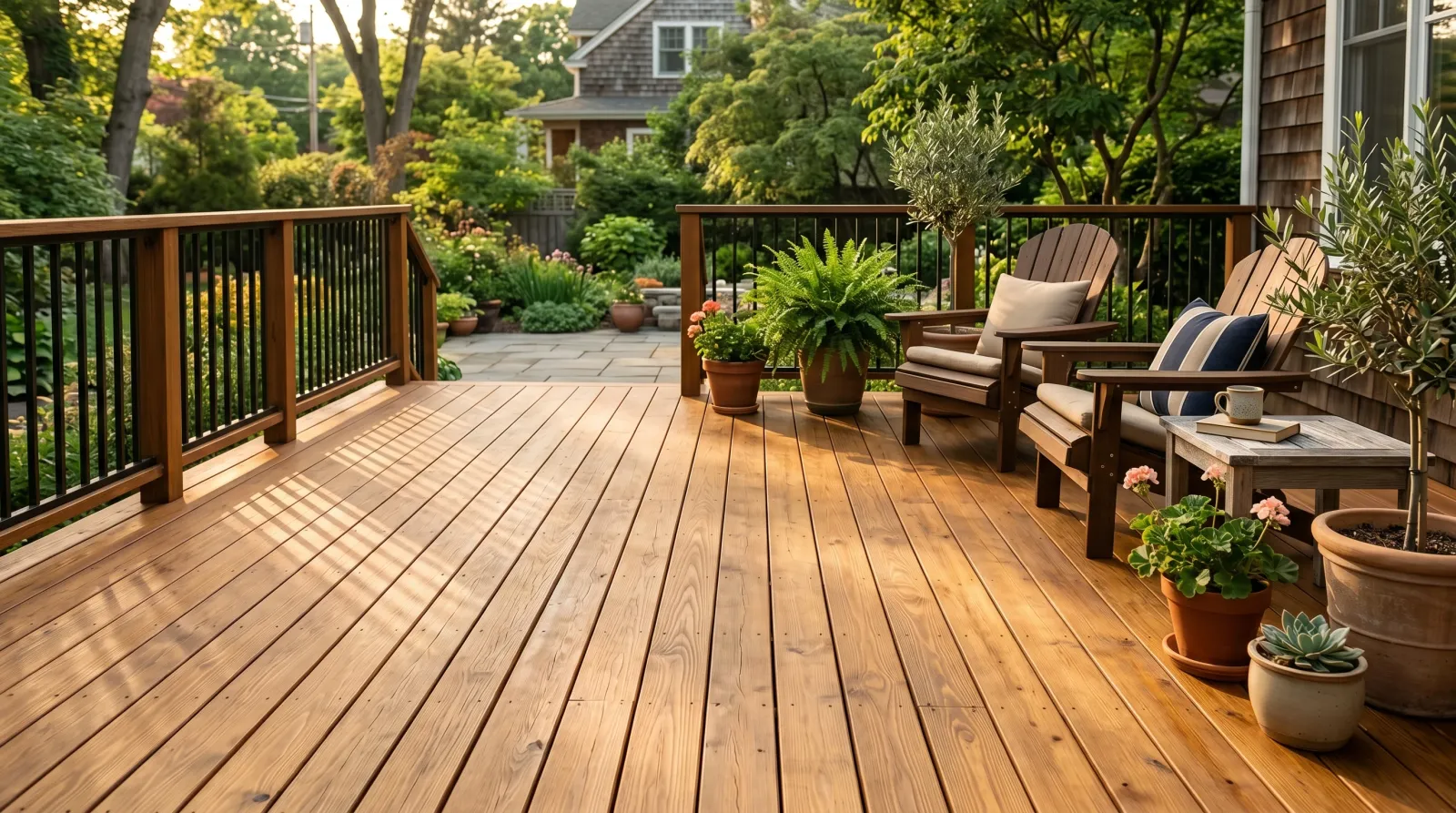
Benjamin Moore Woodluxe5 sheens
Coverage150–300 sq ft / gal
Recoat4 hr water-based
CureAbout 2 weeks before heavy foot traffic
Sheens TranslucentSemi-TransparentSemi-SolidSolidUltra-Flat Solid
Read this first
The Fast Verdict
Yes on siding, fences, and low-traffic decks, where the color match and the easy recoat earn the money. It soaks into bare cedar and pine instead of sitting on top, the water-based version recoats in four hours so a two-coat deck fits in one dry Saturday, and nobody else offers 75 semi-transparent colors plus 3,500-plus tintable solids. No if you want the longest-lasting finish on a sun-baked deck floor — at $60 to $70 a gallon you are paying top-tier price for mid-pack deck-floor life.
Best for
Cedar and pine siding · Fences · Covered or low-traffic decks · Bare or freshly stripped wood · Matching a stain to your trim color · Two-coat jobs in one dry Saturday
Skip if
Maximum years per coat on a sun-baked deck floor · Dense tropical hardwood without going oil-based · An old film finish you cannot strip · New pressure-treated lumber that has not dried out
What it's good at
- Penetrating bare cedar and pine instead of sitting on top, so it does not peel like an over-applied film
- A four-hour recoat on the water-based — a two-coat deck in one dry Saturday, soap-and-water cleanup
- The deepest color deck in the category: 75 semi-transparent colors plus 3,500-plus tintable solids
- Low VOC on the water-based at 71.5 g/L, mild enough that a screened porch is liveable the same evening
- Touch-ups and recoats that blend, because a penetrating stain does not flash the way a film finish does
- Rescuing already-weathered or repaired wood with the solid, which hides in one coat and protects in two
What it's not good at
- Deck-floor longevity — semi-transparent fades on the same 2-to-3 year clock as the rest of the category
- Semi-transparent on dense, tight-grain, or previously sealed wood, where it puddles and dries blotchy
- One-coat color on the light opacities since the drop to about 18% solids
- Scuff resistance on the standard solid under chair legs and planters
- Coverage on rough-sawn or bone-dry lumber, which drinks the first coat and lands at the low end of the range
- Price for the result — top-tier money at $60 to $70 a gallon for mid-pack deck-floor life
Same shelf, different cans
Which Woodluxe Are You Actually Buying?
Woodluxe is five opacities across two bases, and this is where people grab the wrong can. Pick by the wood you have and the years you expect, not by the color chip.
Woodluxe Water-Based Semi-Transparent / Semi-Solid
BaseWaterborne, about 18% solids (Arborcoat ran about 26%)
Recoat4 hr
Buy it if
You want the grain to show on cedar or pine siding, a fence, or a low-traffic deck, and you will refresh a deck floor every 2 to 3 years. Plan two coats from the start.
Avoid if
The boards are dense, tight-grain, or still carrying old sealer — the stain has nowhere to soak, so it puddles and dries blotchy.
Woodluxe Water-Based Solid
BaseWaterborne 100% acrylic, 100 g/L VOC, 300–400 sq ft per gallon per coat
Recoat4 hr
Buy it if
The wood is gray, patched, or you are done babysitting it, or you want an exact color out of the 3,500-plus tintable Benjamin Moore palette. Budget two coats, not one.
Avoid if
The boards sit less than about 4 feet off the ground. Ground moisture pushes up from underneath and cracks a film-forming solid.
Woodluxe Ultra-Flat Solid
BaseWaterborne acrylic solid
Recoat4 hr
Buy it if
The deck carries furniture and planters. It resists scuffs noticeably better than the standard solid, which is the loudest complaint in the line.
Avoid if
You are coating vertical siding or fence pickets, where scuffing was never the problem and the standard solid is fine.
Woodluxe Oil-Based (translucent, semi-transparent, semi-solid)
BaseOil, higher VOC than the water-based
Recoat24–48 hr
Buy it if
The wood is dense or exotic and a water-based semi-transparent cannot get in, or you want the richest first-year color and accept slower upkeep.
Avoid if
You want the job done in one dry Saturday, or you would rather not deal with the heavier smell and solvent cleanup.
Woodluxe Translucent
BaseWaterborne, near-clear; 7 colors — Natural, Redwood, Teak, Cedar, Mahogany, Chestnut Brown, Bleached Gray
Recoat4 hr
Buy it if
New cedar you want to keep light, where the wood leads and the stain only tints it.
Avoid if
A deck floor you expect three years out of. Translucent has the shortest life in the line.
Numbers, not adjectives
Spec Sheet
- Coverage
- 150–300 sq ft / gal; solid 300–400 sq ft per coat and solid needs two
- Solids content
- About 18% on translucent and semi-transparent
- Opacities
- Translucent, Semi-Transparent, Semi-Solid, Solid, Ultra-Flat Solid
- Touch dry
- 1 hr
- Recoat
- 4 hr water-based · 24–48 hr oil-based
- Cure
- About 2 weeks before heavy foot traffic
- VOC
- 71.5 g/L water-based semi-trans and semi-solid · 100 g/L water-based solid · oil-based higher
- Primer
- None. Bare or stripped wood only, no film-forming topcoat underneath
- Surfaces
- Decks, siding, fences, porch floors, outdoor furniture
- Colors
- 7 translucent, 75 semi-transparent, 75 semi-solid, 3,500-plus solid
- Sizes
- 8-oz sample, quart, gallon, 5-gallon (solid)
- Price
- $60–70 / gal water-based; up to $83 at specialty stores; samples $10–15
Application Settings That Work
- Brush
- Brushes and pads clean and lays down without much lap drag if you keep a wet edge. Work full board lengths so the laps fall at the ends, and stain a whole board before you stop.
- Primer
- None, and that matters. This is a penetrating stain, so it goes onto bare or freshly stripped wood only. Never put it over a film-forming sealer or an old solid stain that has not been stripped — it will not soak in and it will peel.
Recoat, Cure, and When You Can Walk On It
Touch dry in an hour, recoat at four on the water-based, so a two-coat deck fits in one dry Saturday. The oil-based stretches that to a full day or two between coats. What people miss is the cure: about two weeks before heavy foot traffic. Keep the furniture and the planters off until then. And before any of that, the wood has to be ready. Fresh pressure-treated lumber is wet from the mill and carries mill glaze — stain it day one and the finish sits on top and flakes off in a season. Let new PT decking dry a few weeks in dry weather at minimum, often a couple of months. The splash test still works: flick water on the board, and if it beads up it is not ready. If it soaks in, you can stain. Same rule after a power wash — bone dry, not damp.
Mid-project panic
When It Goes Wrong, and How to Fix It
Blotches and lap marks on dense or previously sealed boards
Why it happens. A penetrating stain needs somewhere to go. On tight-grain hardwoods, old smooth decking, or boards still carrying a film of old sealer, the semi-transparent has nothing to soak into. It puddles, dries uneven, and shows every spot where it sat. This is the most common complaint from people who skipped prep.
The fix. Strip the old film finish back to bare wood, or step up to a solid that is meant to sit on the surface. There is no third option. Keep a wet edge on the boards you do stain, and work full board lengths so laps land at the ends.
One coat of semi-transparent looks weak and thin
Why it happens. The light Woodluxe opacities run about 18 percent solids where Arborcoat ran about 26. Less material stays on the wood, so a single coat reads lighter and less saturated, especially in year one on dense or tight-grain boards.
The fix. Plan two coats on semi-transparent from the start and this complaint disappears. Recoat at four hours on the water-based, so the second coat costs you an afternoon, not a weekend. Buy the 8-oz sample first and look at it dry, in daylight, on your own wood.
The solid stain scuffs under chair legs and planters
Why it happens. It is the trade-off of a matte-ish acrylic solid on a horizontal surface. Furniture feet, planters, and plain foot traffic mark it sooner than people expect, and it is the loudest gripe about the line.
The fix. Buy the Ultra-Flat Solid instead — it tests noticeably more scuff-resistant than the standard solid. If the standard is already down, put pads under the furniture and plan on spot recoats, which blend better on a stain than on a paint film.
Solid stain cracking on a low deck or the bottom fence boards
Why it happens. Wood less than about 4 feet off the ground keeps pulling ground moisture up into the board. That moisture pushes against a film-forming solid from underneath and the film cracks. It is a physics problem, not a can problem.
The fix. Use a semi-solid that penetrates instead of filming on anything close to the dirt. Save solid for raised decks and vertical surfaces — siding, railings, and fence pickets that are not touching soil.
A new pressure-treated deck flaked within a season
Why it happens. It was stained too soon. Fresh PT lumber is wet from the mill and carries surface mill glaze, so the stain sits on top instead of penetrating and lets go at the first freeze-thaw or hard sun.
The fix. Strip or sand off what flaked, then wait. A few weeks of dry weather minimum, often a couple of months. Splash water on a board: beads mean wait, soaks in means stain. Same after a power wash — let it get bone dry first.
Side by side
Woodluxe vs Arborcoat: What Actually Changed
Most people typing Woodluxe review are really asking whether the can that replaced their Arborcoat is a downgrade. Here is the number nobody puts on the shelf talker.
| Woodluxe | Arborcoat | |
|---|---|---|
| Solids content, light opacities | About 18% | About 26% |
| How it goes on | Soaks deeper into the fiber, builds a thinner film, laps far less and recoats far more easily. | More body to drag around, so more lapping and a harder recoat. |
| First-year color depth | Reads lighter and less saturated in one coat. Plan two, especially on dense boards. | One coat gave the richer color people remember. |
| The solid stain | Essentially unchanged — 100% acrylic, water-based only, same hide and behavior. | The same product. If you liked Arborcoat solid, you will like Woodluxe solid. |
| Proven longevity | Launched 2024. Nobody has a seven-year Woodluxe wall to point at yet. | Painters cite semi-solid recoats every 3 to 4 years on horizontal surfaces and up to 7 years on vertical siding. |
| Color matching | 7 translucent, 75 semi-transparent, 75 semi-solid, 3,500-plus tintable solids. | Same opacity ladder; your dealer can cross an old Arborcoat color into Woodluxe. |
Solids content, light opacities
WoodluxeAbout 18%
ArborcoatAbout 26%
How it goes on
WoodluxeSoaks deeper into the fiber, builds a thinner film, laps far less and recoats far more easily.
ArborcoatMore body to drag around, so more lapping and a harder recoat.
First-year color depth
WoodluxeReads lighter and less saturated in one coat. Plan two, especially on dense boards.
ArborcoatOne coat gave the richer color people remember.
The solid stain
WoodluxeEssentially unchanged — 100% acrylic, water-based only, same hide and behavior.
ArborcoatThe same product. If you liked Arborcoat solid, you will like Woodluxe solid.
Proven longevity
WoodluxeLaunched 2024. Nobody has a seven-year Woodluxe wall to point at yet.
ArborcoatPainters cite semi-solid recoats every 3 to 4 years on horizontal surfaces and up to 7 years on vertical siding.
Color matching
Woodluxe7 translucent, 75 semi-transparent, 75 semi-solid, 3,500-plus tintable solids.
ArborcoatSame opacity ladder; your dealer can cross an old Arborcoat color into Woodluxe.
Less solids is a real win on application and a real loss on first-coat color. A first-time DIYer gets a cleaner-looking deck out of Woodluxe than out of the old stuff because it laps less and recoats easier, and Benjamin Moore had tighter VOC rules pushing the formula that direction anyway. What you give up is depth per coat, and the fix is a second coat rather than a different brand. The one honest gap is time: anyone quoting five- or seven-year Woodluxe numbers is extrapolating from Arborcoat, not reporting. If you are staining siding you will not touch again for a decade, that is a fair reason to wait.
If not this one
Honest Alternatives
BP
Behr Premium Semi-Transparent / Olympic Maximus$30–45 / gal
Both sell at the big box for $20-plus less a gallon. Behr Premium holds up fine on backyard decks, recoats fast, and you can grab it any Saturday. You lose the deep Benjamin Moore color deck and a little penetration finesse on bare cedar.
SW
Sherwin-Williams SuperDeck (solid)Similar per-gallon money at the SW counter
The obvious cross-shop: a dealer store, a tinting counter, the same shopping trip in reverse. SuperDeck solid is a legitimate rival to Woodluxe solid. Its Clear Sealer is a different story and scores among Consumer Reports' worst outdoor finishes, so do not let the shared name sell you the wrong can.
Full review →CA
Cabot Australian Timber Oil$55–75 / gal
A penetrating oil for dense and exotic hardwoods — ipe, mahogany, teak — where a water-based semi-transparent cannot get in. Richer first-year color, slower recoat, more upkeep.
Full review →DE
Defy Extreme Semi-Transparent$45–55 / gal
A zinc-nano-particle stain built for UV defense on sun-blasted southern and western decks. Stronger fade resistance than Woodluxe on a fully exposed horizontal floor, with a much smaller color range. The pick when sun is the enemy.
Questions people actually ask
Woodluxe Questions, Answered
Is Benjamin Moore Woodluxe worth it?
Yes for siding, fences, and low-traffic decks; no if you want the longest-wearing finish on a sun-baked deck floor. It penetrates cleanly on bare cedar and pine, recoats in four hours on the water-based version, and offers 75 semi-transparent colors plus 3,500-plus tintable solids that no rival stain deck matches. But at $60 to $70 a gallon you are paying premium money for the same 2 to 3 year life every semi-transparent gets on a horizontal deck floor.
Is Woodluxe the same as Arborcoat?
No, but it replaced it. Benjamin Moore phased out Arborcoat and rolled out Woodluxe in 2024 across the same opacity range. The water-based semi-transparent, semi-solid, and translucent formulas were redesigned for deeper penetration. The solid stain is close to the old solid formula. If you matched a deck in Arborcoat years ago, your store can still cross-reference the color into Woodluxe.
Does Woodluxe need a primer or sealer first?
No. It is a penetrating stain, not a film coating, so you stain straight onto bare or stripped wood. Never put it over a film-forming sealer or old solid stain that has not been stripped. It will not soak in and it will peel. New pressure-treated lumber has to dry out first, usually a few weeks to a few months, or the stain sits on top and flakes.
Water-based or oil-based Woodluxe for a deck?
Water-based for most decks. It recoats in about 4 hours, cleans up with soap and water, and the VOC sits around 71.5 g/L. Oil-based penetrates dense hardwoods a little better and gives a richer first-year look, but the recoat window stretches to a full day or two and the smell is heavier. On standard cedar or pine decking, the water-based wins on convenience.
How long does Woodluxe last on a deck?
Plan on 2 to 3 years on a horizontal deck floor before the semi-transparent needs a refresh, and 4 to 6 years on vertical siding or fences. Horizontal surfaces take foot traffic and standing sun, so they always wear faster than walls. Solid opacity lasts longest. Anyone promising 5-plus years on a deck floor is selling, not staining.
Is Woodluxe better than Arborcoat?
Different, mostly. The lighter Woodluxe opacities dropped from about 26 percent solids to about 18, so they soak in deeper, lap less, and recoat easier — but the first-year color reads thinner and dense wood may want a second coat. The solid stain is essentially unchanged. Painters with long Arborcoat track records, including 7-year runs on vertical siding, note Woodluxe is too new to have proven that yet.
How much does a Woodluxe deck project cost?
Figure $60 to $70 per gallon at most dealers, with Consumer Reports listing the water-based solid at $70, and $10 to $15 for an 8-oz sample. A 1,000 sq ft deck runs roughly 9 gallons for two coats, so about $540 to $630 in stain before brushes and cleaner. Solid covers 300 to 400 sq ft per gallon per coat and wants two coats.
What are the most common Woodluxe complaints?
Three come up repeatedly: the standard solid stain scuffing under furniture and foot traffic, which the Ultra-Flat Solid resists better; the semi-transparent needing an extra coat for the rich color old Arborcoat gave in one; and blotchy results on dense or previously sealed wood that was not stripped first. Price is the fourth — premium dealer-tinted money for mid-pack deck-floor longevity.
Can I put Woodluxe over an old solid stain or sealer?
Not without stripping first. A penetrating stain has to get into the wood, and an old film finish gives it nowhere to go, so it puddles, dries blotchy, and peels off with the layer underneath. Strip back to bare wood and let it dry, or accept that you are committing to a solid opacity from here on.
Has Woodluxe been independently tested?
Yes. Consumer Reports runs the water-based solid through its multi-year outdoor stain test, scoring appearance after 1, 2, and 3 years plus cracking and mildew, with the detailed scores member-only, and Better Homes and Gardens named Woodluxe its top transparent deck stain for 2026. The Consumer Reports category data matches the field: solid stains last 3 to 5 years on a deck, semi-transparent 2 to 3.
Keep exploring
We may earn a commission when you buy through the retailer link above. It never changes the score or the verdict.
Ask a Question