Product review · Benjamin Moore · Updated August 7, 2026
Regal Select ExteriorBenjamin Moore paint review
8.4/10The most paint per dollar Benjamin Moore sells for a standard siding repaint.
The can I reach for when a homeowner wants Benjamin Moore on siding but balks at Aura pricing. It grips chalky siding and stays flexible through freeze-thaw. It will not hold a deep color on a wall that bakes.

Mark Thompson · Pro Contractor & Field Editor · Updated August 7, 2026
22 years running residential and light commercial repaints across the Midwest. Mark has put this line over 15-year-old chalky body paint where the previous owner's bargain latex had let go in sheets, and he goes back to look at the lap joints in year three. About the testing process →
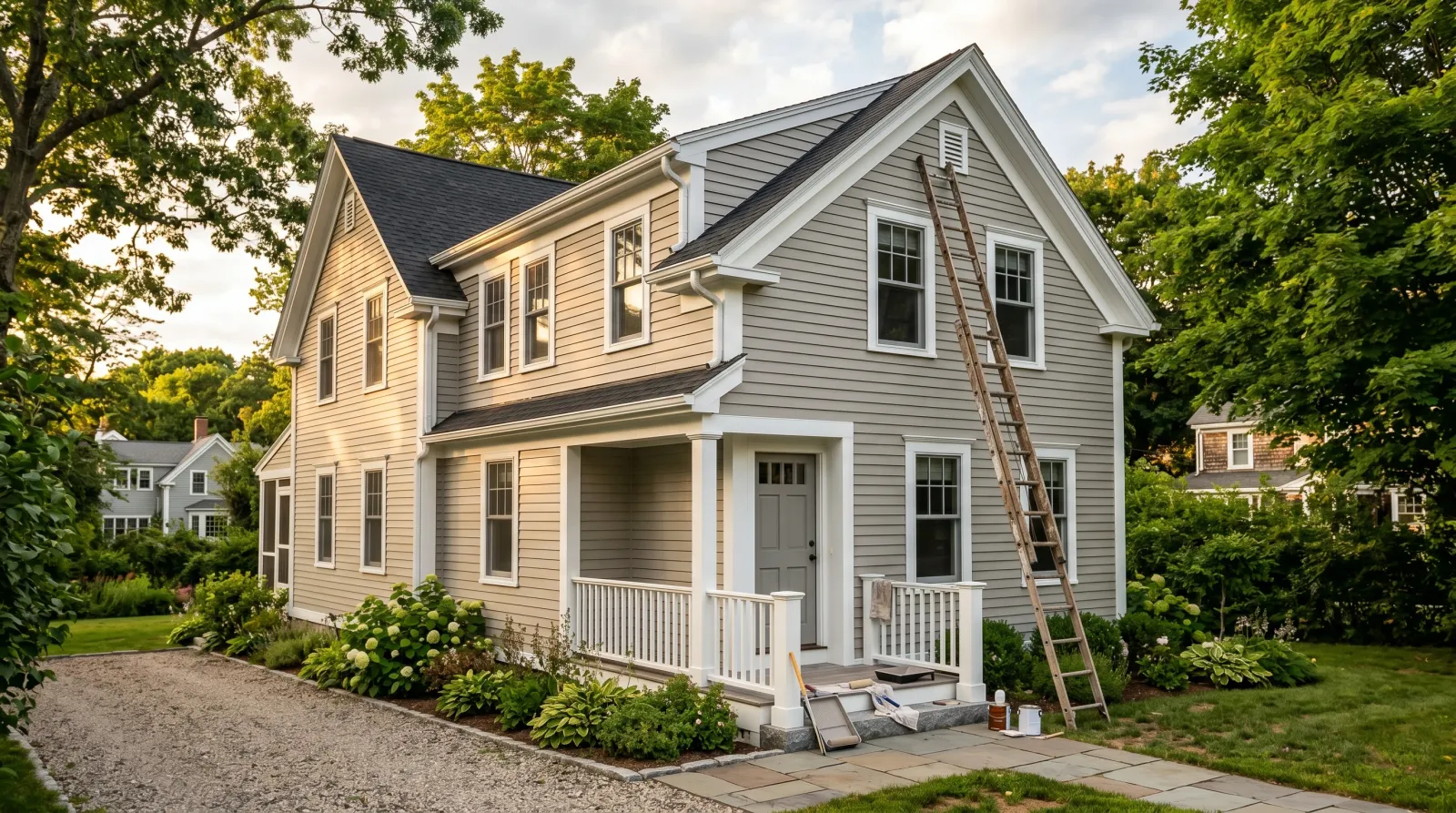
Benjamin Moore Regal Select Exterior3 sheens
Coverage250–400 sq ft / gal
Recoat4 hr in good conditions
VOCUnder 50 g/L; LEED-eligible
Full cure14–30 days
Sheens FlatLow LustreSoft Gloss
Read this first
The Fast Verdict
Buy it for wood or fiber-cement siding in a light-to-mid color, especially where winters are real. The alkyd-modified acrylic resin grabs chalky, hard-to-coat surfaces that make plain acrylic peel, and the cured film stays flexible enough that I see far fewer hairline cracks at the lap joints and nail heads by year three. Skip it if a deep navy or barn red on a south wall is the whole point of the job, or if you have to paint below 40 degrees. Those go to Aura Exterior.
Best for
Wood and fiber-cement siding · Light-to-mid colors · Chalky, hard-to-coat repaints · Freeze-thaw climates · Exterior trim in Soft Gloss
Skip if
Deep colors on a south or west wall · Painting below 40°F · Decks and porch floors · The cheapest possible rental repaint
What it's good at
- Adhesion to chalky and hard-to-coat siding, where plain acrylic lets go
- Staying flexible through freeze-thaw — far fewer hairline cracks at lap joints and nail heads by year three
- Brushing long before the tip drags, and back-rolling clean over a sprayed coat
- Low Lustre, which hides board waves and old repairs better than Soft Gloss on a long sunlit wall
- Dealer tinting and boxed 5-gallon batches that actually match across a big body
- Doing siding and trim from the same can in the same sheen family
What it's not good at
- Deep-color hold on a baking south or west wall — fading and chalking by year four or five
- Cold-weather application; the label tops out around 40°F
- One-coat anything. Two full coats over a color change, no shortcuts
- Touch-ups after a season of UV, which flash against weathered siding
- Dealer-only, so a Saturday shortfall is a drive
- Horizontal wood. A deck or porch floor chews through wall paint
Same shelf, different cans
Which Regal Select Exterior Are You Buying?
The Regal Select Exterior name covers more than one can, and that trips people up at the counter. This review is the standard line.
Regal Select Exterior, standard (this review)
BaseWaterborne acrylic with alkyd technology in the resin
SheensFlat, Low Lustre, Soft Gloss
Recoat4 hr in good conditions
Buy it if
Most siding and trim repaints on wood and fiber cement. Low Lustre is the sheen most siding wants.
Avoid if
Badly eroded siding with surface cracking, or a deck floor.
Regal Select Exterior High Build
BaseSame family, thicker film
SheensFlat, Low Lustre, Soft Gloss
Buy it if
Rough, eroded, or hairline-cracked siding. It bridges checks the standard product will telegraph through.
Avoid if
Sound, smooth siding where you are just paying for build.
MoorGard / MoorGlo / MoorLife
BaseLegacy specialty sub-lines folded under the Regal Select umbrella
Buy it if
Your dealer stocks them and says the job calls for one. Ask which.
Avoid if
You are guessing. Ask at the counter before you buy.
ben Exterior
BaseContractor-grade budget tier
Buy it if
Rentals, sheds, and repaints where you are not asking for ten years. $15 to $25 less a gallon.
Avoid if
The front of a house you plan to keep.
Aura Exterior
BaseThe flagship, with color-lock technology
Buy it if
Deep saturated colors on brutal exposures, or cold-weather application.
Avoid if
A light-to-mid color on an ordinary exposure, where you are paying for headroom you will not use.
Numbers, not adjectives
Spec Sheet
- Coverage
- 250–400 sq ft / gal, surface and sheen dependent
- Sheens
- Flat, Low Lustre, Soft Gloss, plus High Build versions of all three
- Touch dry
- 1–2 hr
- Recoat
- 4 hr in good conditions
- Full cure
- 14–30 days
- VOC
- Under 50 g/L; LEED-eligible
- Application temp
- Down to about 40°F per label — Aura goes colder
- Primer
- Self-priming on sound repaints; spot-prime bare wood with Fresh Start and bleeding knots with an oil or shellac blocker
- Surfaces
- Wood and fiber-cement siding, exterior trim, primed masonry, fences, soffits
- Sizes
- Quart, gallon, 5-gallon
- Price
- $55–70 / gal at BM dealers; sale near $50
Application Settings That Work
- Brush
- A 2.5-inch sash pulls a long line before the tip starts dragging. Feather the edge into the next section and keep moving; lap marks come from stopping mid-wall, not from the paint. Work in the shade as the sun moves around the house.
- Airless
- Spray and back-roll on a big body job. It lays down even, and it back-rolls clean over a sprayed coat, so the two-person rhythm works well here. Keep the roller close behind the gun and do not stop in the middle of a wall.
- Primer
- Self-priming on sound, previously painted siding. Not on bare wood: spot-prime raw spots with BM Fresh Start, and use an oil or shellac blocker on bleeding cedar or redwood knots. Wash the chalk off before any of it, and caulk after primer, before topcoat.
The Recoat Trap
Four-hour recoat is a best-case number, and exterior best-case is rare. The label assumes 50°F and up, low humidity, and shade. A spring morning that starts at 45 with dew on the siding is not that. Recoat too early on a cool, damp morning and you trap solvent and moisture under the second coat: the film stays soft, adhesion drops, and you can get blistering when the sun finally hits it. I have seen a whole north wall blister because a crew chased the four-hour number on a 48-degree day. The rule is simple — touch the first coat. If it drags or feels tacky, wait. On a cool morning, give it the afternoon. On a hot dry day, four hours is real. Full cure runs 14 to 30 days after that.
Mid-project panic
When It Goes Wrong, and How to Fix It
New paint peeling off chalky old siding
Why it happens. Chalk is the old paint giving up, and nothing sticks to it. Paint over chalk peels no matter how good the paint is. The alkyd-modified resin helps on hard-to-coat surfaces, but it is not a miracle and the chalk still has to come off first.
The fix. Run your hand down the siding. If it comes back powdery, pressure-wash or hand-scrub with a TSP substitute, rinse, and let it dry a full day before any paint goes on.
Brown stain ghosting through over cedar or redwood
Why it happens. Tannin bleed. Self-priming covers repaints, not bare or chalky substrate, and an acrylic primer laid over the top will not stop it either.
The fix. Hit bleeding knots and tannin-heavy bare spots with an oil or shellac blocker first, then spot-prime the remaining raw wood with BM Fresh Start. Caulk after primer, not before — caulk over bare wood fails early.
One coat flashing within a season
Why it happens. This is a quality paint, not a one-coat paint, and it does not pretend to be. Over any real color change one coat looks acceptable on the day and gives itself away a few months later.
The fix. Two full coats, every time. Buy 10 percent more than the calculator says so you are not chasing a partial gallon at a dealer that might be closed.
A soft, early-chalking film after a cold-weather job
Why it happens. The label tops out at roughly 40°F, and below that the film will not coalesce. It stays soft, chalks early, and you are back on the ladder sooner than you planned.
The fix. Wait for a real window, or step up to Aura Exterior, which is rated to apply colder. That is the one case where the $20 to $30 a gallon buys you something on a light color.
A deep navy or barn red fading on the south wall by year four
Why it happens. Color-hold is the ceiling on this line. Deep tones drift and the flat side starts chalking on south and west exposures where Aura's color-lock still reads true.
The fix. Nothing fixes it after the fact — that wall is a repaint. If the dark color is the whole point of the job on a sun-blasted elevation, this is where the price gap to Aura earns itself.
Side by side
Regal Select Exterior vs Aura Exterior vs ben Exterior
Three rungs of the same exterior ladder, sold at the same counter. The gap between them is mostly about how hard the sun hits the wall and how long you plan to own it.
| Regal Select Exterior | Aura Exterior | ben Exterior | |
|---|---|---|---|
| Price per gallon | $55–70, sale near $50 | $85–100 | $35–45 |
| Where it sits in the line | The middle rung and the workhorse repaint coating. | The flagship. | Contractor-grade tier below Regal Select. |
| Deep color on a sun-blasted wall | Fades and starts chalking by year four or five. | Color-lock still reads true; this is what the premium buys. | Not the job for it. |
| Chalk adhesion and freeze-thaw flexibility | The reason to buy it. Alkyd-modified resin, far fewer lap-joint cracks at year three. | Flagship film, and it stretches the maintenance cycle on top of that. | Gives up some of both. |
| Cold-weather window | Label tops out around 40°F. | Rated to apply colder — the deciding factor in a northern spring. | Budget tier; not the can to gamble a cold morning on. |
| Buy it when | Wood or fiber-cement siding, light-to-mid color, real winters. | Forever home in harsh sun, or a saturated dark color. | Rentals, sheds and repaints where you are not asking for ten years. |
Where it sits in the line
Regal Select ExteriorThe middle rung and the workhorse repaint coating.
Aura ExteriorThe flagship.
ben ExteriorContractor-grade tier below Regal Select.
Deep color on a sun-blasted wall
Regal Select ExteriorFades and starts chalking by year four or five.
Aura ExteriorColor-lock still reads true; this is what the premium buys.
ben ExteriorNot the job for it.
Chalk adhesion and freeze-thaw flexibility
Regal Select ExteriorThe reason to buy it. Alkyd-modified resin, far fewer lap-joint cracks at year three.
Aura ExteriorFlagship film, and it stretches the maintenance cycle on top of that.
ben ExteriorGives up some of both.
Cold-weather window
Regal Select ExteriorLabel tops out around 40°F.
Aura ExteriorRated to apply colder — the deciding factor in a northern spring.
ben ExteriorBudget tier; not the can to gamble a cold morning on.
Buy it when
Regal Select ExteriorWood or fiber-cement siding, light-to-mid color, real winters.
Aura ExteriorForever home in harsh sun, or a saturated dark color.
ben ExteriorRentals, sheds and repaints where you are not asking for ten years.
For a standard siding repaint in a light-to-mid color, Regal Select Exterior is the smarter dollar and lands at maybe 90 percent of Aura's performance. Go up to Aura Exterior for two specific reasons and no others: a deep saturated color on a wall that bakes, or a cold application window you cannot move. Go down to ben Exterior when the budget genuinely runs the job — a shed, a fence-adjacent outbuilding, a rental you will redo on turnover. And on a deck or porch floor, none of the three is the answer; foot traffic chews through wall paint and a solid deck stain is the right tool.
If not this one
Honest Alternatives
BM
Benjamin Moore ben Exterior$35–45 / gal
Same brand, contractor-grade tier, $15 to $25 less per gallon. Solid for rentals, sheds and repaints where you are not asking for ten years. You give up some of the chalk-adhesion edge and the freeze-thaw flexibility.
BM
Benjamin Moore Aura Exterior$85–100 / gal
BM's flagship exterior. Color-lock technology holds deep tones that Regal Select fades, it applies in colder weather, and it stretches the maintenance cycle. Worth the jump on a forever home in harsh sun or a saturated dark color.
Full review →AS
A solid-color deck stain for horizontal woodVaries by brand
If the surface is a deck or porch floor rather than siding, this is the wrong product entirely. Foot traffic chews through wall paint. Step over to a solid deck stain built for horizontal wear.
Questions people actually ask
Regal Select Exterior Questions, Answered
Is Regal Select Exterior worth it?
For a standard siding repaint in a light-to-mid color, yes. At $55 to $70 a gallon the alkyd-modified resin grips chalky, hard-to-coat siding and stays flexible through freeze-thaw, so you see fewer lap-joint cracks at year three than commodity exterior paint gives you. It is not worth it if you want a deep saturated color to hold on a baking south wall, or if you paint in genuinely cold weather.
Does Regal Select Exterior need a primer?
On sound, previously painted siding in good shape, no — scuff-clean and topcoat. On bare wood, primer is not optional. Spot-prime raw spots with Fresh Start and hit bleeding cedar or redwood knots with an oil or shellac stain blocker first. The self-priming claim covers repaints, not bare or chalky substrate.
How does it compare to Aura Exterior?
Aura Exterior holds deep color and gloss longer, and its low-temp application window runs colder. For a saturated navy or barn red on a south wall, Aura is the upgrade. Regal Select Exterior costs $20 to $30 less per gallon and lands at maybe 90 percent of the performance in light-to-mid colors. On most repaints, Regal Select is the smarter dollar.
What is the real recoat window?
Four hours under good conditions: 50 degrees and up, low humidity, out of direct blasting sun. In cool spring mornings or high humidity, stretch that. Recoat too early on a damp or cold morning and you trap solvent, get a soft film, and lose adhesion. The label number is a best case, not a promise.
Can I paint exterior trim with it?
Yes, in Soft Gloss. It brushes and levels well enough for fascia, window casing and porch posts. For doors and railings that take hand contact and harder knocks, a dedicated trim enamel like Advance cures harder. This is the right call when you want siding and trim from the same can in the same sheen family.
How many coats do I need?
Two over any real color change, every time. It is a quality paint, not a one-coat paint, and one coat over a contrast color flashes within a season. Budget the gallons and the time, and buy 10 percent more than the calculator says.
Do I really have to wash the siding first?
Yes, and it is the corner homeowners cut that bites them. Run your hand down the old siding — if it comes back powdery, that is chalk, and paint over chalk peels no matter how good the paint is. Pressure-wash or hand-scrub with a TSP substitute, rinse, and let it dry a full day.
Which sheen should I use on siding?
Low Lustre for most siding. It sheds water and dirt better than Flat and it does not spotlight every wave and old repair the way Soft Gloss does on a long sunlit wall. Save Soft Gloss for trim, fascia and porch posts.
When should I buy the High Build version instead?
When the siding is badly eroded or shows surface cracking. High Build lays down a thicker film that bridges hairline checks the standard product will telegraph through. On sound, smooth siding you are just paying for build you do not need.
Can I use it on a deck or porch floor?
No. Foot traffic chews through wall paint, and this is a wall paint. Use a solid-color deck stain built for horizontal wood instead.
Keep exploring
Benjamin Moore brand guide and product lineupBest exterior house paint — full round-upHow to deal with chalky old siding before you repaint
We may earn a commission when you buy through the retailer link above. It never changes the score or the verdict.
Ask a Question