Product review · Benjamin Moore · Updated August 17, 2026
Cabinet CoatBenjamin Moore paint review
8.4/10The value seat in cabinet enamel — hard sooner than Advance at half the price.
INSL-X Cabinet Coat is the contractor value pick for white and light cabinets — a hard, self-priming urethane-acrylic for about half what Advance costs. It sets fast, and that is both why it works and why it punishes a slow brusher.

Mark Thompson · Pro Contractor & Field Editor · Updated August 17, 2026
22 years running residential and light commercial repaints across the Midwest. Mark has brushed and sprayed Cabinet Coat on kitchen doors, vanities, and shop shelving, and has gone back at the one-year mark to see what the pulls look like. About the testing process →
Benjamin Moore Cabinet Coat2 sheens
Coverage350–450 sq ft / gal
Recoat6 hr
VOCUnder 50 g/L
Full cureAbout 14 days
Sheens Satinsemi-gloss
Read this first
The Fast Verdict
Buy it for cabinets, a vanity, doors, or interior trim. Roughly $55 to $65 a gallon gets a hard, washable, self-priming enamel for about half what Advance costs, and grease wipes off it without ghosting. It comes in a white base plus tint bases through 4X, so dark colors work too — just call ahead, since not every store stocks the deep bases. Skip it if you want a glass-flat brushed finish, because Advance levels smoother and ends up the harder film once its 30 days are up. Spray it if you can.
Best for
Kitchen cabinets · Bathroom vanities · Interior trim and doors · Furniture and shelving · Spraying · Jobs that need doors back on hinges fast
Skip if
You want glass-flat leveling · You are a slow go-back-over-it brusher · A cold shop · You need a sheen outside satin and semi-gloss
What it's good at
- Self-priming on clean previously-painted or bare wood — scuff sand and two coats is the whole system
- Getting handle-hard sooner than Advance, closer to two weeks than a month
- Washability — grease, food, and a damp rag wipe off without burnishing or ghosting
- Grease near the range, where a degreaser wipe pulls cooking film off without dulling the sheen
- Price. About $55–65 a gallon against $80–95 for Advance, which is real money on a full kitchen
- Touching up clean from the same can
- Back-rolling a door front to even the film without leaving stipple
What it's not good at
- Base stocking — dark colors need the 3X or 4X tint base, and plenty of counters only shelve the white
- Glass-flat leveling; faint brush stroke shows at six inches under raking light
- Only two sheens, satin and semi-gloss, with no high gloss and no flat
- Forgiving a slow brusher who goes back over a half-set panel
- Cold shops — water-thinned material around 55°F throws micro-bubbles in HVLP work
- Film-thickness fussiness; pinholes and bubbles turn up on some substrates with no change in process
- Final hardness, where Advance's full 30-day cure ends up ahead
Numbers, not adjectives
Spec Sheet
- Coverage
- 350–450 sq ft / gal
- Sheens
- Satin, Semi-Gloss
- Touch dry
- About 1 hr
- Recoat
- 6 hr
- Full cure
- About 14 days
- VOC
- Under 50 g/L (47 g/L tested)
- Primer
- Self-priming on most surfaces; INSL-X Stix on glossy or factory finishes
- Surfaces
- Cabinets, trim, doors, furniture, shelving, metal
- Tint range
- White (01) plus tint bases 1X–4X — light through dark colors
- Sizes
- Quart, gallon
- Price
- About $55–65 / gal
Application Settings That Work
- Brush
- A good synthetic brush, a wet edge, and no going back. Cut the rails and stiles, then back-roll the door panel with a microfiber roller while it is wet to even the mil thickness and kill stipple. Feather the edge into wet paint. A dry lap mark in semi-gloss shows the second daylight hits it.
- Airless
- Spray it if you can — airless lays it flatter than any brush, and the complaints about brush texture disappear entirely. Two thin coats.
- HVLP
- Works, with one warning: micro-bubbles show up when the paint is thinned with water in a cold shop around 55°F. Warm the shop and the material first.
- Thinning
- Keep it minimal. Thinning with water in a cold room is the reported cause of micro-bubbles in sprayed work. Warm the paint instead of watering it.
- Primer
- Self-priming on clean, previously painted, or bare wood after a scuff sand — degrease first, then 220 grit, then dust off and tack. On glossy factory finishes, melamine, laminate, or slick varnish, prime with INSL-X Stix or spot-test adhesion. That is the corner that bites you in two years.
Hard Sooner Is Not Hardest
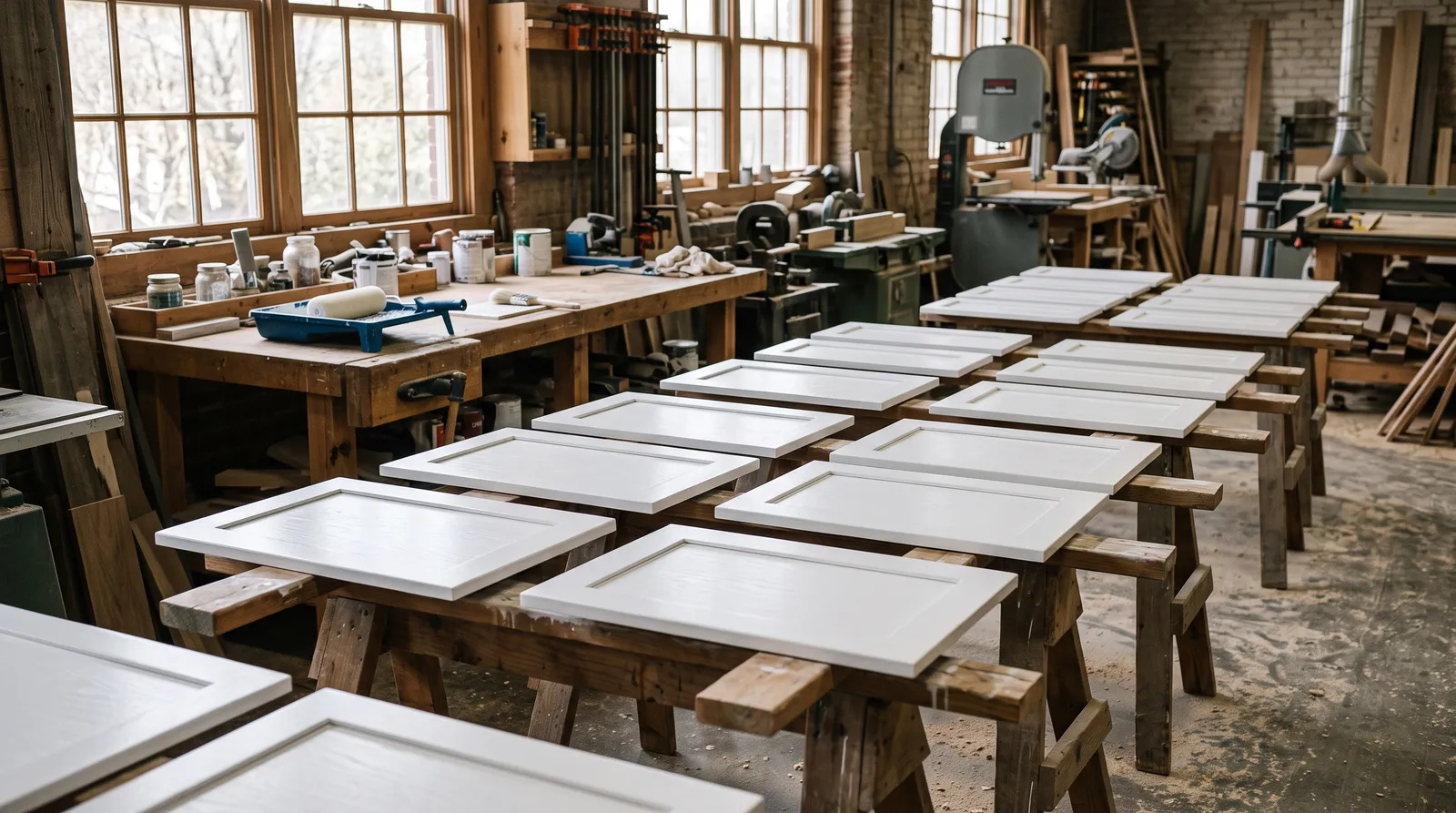
Read this before you promise anybody a weekend. Touch-dry in about an hour, recoat at six, and the film keeps tightening for roughly 14 days. That is genuinely faster than Advance, which wants a full 30 days. But sooner is not hardest — Advance keeps oxidizing across its whole cure and ends up the harder finish of the two. Cabinet Coat wins the schedule, not the endurance contest. Painters who sprayed it exactly to label still scuff it with the back of a fingernail a week after the final coat, so doors re-hung that early in a busy kitchen pick up dings at the pulls that never level back out. Give the doors a day off the sawhorses before they go back up, longer if it is humid, and keep the abuse off them for two weeks.
Mid-project panic
When It Goes Wrong, and How to Fix It
Brush and roller texture stuck in the dried film
Why it happens. It sets fast next to Advance. Pros keep saying the same thing: Cabinet Coat is the better cabinet product but the tougher one to brush. Go back over a half-set panel, or lay it on heavy, and the texture stays in the film instead of leveling out.
The fix. Brush small sections and walk away from them. Cut the rails and stiles, back-roll the flat panel with a microfiber roller while it is still wet, feather the edge into wet paint, and do not stop mid-panel. If the finish has to read smooth at six inches, spray it.
Pinholes, bubbles, or micro-bubbles in the finish
Why it happens. It is fussy about film thickness. Refinishers with years of clean results have reported little pinholes and bubbles on baltic birch with no change to their process, and micro-bubbles turn up in HVLP work when the paint is thinned with water in a cold shop around 55°F.
The fix. Two thin coats, not one fat one. Warm the shop and the paint above 55°F before you spray, and stop thinning with water in a cold room. Lay it heavy and you trap solvent under a skinned surface, which is where sags and a soft spot months later come from.
The film lets go at the door pull a year or two later
Why it happens. Not the paint wearing out — it is prep. Self-priming holds on most surfaces, not all. Glossy factory laminate, melamine, and slick varnish need a bonding coat, and grease pressed into sanding scratches keeps anything from grabbing.
The fix. Degrease first with a TSP substitute, rinse, dry, then scuff sand to 220 and tack off the dust. On slick factory finishes, prime with INSL-X Stix or spot-test adhesion before you commit a kitchen to it.
A dark color coming up thin and streaky
Why it happens. Wrong base in the can. Cabinet Coat runs white (01) plus tint bases 1X through 4X, and a navy or charcoal needs the 3X or 4X base — force that much colorant into the white base and the pigment has nowhere to live.
The fix. Ask the counter for the base your color formula calls for — a Benjamin Moore dealer can pull the right one, though not every store stocks all five cans. Do not try to force a dark color out of the white base with extra coats; you get streaks, not depth.
Side by side
Cabinet Coat vs Advance vs Emerald Urethane
Three cabinet enamels, three different jobs. Leveling and cure schedule decide this more than durability does.
| Cabinet Coat | Benjamin Moore Advance | SW Emerald Urethane | |
|---|---|---|---|
| Color range | White (01) plus tint bases 1X–4X — dark colors included; deep bases are dealer-stocked, so call ahead. | Full 3,400-color deck including a deep base for dark cabinets. | Smaller color deck than either Benjamin Moore line. |
| Leveling | Good, not glass. Faint brush stroke shows at six inches under raking light, more in semi-gloss. | The flattest of the three. Closest to a sprayed factory finish out of a brush. | Sprays beautifully; harder to work by hand. |
| Recoat window | 6 hr | Long — the cure is the price of the leveling. | 4 hr, so a cabinet job fits in one weekend. |
| Full cure | About 14 days | About 30 days, and it keeps getting harder the whole way. | Hardest cured film in the category. |
| Final hardness | Hard sooner, but not hardest. | Ends up the harder film of the two Benjamin Moore lines. | The durability benchmark, and priced like it. |
| Primer | Self-priming on most surfaces; Stix on glossy. | Plan on prep either way for a cabinet job. | Plan on prep either way for a cabinet job. |
| Sheens | Satin, semi-gloss only | Satin, semi-gloss, high gloss | Trim enamel sheen range |
| Street price per gallon | $55–65 | $80–95 | $95–110 |
Color range
Cabinet CoatWhite (01) plus tint bases 1X–4X — dark colors included; deep bases are dealer-stocked, so call ahead.
Benjamin Moore AdvanceFull 3,400-color deck including a deep base for dark cabinets.
SW Emerald UrethaneSmaller color deck than either Benjamin Moore line.
Leveling
Cabinet CoatGood, not glass. Faint brush stroke shows at six inches under raking light, more in semi-gloss.
Benjamin Moore AdvanceThe flattest of the three. Closest to a sprayed factory finish out of a brush.
SW Emerald UrethaneSprays beautifully; harder to work by hand.
Recoat window
Cabinet Coat6 hr
Benjamin Moore AdvanceLong — the cure is the price of the leveling.
SW Emerald Urethane4 hr, so a cabinet job fits in one weekend.
Full cure
Cabinet CoatAbout 14 days
Benjamin Moore AdvanceAbout 30 days, and it keeps getting harder the whole way.
SW Emerald UrethaneHardest cured film in the category.
Final hardness
Cabinet CoatHard sooner, but not hardest.
Benjamin Moore AdvanceEnds up the harder film of the two Benjamin Moore lines.
SW Emerald UrethaneThe durability benchmark, and priced like it.
Primer
Cabinet CoatSelf-priming on most surfaces; Stix on glossy.
Benjamin Moore AdvancePlan on prep either way for a cabinet job.
SW Emerald UrethanePlan on prep either way for a cabinet job.
Sheens
Cabinet CoatSatin, semi-gloss only
Benjamin Moore AdvanceSatin, semi-gloss, high gloss
SW Emerald UrethaneTrim enamel sheen range
Cabinets, a vanity, or trim, and you want the doors back on hinges this week: Cabinet Coat, and put the $30 a gallon you saved into better prep. A brushed finish that has to read like glass: Advance, and plan around the 30-day cure. The most durable finish and the fastest schedule at the same time: Emerald Urethane, at the top of the price band. Nothing beats Cabinet Coat on price-to-finish, which is why refinishers buy it by the case.
If not this one
Honest Alternatives
BM
Benjamin Moore Advance$80–95 / gal
The premium line from the same parent company. Levels closer to a sprayed factory finish and adds a true high-gloss sheen. Costs nearly double and makes you wait a 30-day cure, but it is the pick when leveling decides the job.
Full review →BP
Behr Premium Cabinet, Door & Trim Enamel$45–50 / gal
Budget pick, on the shelf at every Home Depot. It works, but you fight more brush marks unless you spray, and the soft cure runs 60 to 90 days. Fine for a rental or a low-traffic kitchen you can leave alone for two months. Not a daily-driver family kitchen.
SW
Sherwin-Williams Emerald Urethane Trim Enamel$95–110 / gal
The hardest cured film in the category and a four-hour recoat that lets you knock out cabinets in one weekend. Smaller color deck and a faint ammonia smell on application, so ventilate. The pick when you want maximum durability and the fastest schedule and will pay for both.
Full review →Questions people actually ask
Cabinet Coat Questions, Answered
Is Cabinet Coat worth it?
For cabinets, a vanity, or trim in most colors, yes. At roughly $55 to $65 a gallon you get a hard, washable, self-priming enamel for about half what Advance costs, and grease wipes off it without ghosting. It comes in a white base plus tint bases through 4X, so dark colors are on the table too. It is not worth it if you want a glass-flat brushed finish, since Advance levels smoother and ends up the harder film after its 30-day cure.
Cabinet Coat vs Advance — which one?
Both come from Benjamin Moore, and both tint to dark colors — Cabinet Coat carries a white base plus tint bases through 4X. Advance levels flatter, so pick it for a near-sprayed brush finish. Cabinet Coat gets hard sooner, skips primer on most surfaces, and costs about half — though Advance ends up the harder film once its 30 days are up. Pick it when budget and turnaround matter more than glass-flat leveling.
Does Cabinet Coat need a primer?
On clean, previously painted, or bare wood, no. It bonds well on its own after a scuff sand. On glossy factory finishes, melamine, laminate, or slick varnish, spot-test adhesion or just prime with INSL-X Stix. Skipping primer on a slick surface is how the film peels at the door pull in a year.
Can I tint Cabinet Coat to a dark color?
Yes. It comes in a standard white (01) plus four tint bases — 1X through 4X — and the 4X base handles navy, charcoal, and other dark colors. Not every store stocks all five cans, so call ahead and ask for the base your color needs. Trying to force a dark color into the white base is what comes up thin and streaky.
How long before I can re-hang the doors?
Give them a full day off the sawhorses, longer if it is humid. Touch-dry in an hour does not mean handle-ready. The film keeps hardening for about 14 days, and painters who sprayed it to label still scuff it with a fingernail a week after the last coat. Re-hang early in a busy kitchen and you collect dings at the pulls that never level back out.
Why does my brushed finish show stroke marks?
Almost always because you went back into it. Cabinet Coat sets faster than Advance, so a second pass through a half-set panel leaves the texture in the film instead of letting it flow out. Brush small sections, back-roll the flats while wet, feather into wet paint, and walk away. Or spray it, where the complaint disappears.
What sheens does Cabinet Coat come in?
Satin and semi-gloss, and that is the whole list. No high gloss for a jewelry-box door, no flat for a soft-look trim. Semi-gloss shows brush texture more than satin does, so if you are brushing rather than spraying, satin is the more forgiving buy.
Should I brush or spray Cabinet Coat?
Spray it if you have the gear — HVLP or airless lays it flatter than any brush. Brushed and back-rolled it is still one of the more forgiving enamels you can buy, as long as you work in small sections and do not go back over setting paint. Keep the shop above 55°F either way.
How does it hold up after a year in a real kitchen?
Light burnishing right where fingernails strike the door by the handle — slightly more than Advance, less than Behr, and visible at six inches rather than across the room. The top edge of base cabinets takes pans and grocery bags well and touches up clean from the same can. Grease near the range is where it does best.
Is Cabinet Coat harder than Advance?
Sooner, not harder. Cabinet Coat reaches handle-ready at around two weeks while Advance takes 30 days, but Advance keeps oxidizing that whole time and lands on the harder finish. If the kitchen has to be usable this week, that trade is worth it. If you have a month, Advance ends up tougher.
Keep exploring
Benjamin Moore — full brand guideBenjamin Moore Advance — honest reviewBest paint for kitchen cabinets — full round-up
We may earn a commission when you buy through the retailer link above. It never changes the score or the verdict.
Ask a Question