Product review · Behr · Updated August 7, 2026
Premium Solid Color StainBehr paint review
7.0/10The easiest solid stain to buy and not the best one — excellent on a fence, a strip-and-sand waiting to happen on a deck.
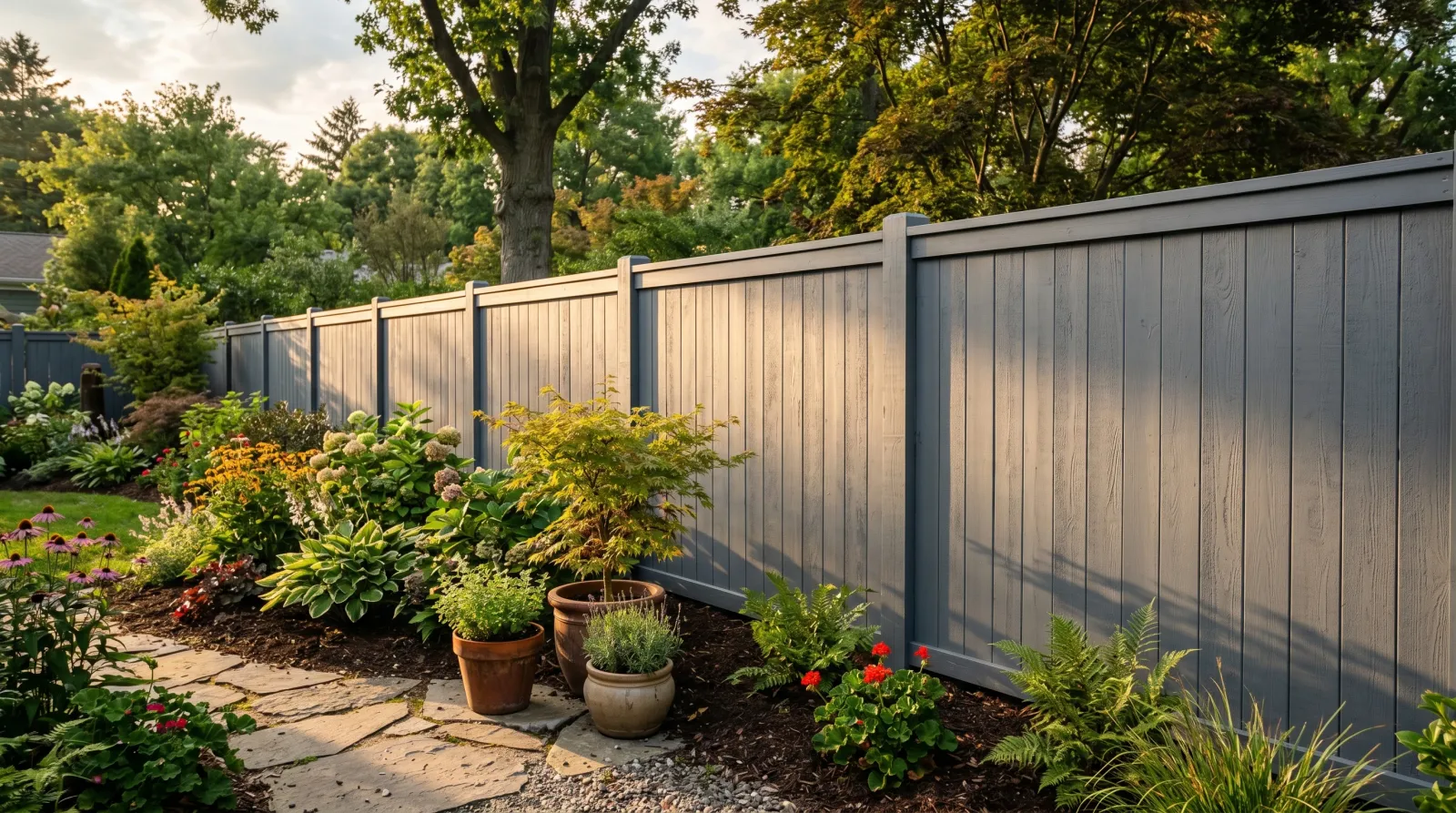
Two coats hide a twelve-year-old silver-grey fence with no primer and no scraping, and it recoats later without a full strip. On a walked-on deck the same film peels inside two to four years against a label that says ten.

Mark Thompson · Pro Contractor & Field Editor · Updated August 7, 2026
22 years running residential and light commercial repaints across the Midwest. Mark has put solid stain on more fence runs than he can count, and has sanded enough failed deck film to be blunt about where it belongs. About the testing process →
Behr Premium Solid Color Stain1 sheen
Coverage1st coat 200–400 sq ft / gal
Dry / recoatTouch 1–2 hr
VOCUnder 100 g/L
Full cure72 hr — furniture stays off until then
Sheens solid coverage
Read this first
The Fast Verdict
On a wood fence, siding, shakes, or vertical railings, yes. At $45 to $52 a gallon it buys opaque color that hides weathered wood, roughly 1,600 counter tints, and the ability to recoat over a sound prior coat without stripping it all off — about $0.25 a square foot in material. On a flat, walked-on deck, no. The film peels, often inside two to four years against a label that claims ten, and taking it off again means a pressure washer and a sander.
Best for
Wood fences · Cedar and pine siding · Shakes and shingles · Vertical railings and trim · Weathered grey wood that needs hiding · Recoating a sound previous solid coat
Skip if
A flat, walked-on deck you want to coat once and forget · You want the wood color to show · You want a choice of sheen · The old coating is lifting and you will not strip it · You want the best-performing solid stain rather than the easiest to buy
What it's good at
- Hiding a tired fence in two coats — a twelve-year-old silver-grey cedar run reads as one even color, no primer, no scraping
- Recoating over a sound prior solid coat without a full strip, which is the line's best trick
- Real water beading on vertical wood; rain still beads at year three the way it did on day one
- Color depth at the price — about 1,600 tints across two bases plus five pre-mixed wood tones, for $48 a gallon
- Cost per square foot: two coats over 400 sq ft of railings and steps took exactly 2 gallons in 2026 field testing, about $0.25 a square foot in material
- Low smell and water cleanup at under 100 g/L, so the yard is usable the same evening
- Mildew prevention, which scored 8 out of 10 at the two-year mark in independent testing
What it's not good at
- Decks. The film peels at the high-wear zones, often inside 2 to 4 years against a 10-year claim
- Being honest about the deck-versus-fence gap, which the marketing lumps into one happy sentence
- Forgiving prep — over a dirty, glossy, or already-peeling surface it never bonds
- Sheen choice; it comes in one low-sheen flat and nothing else
- Coming off again once it fails, which is a pressure washer, a sander, and a respirator
- Being used untinted — the Tintable White base with no colorant in it is not a finish
- Beating the field on performance; independent two-year testing puts it at 6.5 out of 10, behind Flood Pro Series on the same shelf
Same shelf, different cans
Which Behr Stain Are You Actually Buying?
Behr sells several waterproofing stains under names a paragraph apart on the shelf, and grabbing the wrong can gets you a finish you did not want. This review covers the solid color one. Here are the three cans people confuse it with most.
Premium Solid Color Waterproofing Stain & Sealer (this review)
BaseWater-based acrylic, opaque film-forming
SheensSingle low-sheen flat; no clear or semi-transparent option
Recoat1–2 hr
Buy it if
The wood is too far gone to show off, or you want a painted look that breathes better than paint. Claimed up to 10 years on decks and 25 on fences and siding, with about 1,600 custom tints behind it.
Avoid if
The surface is a flat deck you want to coat once and leave. It is a film, and film on a wet, walked-on board lifts.
BEHR DECKplus Solid Color
BaseOpaque budget line, thinner film
Buy it if
A back fence or a shed wall you will recoat in a few years anyway. Roughly $12 to $20 less a gallon on the same Home Depot shelf.
Avoid if
You want the long claim and the written warranty. Behr puts DECKplus at up to 5 years on decks and 15 on fences — half the Premium number on both surfaces.
Premium Semi-Transparent Waterproofing Stain
BasePenetrating, shows wood color and grain
Buy it if
You want the grain to read through, or you have a deck floor and would rather have a coating that fades than one that peels. Claimed up to 6 years on decks and 8 on fences.
Avoid if
The boards are mismatched, blotchy, or badly weathered. A semi-transparent hides nothing and shows every defect underneath.
Numbers, not adjectives
Spec Sheet
- Coverage
- 1st coat 200–400 sq ft / gal · 2nd coat 400–800 sq ft / gal
- Finish
- Single low-sheen flat, fully opaque, no clear option
- Dry / recoat
- Touch 1–2 hr · recoat 1–2 hr at 77°F
- Light foot traffic
- 24–48 hr
- Full cure
- 72 hr — furniture stays off until then
- Rain rule
- Resists rain 4 hr after application, but do not apply if rain is expected within 24 hr
- Application temp
- 35–90°F, out of direct sun and off hot boards
- VOC
- Under 100 g/L; water-based acrylic, sold in all 50 states
- Bases / colors
- No. 5011 Tintable White and No. 5013 Deep Base, about 1,600 tints, plus 5 pre-mixed wood tones
- Sizes
- Quart, gallon, 5-gallon
- Mfr. durability claim
- Up to 10 years decks, up to 25 years fences and siding
- Price
- $45–52 / gal at Home Depot; the 5-gallon runs cheaper per gallon
Application Settings That Work
- Brush
- Nylon-polyester brush, 3/8-inch nap roller. Work two or three boards at a time, lightly saturate rather than puddling, and back-brush or pad immediately to break up any pooling and drive the material in. Keep a wet edge so sections blend instead of lapping.
- Airless
- A .015 to .019-inch tip with a 60-mesh filter. Spraying is fine, but you must back-brush or back-roll behind the gun. Spray alone lays a fat film with nothing holding it to the wood.
- Thinning
- Do not thin it. The data sheet builds the numbers on 7.8 mils wet at 200 sq ft per gallon, and over-application in the other direction is named on that same sheet as a cause of peeling and cracking.
- Primer
- Self-priming on clean bare wood in mid-tone and deep colors. Two exceptions the data sheet spells out: tannin-bleeding woods — cedar, redwood, cypress — under white or pastel colors need one coat of Behr No. 436 exterior primer first, and previously painted surfaces need a full or spot prime with the same product. Prep first with No. 63 cleaner and brightener, and No. 64 stripper if an old finish has to come off.
Dry, Recoat, and the 72-Hour Cure
Behr's data sheet No. 5011 says touch dry in 1 to 2 hours and recoat in 1 to 2 hours at 77°F and 50 percent humidity, so you finish a whole fence in one day rather than stretching it across a weekend. Field crews brushing and rolling verticals in warm dry weather report going back over a thin, back-brushed first coat at around 30 minutes without trouble, because porous wood sets it fast — test a board with your thumb before you commit the run, and wait if it drags or feels tacky. What you must not do is stretch the recoat across days on a fence that collects dew overnight. Light foot traffic waits 24 to 48 hours and full cure is 72, which is when the furniture goes back on. On rain: it resists rain 4 hours after application, but the label also says do not apply at all if rain is expected within 24 hours — trust the 24-hour rule. Washed wood needs 48 to 72 hours of drying before you open the can, and that is the step everyone rushes.
Mid-project panic
When It Goes Wrong, and How to Fix It
Peeling in sheets on a deck at year two or three
Why it happens. Four things gang up on a horizontal film. Deck boards wick moisture from below and the sealed top gives it nowhere to go, so it pushes the coating off. Foot traffic abrades the film exactly where the moisture problem already is. Water sits on a flat board instead of running off, working at the film edges. And over-application — Behr's own data sheet names it as a cause of surface failure, peeling and cracking included.
The fix. Thin coats, back-brushed, beat one fat coat every time. Then treat the deck as a service interval, not a coating: clean and recoat horizontal boards every 2 to 3 years, starting with the stairs, the doorway, and the walking lane. If you want a deck you can leave alone, keep this product vertical and put a penetrating semi-transparent or a resurfacer on the flat.
Brown-yellow blotches coming through a white or pastel on cedar
Why it happens. Tannin bleed. Redwood, cedar, cypress and their relatives push water-soluble extractives to the surface, and under a light-colored solid stain they print through within weeks. Deep colors hide it, which is why the self-priming claim holds there and not here.
The fix. One coat of Behr Premium Plus Exterior Multi-Surface Primer & Sealer No. 436 first, then the stain. The same primer is required over previously painted surfaces, full or spot. A dark slate or barn red on clean bare pine goes straight to the stain.
The new coat never bonded to the wood
Why it happens. It went over a dirty, glossy, or already-peeling surface, or the wood was not dry. New pressure-treated lumber that still sheds water in beads is telling you the stain cannot get in yet. People blame the can, but the can did not get clean wood.
The fix. Follow the prep chain the label names. Old finish: strip with Behr Premium Wood Stain & Finish Stripper No. 64, then neutralize and brighten with Behr Premium All-In-One Wood Cleaner No. 63 — stripper leaves the wood chemically hot and stain will not bond to it. Weathered grey wood: wash with No. 63 anyway. New wood: No. 63 to lift mill glaze, then a light sand for the raised fuzz. Then wait 48 to 72 hours.
Lap marks across a hot fence run
Why it happens. You lost the wet edge. Stopping in the middle of a board on a warm day lets the section set, and the next pass lands on a half-dry film that will not blend.
The fix. Work small sections, two or three boards at a time, and stop at a board line rather than mid-run. Keep a wet edge so sections blend. Apply between 35 and 90°F, out of direct sun and off hot boards.
Getting a failed coat off again
Why it happens. A deck stripper is built to lift penetrating stain out of wood pores, and an acrylic film sitting on top mostly ignores it. This is the hidden cost nobody prices in: when a penetrating stain wears out you clean and recoat, but when a film-forming solid fails you have to physically remove it.
The fix. Pressure wash everything loose first — that takes off the sheets and flakes but stops where the film is still bonded, and on a two-year-old deck plenty of it still is. Sand the rest with a belt or orbital and coarse paper, which is the slow part. Wear a respirator, because you are making acrylic dust, not wood dust. Then brighten and dry before anything new goes down.
Side by side
Behr Solid vs Flood Pro Series vs Restore-A-Deck
Independent two-year field testing on pressure-treated pine in full sun puts these side by side, and Behr lands at the bottom on score and near the bottom on price. Read the table honestly before you buy out of habit.
| Behr Premium Solid Color | Flood Pro Series Solid | Restore-A-Deck Solid | |
|---|---|---|---|
| 2-year field score | 6.5 / 10 | 8.0 / 10 | 8.88 / 10 |
| Price per gallon | $49.99 | $45.99 | $59.99–69.99 |
| Coverage | 200–400 sq ft/gal on the first coat | 250–350 sq ft/gal | Two-coat system |
| Where to buy | Home Depot, tinted at the counter in fifteen minutes | Home Depot and paint stores | Direct or online — ordered, not grabbed |
| Color range | About 1,600 custom tints across two bases, plus 5 pre-mixed wood tones | Smaller than Behr's, which is the honest catch | — |
| Where it wins | Matching a house color on a Saturday for $50 | The like-for-like upgrade: higher score, lower price, better coverage, same shelf | Best score of the field if you can wait for shipping |
2-year field score
Behr Premium Solid Color6.5 / 10
Flood Pro Series Solid8.0 / 10
Restore-A-Deck Solid8.88 / 10
Price per gallon
Behr Premium Solid Color$49.99
Flood Pro Series Solid$45.99
Restore-A-Deck Solid$59.99–69.99
Coverage
Behr Premium Solid Color200–400 sq ft/gal on the first coat
Flood Pro Series Solid250–350 sq ft/gal
Restore-A-Deck SolidTwo-coat system
Where to buy
Behr Premium Solid ColorHome Depot, tinted at the counter in fifteen minutes
Flood Pro Series SolidHome Depot and paint stores
Restore-A-Deck SolidDirect or online — ordered, not grabbed
Color range
Behr Premium Solid ColorAbout 1,600 custom tints across two bases, plus 5 pre-mixed wood tones
Flood Pro Series SolidSmaller than Behr's, which is the honest catch
Restore-A-Deck Solid—
Where it wins
Behr Premium Solid ColorMatching a house color on a Saturday for $50
Flood Pro Series SolidThe like-for-like upgrade: higher score, lower price, better coverage, same shelf
Restore-A-Deck SolidBest score of the field if you can wait for shipping
Flood Pro Series scores a point and a half higher than Behr, costs four dollars less a gallon, covers further, and sits on the same big-box shelf — that is the like-for-like upgrade for most people and there is no good reason to skip it out of habit. Restore-A-Deck scores higher still, but you are ordering it and paying $10 to $20 more a gallon. Behr's case is availability, the color library, and counter tinting on a Saturday. That is a real case. It just is not a performance case.
If not this one
Honest Alternatives
FP
Flood Pro Series Solid Color Stain$45.99 / gal
The one to compare against before you commit. Better two-year field score than Behr, 8.0 against 6.5, a couple of dollars cheaper, and it stretches 250 to 350 sq ft per gallon instead of 200 to 400 on the first coat. Sold at Home Depot alongside Behr and at paint stores. Smaller color range than Behr's roughly 1,600 tints, which is the honest catch.
BD
BEHR DECKplus Solid Color Wood Stain$30–38 / gal
Behr's older budget solid line on the same shelf. Same opaque idea, thinner film, and a claim of up to 5 years on decks and 15 on fences against 10 and 25 for Premium — roughly $15 less a gallon for half the claimed life. Fine for a back fence or a shed wall. Same peeling caveat on horizontal surfaces.
CS
Cabot Solid Color Acrylic Stain$50–65 / gal
Longer track record on the contractor side, particularly on siding and shingles. Tougher film, deeper color hold, and a known quantity on cedar shake. Costs more and you will likely buy it at a paint store rather than a big box. The pick when the siding is the whole front of the house.
RO
Rust-Oleum RockSolid 20X or a deck resurfacer$90–120 / kit
When the deck is already cracked and splintering, a thick resurfacer fills checks and lays down a textured non-slip film built for foot traffic and standing water — exactly the conditions a thin solid stain fails in. Heavier job, higher cost, far longer life on a rough horizontal deck.
Questions people actually ask
Premium Solid Color Stain Questions, Answered
How long does Behr solid color stain actually last on a deck?
Behr claims up to 10 years on a deck and up to 25 on fences and siding. On horizontal boards that get sun, foot traffic, and standing water, plan on 2 to 4 years before the film starts peeling at the high-wear zones. Fences and siding are a different story and get much closer to the long claim. The walked-on flat surfaces fail first, every time.
What does the 10-year and 25-year warranty actually cover?
Behr backs the claim with a written satisfaction warranty — 25 years on vertical surfaces, 10 on horizontal. The catch is that it only applies when the surface was prepped exactly per label directions, it excludes fading, slight greying, and heavy-traffic wear, and a successful claim pays in product rather than the labor to strip and redo the deck. Field reports say peeled-deck claims are routinely denied on prep grounds, because proving label-perfect prep two years later is nearly impossible.
How many gallons do I need, and what does it cost per square foot?
Budget off the first-coat number, 200 to 400 sq ft per gallon, and assume the low end on porous or pressure-treated wood. The second coat stretches roughly twice as far because the wood is sealed. Independent 2026 testing used exactly 2 gallons for two coats over 400 sq ft of railings and steps — about $0.25 per square foot at $49.99 a gallon. A 200 sq ft deck wants about 1.5 gallons for two coats; one side of a 6-foot by 100-foot fence run needs roughly 4. Remember a fence has two sides.
What colors does it come in?
Around 1,600 custom tints mixed at the Home Depot counter from two bases, No. 5011 Tintable White and No. 5013 Deep Base, plus five pre-mixed wood tones on the shelf: Cedar Naturaltone, Chocolate, Redwood, Russet, and Cordovan Brown. SC-102 Slate is the best-selling pre-tinted listing. One warning: third-party SC-number charts contradict each other, so pull the physical chip at the counter rather than ordering off a blog post.
What temperature and weather do you need?
Apply between 35 and 90°F, out of direct sun and off hot boards. Behr says it resists rain 4 hours after application, but the label also says not to apply at all if rain is expected within 24 hours — trust the 24-hour rule. Washed wood should dry 48 to 72 hours before you open the can. If the can you bought quotes a narrower window than the data sheet, the can wins; that is the document a warranty claim gets judged against.
Do you ever need primer under it?
Yes, in two cases the label spells out. Cedar, redwood, cypress, and other tannin-bleeding woods need a coat of Behr's No. 436 exterior primer under white or pastel colors, or the tannins stain through within weeks. Previously painted surfaces also call for a full or spot prime with No. 436. On clean bare wood in mid-tone or dark colors it is genuinely self-priming.
Why is my Behr solid stain peeling?
Because it is a film, not a penetrating stain, and film on a flat wet surface peels. Trapped moisture pushes the coating off from below, foot traffic thins it from above, and water pools on a flat board instead of running off. Two more causes are on you: putting it over a dirty or glossy surface it never bonded to, and laying it on too thick. Behr's own data sheet says over-application leads to peeling and cracking, so back-brush every section instead of flooding it.
How do you remove it after it peels?
Mechanically. Pressure wash to strip everything loose, then sand the areas still bonded, because a film-forming acrylic will not lift cleanly with deck stripper alone. Wear a respirator; you are sanding acrylic dust. Independent testers scored its reapplication difficulty at 4 out of 10 and called hard removal one of its two most frustrating traits, alongside the peeling itself.
Can you put Behr solid stain over an old solid stain?
Yes, if the old one is sound. Solid stains are film-forming, so unlike the semi-transparent version you can recoat over a previous solid coat that is still bonded. Clean it, scuff any glossy spots, spot-strip anything peeling, then recoat. If big areas are lifting, strip those down to wood or the new coat just rides on top of the failure.
Is Behr solid color stain worth it?
On a fence, siding, shakes, or vertical railings, yes — around $48 a gallon for opaque color that hides weathered wood, plus the ability to recoat over a sound prior coat without stripping it all off. On a deck it is not. The film peels under foot traffic and trapped moisture, usually in 2 to 4 years against the label's 10, and removal means a pressure washer plus sanding. Independent two-year testing scored it 6.5 out of 10, behind Flood Pro Series on the same Home Depot shelf.
Keep exploring
Behr brand hub — all our Behr reviewsBest fence paint and stain — full round-upSolid stain vs paint on a deck
We may earn a commission when you buy through the retailer link above. It never changes the score or the verdict.
Ask a Question