Product review · Behr · Updated August 7, 2026
Masonry, Stucco & Brick PaintBehr paint review
7.4/10Best coverage per dollar in the masonry aisle — on a wall that is sound, dry, cured, and crack-free.
A $30 self-priming acrylic that seals sound block, stucco, and brick better than anything at the price. It also telegraphs every hairline crack right back through the film by spring.

Mark Thompson · Pro Contractor & Field Editor · Updated August 7, 2026
22 years running residential and light commercial repaints across the Midwest. Mark has rolled this paint onto retaining walls, foundation skirts, and more than one 1974 fireplace, and still takes side jobs to keep the numbers honest. About the testing process →
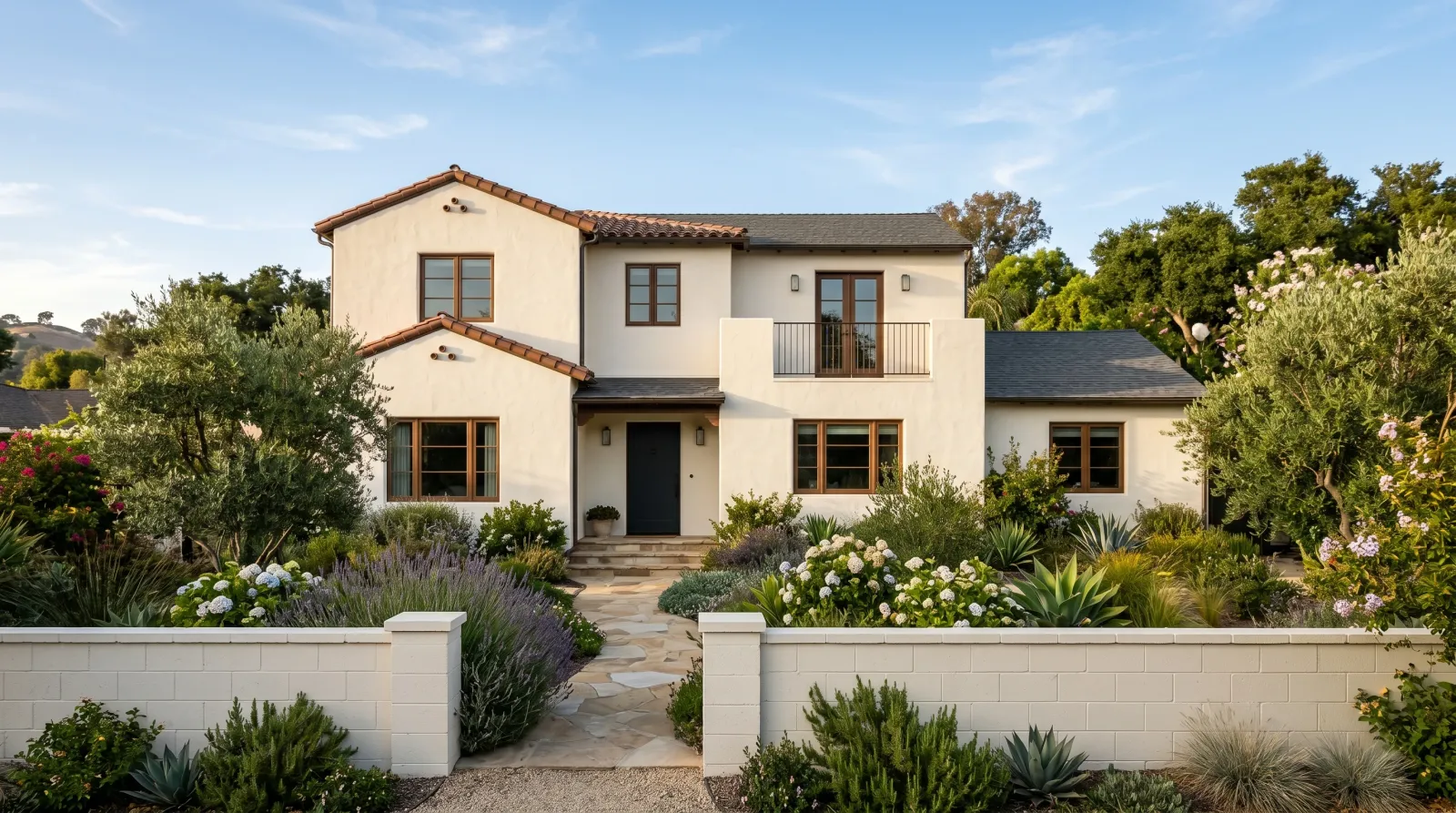
Behr Masonry, Stucco & Brick Paint2 sheens
Coverage250–400 sq ft / gal
Dry / recoatTouch 2–3 hr · recoat 4 hr
VOCFlat under 50 g/L
Full cure2 weeks at 77°F and 50% humidity
Sheens FlatSatin
Read this first
The Fast Verdict
Buy it if your wall is sound, dry, and crack-free. At $28 to $31 a gallon nothing in the masonry aisle covers concrete, block, or stucco for less, it self-primes on a cured surface, the mildew resistance is real on a shaded north wall, and the thin film lets masonry breathe instead of blister. You can do a whole foundation skirt for under $80. Skip it if the wall has hairline cracks, sits damp, or shows efflorescence — that is an elastomeric job or a moisture job, not a paint job.
Best for
Garden and retaining walls · Foundation skirts · Sound cured stucco · Clean brick · Concrete block and CMU · Interior fireplace surrounds and basement walls · Small jobs where the stakes are low
Skip if
Hairline cracks you want gone · Damp or efflorescing walls · Anything people walk on · Fireboxes and hot surfaces · New concrete under 30 days · Whole-house stucco in a deep color under hard sun
What it's good at
- Coverage for the money — two coats hide bare grey block on a 200 sq ft retaining wall with a 3/4-inch nap and a back-roll
- Self-priming that actually holds on cured, clean stucco with no separate masonry primer
- Mildew resistance that earns its keep on a shaded north stucco wall in a humid zone
- Breathing — a thin acrylic lets vapor move out of masonry, and a wall that can dry does not blister
- Counter tinting off Behr's full deck at any Home Depot in fifteen minutes
- Interior and exterior rating, which makes it the fireplace surround and basement wall answer as well as the garden wall one
- Price per project: a whole foundation skirt for under $80
What it's not good at
- Bridging anything — every hairline crack reopens through the film the first time the wall moves
- Forgiving bad prep; over chalk, efflorescence, or green concrete it comes off in sheets the next wet season
- Holding a deep color on a south-facing wall, where it chalks and burnishes a year or two early
- Floors, patios, steps, pool decks, garage slabs, and hearth tops — the label excludes foot traffic outright
- Fireboxes and anything that gets hot, which wants a high-heat coating instead
- Sheen choice; flat and satin are the whole menu
- Living up to the 20-year warranty, which pays in product, not labor, and only when the substrate was right
Same shelf, different cans
Which Masonry Behr Are You Buying?
Behr sells two coatings under almost the same name and the boxes look alike on the shelf. They are not the same product, and grabbing the wrong one is the single most common mistake I see in this aisle.
Premium Masonry, Stucco & Brick Paint (this review)
BaseThin-film 100% acrylic latex, 30% solids, 2.0 mils dry at 250 sq ft/gal
SheensFlat (No. 270), Satin (No. 280)
Recoat4 hr
Buy it if
The wall is sound, cured, and crack-free. Garden walls, foundation skirts, retaining walls, clean brick, an interior fireplace surround. It seals, colors, resists mildew, and self-primes with two coats.
Avoid if
You want hairline cracks gone. A thin acrylic film follows the surface it sits on, so every crack reopens through the paint the first time the wall moves with the seasons.
Premium Elastomeric Masonry, Stucco & Brick Paint
BaseHigh-build flexible membrane, goes on heavy
Buy it if
Cracked or weather-beaten stucco. It bridges hairline cracks and sheds wind-driven rain rated to 98 mph, which is exactly what the standard paint cannot do.
Avoid if
The wall is sound and crack-free. It costs roughly twice as much a gallon, and on a wall that does not need bridging it just traps moisture that would rather move out.
Numbers, not adjectives
Spec Sheet
- Coverage
- 250–400 sq ft / gal; rough block lands near 250
- Sheens
- Flat (No. 270), Satin (No. 280)
- Dry / recoat
- Touch 2–3 hr · recoat 4 hr
- Full cure
- 2 weeks at 77°F and 50% humidity — no washing before then
- Application temp
- 50–90°F on air and surface, out of direct sun
- VOC
- Flat under 50 g/L; satin is the higher of the two. SCAQMD, CARB, and LEED v4 compliant, GREENGUARD listed
- Scrub resistance
- Over 2,500 cycles (ASTM D2486)
- Roller nap
- 3/8 to 3/4-inch by texture; 3/4 to 1-inch on rough stucco
- Surfaces
- Concrete, block and CMU, brick, stucco, EIFS, fiber cement, drywall — above-grade vertical only, never a floor
- Warranty
- 20-year limited, original residential buyer, pays in product not labor
- Sizes
- Gallon; 5-gallon runs about $137–151 a bucket
- Price
- $28–31 / gal at Home Depot
Application Settings That Work
- Airless
- A .015 to .021-inch tip with a 60-mesh filter. Back-roll behind the gun on block and stucco so the material gets driven into the texture instead of bridging it.
- Thinning
- None. Formulated for package consistency, and thinning drops the dry film under the 2.0 mils at 250 sq ft per gallon that the durability numbers assume.
- Primer
- Self-priming with two coats on sound concrete, brick, stucco, and EIFS. CMU, cinder, and split-face block take one coat of Behr DRYPLUS Masonry Waterproofer No. 875 first — block is porous enough that skipping it is how water ends up behind your paint. Stains, patches, and repairs want Multi-Surface Stain-Blocking Primer & Sealer No. 436. A washed wall that still dusts on your palm wants Concrete & Masonry Bonding Primer. Steel-troweled or poured-smooth concrete is glassy and needs an acid etch until it feels like fine sandpaper, then a hard rinse and a full dry — goggles and gloves for that one.
Two Weeks Means Two Weeks
Touch dry in 2 to 3 hours, recoat at 4. That part is easy and you can get two coats on a garden wall in a day. The film is not hard until roughly day fourteen, measured at 77°F and 50 percent humidity, and that is the number people blow through. Pressure-washing a fresh wall or scrubbing a fireplace surround in week one takes paint off along with the dirt. Watch the 90°F ceiling as hard as the 50°F floor: cold air stops the film forming, and hot sun dries the surface before the coat can level, which gives you lap marks and poor adhesion on a wall that looked fine going on. Chase the shade around the house instead of chasing the clock. Past cure, the honest field life on a well-prepped wall is one repaint cycle — 7 to 10 years before fade and chalk tell you it is time again, not the 20 on the label.
Mid-project panic
When It Goes Wrong, and How to Fix It
The paint came off in sheets the next wet season
Why it happens. Bad substrate, every time. This paint punishes prep harder than a premium exterior acrylic does — it has less grip to spare. Chalk, efflorescence, or concrete that has not cured a full 30 days all give the film something to sit on instead of something to hold.
The fix. Pressure-wash off dirt, chalk, and loose coating. If your palm comes back dusty, you are not done. Scrub efflorescence off dry, then treat with a masonry cleaner or a mild acid rinse and rinse clean. Let new pours and new stucco cure 30 days, then test with pH strips and paint only at pH 12 or lower.
Hairline cracks came back through the fresh paint
Why it happens. A thin acrylic film follows the surface it sits on. There is no build to span a gap, so the crack is still a crack under the paint, and the first seasonal movement reopens it through the film.
The fix. There is no fix in this can. Crack-hiding is the elastomeric line's job — it builds a flexible membrane that bridges hairline cracks. On a sound crack-free wall the elastomeric is overkill and your wallet will feel it, so match the product to the wall before you buy.
A dark wall goes chalky on your hand by year three
Why it happens. The thin film burnishes and chalks earlier than a top-tier exterior, and south-facing dark colors take the worst of it. That is the trade for a $30 gallon and a breathable low-build coating.
The fix. Run light colors on sun-baked walls and the problem mostly disappears. If the wall is a whole-house stucco elevation in a mid to deep color, this is the wrong tier — step up to a premium exterior acrylic for the fade life. On an existing chalked wall, wash it back to sound before you recoat.
Pinholes and unpainted low spots across rough stucco
Why it happens. Nap too short for the texture. On heavy dash or knock-down stucco a short nap rides the high points and never reaches into the profile, and you will not see it until the wall dries.
The fix. Match the nap to the texture: 3/8-inch on smooth poured concrete, the middle of the range on block and brick, and 3/4 to 1-inch on rough stucco. Back-roll the second coat into the texture so the low spots actually fill. Two coats, always two coats — one-coat coverage means one coat under lab conditions.
Lap marks and poor adhesion on a hot wall
Why it happens. You painted over 90°F or in direct sun. The surface skins before the coat can level, so laps set instead of blending, and the film never bonds the way it does at moderate temperature. Then comes the second mistake: splashing water in because it feels thick.
The fix. Work in shade, 50 to 90°F on air and surface. Do not thin it. This paint is built to go on at package consistency, and thinning drops the dry film under the 2.0 mils every durability number here assumes. If it is dragging, the wall is too hot, not the paint too thick.
Side by side
Masonry Line vs Elastomeric vs Premium Exterior Acrylic
Most people in the aisle read the word masonry on the can as a requirement. It is not. Every Behr exterior wall paint is label-rated for masonry, stucco, and brick, so the dedicated line is a choice — and the choice comes down to what the wall is and what color is going on it.
| Masonry, Stucco & Brick | Premium Elastomeric | Marquee / Dynasty Exterior | |
|---|---|---|---|
| Price per gallon | $28–31 | $45–60 | Roughly $58–72 at full price |
| What the film does | Thin 100% acrylic. Seals, colors, breathes. 30% solids, 2.0 mils dry at 250 sq ft/gal. | High-build flexible membrane. Goes on heavy, bridges hairline cracks, sheds wind-driven rain to 98 mph. | Standard premium exterior acrylic with a much stronger UV and dirt package and one-coat hide across 700-plus colors. |
| Hairline cracks | Telegraphs every one back through by spring. | The whole reason to buy it. | Does not bridge them either. |
| Alkali resistance on bare masonry | Rated to pH 12 — the thing bare block and stucco actually need. | — | — |
| Interior use | Rated interior and exterior; the fireplace surround and basement wall pick. | — | Exterior lines. |
| Deep color on a south-facing wall | Fades and chalks a year or two early. | — | The fade life a dark wall in hard sun needs. |
| Sheens | Flat and Satin only. | — | Full exterior range, including semi-gloss. |
Price per gallon
Masonry, Stucco & Brick$28–31
Premium Elastomeric$45–60
Marquee / Dynasty ExteriorRoughly $58–72 at full price
What the film does
Masonry, Stucco & BrickThin 100% acrylic. Seals, colors, breathes. 30% solids, 2.0 mils dry at 250 sq ft/gal.
Premium ElastomericHigh-build flexible membrane. Goes on heavy, bridges hairline cracks, sheds wind-driven rain to 98 mph.
Marquee / Dynasty ExteriorStandard premium exterior acrylic with a much stronger UV and dirt package and one-coat hide across 700-plus colors.
Hairline cracks
Masonry, Stucco & BrickTelegraphs every one back through by spring.
Premium ElastomericThe whole reason to buy it.
Marquee / Dynasty ExteriorDoes not bridge them either.
Alkali resistance on bare masonry
Masonry, Stucco & BrickRated to pH 12 — the thing bare block and stucco actually need.
Premium Elastomeric—
Interior use
Masonry, Stucco & BrickRated interior and exterior; the fireplace surround and basement wall pick.
Premium Elastomeric—
Marquee / Dynasty ExteriorExterior lines.
Deep color on a south-facing wall
Masonry, Stucco & BrickFades and chalks a year or two early.
Premium Elastomeric—
Marquee / Dynasty ExteriorThe fade life a dark wall in hard sun needs.
Sheens
Masonry, Stucco & BrickFlat and Satin only.
Premium Elastomeric—
Marquee / Dynasty ExteriorFull exterior range, including semi-gloss.
Sound bare masonry or a budget recoat, buy the masonry line — the alkali resistance is what bare block needs and nothing else in the aisle gives it to you this cheap. Cracked or weather-beaten stucco, or a wall you need to waterproof, buy the elastomeric and accept the price. Whole-house exterior in a mid to deep color under full sun, step up to Marquee or Dynasty Exterior; that money buys fade life a thin film cannot. And if you want semi-gloss on masonry at all, the exterior lines are your only route.
If not this one
Honest Alternatives
BM
Behr Masonry, Stucco & Brick in the other sheen$28–31 / gal
Flat is not the cheaper sheen — both sit in the same band, so price should not decide it. Flat hides surface imperfection and patches better on rough block and comes in under 50 g/L VOC. Satin cleans and scrubs better and is the sheen for anywhere soot, hands, or a hose will reach. Flat for a foundation skirt, satin for a fireplace surround.
BP
Behr Premium Elastomeric Masonry, Stucco & Brick$45–60 / gal
The crack-bridging sibling. Builds a thick flexible membrane that spans hairline cracks and sheds wind-driven rain at up to 98 mph. Roughly twice the price per gallon and it goes on heavy. Right pick when your stucco is cracking or you need waterproofing, wrong pick on a sound wall where it just traps moisture.
BM
Behr Marquee or Dynasty ExteriorRoughly $58–72 / gal at full price
The step up for a whole house. One-coat hide across 700-plus colors, a much stronger UV and dirt package, and the fade life a dark wall in hard sun actually needs. Also the only route to semi-gloss on masonry. Overkill on a garden wall, worth it on an elevation.
Full review →DM
Drylok Masonry Waterproofer$40–55 / gal
Not a topcoat, a waterproofer. For a below-grade basement wall or a foundation that weeps, it seals against hydrostatic pressure in a way no acrylic topcoat does. Use it where water is the enemy, then paint over it if you want color.
Questions people actually ask
Masonry, Stucco & Brick Paint Questions, Answered
Is Behr masonry paint any good for stucco?
On sound, cured stucco, yes. It is a fair-value 100% acrylic that bridges nothing but seals a clean wall and resists mildew for several years. The catch is prep. Stucco that is chalking or under 30 days old will fail no matter what you brush on. It will not bridge moving cracks either. For hairline-crack bridging on stucco you want the elastomeric line instead.
Does Behr masonry paint need a primer?
Behr calls it self-priming, and on a clean, sound, cured masonry wall that holds up — skip the separate primer there. On new concrete, heavy chalking, or efflorescence it does not. Wash, let it cure 30 days, and seal with the right primer first. Self-priming is a fair-weather claim, and bad substrate beats it every time.
How long does Behr masonry paint last?
Behr warrants it 20 years, which is a marketing number, not a field number. On a prepped, dry, south-facing block wall expect a solid repaint cycle of 7 to 10 years before you see fade and chalk. On a damp foundation or efflorescing block it can peel inside two seasons. The wall decides, not the warranty.
Behr masonry paint or elastomeric?
Pick standard Masonry, Stucco & Brick for sound walls with no moving cracks. It is thinner, cheaper, and breathes well. Pick the elastomeric line when you have hairline cracks to bridge or wind-driven rain to stop — it builds a thick flexible film and costs more per gallon. Do not pay for elastomeric on a crack-free wall.
Can you use it on an interior brick fireplace?
Yes, on the surround and chimney breast — it is interior and exterior rated and Behr's own fireplace tutorials use it. Keep it out of the firebox and off any surface that gets hot; that needs a high-heat coating. Take satin near a working fireplace so soot wipes off, and skip a hearth top you step on, since the label excludes horizontal foot-traffic surfaces. Remember painted brick is effectively permanent — stripping it later means chemicals or blasting.
Do I need the masonry line, or will regular Behr exterior paint work on brick and stucco?
Either works. Behr's regular exterior lines are also rated for masonry, stucco, and brick. The masonry line wins on price at $28 to $31 a gallon and on alkali resistance to pH 12 on bare masonry. A premium exterior acrylic like Marquee wins on fade resistance for dark colors on sun-blasted walls and on one-coat hide. And despite what some sites claim, there is no separate Marquee masonry product — those listings are ordinary Marquee tinted to a color named California Stucco.
Can you use it on a patio, steps, or a garage floor?
No. The label says not for horizontal surfaces subject to foot traffic. It wears through fast where shoes scuff it and gets slippery when wet. For painted concrete or brick underfoot use a porch and patio floor enamel or a concrete floor coating, and save this paint for vertical walls.
What temperature can you apply it in?
Between 50 and 90°F on air and surface, out of direct sun. Below 50°F the film does not form properly; above 90°F it dries too fast to level. It recoats in 4 hours at 77°F and 50 percent humidity but needs a full 2 weeks to cure, so do not wash or scrub the wall before then. And never thin it — the label says use it at package consistency.
Can I whitewash or limewash brick with it?
Not properly. The soft, mottled look where brick color still reads through is limewash, and Behr does not make one. The old workaround of thinning white paint 50/50 with water is off-label here — the data sheet says do not thin, full stop, and doing it anyway puts you outside the warranty and on your own for adhesion. If you want brick that reads as painted, this is the right can at full strength, two coats, no water.
Is Behr masonry paint worth it?
On a sound, dry, crack-free wall, yes. At $28 to $31 a gallon nothing in the masonry aisle covers concrete, block, or stucco for less, it self-primes on a cured surface, and the mildew resistance is real. It is the wrong buy if the wall has hairline cracks, sits damp, or shows efflorescence, and the wrong buy for whole-house stucco in a deep color under hard sun. Plan on 7 to 10 years of field life, not the 20 on the label.
Keep exploring
All Behr paint reviewsBest masonry paint round-upWhat elastomeric paint actually doesHow to fix a chalking exteriorBest limewash for brickBest concrete floor paint
We may earn a commission when you buy through the retailer link above. It never changes the score or the verdict.
Ask a Question