Product review · Behr · Updated August 7, 2026
Bonding PrimerBehr paint review
8.0/10The bonding primer to buy if you shop at Home Depot — it just is not the value pick anymore.
Behr No. 432 exists for one narrow job: making paint hold on laminate, glazed tile, glass, and cured gloss. It still does that job well. At $54.98 a gallon it is no longer the cheap way to get it done.

David Chen · Formulation Lead & Resident Chemist · Updated August 7, 2026
Polymer chemist by training, six years in industrial coatings R&D before joining CompositePaint's formulation team. David writes the adhesion pieces — why a primer wets out on a slick door, and why the wrong one lets go in a curl. About the testing process →
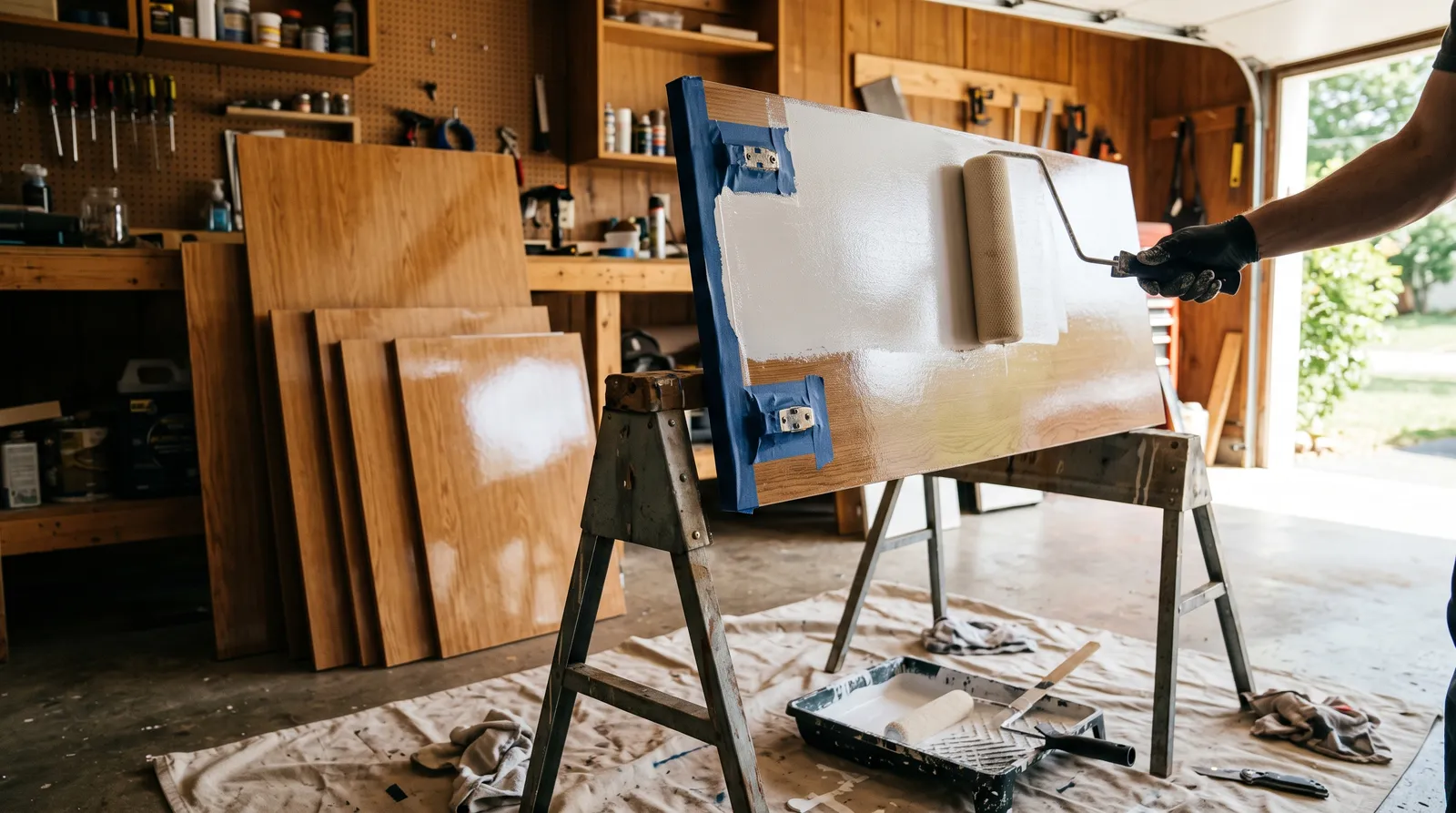
Behr Bonding Primer
Coverage300–400 sq ft / gal
Dry / recoatTouch 30 min
VOCUnder 100 g/L
Read this first
The Fast Verdict
Buy it if you are painting something slick and Home Depot is your store. It grips laminate, glazed tile, glass, PVC, fiberglass, and cured gloss the way no wall primer will, it tints at the same counter as your topcoat, and it recoats in an hour. Two honest limits keep it off a higher score: it is a bonding primer, not a stain blocker, and KILZ Adhesion sits in the same aisle for roughly half the gallon price.
Best for
Glossy and factory-finished cabinets · Slick or varnished trim · Laminate and melamine · Glazed tile and fireplace surrounds · Glass, PVC, and fiberglass · Metal, galvanized, and anodized aluminum · Anyone who wants the primer tinted toward a deep topcoat
Skip if
Bare drywall, fresh plaster, or raw lumber · Tannin, nicotine, smoke, or set-in water stains · Floors and anything underfoot · Horizontal surfaces that hold standing water · You only need a white bonding coat and want to pay half
What it's good at
- Wetting and gripping genuinely slick substrates — laminate, glass, glazed tile, PVC, fiberglass, aluminum, galvanized metal, Kynar, and cured glossy enamel
- Fast turnaround: tack-free in 30 minutes, recoats as a primer in an hour, so you can prime cabinet faces in the morning and start enamel after lunch
- One can inside and out, so a job that crosses the threshold primes from a single bucket
- Low odor and broad VOC compliance — under 100 g/L, SCAQMD, OTC, and CARB, with warm soapy water cleanup
- Tinting up to 2 fl oz per gallon at the same counter as the topcoat, which no white-only bonder offers
- Sanding down to a flat, slightly toothy film that knocks nibs off easily before topcoating
- Earning a 4.6 out of 5 across roughly 250 Home Depot reviews, high for a category people mostly review when it fails
What it's not good at
- Blocking stains — tannin, nicotine, smoke, ink, and set-in water rings migrate straight through
- The very slickest substrates, where urethane bonders wet out more consistently and Behr's own label asks for a test patch
- Price against the aisle it sits in; KILZ Adhesion does the same chemistry for roughly half
- Patience — the 14-day topcoat window means priming far ahead of painting quietly costs you the bond
- Hot topcoats on day one; epoxies, lacquers, and xylene-bearing finishes need a full 24-hour wait
- Coverage on porous or textured substrate, where the low-build film runs under the 300 to 400 sq ft range
- Floors, foot-traffic surfaces, and anything under prolonged standing water
Numbers, not adjectives
Spec Sheet
- Coverage
- 300–400 sq ft / gal, surface and method dependent
- Chemistry
- Waterborne acrylic bonding primer
- Finish
- Non-reflective flat
- Dry / recoat
- Touch 30 min · recoat 1 hr at 77°F, 50% RH
- Topcoat window
- Within 14 days; 24 hr before epoxies, lacquers, or hot-solvent finishes
- VOC
- Under 100 g/L; SCAQMD, OTC, and CARB compliant
- Tint
- White base; up to 2 fl oz colorant per gallon
- Application temp
- 50–90°F on air, material, and surface
- Roller
- 3/8-inch to 1/2-inch nap
- Surfaces
- Glossy and factory finishes, laminate, glazed tile, glass, PVC, fiberglass, metals, galvanized and anodized aluminum, Kynar, chalky coatings
- Sizes
- 1 quart and 1 gallon (No. 432 line; gallon is model 43201)
- Price
- About $28.98 a quart, $54.98 a gallon at Home Depot
Application Settings That Work
- Brush
- Nylon or polyester bristle. Natural bristle drinks water, swells, and drags through a waterborne primer. Roll with a 3/8-inch to 1/2-inch nap — anything thicker piles film on and telegraphs texture into a cabinet finish you are trying to keep flat.
- Airless
- A 0.015 to 0.021-inch tip with a 60-mesh filter. That is a fine tip for a primer, which tells you how thin the material is. A coarser filter lets flecks through and a bigger tip lays it on heavier than the bond needs.
- Thinning
- None for brush or roller — that is a flat rule. For spraying only, up to half a pint of water per gallon to help it atomize. Water it down further and you dilute the adhesion promoters that are the entire reason you bought the can.
- Primer
- Degrease first with a water-based cleaner, never mineral spirits. Scuff off the worst of the gloss for margin, vacuum, and wipe the dust with a damp cloth. On highly engineered plastics, put a test patch down before you commit the piece. Do not use it on floors or on horizontal surfaces that sit under standing water, and remember that priming glass blocks light and a dark topcoat on glass can build enough thermal stress to crack the pane.
Dry Times and the Topcoat Clock
No. 432 is dry to the touch in 30 minutes and takes a latex or waterborne enamel topcoat after 1 hour. Both numbers are rated at 77°F and 50 percent relative humidity, the lab-fair conditions on every data sheet. A cool garage in October or a humid August afternoon stretches both, sometimes by half again, because a waterborne film cannot form faster than the water can leave it. Apply between 50 and 90°F measured on the air, the material, and the surface itself, which in a garage is usually the coldest of the three. Two longer clocks sit on top of that. Hot topcoats — epoxies, lacquers, anything carrying xylene — need a full 24 hours, because a fresh acrylic film is still completing film formation and a hot solvent will re-dissolve and lift it. And the primed surface has a 14-day shelf life: topcoat inside two weeks, while the film is still fresh and clean, or the dust and hand oils it collects turn your bonding coat back into a slick surface.
Mid-project panic
When It Goes Wrong, and How to Fix It
The topcoat peeled off the primed cabinet doors
Why it happens. Almost always skipped degreasing, and it is the single biggest cluster in the Home Depot review pile. A bonding primer works by wetting out on the substrate — spreading into intimate contact so the acrylic resin can develop adhesion across the interface. Kitchen cabinets carry an invisible layer of cooking grease and hand oil, and a primer cannot wet out on grease. It bridges over it instead, and the whole stack lets go later.
The fix. Wash with a water-based cleaner before anything else. Not mineral spirits — that leaves an oily residue and defeats the exact mechanism you bought the can for. Then knock down the worst of the gloss with a scuff sand for margin, vacuum, wipe the dust off with a damp cloth, and prime. On a surface that was properly degreased, No. 432 grips the everyday glossy door reliably.
Brown or yellow stains ghosting up through the finish
Why it happens. Wrong primer for the problem. No. 432 is a bonding primer, not a sealer, and the two categories have almost nothing to do with each other. Its waterborne acrylic film covers light everyday marks, but tannin from cedar or knotty pine, nicotine, smoke, ink, and set-in water rings dissolve their way up through it and print into your topcoat.
The fix. Spot-prime the stains with a shellac primer like Zinsser B-I-N first, then bond-coat over the top, or use Behr's own multi-surface stain-blocking primer instead. Shellac also bonds well to gloss, so on a slick surface that is also stained — a glossy, nicotine-yellowed door — B-I-N covers both jobs in one can.
The primer lifted when the lacquer or epoxy went on
Why it happens. The film was still soft. Cross-linking is not instant: a fresh acrylic is still completing film formation for hours after it feels dry, and a hot solvent flashed onto a half-cured primer re-dissolves it and drags it around. Behr clears No. 432 for epoxies, lacquers, and xylene-bearing topcoats, but only after a full day.
The fix. Wait 24 hours before any hot finish, and put a test patch down first. For ordinary latex or waterborne enamel you are clear at the 1-hour recoat, which is why most people never meet this problem at all.
A surface primed weeks ago will not hold the topcoat
Why it happens. The 14-day window is a real clock, not legal padding. Your topcoat bonds to a clean, fresh primer film. A bonding coat left sitting collects dust and hand oil, and a dusty flat film is just another low-energy surface for paint to slide off.
The fix. Prime when you are ready to paint, not far ahead of it. If a primed surface has aged past two weeks or been handled, wash it, scuff it, and lay a fresh bonding coat before you topcoat.
The gallon ran out well short of 400 square feet
Why it happens. Two causes. This is a low-build film by design — that is what keeps it from rounding off cabinet detail — and porous or textured substrate drinks more of it than the spec range implies. Thinning makes it worse: a bonding primer earns its grip from the resin-to-substrate ratio in the wet film.
The fix. Buy by your actual square footage at the low end of the range, and do not thin it at all for brush or roller work. Water is only allowed for spraying, up to half a pint per gallon. Run the size math too — the quart is $28.98 and the gallon $54.98, so the gallon is about $26 more for four times the primer.
Side by side
Behr Bonding Primer vs KILZ Adhesion vs INSL-X Stix
Three bonding primers cover the same job, and Behr now sits in the middle of them on price rather than at the bottom. The choice comes down to whether you need the primer tinted and how hard the substrate really is.
| Behr Bonding Primer | KILZ Adhesion | INSL-X Stix | |
|---|---|---|---|
| Price per gallon | $54.98 (quart $28.98) | $28–35 | $70–73 |
| Binder | Waterborne acrylic | Water-based, no-sand claimed | Acrylic-urethane |
| Tintable | Yes, up to 2 fl oz per gallon, mixed at the same counter as your topcoat | No — the grab-and-go white can | Not the reason people buy it |
| Grip on the hardest factory films | Good on everyday gloss; a notch behind on Kynar, anodized aluminum, and dense engineered plastics | Substrate list overlaps Behr's almost line for line | Wets out and grips a hair more reliably, and stays more flexible |
| Stain blocking | No — spot-prime with shellac first | No | No |
| Where to buy | Home Depot only; Behr is HD-exclusive | Home Depot, Lowe's, Walmart, Amazon | Benjamin Moore dealers |
| Where it wins | Glossy cabinets and trim when you want the primer shaded toward a deep topcoat | A white bonding coat under a white enamel, for half the money | Make-or-break engineered plastics and commercial-grade factory films |
Binder
Behr Bonding PrimerWaterborne acrylic
KILZ AdhesionWater-based, no-sand claimed
INSL-X StixAcrylic-urethane
Tintable
Behr Bonding PrimerYes, up to 2 fl oz per gallon, mixed at the same counter as your topcoat
KILZ AdhesionNo — the grab-and-go white can
INSL-X StixNot the reason people buy it
Grip on the hardest factory films
Behr Bonding PrimerGood on everyday gloss; a notch behind on Kynar, anodized aluminum, and dense engineered plastics
KILZ AdhesionSubstrate list overlaps Behr's almost line for line
INSL-X StixWets out and grips a hair more reliably, and stays more flexible
Where to buy
Behr Bonding PrimerHome Depot only; Behr is HD-exclusive
KILZ AdhesionHome Depot, Lowe's, Walmart, Amazon
INSL-X StixBenjamin Moore dealers
Where it wins
Behr Bonding PrimerGlossy cabinets and trim when you want the primer shaded toward a deep topcoat
KILZ AdhesionA white bonding coat under a white enamel, for half the money
INSL-X StixMake-or-break engineered plastics and commercial-grade factory films
If you need the primer tinted, or you want one counter for the primer and the topcoat both, No. 432 is the can. If all you want is a white bonding coat under a white enamel, KILZ Adhesion sits two shelves over for roughly half the price and its substrate list reads almost identically — check the shelf tag, since KILZ pricing moves around more than Behr's does. And if the substrate is a hard engineered plastic where a failure means redoing the whole piece, pay the extra $15 to $18 for Stix. Behr no longer undercuts it by enough to make the choice obvious.
If not this one
Honest Alternatives
KA
KILZ Adhesion$28–35 / gal
The one that changes the math at Behr's current price. Same Home Depot aisle, plus Lowe's, Walmart, and Amazon, with a substrate list that overlaps Behr's almost line for line: Kynar, PVC, vinyl, Formica, glass, tile, glazed brick, fiberglass, chalky paint, glossy finishes, metals. It is not tintable, which is the honest trade.
Full review →IX
INSL-X Stix Bonding Primer$70–73 / gal
The pro default and the gripper Behr is measured against. An acrylic-urethane binder that stays more flexible and wets out a hair more reliably on the very hardest factory films. Costs $15 to $18 more a gallon and means a trip to a Benjamin Moore dealer.
SW
Sherwin-Williams Extreme Bond Primer$55–70 / gal
SW's house gripper and the direct counterpart — also waterborne acrylic, also no-sand claimed, also tinted at its own counter. Its standout is an unusually wide topcoat rating that explicitly includes lacquer. The two now sit within a few dollars of each other, so pick on which counter you are standing at.
Full review →ZB
Zinsser B-I-N Shellac-Based Primer$25–35 / quart
The opposite chemistry, on purpose. Shellac in alcohol dries to a tight, non-aqueous barrier that locks down tannin, knots, nicotine, water rings, and odors a bonding primer lets pass, and it bonds to gloss as well. The trade-offs are alcohol fumes, serious ventilation, and a more brittle film.
Questions people actually ask
Bonding Primer Questions, Answered
Do I need a bonding primer for laminate cabinets?
Almost always, yes. Laminate and melamine are dense, low-surface-energy plastics, and ordinary paint dries into a skin that rests on top instead of gripping. Scuff-sanding helps on the broad faces but cannot reach the routed profiles and inside corners where doors wear first. A bonding primer like No. 432 wets the slick surface chemically, and your enamel then bonds to the primer instead of to bare laminate.
Behr Bonding Primer or INSL-X Stix?
Both grip slick surfaces well. Stix runs an acrylic-urethane binder that wets out a hair more reliably on the hardest factory films and stays a touch more flexible, which is why pros reach for it first. Behr is a straight acrylic, sits about $15 to $18 cheaper a gallon, and is at the Home Depot you are already standing in. For most glossy cabinets and trim, Behr is the value pick; for the slickest engineered plastics, Stix has the edge.
Does Behr Bonding Primer block stains?
No, and that is the wrong tool for the job. No. 432 is built to make paint stick to slick surfaces, not to lock down bleed-through. Tannin from cedar or knotty pine, nicotine, smoke, and old water rings will migrate up through it. Spot-prime those with a shellac primer like Zinsser B-I-N first and then bond-coat, or use Behr's own multi-surface stain-blocking primer instead.
How long does Behr Bonding Primer take to dry?
Dry to the touch in about 30 minutes and ready for a latex or waterborne enamel topcoat after 1 hour, rated at 77°F and 50 percent humidity. Cooler or damper conditions stretch both. Wait a full 24 hours before applying epoxies, lacquers, or any xylene-bearing topcoat, and always topcoat within 14 days of priming while the film is fresh.
Do I still have to sand before I prime?
You do not have to, and that is the headline claim — the wetting agents and adhesion promoters in the acrylic lower the contact angle so the primer flows into intimate contact instead of beading off. Behr says the chemistry reduces or potentially eliminates sanding on dense and glossy surfaces. What you cannot skip is degreasing, because the primer cannot wet out on a layer of cooking grease or hand oil. A quick scuff still buys margin on a hard factory film.
What sizes does it come in and what does it cost?
Two sizes at Home Depot: a quart at about $28.98 and a gallon, model 43201, at about $54.98. The gallon covers 300 to 400 sq ft, so it is only about $26 more for four times the primer. Buy the quart for a single small piece and the gallon for anything bigger, since leftover bonding primer past its 14-day topcoat window is wasted anyway.
Can I spray Behr Bonding Primer?
Yes, through an airless sprayer with a 0.015 to 0.021-inch tip and a 60-mesh filter. If it needs thinning to atomize, add no more than half a pint of water per gallon, and only when spraying. Behr says not to thin it at all for brush or roller work. Brush with nylon or polyester, roll with a 3/8-inch to 1/2-inch nap.
Can I use it on a floor or a shower surround?
No. Behr excludes floors and horizontal surfaces subject to prolonged water contact outright. It is a wall, trim, cabinet, and vertical-substrate primer. Anything underfoot wants a coating built for abrasion, and a wet area under standing water wants a system rated for it.
What do Home Depot buyers actually say about it?
Roughly 250 verified buyers rate the gallon about 4.6 out of 5. The praise is consistent: it lays down smooth and it bonds where people expected to be disappointed, with glazed tile and tiled fireplace surrounds named again and again, and several working painters calling it a less expensive stand-in for INSL-X Stix. The complaints split into thin coverage, which is the trade-off for a low-build film, and peeling, which almost always traces back to a surface that was never degreased.
Keep exploring
Behr brand hub — every line, reviewedBehr Cabinet & Trim Enamel — the topcoat this primes forBehr Dynasty — the brand's top interior line
We may earn a commission when you buy through the retailer link above. It never changes the score or the verdict.
Ask a Question