Paint vs Peel-and-Stick Wallpaper (for Renters)
Paint vs peel and stick wallpaper for renters: which one your landlord allows, how each one comes off on move-out day, and a real side-by-side cost breakdown.

The 30-Second Answer
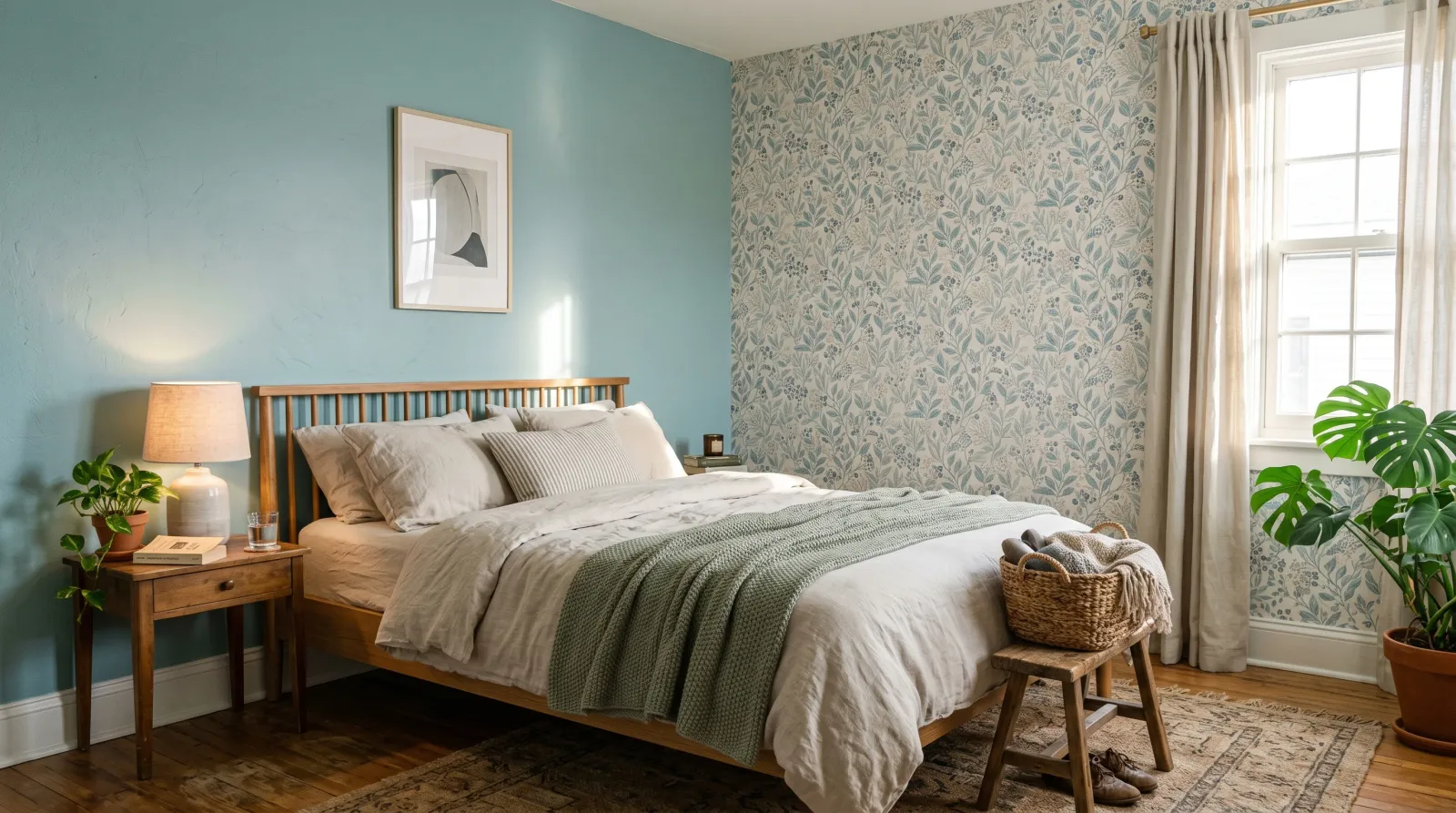
Okay, so you’re renting and you want the wall to look like yours, not like the last four tenants’. Here’s the short version. If you can’t get your landlord to say yes to paint, or you want it gone fast with no patching, go with peel-and-stick wallpaper. If you have written permission, you want a true solid color across a whole wall, and you don’t mind two coats plus repainting it back at move-out, paint wins on cost and on looking seamless. Most renters who ask me end up reaching for peel-and-stick, and it’s usually the right call.
At a Glance
| Paint | Peel-and-stick wallpaper | |
|---|---|---|
| Durability | 🟢 years, scrubbable | 🟡 1–3 yrs, edges lift |
| Finish | 🟢 seamless solid color | 🟢 pattern, no brush marks |
| Cost (one accent wall) | 🟢 $50–80 | 🟡 $120–250 |
| Ease of use | 🟡 prep, dry time, 2 coats | 🟢 no dry time, peel and press |
| Cleanup / removal | 🔴 repaint to original | 🟢 peels off in an afternoon |
That table is the whole fight in five rows. Paint is cheaper and tougher. Peel-and-stick is faster and far easier to undo. The rest is about which of those matters most for your wall and your lease.
How to Tell What You’re Already Working With
Before you pick a side, figure out what’s on your wall right now, because it changes the answer.
Run your hand across the wall. If it’s bumpy or has that orange-peel texture, peel-and-stick is going to struggle. The adhesive only grabs the high points and you’ll see bubbles and lifting within weeks. Smooth, flat walls are what peel-and-stick is made for.
Now check the sheen. Press a piece of clear tape onto the wall, smooth it down, and pull it off. If it comes off easily and the wall is dead-flat with no shine, that’s flat or matte paint, which is the trickiest surface for both options (it scuffs when you paint, and adhesive can pull the paint off when you remove wallpaper). A slight shine that resists the tape a little means eggshell or satin, which is the friendliest surface for either choice. If you’re not sure what sheen even means here, the sheen guide walks through all five.
Side-By-Side: What Each One Actually Does to the Wall
This is the part nobody tells renters, so I’m putting it up front.
Paint becomes the wall. Once it’s on and cured, there’s no peeling it off. To undo it you paint over it again, usually in the original landlord-approved color, sometimes with a primer coat first if you went dark. That’s real work and a second trip to the store at move-out.
Peel-and-stick sits on top of the wall like a giant sticker. It doesn’t soak in, it doesn’t cure into the drywall, and the whole point is that it lifts back off. When it works, you pull it down in twenty minutes and the wall underneath looks untouched. When it goes wrong (cheap flat paint, fresh paint, or you left it up three years), it can take a thin layer of paint with it.
So the real question isn’t “which looks better.” Both look good now. The question is what each one leaves behind on the day you hand back the keys.
Durability
Paint wins this one, no contest. A decent eggshell or satin wall paint stands up to years of fingerprints, furniture bumps, and the occasional wipe-down. Satin and semi-gloss are scrubbable, so you can clean a smudge without leaving a shiny rubbed spot. In a rental you’ll probably move before the paint wears out.
Peel-and-stick is more delicate. The vinyl face cleans up fine with a damp cloth, but the adhesive is the weak point. Heat, steam, and time loosen it. On a bathroom or a sunny window wall, the corners and seams start lifting inside a year. In a dry bedroom on a cool wall, a good roll can stay put for two or three years. You’ll know it’s loosening when you see a thin shadow line along a seam (that’s the edge releasing).
Winner: paint.
Finish
This one’s a real tie, not a cop-out. They just win different looks.
Paint gives you a seamless, edge-to-edge solid color with no lines anywhere. If you want a calm, single-color accent wall (a soft sage, a warm terracotta, a deep navy), paint is the cleaner result. No seams to line up, no pattern repeat to match.
Peel-and-stick gives you a pattern without any of the brush marks, roller stipple, or cut-in mistakes a first-timer makes with paint. If you’ve never painted and the idea of taping off a ceiling line makes you nervous, wallpaper skips that fear entirely. The trade-off is the seams. On a wide wall you’ll have vertical seams every 24 inches or so, and you have to match the pattern across them. Done carefully they nearly disappear. Done in a hurry, you’ll see them.
Winner: tie. Solid color, paint. Pattern with no painting skill required, peel-and-stick.
Cost
For one accent wall, paint is cheaper, and it’s not close on the sticker.
A gallon of solid mid-grade interior paint runs about 35 to 50 dollars and covers 350 to 400 square feet, which is way more than one accent wall needs. Add a roller, a brush, a tray, tape, and a drop cloth and you’re at roughly 50 to 80 dollars all in. You’ll have leftover paint, which you’ll want anyway for the move-out repaint.
Peel-and-stick is sold by the roll, and a roll covers a lot less than a gallon. A patterned accent wall usually takes two to four rolls, and good rolls (the kind that peel off clean later, like Tempaper or Chasing Paper) run 40 to 60 dollars each. So a real accent wall lands around 120 to 250 dollars. The cheap rolls cost less, but they’re the ones most likely to leave residue or tear on removal, which costs you your deposit. Bad trade.
Winner: paint.
Ease of Use
Peel-and-stick wins for a true beginner, and this is where it earns its price.
Paint is forgiving in the sense that a second coat fixes most mistakes, but it asks for prep: wash the wall, fill any nail holes, tape the edges, and wait for each coat to dry (usually 2 to 4 hours, longer in a humid room). A small accent wall is a half-day project once you count dry time. Don’t worry, none of it is hard, but it does eat an afternoon and an evening.
Peel-and-stick is wipe the wall, peel the backing, line up the top, and press down, smoothing bubbles as you go with a flat card or squeegee. No dry time. The trick is the first strip: get it plumb (straight up and down) with a level or a level app, because every strip after lines up to that one. Get strip one crooked and the whole wall drifts. Take your time on it, and the rest goes fast.
Winner: peel-and-stick, for first-timers especially.
Cleanup and Removal
This is the row that decides it for most renters, and peel-and-stick wins big.
Removing paint isn’t really removal. It’s repainting. At move-out you’re buying the original color (if you even know what it was), priming if you went dark, and rolling a fresh coat over your accent wall. Plan on another half-day and 40 to 60 dollars. Skip it, and that comes out of your deposit, often at a marked-up “professional repaint” rate.
Peel-and-stick, removed right, is the easiest part of the whole project. Start at a top corner, pull slow and at a low angle (down and back toward the wall, not straight out), and it comes away in a sheet. If a section fights you, warm it with a hairdryer on low to soften the adhesive. The wall underneath should look exactly like it did before. Any sticky residue lifts with a little soapy water and a soft cloth.
A warning, because I’ve seen this go wrong. On cheap flat builder-grade paint, or on paint less than 30 days old, the adhesive can grip harder than the paint grips the wall, and you’ll pull paint off in patches (the same way paint peels when it never bonded right in the first place). If your walls are flat builder paint, test a small strip in a closet first and leave it up a week. If it pulls clean there, you’re fine. If it tears the surface, that’s the wall telling you to paint instead (with permission) or pick a different wall.
Winner: peel-and-stick.
Verdict by Use Case
- Pick paint if: you have written permission, you want a solid color across the whole wall, your budget is tight, and you’re okay repainting it back at move-out. Paint also wins on any wall that’s textured or that takes real abuse, like a hallway or a kid’s room.
- Pick peel-and-stick if: your lease bans painting, you want a pattern, you’ve never painted and don’t want to learn this week, or you need it gone fast and clean when you leave. This is the move for short leases and strict deposits.
- It’s basically a tie when: the wall is smooth, your paint is a cured eggshell or satin, and you like both a solid color and the pattern you found. Pick on feeling. You won’t regret either one.
One more honest note. If your landlord says yes to paint but the actual painting scares you, that fear is normal and it passes. A single accent wall is the friendliest place to start. The how-to-paint-walls walkthrough is written for bathroom walls, but the steps (wash, tape, cut in, roll, second coat) are the same for any room.
Top Picks by Side
Going with paint? Grab a sample pot first and do a test patch on the actual wall, in the actual room, at the hour you’re usually home. Wall color shifts with the light, and a chip from the store lies to you. For which sheen to buy, the sheen guide covers why eggshell or satin is the safe renter pick (washable, not too shiny, hides less-than-perfect walls).
Going with peel-and-stick? Buy one roll more than the calculator says, because you’ll lose some to pattern matching, and order all rolls in the same batch so the color matches. Stick with brands built to remove clean rather than the cheapest listing, since the cheap ones are the ones that leave residue.
FAQ
Will peel-and-stick wallpaper damage rental walls? On a clean, fully cured, flat or smooth wall, it usually peels off with no damage if you take it down within a year or two. The risk climbs on cheap flat builder paint, on paint that hasn’t cured 30 days, and on textured walls. Pull a corner slow and low, warm it with a hairdryer if it resists, and test a hidden strip first if you’re unsure.
Do I need my landlord’s permission to paint a rental? Yes, and get it in writing. Most leases require walls returned in the original color, and unapproved paint can cost your deposit. Peel-and-stick lives in a grayer area, but a quick text still saves you an argument later.
Can I paint over a wall I had peel-and-stick on? Yes. Remove the wallpaper, wipe off any adhesive residue with soapy water, let it dry, then prime if there’s any sticky film left so the paint bonds evenly. After that it paints like a normal wall.
What if the peel-and-stick lifts at the edges before I’m ready? Tack it back down. A small dab of clear-drying adhesive at the loose edge, pressed flat for a minute, usually holds it. Seams in steamy or sunny spots lift first, so check those every few months and re-press before the lift spreads.