Enamel vs Paint — Is There Actually a Difference?
Enamel used to mean oil-based and glass-hard. In 2026 it's a marketing word for scrubbable trim paint. Here's when the premium is real.

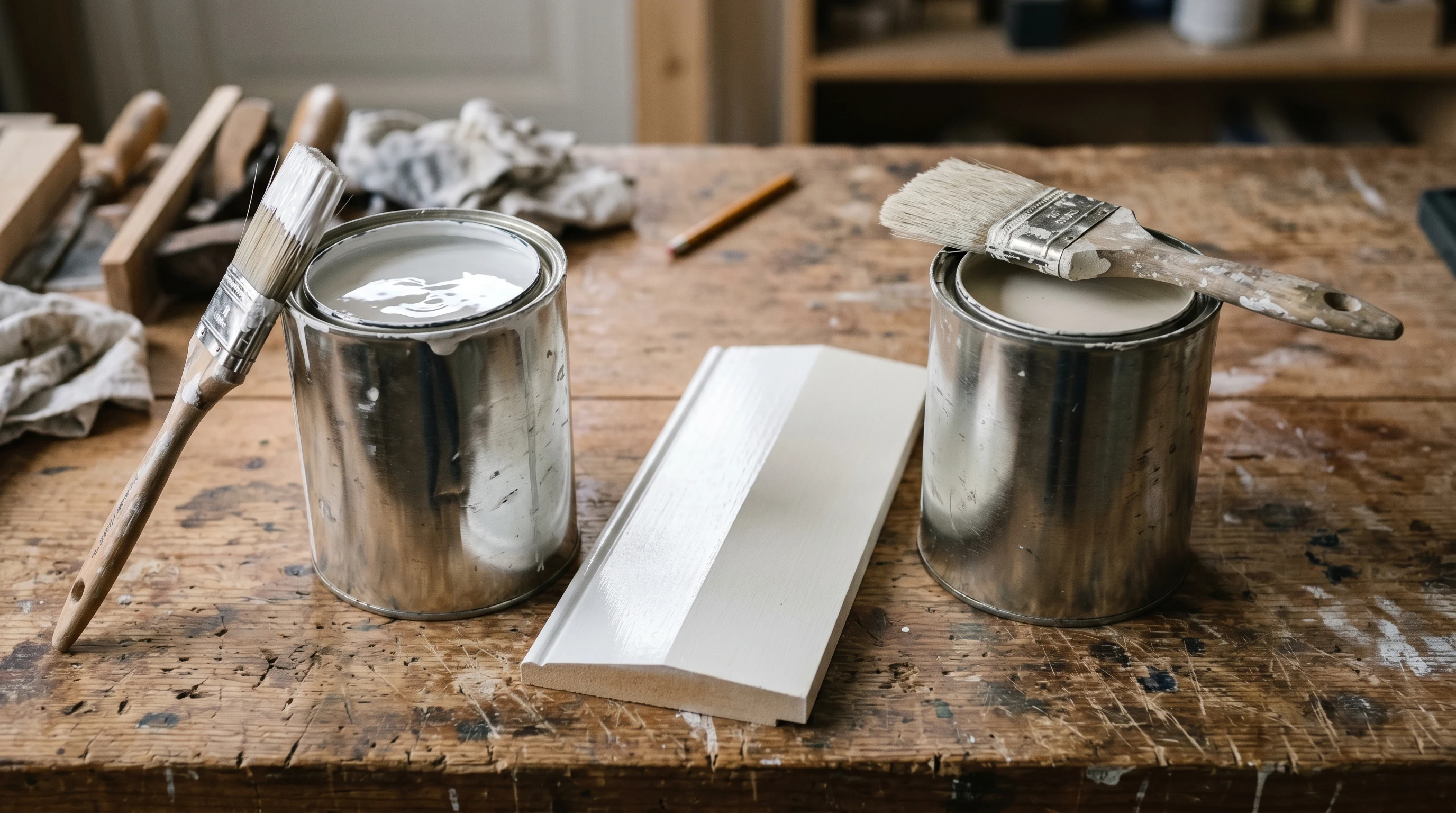
The 30-Second Answer
In 2026 enamel is a marketing word. It used to mean oil-based, glass-hard, slow-drying alkyd. Today it covers any paint with a harder cured film and a higher sheen — usually waterborne alkyd or urethane-acrylic. Pay the premium on trim, doors, cabinets, and railings. Skip it on walls and ceilings. That’s the whole article.
At a Glance
| Enamel | Standard paint | |
|---|---|---|
| Film hardness | 🟢 hard cured film | ⚪ softer emulsion |
| Sheen range | satin to gloss | flat to eggshell |
| Scrubbability | 🟢 1,000+ cycles | 🟡 200–500 cycles |
| Cost per gallon | $60–95 | $35–55 |
| Coverage | 350–400 sq ft | 350–400 sq ft |
What Enamel Actually Means in 2026
Read the can. The word “enamel” tells you three things:
- The cured film is harder than standard wall paint. Manufacturers hit this with urethane-acrylic chemistry, modified alkyd, or waterborne alkyd resins.
- The sheen is satin or higher. Flat enamel exists on a few labels but it’s rare and mostly a marketing stretch.
- The price is roughly double the brand’s commodity wall line.
That’s it. There is no enamel standard. No ASTM test that has to be passed. A can labeled “enamel” at Home Depot and a can labeled “enamel” from Benjamin Moore are aiming at the same outcome — trim-grade durability — but they’re built differently and they perform differently.
The shorthand that works on a jobsite: enamel = trim paint. Standard paint = wall paint. Use them where they belong and the labels stop mattering.
How to Tell What’s Already on the Trim
Most homeowners don’t know whether their trim is old alkyd enamel, latex semi-gloss, or a waterborne alkyd from the last repaint. Two-minute test:
Soak a cotton ball in denatured alcohol. Wipe the trim in a hidden spot — back of a door, inside of a baseboard return. If the cotton picks up color and the surface goes tacky, it’s latex or waterborne enamel. If the cotton stays clean and the surface doesn’t react, it’s oil-based alkyd enamel. The difference matters for what you put on top.
If the trim is chalky, yellowed, and brittle to a fingernail scratch, it’s probably original oil enamel from before the house was repainted. Plan on a BIN primer coat before anything water-based goes over it or you’ll see peeling at door edges inside a year.
Film Hardness
This is the one place enamel earns its name. Standard wall paint cures into a soft, slightly flexible emulsion film — you can dig a fingernail into eggshell wall paint and leave a mark a month after it dried. Enamel cures into something closer to a thin plastic shell. Urethane-acrylic and waterborne alkyd both keep hardening for 30 days after application. The first week feels firm. The full month feels like a different material.
That hardness shows up in three places: scrub cycles, impact resistance, and chip resistance at edges. On a baseboard the dog rubs against, standard paint burnishes and goes shiny in the rub zone within months. Enamel doesn’t. On a door jamb where the kids slam through, standard paint chips at the corner. Enamel mostly holds.
Winner: Enamel.
Sheen and Scrubbability
Enamel sheens start at satin and run through semi-gloss to full gloss. Standard paint sheens run from flat to eggshell, with the occasional satin wall paint at the top of the line.
The scrub numbers tell the story. Premium wall paint passes 200–500 scrub cycles before the film starts to wear through. Trim-grade enamel passes 1,000+. On a kitchen wall behind a stove, you might wipe a grease splatter once a week for ten years. Standard paint surrenders by year three. Enamel keeps going.
The sheen is also doing work. Higher sheen = harder, slicker surface = easier to wipe. A flat wall paint absorbs the grease into the film. A satin enamel sheds it.
Winner: Enamel.
Application
Standard wall paint is engineered to be forgiving. It rolls easy, levels out brush marks within reason, and tolerates a sloppy cut-in. A homeowner can get a passable job on the first try.
Enamel is less forgiving. The harder resins set up faster, which means brush marks lock in if you don’t keep a wet edge. Lap marks show in raking light because the sheen is high enough to reveal them. Self-leveling waterborne alkyds (BM Advance, SW Emerald Urethane) close some of the gap, but they’re still trim paints — you have to brush them with intent.
Two coats. Always two coats. Doesn’t matter what the can says. Enamel especially needs the second coat to bury the brush marks of the first and pull the sheen even.
Winner: Standard paint.
Yellowing
Old oil-based enamel yellows on white. Always. Two years on a north-facing baseboard and it’s noticeable. Five years and it’s obvious.
Modern waterborne enamel doesn’t yellow. Urethane-acrylic and acrylic enamel stay color-stable for the life of the film. Waterborne alkyd is the middle ground — slightly more amber-shift than acrylic, but nothing like traditional oil.
Standard wall paint doesn’t yellow either, because there’s no alkyd resin in there to oxidize.
Winner: Tie for modern waterborne enamel vs. standard. If you’re looking at traditional oil-based enamel, that’s a loss.
Cost and Coverage
Real numbers from a 2026 shelf check at retail:
| Tier | Standard paint | Enamel |
|---|---|---|
| Builder grade | $30–40/gal | $50–65/gal |
| Mid-tier | $45–55/gal | $65–80/gal |
| Premium | $60–80/gal | $80–100/gal |
Coverage is roughly the same — 350 to 400 square feet per gallon for either, two coats. The cost gap is real but it’s only meaningful when you scale to the square footage involved.
A typical interior repaint: 1,200 square feet of walls (3 gallons), 200 linear feet of baseboard at 6 inches tall (one quart). Standard paint for the walls costs $135–240. Enamel for the trim costs $20–25 for the quart. The trim premium is rounding error on the whole job.
Flip it: enamel for everything in that same room would cost $200–300. For walls you won’t touch, that’s money lit on fire.
Winner: Standard paint on price-per-gallon. The right answer is using each where it belongs.
When Enamel Is Worth the Premium
Five jobs where enamel earns its price:
- Trim and baseboards. Dust accumulates, dogs rub, shoes scuff. Enamel wipes clean for ten years. Wall paint on baseboards is grimy by year two.
- Doors and door jambs. Hand traffic, slam impact, occasional cleaning. Standard paint chips at the strike plate inside a year. Enamel mostly doesn’t.
- Kitchen and bath cabinets. Grease, water, fingernails. This is where waterborne alkyd (Advance, Emerald Urethane) lives. Standard paint cannot survive a cabinet repaint.
- Railings, banisters, handrails. Skin oils, grip wear. Same logic as cabinets.
- Bathroom walls in high-humidity rooms. Steam, soap splatter, wipe cycles. Satin enamel on a bathroom wall outlasts eggshell by a wide margin. See the best bathroom paint round-up for specific picks.
When Enamel Is Wasted Money
- Ceilings. Nobody touches a ceiling. Use flat ceiling paint.
- Bedroom walls. Low-touch, dust-only. Eggshell standard paint is plenty.
- Closet interiors. You’ll never wipe them. Flat is fine.
- Garages and unconditioned spaces with rough block walls. Standard masonry paint or a dedicated block filler does better than enamel here.
Verdict by Use Case
- Pick enamel if: the surface gets touched, wiped, scrubbed, or kicked. Trim, doors, cabinets, railings, bathroom walls, garage doors.
- Pick standard paint if: the surface gets looked at and that’s it. Walls in low-traffic rooms, ceilings, closet interiors.
- It’s basically a tie when: you’re doing a kid’s bedroom and the walls will get wiped sometimes. A premium scrubbable eggshell (Aura, Emerald, Marquee) splits the difference and costs less than full enamel.
Top Picks by Side
Going with enamel for cabinets or trim? See the best paint for kitchen cabinets — those picks are all waterborne enamel, the category that lives at the top of the trim shelf.
Going with standard paint for walls? Browse the best interior paint round-up for low-VOC scrubbable eggshells that handle living rooms and bedrooms without the trim-paint premium.
Not sure which finish to pick on either? The sheen guide walks through where flat, eggshell, satin, and semi-gloss each belong.
What’ll Bite You in Two Years
Painting walls in enamel because someone told you it’s “more durable.” Enamel sheen on a 12-foot wall shows every drywall flaw, every roller flash, every cut-in lap mark. You’ll be looking at it every morning for years. Drywall is not flat enough for satin sheen. Sand it dead flat first or step down to eggshell.