Product review · Sherwin-Williams · Updated August 7, 2026
ProMar 400Sherwin-Williams paint review
7.0/10Best dead-flat hide and best touch-up in the ProMar family, and no business on a wall people touch.
A ceiling paint that also sells as a wall paint, and the second half is where people get burned. The dead flat is genuinely excellent. The film is genuinely thin.

Mark Thompson · Pro Contractor & Field Editor · Updated August 7, 2026
22 years running residential and light commercial repaints across the Midwest. Mark has sprayed ProMar 400 flat across more ceilings than he can count and argued with builders about putting it on walls just as often. About the testing process →
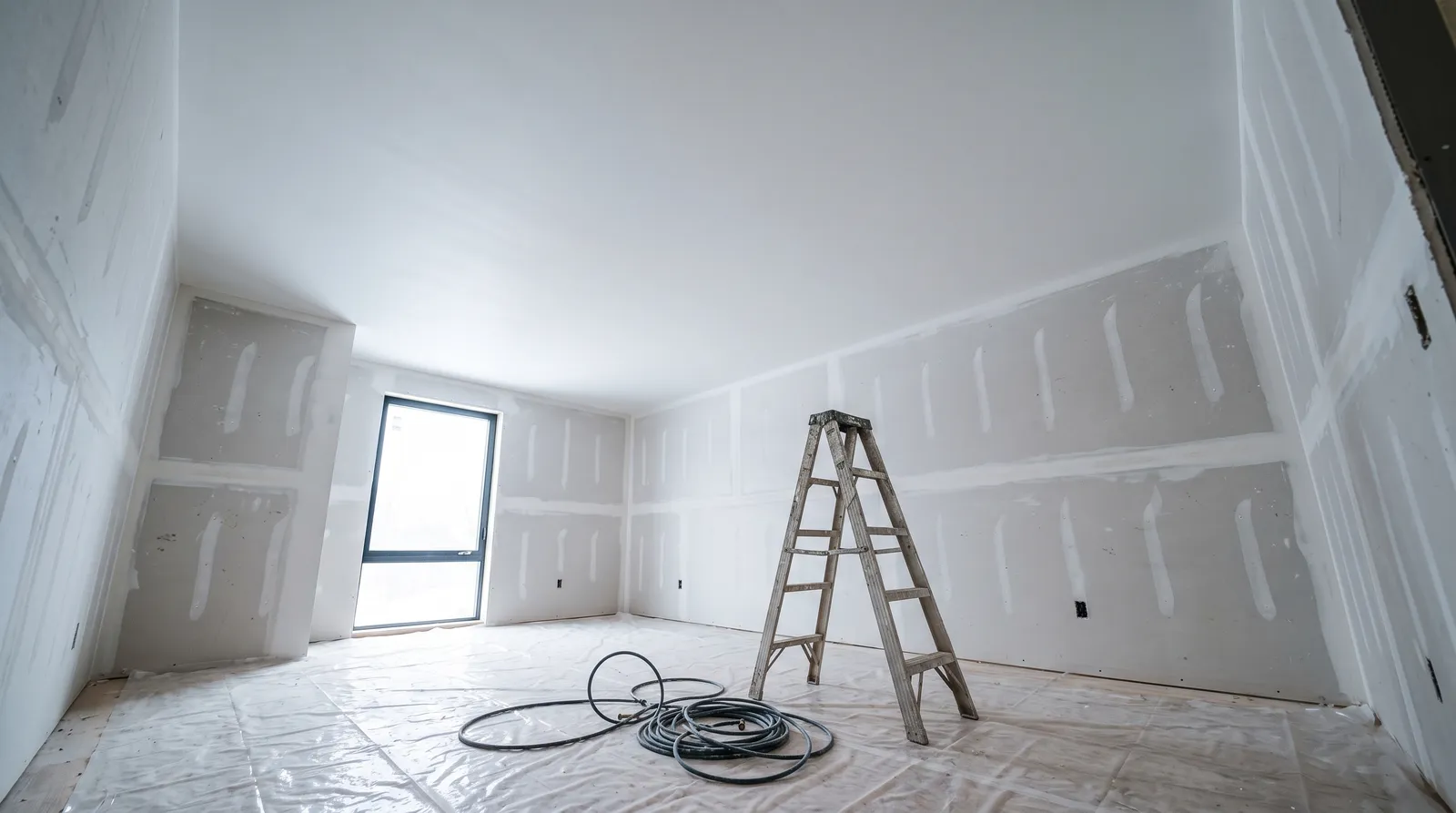
Sherwin-Williams ProMar 4004 sheens
Coverage350–400 sq ft / gal per coat at 4 mils wet
Recoat4 hr at 77°F, 50% RH
VOCZero VOC as tinted
Full cure30 days
Sheens FlatLow SheenEg-ShelSemi-Gloss
Read this first
The Fast Verdict
On ceilings, closets, garages and spec houses, yes. The dead flat hides bad drywall better than paint twice the price, it touches up without flashing, and it sprays like water. On any wall someone will lean on, no. It is thinner than ProMar 200, has no antimicrobial package, and the price gap between the two is five to ten dollars a gallon. That is not enough money to accept the durability drop.
Best for
Sprayed ceilings · Closets and utility rooms · Garages and storage rooms · Spec-built new construction · Punch-list touch-ups · Ceilings with a history of patches
Skip if
Bathrooms, laundry rooms and basements · Kid's rooms and hallways · Deep saturated wall colors · Trim, doors and cabinets · Roller-only jobs · Your own long-term home
What it's good at
- Dead-flat hide that buries tape lines, stipple and bad mud work
- Touch-ups that actually disappear — spot-roll a patch a month later and it blends
- Spraying: clean atomization, wide fan, no dry spray
- Punch-list work on new construction, where invisible touch-up saves a return trip
- Price, and the five-gallon drops it again
- Occupied buildings, on zero VOC as tinted with GREENGUARD Gold paperwork
What it's not good at
- Washing — wipe it and you burnish it, push and color comes off
- Humid rooms; there is no antimicrobial package at all
- Rolling, where the thin film gives you streaky coats and lap edges
- Holding a mid or deep color, which can go dull in a few years
- Trim, doors and cabinets — it is a thin vinyl acrylic wall paint
- Sheen choice, since flat is often the only one stocked
Numbers, not adjectives
Spec Sheet
- Coverage
- 350–400 sq ft / gal per coat at 4 mils wet, 1.3 mils dry
- Volume solids
- ~29% flat · ~34% eg-shel · ~38% low sheen · ~35% semi-gloss
- Sheens
- Flat, Low Sheen, Eg-Shel, Semi-Gloss, Gloss — flat is the stocked one
- Touch dry
- 1 hr
- Recoat
- 4 hr at 77°F, 50% RH
- Full cure
- 30 days
- VOC
- Zero VOC as tinted; GREENGUARD Gold (UL 2818)
- Antimicrobial
- None. ProMar 200 has it, 400 does not.
- Primer
- Prime new drywall, patches, stains, raw wood and glossy surfaces
- Surfaces
- Primed drywall, plaster, wood, masonry, concrete, primed metal
- Sizes
- Gallon, 5-gallon
- Price
- List $70–78 / gal; street with a pro account or promo $30–40
Application Settings That Work
- Airless
- This paint was built to go through a rig. It atomizes clean, holds a wide fan, and does not dry-spray on you. The gap between spraying it and rolling it is bigger than with most products — if you have the gun, use it. Sprayed flat on a ceiling it lays down glass smooth.
- Primer
- More primer than the label suggests. On new drywall, prime with a drywall primer or a coat of ProMar 200 primer before the finish coats — 400 is too thin to bury paper nap and mud on its own. Prime patches, water stains, raw wood and glossy surfaces too, and use Zinsser BIN for stains and knots. Two coats over primer, never over bare board.
Mid-project panic
When It Goes Wrong, and How to Fix It
A shiny stripe at shoulder height in the hallway
Why it happens. Roughly 34 percent volume solids in eg-shel and a 1.3 mil dry film. That is the whole durability story in two numbers. Wipe a fingerprint off the flat and you leave a burnished mark. Push harder on a crayon scuff and color lifts onto the sponge.
The fix. There is no cleaner for burnish. You re-roll the wall to a corner or live with it. The real fix is upstream: put ProMar 200 on the walls and keep 400 for the ceiling. The difference on a 2,000 sq ft house is about forty dollars.
Thin, streaky first coat when you roll it
Why it happens. Painters who spray it love it and painters who roll it complain, and both are right. The same thin film that atomizes so cleanly comes off a roller light. Over a color change or a patched wall you see lap edges and holidays and end up going three coats on a paint you bought to save money.
The fix. Prime first — a drywall primer or a coat of ProMar 200 primer on new board — then two finish coats. Do not stop mid-wall. If you own a sprayer, spray it; that is what the formula was built for.
Gray spots on a bathroom or laundry ceiling
Why it happens. There is no mildewcide in 400. ProMar 200 carries a mildew-resistant additive and 400 does not. In a steamy bathroom, a laundry room or a basement, the film has nothing defending it and you are relying entirely on the exhaust fan.
The fix. Do not spec 400 in a humid room in the first place. Use a bathroom-rated paint over a stain-blocking primer, and if the spots are already there, kill them before you coat over them or they come straight back.
Wall color looks washed out after a few years
Why it happens. Multiple painters report ProMar walls in rentals reading like whitewash rather than paint after a few years. Mid and deep tones go dull first. Whites and near-whites hold up fine.
The fix. Keep 400 in ceiling white and pale colors. If you want a saturated wall color to stay saturated, this is not the can — move to ProMar 200 at minimum, SuperPaint or Duration if you are buying at retail.
The store only has flat
Why it happens. Sherwin-Williams has been narrowing the 400 line for years. In a lot of stores the flat is the only sheen kept in stock and eg-shel or semi-gloss becomes a special order with a wait.
The fix. Call before you drive if you want anything other than flat, and have ProMar 200 as your fallback so a stocking gap does not stall the job.
Side by side
ProMar 400 vs ProMar 200
This is the only comparison that matters, because the two cans sit on the same shelf at the same store and are five to ten dollars a gallon apart. Below them is ProMar 700, the commercial floor, cheapest and thinnest, with the ugliest field reports in the family.
| ProMar 400 | ProMar 200 | |
|---|---|---|
| Volume solids (eg-shel) | About 34% | About 42% |
| Film on the wall | 1.3 mils dry from a 4 mil wet coat. Thin, and that is the durability story. | Thicker film from the same wet mils. More paint on the wall for the same pass. |
| Antimicrobial | None | Yes — a mildew-resistant additive |
| Hide over a color change | Budget primer plus two coats or you will be doing three. | Better hide over color changes and patches; two coats does it. |
| Touch-up | The chalk flat spot-rolls invisibly for months. Best in the family. | Blends inside the first month, then starts to flash. |
| Washability | Wipe it and you burnish it. Push and color lifts. | Takes a wipe-down. Still not premium scrub, but a real step up. |
| Street price per gallon | $30–40 | $38–48 |
| Where it wins | Ceilings, closets, garages, spec houses, punch-list patches. | Walls in anything a person lives in — the trade default. |
Film on the wall
ProMar 4001.3 mils dry from a 4 mil wet coat. Thin, and that is the durability story.
ProMar 200Thicker film from the same wet mils. More paint on the wall for the same pass.
Hide over a color change
ProMar 400Budget primer plus two coats or you will be doing three.
ProMar 200Better hide over color changes and patches; two coats does it.
Touch-up
ProMar 400The chalk flat spot-rolls invisibly for months. Best in the family.
ProMar 200Blends inside the first month, then starts to flash.
Washability
ProMar 400Wipe it and you burnish it. Push and color lifts.
ProMar 200Takes a wipe-down. Still not premium scrub, but a real step up.
Where it wins
ProMar 400Ceilings, closets, garages, spec houses, punch-list patches.
ProMar 200Walls in anything a person lives in — the trade default.
Run the math on a typical 2,000 sq ft house. Ceilings might take four gallons, walls ten. Doing all fourteen in 400 saves roughly a hundred dollars against doing all fourteen in 200. Doing ceilings in 400 and walls in 200 costs about forty of that hundred back and fixes every complaint on this page. That is the buy. If it is your own home and you are not on a contractor account, step out of the ProMar family entirely for walls.
If not this one
Honest Alternatives
SW
Sherwin-Williams ProMar 200$38–48 / gal street
The same workflow, four-hour recoat and store, with more solids, an antimicrobial additive, and a film that takes a wipe. Five to ten dollars more per gallon. For walls this is the default answer and 400 is the exception.
Full review →SW
Sherwin-Williams SuperPaint$55–70 / gal
If you are buying at retail rather than on a contractor account, the ProMar line stops making sense. SuperPaint costs more per gallon but gives real scrub resistance and better color hold, and you are not repainting the hallway in three years. It also has a true exterior version the ProMar interiors do not.
Full review →SW
Sherwin-Williams ProMar 700Cheapest in the family
The commercial floor: thinnest film, lowest price, and the one painters complain about pulling off trim with blue tape. Fine for a warehouse office nobody looks at. Not for a home, and not worth the few dollars you save over 400.
Questions people actually ask
ProMar 400 Questions, Answered
Is ProMar 400 worth it?
On ceilings, closets, garages and spec-built new construction, yes. The dead-flat finish hides bad drywall work better than almost anything at the price, and it touches up without flashing. On living-room and hallway walls it is not worth it. There is no antimicrobial package, the film is thin, and a sponge will take the color off. Pay the extra five to ten dollars a gallon for ProMar 200 on any wall a person touches.
What is the difference between ProMar 400 and ProMar 200?
Volume solids, mostly. ProMar 200 eggshell runs about 42 percent solids, ProMar 400 eggshell about 34 percent. That means 200 lays down a thicker film from the same wet mils, hides better, and scrubs better. ProMar 200 also carries an antimicrobial additive that 400 does not. Both cover 350 to 400 sq ft per gallon on paper and both recoat in four hours. The real gap is durability, and the price gap is only five to ten dollars a gallon.
Is ProMar 400 good for ceilings?
It is one of the best cheap ceiling paints Sherwin-Williams sells. The flat is a true dead flat, so it swallows roller stipple, tape lines and bad mud work instead of highlighting them. It sprays beautifully, touches up invisibly, and costs little enough that you can be generous with it. Ceilings do not get scrubbed, so the film thinness that hurts it on walls does not matter up there.
Is ProMar 400 any good on walls?
Only in rooms nobody touches. Closets, garages, storage and utility rooms are fine. A hallway, a kid's room or a bathroom is not — no mildewcide, no scrub, and mid-tone colors that go dull. For forty dollars more across a whole house you can put ProMar 200 on the walls instead and fix all of it.
Does ProMar 400 need primer?
Yes, more than the label suggests. On new drywall, prime with a drywall primer or a coat of ProMar 200 primer before the finish coats — 400 is too thin to bury paper nap and mud on its own. Prime patches, water stains, raw wood and glossy surfaces too. Zinsser BIN for stains and knots. Skipping primer is how you end up rolling three coats of a paint you bought to save money.
How much does ProMar 400 cost per gallon?
List is roughly $70 to $78 a gallon depending on sheen, but nobody pays list at Sherwin-Williams. With a contractor account or on a promo day, expect $30 to $40 a gallon and less in the five. That is usually five to ten dollars under ProMar 200 for the same size.
Is ProMar 400 being discontinued?
It is not gone, but Sherwin-Williams has been thinning the line for years. In a lot of stores the flat is the only sheen kept in stock, and eg-shel or semi-gloss becomes a special order. Call ahead before you spec a sheen other than flat, and have ProMar 200 as your fallback.
Can you use ProMar 400 on trim and doors?
No. It technically lists wood and primed metal as substrates, but it is a thin vinyl acrylic wall paint. It will not stand up to hands, cleaning or door edges rubbing. Put ProClassic or Emerald Urethane Trim Enamel on trim and doors and leave 400 on flat surfaces nobody touches.
Does ProMar 400 fade?
Deep and mid-tone colors can go dull faster than a premium paint, and painters have reported rental walls that looked washed out after a few years. Light colors and ceiling whites hold up fine. If you want a saturated wall color to stay saturated, this is not the can.
Keep exploring
ProMar 200 review — the rung above, and usually the smarter buySherwin-Williams brand guide and product lineupBest ceiling paint, tested and rankedBest flat paint for hiding wall imperfectionsWhy wiping a flat wall leaves a shiny mark
We may earn a commission when you buy through the retailer link above. It never changes the score or the verdict.
Ask a Question