Product review · Glidden · Updated August 7, 2026
EssentialsGlidden paint review
6.6/10A budget result, which is perfect in a closet and frustrating in a kitchen.
The cheapest can with a name you recognize, and it is genuinely enough for a closet, a rental, or a guest room. It is not enough for a kitchen, and the difference comes down to one thing: how hard you can rub it.

Emily Roberts · DIY Editor & First-Timer's Guide · Updated August 7, 2026
Emily painted her first room at 24, hated every minute of it, and got better. She writes the guides she wishes she had, which means defining every term the first time it shows up and being honest about what a $20 gallon can and cannot do. About the testing process →
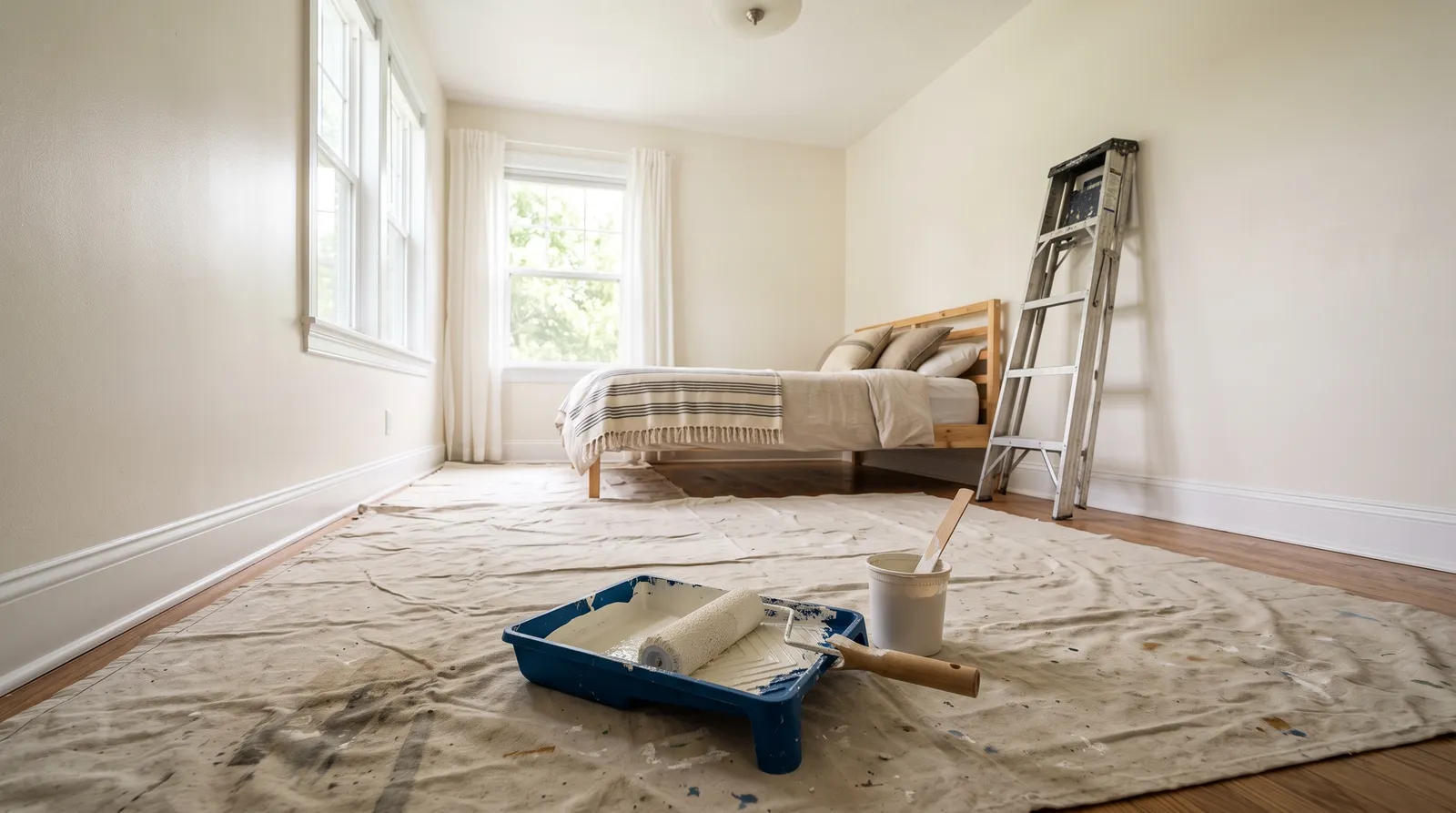
Glidden Essentials3 sheens
CoverageUp to about 350 sq ft / gal claimed
Dry / RecoatTouch dry about 30 min to 1 hr
VOCLow-VOC, low-odor formula
Full cureAbout 14 days
Sheens FlatEggshellSemi-Gloss
Read this first
The Fast Verdict
Buy it for a closet, a guest room, a ceiling, a rental between tenants, or a quick weekend refresh. At around $18 to $28 a gallon it puts a clean, even color on a wall, it tints to Glidden's full deck in about fifteen minutes, and the low-VOC, low-odor formula means you can sleep in the room that night with a window cracked. The catch is a thin film and a weak scrub rating: plan on two coats, and keep it out of kitchens, baths, and busy hallways.
Best for
Closets and ceilings · Guest rooms and bedrooms · Rentals between tenants · Flips and quick refreshes · Same-color touch-up jobs · Sheds and outbuildings in the exterior version
Skip if
Kitchens and bathrooms · Busy hallways · Deep reds, navies, or charcoals · You want one-coat coverage on a color change · You want satin walls
What it's good at
- Putting a clean, even, fresh-looking wall up for very little money — that is the whole headline
- Rolling and brushing without fighting back, which matters a lot if this is your first room
- Low smell, so a bedroom is comfortable to sleep in that night with a window cracked
- Tinting to Glidden's full deck at the store in about fifteen minutes, including matches of other brands' colors
- The 5-gallon math on a rental or a flip, where it is the cheapest honest way to get a name-brand gallon on every wall
- Forgiving a beginner's roller work, because the second coat you are doing anyway catches the misses
What it's not good at
- Hiding in one pass — it is a thin film and you can see through it more than the step-up lines
- Any real color change, which is two coats minimum and two to three on a deep or dark change
- Surviving a scrub. A Magic Eraser or a stiff sponge burnishes a shiny spot into a flat wall
- Kitchens, baths, mudrooms, and busy hallways, which is exactly where it wears out fastest
- Deep, rich accent colors, which read flat and patchy at this tier
- Standing in for a primer — it is straight paint, so bare, patched, glossy, and stained spots are on you
- Satin, because Essentials does not come in it at all
Same shelf, different cans
Interior or Exterior — Two Cans, One Idea
Essentials comes in an interior version and an exterior version, and they earn the same verdict for the same reason: this is the bottom rung of the Glidden ladder. That ladder goes Essentials, then Fundamentals, then Premium, then Diamond, and every step up mostly buys you more pigment and binder — the stuff that makes paint hide in one coat and survive a sponge.
Glidden Essentials Interior (this review)
BaseStraight paint, not a paint-and-primer; low-VOC and low-odor
SheensFlat, Eggshell, Semi-Gloss (no satin)
RecoatAbout 4 hr
Buy it if
A closet, a guest room, a ceiling, a rental, or a flip, at roughly $18 to $28 a gallon, and you have made peace with two coats.
Avoid if
The wall gets wiped, scrubbed, or touched all day, or you specifically want satin — Essentials skips that sheen entirely.
Glidden Essentials Exterior
BaseThe same budget idea for outside walls
SheensFlat, Satin, Semi-Gloss
Buy it if
A shed, a low-stakes outbuilding, or a quick refresh on sound siding, at roughly $20 to $25 a gallon.
Avoid if
A sun-blasted south wall you want to still look good in fifteen years.
Numbers, not adjectives
Spec Sheet
- Coverage
- Up to about 350 sq ft / gal claimed; 200–300 realistic on a color change
- Sheens
- Flat, Eggshell, Semi-Gloss — no satin
- Dry / Recoat
- Touch dry about 30 min to 1 hr · recoat about 4 hr
- Full cure
- About 14 days
- VOC
- Low-VOC, low-odor formula — not zero-VOC, that is Glidden Premium
- Primer
- Not a paint-and-primer; prime bare, patched, glossy, or color-change surfaces first
- Surfaces
- Interior walls, ceilings, drywall, plaster, masonry, primed metal and wood
- Sizes
- Gallon and 5-gallon
- Exterior version
- Flat, Satin, Semi-Gloss at roughly $20–25 / gal
- Price
- About $18–28 / gal at Walmart and Home Depot
Application Settings That Work
- Primer
- Essentials is not a paint-and-primer, so the priming is your job. A same-color refresh over a sound, already-painted wall goes straight on. Bare drywall, fresh patches, glossy trim, water stains, and any real color change all want a separate primer coat first, and a deep red, navy, or charcoal wants a tinted primer under it.
Dry Times and the Two-Week Cure
Touch dry in about 30 minutes to an hour, and ready for the second coat in about four. Full cure — meaning the paint has actually hardened, not just dried on the surface — takes about two weeks. That gap matters here more than the price suggests, because the wipe-down resistance this paint has is only there once it has cured. So do not test a fresh wall with a wet rag on day two. Give it the two weeks, then wipe gently. And here is the honest part: even fully cured, a soft damp wipe is the most this finish wants. It is a two-coat paint on any color change, and two to three coats plus a tinted primer on a deep red, navy, or charcoal — at which point the cheap gallon is not cheap anymore.
Mid-project panic
When It Goes Wrong, and How to Fix It
A shiny patch where you cleaned a scuff
Why it happens. That is burnishing — rubbing a shiny spot into a flat wall, so the clean patch ends up looking different from everything around it. Essentials has the thinnest film on the Glidden ladder, so a Magic Eraser or a stiff sponge polishes it instead of cleaning it. Once you have seen it, you cannot un-see it.
The fix. Stick to a soft, damp cloth and no pressure. If a wall genuinely gets cleaned rather than dusted, step up a rung to Fundamentals or Premium — for a kitchen or bath, be honest with yourself and go further than that.
The old color still showing through after one coat
Why it happens. This is a thin film, which is the polite way of saying you can see through it more. On a same-color refresh that is fine. On any color change, one coat is not the plan and never was.
The fix. Do a test patch first: roll one coat on a two-foot square, let it dry, and look at how much of the old wall is still there. That little square tells you whether you are a two-coat job or a two-coats-and-a-primer job before you commit the whole room.
A deep red or navy that looks patchy and flat
Why it happens. Saturated colors need a lot of pigment to land evenly, and the bargain tier does not carry it. Going over a dark wall, or chasing a deep charcoal, the old color and the roller pattern ghost through.
The fix. Two to three coats over a tinted primer, or — the better answer — buy a different tier. For a moody accent color, this is simply the wrong paint, and no number of coats fixes the slightly flat look.
A stain or a patch bleeding through the finished wall
Why it happens. Unlike Glidden Premium, Essentials is not a paint-and-primer, which means there is no built-in bonding and sealing layer. It is built for going over a wall that is already primed or already painted a similar color.
The fix. Prime first. Bare drywall, fresh patches, glossy trim, and water stains all want a separate primer coat, or the old surface ghosts through and you end up doing three coats anyway.
Side by side
Essentials vs Fundamentals vs Premium
Three rungs of the same ladder, sold in the same aisle, and the gap between them is mostly pigment and binder. Here is what each rung actually gets you.
| Glidden Essentials | Glidden Fundamentals | Glidden Premium | |
|---|---|---|---|
| Price per gallon | About $18–28 | Usually a few dollars more than Essentials | $20–26 |
| Coats on a color change | Two, and two to three plus a tinted primer on deep colors | A little better hide than Essentials | Genuinely covers better than either |
| Cleaning | A gentle damp wipe only; scrub it and you burnish it | Takes cleaning a little better | Takes a wipe far better |
| VOC | Low-VOC and low-odor, but not zero-VOC | Not stated here | A zero-VOC paint-and-primer |
| Best rooms | Closets, ceilings, guest rooms, rentals, flips | A borderline room where you want a bit more hide and scrub | A real bedroom or living room |
| Where it wins | The lowest sticker from a name you recognize | The small upcharge that usually pays for itself | The rung most people should actually be buying |
Price per gallon
Glidden EssentialsAbout $18–28
Glidden FundamentalsUsually a few dollars more than Essentials
Glidden Premium$20–26
Coats on a color change
Glidden EssentialsTwo, and two to three plus a tinted primer on deep colors
Glidden FundamentalsA little better hide than Essentials
Glidden PremiumGenuinely covers better than either
Cleaning
Glidden EssentialsA gentle damp wipe only; scrub it and you burnish it
Glidden FundamentalsTakes cleaning a little better
Glidden PremiumTakes a wipe far better
VOC
Glidden EssentialsLow-VOC and low-odor, but not zero-VOC
Glidden FundamentalsNot stated here
Glidden PremiumA zero-VOC paint-and-primer
Best rooms
Glidden EssentialsClosets, ceilings, guest rooms, rentals, flips
Glidden FundamentalsA borderline room where you want a bit more hide and scrub
Glidden PremiumA real bedroom or living room
Where it wins
Glidden EssentialsThe lowest sticker from a name you recognize
Glidden FundamentalsThe small upcharge that usually pays for itself
Glidden PremiumThe rung most people should actually be buying
Here is the simple rule. If it is a room you will actually live in and wipe down sometimes, the small upcharge to Fundamentals — or the slightly bigger one to Premium — pays for itself in fewer coats and a wall that survives a sponge. Save Essentials for the truly low-stakes jobs where you just need cheap coverage: a closet, a ceiling, a rental turnover, a wall you are freshening before a sale. Match the paint to the room and Essentials behaves. Ask it to be a premium paint and it disappoints, and that is on the expectations, not the can.
If not this one
Honest Alternatives
GF
Glidden Fundamentals or Glidden Premium$20–26 / gal for Premium
The closest fix for Essentials' weak spots is one rung up the same ladder. Fundamentals is usually only a few dollars more and hides and cleans a bit better, which makes it the natural pick if a room is borderline. Premium jumps to a zero-VOC paint-and-primer that genuinely covers better and takes a wipe far better, and it is the one to point most people to for a real bedroom or living room.
Full review →BP
Behr Premium Plus$28–35 / gal
The other budget Home Depot wall paint, a few dollars more than the Glidden tiers and a touch better on color-change hide, with Behr's deeper color deck. Neither one scrubs like a true premium, but if you are already in the aisle deciding, this is the honest cross-brand comparison.
Full review →PS
PPG SpeedhideBy the 5-gallon at contractor pricing
If the whole point is the lowest cost per wall on a flip or a big rental turn, and the rooms are low-traffic, a contractor wall paint like Speedhide — Glidden's pro-side cousin — is built for exactly that. Same trade Essentials makes, just sized for someone painting ten rooms instead of one.
Full review →Questions people actually ask
Essentials Questions, Answered
Is the cheapest Glidden paint any good?
Yes, for the right job. Glidden Essentials is the bottom of Glidden's ladder, and for a low-stakes, low-traffic room it gives you a clean, even wall for around $20 a gallon. The honest catch is that it is a thin paint with a weak scrub rating, so it is a closet, a guest room, a rental, or a quick refresh paint — not a kitchen, bathroom, or busy hallway paint. Plan on two coats and you will be happy. Expect one-coat magic and you will not.
Glidden Essentials vs Fundamentals — which should I get?
Fundamentals is the next rung up from Essentials, usually only a few dollars more a gallon, and it hides a little better and takes cleaning a little better. Here is the simple rule: if it is a room you will actually live in and wipe down sometimes, the small upcharge to Fundamentals or to Glidden Premium usually pays for itself in fewer coats and a wall that survives a sponge. Save Essentials for the truly low-stakes jobs.
Do I need a primer with Glidden Essentials?
Often, yes. Unlike Glidden Premium, Essentials is not a paint-and-primer — a paint with a built-in bonding layer — it is just paint. A same-color refresh over a sound wall is fine straight up. But bare drywall, fresh patches, glossy trim, water stains, or any real color change all want a separate primer coat first, or the old surface ghosts through and you end up doing three coats anyway.
How many coats of Glidden Essentials do I need?
Two, for basically any color change — that is just the deal at this tier. A same-color refresh over a sound wall can pull in one. Going over a dark wall, or into a deep red, navy, or charcoal, you are looking at two to three coats plus a tinted primer. A good move before you commit: roll a test patch on a two-foot square, let it dry, and see how much of the old wall is still showing.
Can you scrub Glidden Essentials?
Only gently. A soft, damp wipe is the most this finish wants once it has cured. Take a Magic Eraser or a stiff sponge to a crayon mark and you will burnish it — that means rubbing a shiny spot into a flat wall, so the clean patch ends up looking different from everything around it. If a wall is going to get cleaned rather than dusted, this is not the paint.
Does Glidden Essentials come in satin?
No. It comes in flat, eggshell, and semi-gloss only. Sheen is just how shiny the finish is — flat has no shine and hides wall flaws best, semi-gloss is shiny and wipes the easiest. Satin is the popular middle shine, and Essentials skips it, so if you specifically want satin walls that alone might push you up a tier.
Is Glidden Essentials good for a kitchen or bathroom?
No, and this is the clearest line in the review. Grease splatter, steam, fingerprints, and hallway shoulder-rub are exactly the places that need a washable, durable wall, and they are exactly where Essentials wears out fastest. Every dollar you save here you will spend again repainting sooner. Step up a tier, no question.
How long does Glidden Essentials take to dry?
Touch dry in about 30 minutes to an hour, and ready for a second coat in about four hours. Full cure — the paint actually hardening rather than just drying on the surface — takes about two weeks, and the wipe resistance is not there until then. Do not test a fresh wall with a wet rag.
Is there an exterior version of Glidden Essentials?
Yes. Glidden Essentials Exterior is the same budget idea for outside walls, sold in flat, satin, and semi-gloss for roughly $20 to $25 a gallon. It earns the same verdict: fine for a low-stakes outbuilding, a shed, or a quick refresh on sound siding, and not the paint for a sun-blasted south wall you want to last fifteen years.
Where do you buy Glidden Essentials?
Walmart and Home Depot, and those are basically the only two places it lives. They trade the lowest price back and forth, so buy wherever the gallon is cheaper the day you shop. Home Depot is the safer bet if you need a custom tint or the 5-gallon bucket, since not every Walmart has a working paint desk.
Keep exploring
Glidden brand overview and product linesGlidden Premium Interior review, the step-up wall paintGlidden Fundamentals review, the next budget rung up
We may earn a commission when you buy through the retailer link above. It never changes the score or the verdict.
Ask a Question