Product review · Dunn-Edwards · Updated August 7, 2026
Porch & FloorDunn-Edwards paint review
7.6/10A fair $59 floor coating that applies as easily as any I have rolled, with no track record past one year.
Dunn-Edwards finally has a floor. It rolls out level, covers honestly, and costs about $59 a gallon. It also launched in April 2025, so nobody can tell you how it looks after three winters.

Mark Thompson · Pro Contractor & Field Editor · Updated August 7, 2026
22 years running residential and light commercial repaints. Mark has etched, rolled, and back-rolled more concrete porches than he cares to count, and he is slow to trust a floor coating that has only been on the market a year. About the testing process →
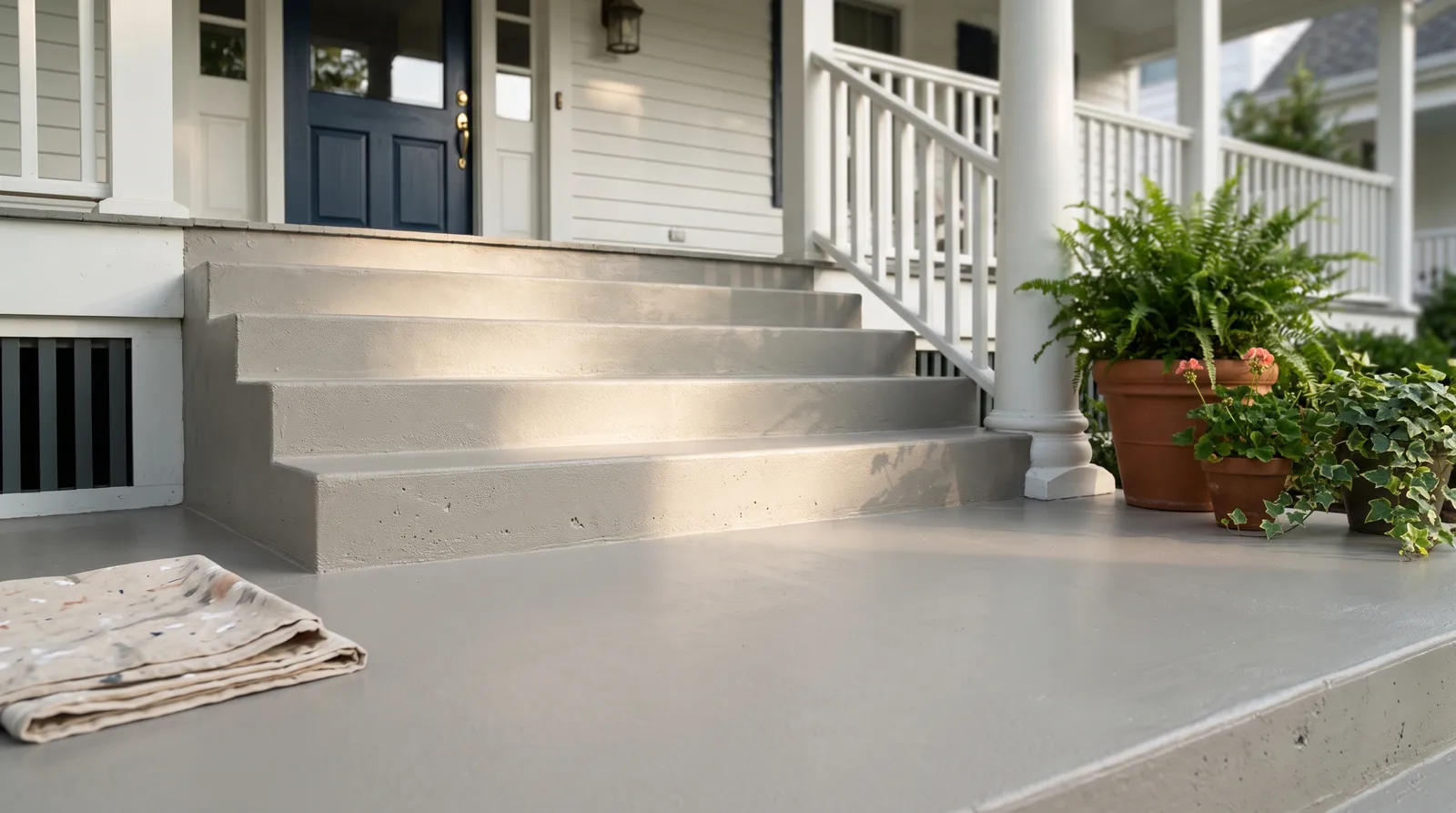
Dunn-Edwards Porch & Floor1 sheen
RecoatMinimum 4 hours between coats
Sheens Eggshell
Read this first
The Fast Verdict
Buy it if the floor is concrete or wood, the traffic is feet, one of the eight colors works, and there is a Dunn-Edwards store within reach. It is a 100% acrylic eggshell coating that covers 300 to 400 sq ft a gallon on a smooth slab, needs no mixing and no thinning, self-levels with no visible brush marks, and washes out with soap and water. Do the citrus etch on bare concrete. Skip it if a car parks on it, if the deck flexes and ponds, or if you want a proven multi-year record.
Best for
Concrete porches and patios · Basement floors · Walkways and stairs · Wood porches and steps · Tired previously painted concrete · Foot traffic only
Skip if
A car parks on it · A bare deck that flexes and ponds water · You need a color outside the eight · You want years of track record · No Dunn-Edwards store nearby
What it's good at
- Existing at all, so Dunn-Edwards customers no longer cross-shop another brand for a porch floor
- Honest coverage at 300 to 400 sq ft a gallon on a smooth or previously painted slab
- Self-leveling, with no noticeable brush marks once the roller stipple closes
- One can, ready to use, with no mix ratio to blow
- Soap-and-water cleanup and no solvent reek driving you off the porch
- A tasteful eight-color program that reads designed rather than the three generic grays most floor lines ship
What it's not good at
- Proving itself, since it launched in April 2025 and a floor coating proves itself in five years, not one
- Forgiving skipped prep, because adhesion lives and dies on the citrus etch
- Traction, since the eggshell film has no factory grit and no anti-slip version exists
- Color choice, at eight colors with no full-deck tinting
- Hiding wear paths, because eggshell telegraphs traffic lanes more than a flatter floor finish
- Availability east of Texas, where there is no Home Depot, no Lowe's, and no real Amazon path
Numbers, not adjectives
Spec Sheet
- Type
- 100% acrylic, water-based porch and floor coating
- Surfaces
- Concrete and wood: porches, patios, basements, walkways, stairs
- Not for
- Vehicle parking, garage floors, bare flexing or ponding decks
- Sheen
- Eggshell
- Coverage
- 300–400 sq ft / gal on smooth or previously painted; 200–300 on rough or porous
- Recoat
- Minimum 4 hours between coats; days before heavy foot traffic
- Primer
- Self-priming on clean, sound concrete; citrus etch recommended on bare concrete
- Colors
- 8 tintable: Bedrock Gray, Shadow, Windswept Willow, Tide At Dusk, Canyon Sunset, Fallen Bark, Vintage Leather, Sundried Tomato
- Cleanup
- Soap and water
- Launched
- April 8, 2025
- Sizes
- Gallon
- Price
- About $59 / gal at Dunn-Edwards stores
Application Settings That Work
- Brush
- Cut in the edges, then roll the field and back-roll your tipped-in edges into the wet paint before it sets. It self-levels and closes over the roller stipple, so done in the right order you will not see where the cut-in meets the roll.
- Thinning
- None. It is ready to use out of the can. No two-part mix, no pot life ticking against you, no thinning. Stir it, cut in, roll it.
- Primer
- Self-priming on clean, sound, fully cured concrete, so no separate primer coat. Bare concrete still gets a citrus-based etching solution to profile the surface, and you should treat that as mandatory. Bare or weathered wood wants a clean, sanded, sound surface and dry boards.
Dry Times and Traffic
Plan the job around the second coat and the first walk. Recoat is a minimum of 4 hours, so a one-day porch is realistic if you start early. Heavy foot traffic is a different number: days, not hours. Keep the furniture, the planters, and the dog off it longer than feels necessary, because a floor coating that gets loaded early wears in the traffic lane first and you cannot spot-fix a lane. Two prep rules set the clock as much as the paint does. Bare concrete gets the citrus etch, a rinse, and a full dry before you open the can. Bare or weathered wood has to be clean, sanded, sound, and dry. Coat damp boards and you trap moisture under a film that is not going to let it out.
Mid-project panic
When It Goes Wrong, and How to Fix It
The film lets go in sheets after one wet season
Why it happens. Almost always a skipped etch on bare concrete. A power-troweled slab feels like glass, and acrylic does not stick to glass. No clean, no profile, no bite. It shows up first on the steps, which take the most traffic.
The fix. Treat the citrus etch as mandatory on bare concrete even though the coating self-primes on clean, sound slabs. Etch it, rinse it, let it dry all the way, then coat. Skip the prep and you have wasted the can.
A wet step is slick underfoot
Why it happens. It is an eggshell film with no factory grit, same as any smooth floor paint, and Dunn-Edwards does not sell an anti-slip version of it.
The fix. Broadcast a fine anti-slip additive into the topcoat yourself. Grit the treads and the ramp, leave the open field smooth so it still cleans easily. Do not assume a porch coating grips wet, because it does not unless you add the texture.
Peeling on a bare wood deck
Why it happens. This is a coating, not a stain. It forms a film on top instead of soaking in. On boards that flex under foot and hold water after rain, a film has nowhere to go and lifts.
The fix. Use a penetrating stain on a flexing, ponding deck. Save Porch & Floor for porches, steps, and slabs that stay sound and shed water, and for tired previously painted concrete you want to read uniform again.
You run out of paint mid-floor
Why it happens. The 300 to 400 sq ft a gallon number is for smooth or previously painted surfaces. Rough or porous concrete drops you to 200 to 300, and porous slabs drink more than people estimate.
The fix. Measure the floor honestly and buy against the low number if the slab is rough. Get the second gallon and the etch on the same trip so you are not chasing a lap line halfway across the field.
Side by side
DE Porch & Floor vs BM Floor & Patio vs Rust-Oleum EpoxyShield
Three coatings, three different jobs. Pick by what rolls across the floor and how much history you want behind the can.
| DE Porch & Floor | BM Floor & Patio | Rust-Oleum EpoxyShield | |
|---|---|---|---|
| Price per gallon | About $59 | $45–55 | $35–55 |
| What it is built for | Foot traffic on concrete and wood: porches, patios, basements, walkways, stairs | Concrete, wood, porches, and steps | Garage slabs and anything a car parks on |
| Film | 100% acrylic eggshell, one part, no mixing | Proven low-luster latex floor enamel | 1-part epoxy-acrylic, harder and hot-tire resistant |
| Colors | 8 tintable colors, take it or leave it | Tints to a full deck | Garage-floor colors, with decorative chips you broadcast in |
| Traction | No factory grit; add an anti-slip additive to the treads yourself | Smooth film, same caveat | Chips add some texture along with the look |
| Track record | One year on the market | Long enough on porches to know how it ages | Long-running garage product |
| Where to buy it | Dunn-Edwards stores and dealers, mostly Southwest | Benjamin Moore dealers in most of the country | Widely stocked |
What it is built for
DE Porch & FloorFoot traffic on concrete and wood: porches, patios, basements, walkways, stairs
BM Floor & PatioConcrete, wood, porches, and steps
Rust-Oleum EpoxyShieldGarage slabs and anything a car parks on
Film
DE Porch & Floor100% acrylic eggshell, one part, no mixing
BM Floor & PatioProven low-luster latex floor enamel
Rust-Oleum EpoxyShield1-part epoxy-acrylic, harder and hot-tire resistant
Colors
DE Porch & Floor8 tintable colors, take it or leave it
BM Floor & PatioTints to a full deck
Rust-Oleum EpoxyShieldGarage-floor colors, with decorative chips you broadcast in
Traction
DE Porch & FloorNo factory grit; add an anti-slip additive to the treads yourself
BM Floor & PatioSmooth film, same caveat
Rust-Oleum EpoxyShieldChips add some texture along with the look
Track record
DE Porch & FloorOne year on the market
BM Floor & PatioLong enough on porches to know how it ages
Rust-Oleum EpoxyShieldLong-running garage product
Where to buy it
DE Porch & FloorDunn-Edwards stores and dealers, mostly Southwest
BM Floor & PatioBenjamin Moore dealers in most of the country
Rust-Oleum EpoxyShieldWidely stocked
If a car parks on the slab, none of this is a debate: buy the garage floor product and stop reading. For a foot-traffic porch, the real choice is Dunn-Edwards versus Benjamin Moore, and it comes down to color and history. Floor & Patio tints to a full deck, costs about the same, and has been on porches long enough to know how it ages. DE Porch & Floor wins when one of its eight colors is the one you want, you already buy Dunn-Edwards for the rest of the house, and the counter that tints it is on your way home. For icy steps or a pool deck, neither smooth coating is the answer without grit.
If not this one
Honest Alternatives
BM
Benjamin Moore Floor & Patio Latex Enamel$45–55 / gal
The porch-and-floor enamel to beat on availability and history. A proven low-luster coating for concrete, wood, porches, and steps that tints to a full deck instead of eight colors, at a dealer in most of the country. Costs about the same. The honest reason to pick it is reach and a record.
RO
Rust-Oleum EpoxyShield 1-Part Garage Floor Paint$35–55 / gal
If a car parks on it, Porch & Floor is the wrong category. A 1-part epoxy-acrylic cures into a harder, more chemical- and hot-tire-resistant film with no two-part mixing or pot life, and you can broadcast decorative and grip chips into it.
VP
Valspar Porch, Floor & Patio Anti-Skid$38–48 / gal
For icy steps, a ramp, or a pool deck. A pre-textured coating bakes fine grit into the film so a wet sole has something to grab, which is the one thing a smooth porch coating cannot do. Lower coverage and it traps dirt, so grit the danger zones and run a smooth coating everywhere else.
Full review →Questions people actually ask
Porch & Floor Questions, Answered
Is Dunn-Edwards Porch & Floor worth it?
For a concrete or wood porch, patio, basement, or set of steps near a Dunn-Edwards store, yes. About $59 a gallon buys a 100% acrylic coating that covers 300 to 400 sq ft, self-levels with no visible brush marks, needs no mixing, and cleans up with soap and water. The catch is that it launched in April 2025, so there is no long-term track record on a surface where longevity is the whole question. Skip it if a car parks on the slab, if the wood deck flexes and ponds water, if you need a color outside the eight, or if the nearest store is a long drive.
Does DE Porch & Floor need an etch or primer on concrete?
On clean, sound, fully cured concrete it self-primes, so no separate primer coat. But Dunn-Edwards still recommends a citrus-based etching solution on bare concrete to profile the surface and promote adhesion, and you should follow that. A power-troweled slab feels like glass, and acrylic does not stick to glass. Etch it, rinse it, let it dry, then coat. Skip the etch and the film lets go in sheets on the first wet season, usually on the steps.
Concrete or wood, does the same product work?
Yes. It is rated for both concrete and wood: porches, patios, basements, walkways, and stairs. The prep differs. Concrete wants the citrus etch. Bare or weathered wood wants a clean, sanded, sound surface and dry boards, because coating damp wood traps moisture under the film. Either way it is a coating, not a stain, so it forms a film on top instead of soaking in. On a deck that flexes and ponds water, a film is more likely to peel than a penetrating stain.
Is it slippery when wet, and can I add grip?
It is an eggshell film with no factory grit, so a wet coated step is slick, same as any smooth floor paint. Dunn-Edwards does not sell an anti-slip version. If you are coating steps, a ramp, or a pool deck, broadcast a fine anti-slip additive into the topcoat yourself, or grit only the treads and leave the field smooth. Do not assume a porch coating grips wet, because it does not unless you add the texture.
How far does a gallon go and what does it cost?
About $59 a gallon at Dunn-Edwards stores. Coverage is 300 to 400 sq ft on a smooth or previously painted surface, which is right in line with the good floor enamels, and 200 to 300 on rough or porous concrete. Measure honestly and buy against the low number if the slab is rough, so you are not chasing a lap line mid-floor.
Can I park a car on it?
No. This is a foot-traffic acrylic, and vehicle parking and garage floors are on the not-for list. Hot tires will lift it. A 1-part epoxy-acrylic garage floor paint is the right tier for a working garage slab.
What colors does it come in?
Eight tintable Porch & Floor colors: Bedrock Gray, Shadow, Windswept Willow, Tide At Dusk, Canyon Sunset, Fallen Bark, Vintage Leather, and Sundried Tomato. It is an earthy, considered set rather than three generic grays, but it is eight. If your porch needs a specific gray to match the trim, other floor lines tint to a full deck and this one does not.
How long before I can walk on it?
Recoat is a minimum of 4 hours between coats. Heavy foot traffic is days, not hours. Keep furniture, planters, and the dog off it longer than you want to, because the traffic lane is where an early-loaded floor coating wears first.
How new is this product?
Dunn-Edwards unveiled it on April 8, 2025, during its centennial year, and it is the company's first floor product after a hundred years of walls, trim, and siding. That matters more on a floor than anywhere else. A wall paint proves itself in a year; a floor takes boots, hose water, freeze-thaw, and UV every day and proves itself in five. Nobody can tell you how this one looks at year five yet.
Keep exploring
Dunn-Edwards brand guideDunn-Edwards Everest interior — reviewedBest porch and floor enamel — full round-up
We may earn a commission when you buy through the retailer link above. It never changes the score or the verdict.
Ask a Question