Product review · C2 · Updated August 7, 2026
C2 Premium ExteriorC2 paint review
8.0/10Buy it for the color that survives five summers, not for a warranty or a spec sheet, because C2 does not print much of either.
The best-looking deep color you can hang on a house, sold by a brand that publishes less hard data than anyone it competes with. Outside, that trade cuts both ways.

Mark Thompson · Pro Contractor & Field Editor · Updated August 7, 2026
22 years running residential and light commercial repaints. Mark has watched cheap exterior color go chalky by year three on the same street where a premium job still reads like the chip, and he still takes side jobs to keep the numbers honest. About the testing process →
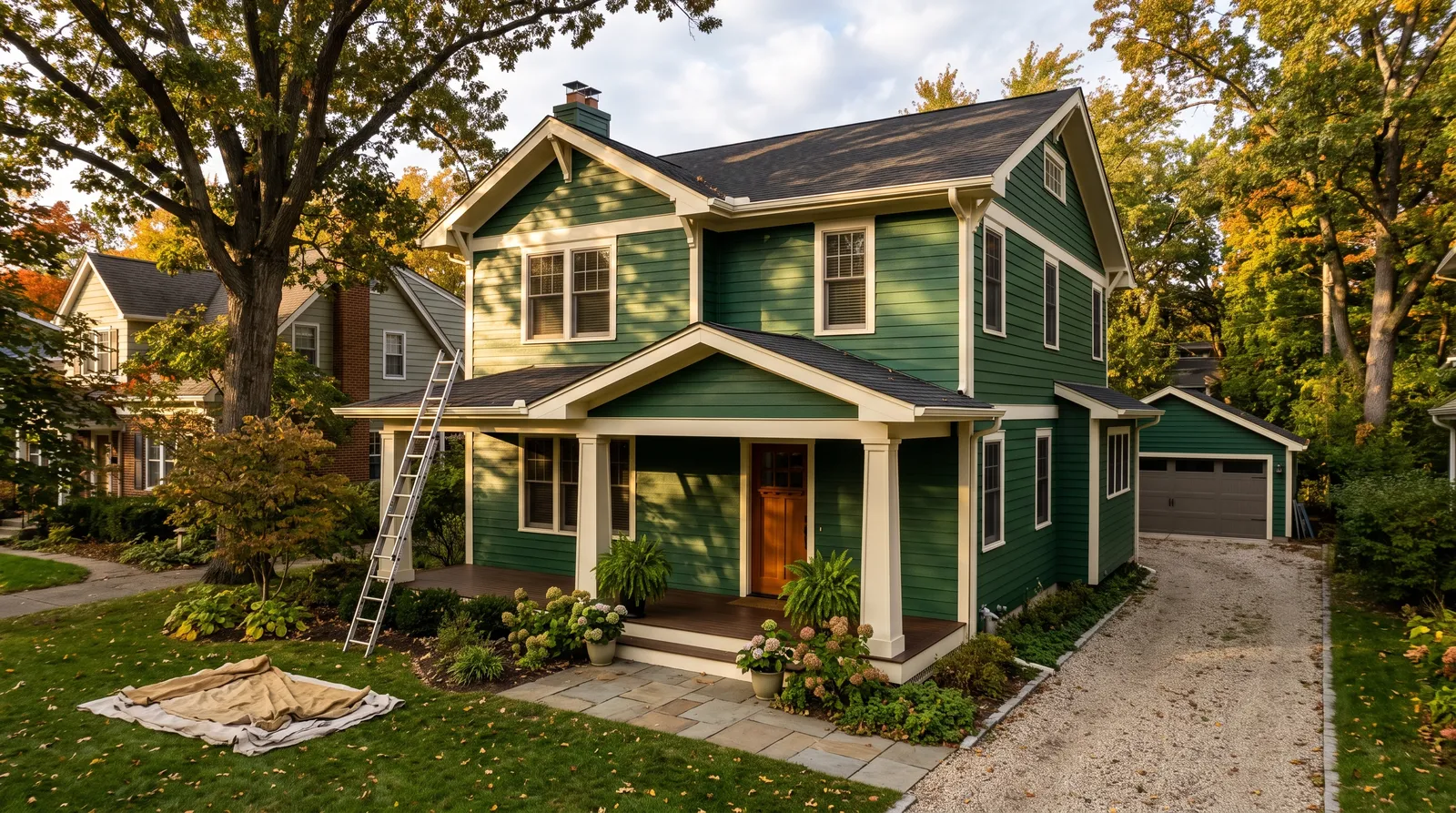
C2 C2 Premium Exterior4 sheens
CoverageAbout 400–450 sq ft / gal
Recoat2–4 hr
VOCNot published on the public line spec
Sheens MatteEggshellSatinSemi-Gloss
Read this first
The Fast Verdict
The MCL colorant and finely ground pigments hold a saturated forest green or slate-blue without going chalky the way a cheap match does by year three. It is a real 100% acrylic that flexes with the siding through freeze and thaw, and the Direct-to-Substrate satin skips a primer step on sound siding. What drags it down: dealer-only, about $86 a gallon, no clear VOC figure on the line, and no plain lifetime warranty. Outside, that thin paperwork counts.
Best for
Deep saturated body colors · Wood and fiber-cement siding · Masonry and primed metal · Fade resistance over five summers · One color across body and trim
Skip if
Builder whites and rentals · You need warranty terms on paper · You want the gallon today off a shelf · No C2 dealer in range · Whole-house jobs where the color is not the point
What it's good at
- Holding a deep saturated body color without chalking or graying out by year three
- Flexing with wood and fiber-cement through freeze and thaw instead of cracking at the laps
- Skipping a primer step on sound siding with the Direct-to-Substrate satin
- Covering the body and the trim from one line, so a whole-house scheme matches
- A real surface range — wood, fiber-cement, masonry, primed metal, aluminum, vinyl
- Strong hide at up to 450 sq ft a gallon on a clean repaint
- A dealer counter that pulls your custom match on a five-figure color decision
What it's not good at
- Availability — dealer-only, with no 7pm grab when you run a gallon short
- Price, at about $86 a gallon against $40 to $50 for a big-box exterior
- Published data: no clear VOC figure on the line
- Warranty, with nothing printed in plain English the way Aura and Emerald print theirs
- Touch-up supply two years out, when every quart is a drive back to the dealer
Numbers, not adjectives
Spec Sheet
- Type
- Premium 100% acrylic exterior
- Coverage
- About 400–450 sq ft / gal; less on rough or porous siding
- Sheens
- Matte, Eggshell, Satin (Direct-to-Substrate), Semi-Gloss
- Touch dry
- About 30 min
- Recoat
- 2–4 hr
- Full hardness
- About 14 days
- VOC
- Not published on the public line spec
- Primer
- Self-priming on sound, similar-color repaints; the DTS satin skips primer on most surfaces; bare wood, bare masonry, and chalky old coats still want primer
- Surfaces
- Wood, fiber-cement, masonry, primed metal, aluminum and vinyl siding, trim
- Sizes
- Quart, gallon
- Availability
- Independent dealers, c2paint.com, US Paint Supply; not in Home Depot, Lowe's, or Menards
- Price
- About $86 / gal direct, around $29 / quart
Application Settings That Work
- Brush
- Brushes and rolls clean and lays down smooth. Two coats, 2 to 4 hours apart, and stay off it for the 14-day cure.
- Airless
- Spray it, then back-roll the first coat into the grain. That back-roll is where adhesion lives, especially on rough cedar or porous fiber-cement.
- Primer
- Sound, similar-color repaints are self-priming, and the Direct-to-Substrate satin skips the primer step on most surfaces. Bare wood, bare masonry, chalky old coats, and any big color jump still want a primer first.
Dry Times in the Real World
Touch dry runs about 30 minutes and you can recoat in 2 to 4 hours, so two coats fit in a day when the weather cooperates. Full hardness is about 14 days, and that is the number that matters for anything the house does to itself. Do not lean a ladder hard against fresh siding, do not press tarps or tape onto it, and do not power-wash it for two weeks. On an exterior, the recoat clock is also a weather clock: if the boards are damp or the temperature is dropping, the paint takes longer than the label suggests, and crowding the second coat over a soft first one is how adhesion goes wrong on a wall you cannot easily redo.
Mid-project panic
When It Goes Wrong, and How to Fix It
The paint peels in sheets the second winter, primer and all
Why it happens. Somebody painted over a chalky old coat. No acrylic on earth sticks to powder, and the prettiest color C2 makes cannot hold onto dust.
The fix. Rub the old siding with a dark glove before you buy anything. Comes back white, you have chalk, and you wash the house down and let it dry before the first gallon opens. That test costs you five minutes and saves the whole job.
A deep color flashes thin and patchy over the old light coat
Why it happens. Going from a pale body color to a saturated green or slate-blue means the topcoat is doing the hiding a primer should have done. It shows worst over the brightest spots.
The fix. Tinted primer under any deep color, tinted toward the topcoat. Then two coats. The Direct-to-Substrate satin skipping a primer applies to sound similar-color repaints, not to a big color jump.
One coat because the label said Direct-to-Substrate
Why it happens. DTS means it bonds without a separate primer on sound surfaces. It does not mean one coat. People read the convenience claim as a coverage claim.
The fix. Two coats. Always two coats. Spray it if you like, then back-roll the first coat into the grain — that is where adhesion lives on rough or thirsty siding.
You need a quart in two years to fix a delivery scuff
Why it happens. Dealer-only means a small footprint. No paint counter in town has the formula, so every touch-up is a longer reach than it would be with a national brand.
The fix. Buy a spare quart with the job and keep the dealer's formula ticket taped to it. At around $29 a quart that is cheap insurance against a two-hour round trip.
Side by side
C2 Premium Exterior vs Aura Exterior vs Behr Marquee Exterior
One is a color paint, one is a premium with paperwork behind it, one is the value dollar off a shelf. Pick the one that matches why you are painting.
| C2 Premium Exterior | Benjamin Moore Aura Exterior | Behr Marquee Exterior | |
|---|---|---|---|
| Deep color and fade retention | The reason it exists. MCL colorant and fine pigments hold a saturated body color for years. | Color Lock pigment tech. A hair less rich than C2 on the deepest colors. | Fine on mid-tones and neutrals; will not match either on a saturated body color. |
| Film | 100% acrylic, flexes with the siding. | Premium acrylic with a long track record. | Big-box premium acrylic. |
| Warranty on paper | No plain lifetime guarantee printed. Ask the dealer for terms in writing. | Published lifetime warranty. | Long warranty of its own. |
| Published VOC | Not published on the public line spec. | Published. | Published. |
| Availability | Dealer-only, plus direct and online stockists. | A Benjamin Moore dealer on most corners. | Home Depot, ten minutes away. |
| Price per gallon | About $86 | About $90 | Around $48 |
| Where it wins | A characterful deep body color you want reading like the chip in five summers. | Premium performance when you want the terms in writing and a gallon nearby. | Mid-tone and neutral houses where the color is not exotic. |
Deep color and fade retention
C2 Premium ExteriorThe reason it exists. MCL colorant and fine pigments hold a saturated body color for years.
Benjamin Moore Aura ExteriorColor Lock pigment tech. A hair less rich than C2 on the deepest colors.
Behr Marquee ExteriorFine on mid-tones and neutrals; will not match either on a saturated body color.
Film
C2 Premium Exterior100% acrylic, flexes with the siding.
Benjamin Moore Aura ExteriorPremium acrylic with a long track record.
Behr Marquee ExteriorBig-box premium acrylic.
Warranty on paper
C2 Premium ExteriorNo plain lifetime guarantee printed. Ask the dealer for terms in writing.
Benjamin Moore Aura ExteriorPublished lifetime warranty.
Behr Marquee ExteriorLong warranty of its own.
Published VOC
C2 Premium ExteriorNot published on the public line spec.
Benjamin Moore Aura ExteriorPublished.
Behr Marquee ExteriorPublished.
Availability
C2 Premium ExteriorDealer-only, plus direct and online stockists.
Benjamin Moore Aura ExteriorA Benjamin Moore dealer on most corners.
Behr Marquee ExteriorHome Depot, ten minutes away.
Price per gallon
C2 Premium ExteriorAbout $86
Benjamin Moore Aura ExteriorAbout $90
Behr Marquee ExteriorAround $48
Where it wins
C2 Premium ExteriorA characterful deep body color you want reading like the chip in five summers.
Benjamin Moore Aura ExteriorPremium performance when you want the terms in writing and a gallon nearby.
Behr Marquee ExteriorMid-tone and neutral houses where the color is not exotic.
Deep, saturated body color and a dealer in range: C2, and it is not close on how the wall looks in year three. Want the same premium tier with a warranty you can hold and a store on the corner: Aura at about $90, or Sherwin-Williams Emerald Exterior at about $95. Painting a builder white, a rental, or a plain mid-tone: Behr Marquee at around $48 covers it in two coats for half the money, and the depth you would have paid C2 for never shows anyway.
If not this one
Honest Alternatives
BM
Benjamin Moore Aura ExteriorAbout $90 / gal
The cross-brand premium pick. Color Lock pigment tech, a published lifetime warranty, and a dealer on most corners. Reads a hair less rich than C2 on the deepest colors, but it wins on availability and on warranty you can hold.
Full review →SW
Sherwin-Williams Emerald ExteriorAbout $95 / gal
The other national premium, with its own long warranty and full published dry, recoat, and VOC numbers. Buy it when the paperwork and the next-day touch-up gallon matter more than the last increment of color depth.
Full review →BM
Behr Marquee ExteriorAround $48 / gal
The big-box value play, on a shelf ten minutes away with a long warranty of its own. It will not match C2's depth on a saturated body color, but for a mid-tone or neutral house it covers in two coats for half the money.
Full review →FB
Farrow & Ball Exterior Eggshell and MasonryPremium, dealer or direct
The boutique rival — same color-led, dealer-or-direct, premium-priced model as C2, with a deck designers chase. Pick on which deck holds the color you want, because on price and availability the two are a wash.
Full review →Questions people actually ask
C2 Premium Exterior Questions, Answered
What makes C2 exterior color hold up outside?
Pigment, mostly. C2 tints its exterior from the MCL waterborne colorant system using finely ground, color-fast pigments instead of the cheap fillers a bargain match leans on. The result is a deep color that keeps its undertone where a commodity exterior goes chalky by year three. It shows most on saturated greens, blues, and deep reds, the colors the sun kills first.
How does C2 exterior compare to Aura Exterior or Emerald?
All three are top-band exterior paints. Aura Exterior runs about $90 a gallon with a lifetime warranty; Emerald Exterior is about $95 with its own long warranty. Both publish full dry, recoat, and VOC numbers and sit on a corner near you. C2 reads richer on deep saturated color. Buy C2 for the color; buy Aura or Emerald when the paperwork and the next-day touch-up gallon matter more.
Is C2 premium exterior paint worth it?
Only when the color is the reason you are painting. At about $86 a gallon you are buying the MCL colorant system and fine pigments that keep a deep body color from going chalky by year three, plus a flexible 100% acrylic film and a Direct-to-Substrate satin that skips a primer step. You are not buying paperwork. For a builder white or a rental, a big-box exterior at $40 to $50 is the smarter spend.
Does the Direct-to-Substrate satin mean I can skip primer?
On a sound, clean, similar-color repaint, yes — that is what DTS is for. It is not a license to skip prep, and it does not cover bare wood, bare masonry, a chalky old coat, or a big jump to a deep color. Those still want a primer, and a deep color wants that primer tinted.
How many coats does it need?
Two. Always two, no matter what the Direct-to-Substrate label implies about skipping steps. Spray and back-roll the first coat into the grain, then lay the second. One coat over old siding is how a wall flashes at every lap the first time the sun hits it sideways.
What is the VOC figure?
C2 does not print a clear g/L number on this line the way the national brands do. It is a waterborne 100% acrylic, but the public line spec leaves the figure blank. If a low-VOC number has to go in a spec or a submittal, ask the dealer for the data sheet before you order.
Does it come with a warranty?
Not the way Aura and Emerald print theirs. There is no plain lifetime guarantee published on the line. Ask the dealer for the warranty terms in writing before a whole-house job, because outside, a warranty is the thing you fall back on when a wall fails early.
Where do you buy C2 exterior paint?
Through independent C2 dealers and direct from c2paint.com, with online stockists like US Paint Supply for areas without a local dealer. It is not in Home Depot, Lowe's, or Menards. Call ahead for a real per-gallon quote, because pricing sits at the top of the band.
Keep exploring
We may earn a commission when you buy through the retailer link above. It never changes the score or the verdict.
Ask a Question