Product review · Benjamin Moore · Updated August 11, 2026
Aura Grand EntranceBenjamin Moore paint review
8.0/10A near-perfect door enamel with a 24-hour recoat, a month-long soft window, and — in the US — an empty shelf where the cans used to be.
Discontinued · Aug 2026Benjamin Moore discontinued Aura Grand Entrance in the US on August 1, 2022 — the official product page is now a discontinuation notice steering buyers to Aura Exterior in satin or soft gloss for front doors. The enamel remains a current product in Canada and Europe (Satin K147 / High Gloss K148, about C$58 a quart at Canadian dealers), and a handful of US independent dealers still hold leftover quarts, usually call-for-price. Have any US can opened and stirred before buying — it has likely sat since 2022 — and do not pay scarcity markups. For the same waterborne-alkyd door lane on a shelf today, see Behr Urethane Alkyd Enamel; for Benjamin Moore's official replacement, Aura Exterior.
The best-leveling front-door enamel a homeowner could brush — and Benjamin Moore discontinued it in the US on August 1, 2022. What the quart was, who still sells it, and what to put on a full-sun door instead.

Mark Thompson · Pro Contractor & Field Editor · Updated August 11, 2026
22 years running residential and light commercial repaints across the Midwest. Mark has brushed Grand Entrance on south-facing front doors and gone back to check the same doors at year five, which is the only way to judge an enamel sold on color retention. About the testing process →
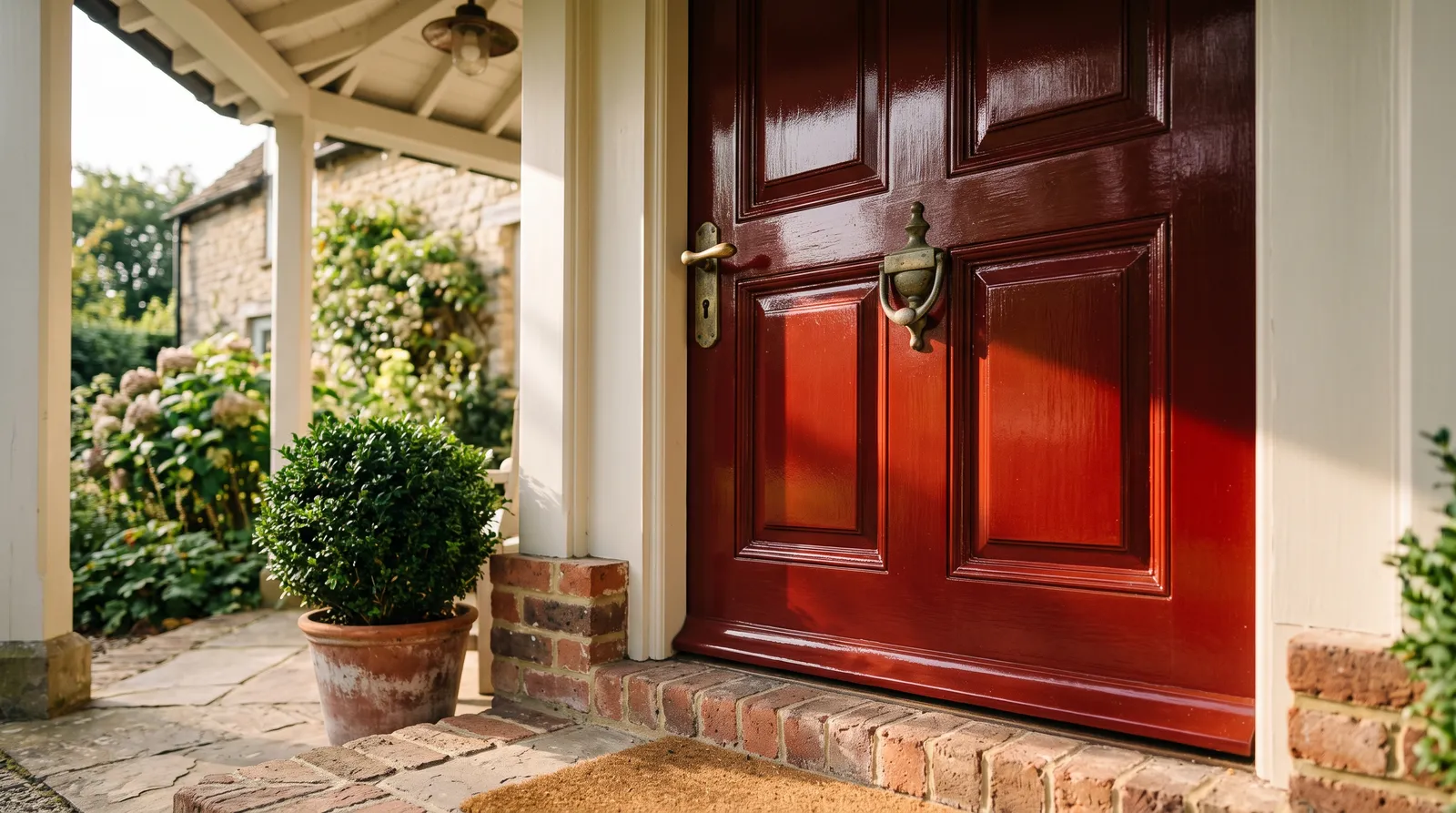
Benjamin Moore Aura Grand Entrance2 sheens
Recoat24 hr at 77°F / 50% RH
VOC48 g/L
Full cure5–7 days per TDS
Sheens SatinHigh Gloss
Read this first
The Fast Verdict
The paint earns the score: a urethane-modified waterborne alkyd modeled on European door enamels, with brush leveling nothing else in the waterborne aisle matched, a true high gloss, and Gennex color that holds on a south-facing black or oxblood door. The shelf takes it back: Benjamin Moore discontinued Grand Entrance in the US on August 1, 2022, and its own page now points to Aura Exterior. Buy a fresh-tested leftover quart if your dealer has your color. Starting from a chip today, brush Behr Urethane Alkyd Enamel — the same chemistry lane, still on shelves, and it recoats the same afternoon instead of the next day.
Best for
Front doors in full sun · Deep, saturated door colors · Smooth wood, metal, and fiberglass doors · Exterior trim and shutters in small doses · Anyone who found a fresh quart in the right color
Skip if
You need the door back in service fast · The only quart left is 2022 stock · You are speccing a repeatable process · Vinyl or flexible substrates · Interior-only trim jobs, where Advance does the same finish and is still sold
What it's good at
- Brush leveling nothing else in the waterborne aisle matched — long open time, marks flow out flat, and sprayed it is better still
- Deep color on a full-sun door: Gennex colorants plus the Aura fade story on the hardest residential test there is
- A true high gloss (148) — the closest off-the-shelf US thing to a European lacquered-door look while it lasted
- Quart-sized honesty: one door, both faces, two coats, casing included, no half-empty gallon left over
- Bonds direct over sound existing enamel; water cleanup and 48 g/L VOC from an alkyd-feel film
- Lifetime limited warranty against blistering, peeling, and wear-through when it was current
What it's not good at
- Availability — discontinued in the US since August 2022, which no finish quality can score around
- The calendar: 4–6 hours to touch, 24 between coats, two days minimum before the door rehangs
- Cure honesty: 5–7 days on the sheet, soft and printable for weeks in the field — the sticking-door complaint is earned
- Sharp panel edges, where heavy coats sag into snots unless tipped off
- Quart-only packaging on anything bigger than a door or two
- Scarcity pricing on leftover 2022 stock, which is a collector's tax on a can with no support behind it
Same shelf, different cans
Not the Aura on Your Walls
Four products wear the Aura badge, and this is the one people mix up most at the counter. Only one of the four is a door enamel — and it is the only one Benjamin Moore no longer sells in the US.
Aura Grand Entrance (this review)
BaseUrethane-modified waterborne alkyd enamel; dries by evaporation plus oxidation
SheensSatin (147), High Gloss (148) — quarts only
Recoat24 hr
Buy it if
A front door or exterior trim where the brushed finish and full-sun color hold are the whole point — and a dealer still has a fresh quart.
Avoid if
You need supply you can rebuy, or a door back on its hinges this weekend.
Aura Interior
BasePremium fast-setting acrylic wall paint
SheensMatte, Eggshell, Satin, Semi-Gloss
Recoat2 hr
Buy it if
Deep saturated interior walls. The opposite temperament — it punishes a slow brush where Grand Entrance forgives one.
Avoid if
Doors and trim that need an enamel film.
Aura Exterior
BasePremium exterior acrylic, Color Lock chemistry, gallons
SheensFlat, Low Lustre, Satin, Soft Gloss
Recoat4 hr
Buy it if
Siding and trim — and, per Benjamin Moore's own guidance since 2022, your front door in satin or soft gloss.
Avoid if
You wanted enamel leveling or a true high gloss; a very good exterior paint is still not a door enamel.
Aura Bath & Spa
BaseHumidity-tuned acrylic matte
SheensMatte only
Recoat1 hr
Buy it if
A steamy bathroom.
Avoid if
Anything this review is about.
Numbers, not adjectives
Spec Sheet
- Chemistry
- Urethane-modified waterborne alkyd; dries by evaporation + oxidation; water cleanup
- Coverage
- 100–125 sq ft / quart per coat at 3.6 wet mils
- Sheens
- Satin (147): 25–35 units at 60° · High Gloss (148)
- Touch dry
- 4–6 hr
- Recoat
- 24 hr at 77°F / 50% RH
- Full cure
- 5–7 days per TDS; film reported soft past 30 days in the field
- Recommended coats
- 2 — the TDS requires two for full sheen and durability
- VOC
- 48 g/L
- Volume solids
- 38–42% (satin, white)
- Application temp
- 50–90°F surface; store above 40°F
- Tint bases
- Gennex 1X, 2X, 3X, 4X — the full Benjamin Moore color deck
- Surfaces
- Primed or previously painted wood, metal, fiberglass doors and trim; interior and exterior; not for soft or flexible substrates
- Sizes
- Quart only — one door, both faces, two coats per quart
- Price
- Roughly $45–60/quart when current; leftover US quarts vary by dealer, about C$58 in Canada where it still sells
Application Settings That Work
- Brush
- This enamel was formulated for a brush, and the brush is where it shows off. A quality 2.5-inch synthetic sash brush, full panels in one pass, and let the long open time pull the marks flat — do not rework a section that has started to set. Tip off the edges; the flats level themselves.
- Primer
- Bonds well direct over sound, scuff-sanded existing paint — many pros skipped primer on repaints. Bare wood, rusty metal, or raw fiberglass wants the matching Fresh Start primer first, and the warranty language assumes a primed surface.
The 24-Hour Recoat and the Sticking Door
Touch dry runs 4 to 6 hours and recoat is a flat 24, so a two-coat door is a two-day job before it rehangs — plan the door off the hinges and a spare way into the house. Full cure reads 5 to 7 days on the data sheet, and the field disagrees: this is an oxidizing alkyd film, and pros report both sheens print past day 30. The classic Grand Entrance failure is a freshly painted door pressed into rubber weatherstripping through a hot, humid first week — it bonds to the gasket, and opening it peels a strip off the latch edge that never blends back. Wax paper or painter's tape on the weatherstrip contact line for the first month is the cheap insurance. Rush the recoat instead and the second coat drags and wrinkles the half-set first — there is no schedule shortcut in this can.
Mid-project panic
When It Goes Wrong, and How to Fix It
The door stuck to the weatherstripping and peeled when it opened
Why it happens. The film is soft long after it feels dry. Full cure says 5–7 days; in real weather the enamel stays printable for weeks, and rubber gaskets press into it every time the door closes. Heat and humidity make the bond worse.
The fix. Prevention only: wax paper or painter's tape on the gasket contact line for the first month, and no hard slams. Once it has peeled, let the damage cure fully, feather the edge with 220 grit, and recoat the whole stile — a spot dab flashes.
Sags and drips on the panel edges — what pros call snots
Why it happens. The same long open time that levels the flats lets excess paint keep moving on sharp edges and corners. Flooding the raised panels puts more film there than 3.6 wet mils and gravity does the rest overnight.
The fix. Lay the coat at the recommended thickness and tip off every edge and corner with a nearly dry brush as you leave each panel. Paint the door flat on sawhorses if it is off the hinges — gravity stops being the enemy.
Second coat wrinkled or dragged over the first
Why it happens. Recoating early. The surface skins in hours but keeps oxidizing underneath, and a solvent-of-water topcoat over a half-set oxidizing film lifts it — standard alkyd behavior, and the 24-hour recoat exists because of it.
The fix. Wait the full day, longer in cool or damp weather and under deep colors. If a section wrinkled, let it harden completely, sand flat, and recoat that face edge to edge.
You cannot find a can anywhere
Why it happens. Benjamin Moore discontinued Grand Entrance in the US on August 1, 2022. US dealer listings that remain are leftover inventory, and most say call for pricing because what is in the back is all there is.
The fix. Call independent BM dealers and ask for Satin 147 or High Gloss 148 by number, and have any old can opened and stirred before you pay — walk away from a skin. Near the border, Canadian dealers sell it as a current product. Otherwise buy the lane, not the label: Behr Urethane Alkyd Enamel today, or Aura Exterior for BM's own answer.
Side by side
Grand Entrance vs Advance vs Behr Urethane Alkyd
The real 2026 decision for a door that deserves an enamel. All three are waterborne alkyds; only two are still on a shelf near you, and only two are rated to face the weather.
| Aura Grand Entrance | BM Advance | Behr Urethane Alkyd | |
|---|---|---|---|
| Status in 2026 | Discontinued in the US since Aug 2022; current in Canada and Europe | Current, BM dealers | Current, every Home Depot |
| Rated for exterior | Yes — interior and exterior | No — interior only | Yes — interior and exterior |
| Sheens | Satin, High Gloss | Satin, Semi-Gloss, High Gloss | Satin, Semi-Gloss — no high gloss |
| Recoat | 24 hr | 16 hr | 4–8 hr |
| Full cure | 5–7 days on paper; soft for weeks | 30 days | 14–21 days |
| Sizes | Quart only | Quart, gallon | Quart, gallon |
| Price | ~$45–60/quart when current | $80–95/gal | ~$45/gal |
| Where it wins | Finish quality and full-sun color hold on a front door | Cabinets and interior trim — the best brush finish still sold | Availability, speed, and price in the same chemistry lane |
Status in 2026
Aura Grand EntranceDiscontinued in the US since Aug 2022; current in Canada and Europe
BM AdvanceCurrent, BM dealers
Behr Urethane AlkydCurrent, every Home Depot
Rated for exterior
Aura Grand EntranceYes — interior and exterior
BM AdvanceNo — interior only
Behr Urethane AlkydYes — interior and exterior
Sheens
Aura Grand EntranceSatin, High Gloss
BM AdvanceSatin, Semi-Gloss, High Gloss
Behr Urethane AlkydSatin, Semi-Gloss — no high gloss
Full cure
Aura Grand Entrance5–7 days on paper; soft for weeks
BM Advance30 days
Behr Urethane Alkyd14–21 days
Where it wins
Aura Grand EntranceFinish quality and full-sun color hold on a front door
BM AdvanceCabinets and interior trim — the best brush finish still sold
Behr Urethane AlkydAvailability, speed, and price in the same chemistry lane
The exterior row decides more than people think. Advance brushes beautifully and is the wrong can for a front door — Benjamin Moore rates it interior only, and an interior alkyd on a weather-side door is a warranty-free experiment. If you want the Grand Entrance feel from a shelf you can actually reach, Behr Urethane Alkyd is the answer: same resin family, rated inside and out, recoats the same afternoon, about $45 a gallon. It levels a half-step behind Grand Entrance under raking light — most things do — but it finishes the job the weekend you started it. And if you are staying inside the Benjamin Moore deck, Aura Exterior in satin or soft gloss is the company's own recommendation for the door.
If not this one
Honest Alternatives
BU
Behr Urethane Alkyd Enamel~$45 / gal
The shelf answer. Same urethane-modified waterborne alkyd lane, rated interior and exterior, satin and semi-gloss, quarts and gallons at any Home Depot, and a 4-to-8-hour recoat that puts the door back on its hinges the same weekend. No high gloss, and the leveling is a half-step behind.
BM
Benjamin Moore Aura Exterior$85–95 / gal
Benjamin Moore's own replacement guidance: Aura Exterior in satin or soft gloss for front doors. Same Color Lock fade resistance and the same color deck, gallon-sized, fast-drying. It brushes like a very good exterior acrylic, not like an enamel — the right call when door, trim, and shutters share one color run.
Full review →BM
Benjamin Moore Advance$80–95 / gal
If the glass-flat brushed finish is what drew you here, Advance is that finish, still current — on interior doors, trim, and cabinets only. Interior-rated, so it does not go on the weather side of anything.
Full review →Questions people actually ask
Aura Grand Entrance Questions, Answered
Is Benjamin Moore Grand Entrance discontinued?
In the US, yes. Benjamin Moore's own product page says Aura Grand Entrance was discontinued as of August 1, 2022, and points buyers to Aura Exterior in satin or soft gloss for front doors. The enamel is still current in Canada and Europe — Canadian dealers list Satin K147 and High Gloss K148 at about C$58 a quart — and some US dealers hold leftover quarts. Check the batch date before money changes hands.
What replaced Aura Grand Entrance?
Officially, Aura Exterior in satin or soft gloss — same Color Lock chemistry, sold in gallons, but a straight exterior acrylic rather than a self-leveling door enamel. Practically, the closest current product to what Grand Entrance was — a urethane-modified waterborne alkyd rated inside and out — is Behr Urethane Alkyd Enamel at Home Depot, for a fraction of the price per square foot.
How long before you can close the door?
Longer than the label's dry time. Touch dry is 4–6 hours and recoat is 24, so a two-coat door is a two-day job before it goes back in the frame. Full cure is listed at 5–7 days, and pros report the film stays soft past 30. Protect the weatherstrip contact line with wax paper or tape for the first month, and no hard slams.
Does Grand Entrance need a primer?
Not over sound, previously painted or primed surfaces — it bonds well direct, and painters used it over scuffed existing enamel all the time. Bare wood, rusty metal, or raw fiberglass wants the matching Fresh Start primer first.
What sheens does Grand Entrance come in?
Two: Satin (147), a genuine mid satin at 25–35 units at 60 degrees, and High Gloss (148), the closest thing Benjamin Moore made to a lacquered European door. Both quarts only, tinted from the full Gennex deck, so any Benjamin Moore color works.
How much does a quart cover?
100–125 square feet per coat, and the TDS requires two coats for full sheen and durability. A standard entry door runs about 20 square feet a side, so one quart does a front door, both faces, two coats, with enough left for the casing. That is exactly why it sold in quarts only.
Grand Entrance vs Advance for a front door — which one?
Grand Entrance, if you can still get it — it is rated for exterior use and Advance is not. Advance is the interior sibling: same waterborne-alkyd feel, gallons, better price, best-in-class on cabinets and inside trim, and the wrong can for a door that takes weather. If Grand Entrance is gone from your area, Behr Urethane Alkyd is the exterior-rated answer.
Can you still buy Grand Entrance in 2026?
Sometimes. Canadian and European Benjamin Moore dealers stock it as a current product. In the US it is leftover inventory at a handful of independent dealers, usually call-for-price. Have any 2022-era quart opened and stirred before buying, and walk away from a skin or a scarcity markup.
Keep exploring
Benjamin Moore brand guide and product linesBenjamin Moore Advance review (the interior sibling)Behr Urethane Alkyd Enamel review (the same lane, still on shelves)Aura Exterior review (Benjamin Moore's official replacement)Best front door paint — full round-up
We may earn a commission when you buy through the retailer link above. It never changes the score or the verdict.
Ask a Question