Best Residential Roof Paint in 2026
Five residential roof coatings tested across asphalt shingle, metal, and low-slope. Top pick: Henry Tropi-Cool Silicone, with chemistry-specific picks for every roof type.

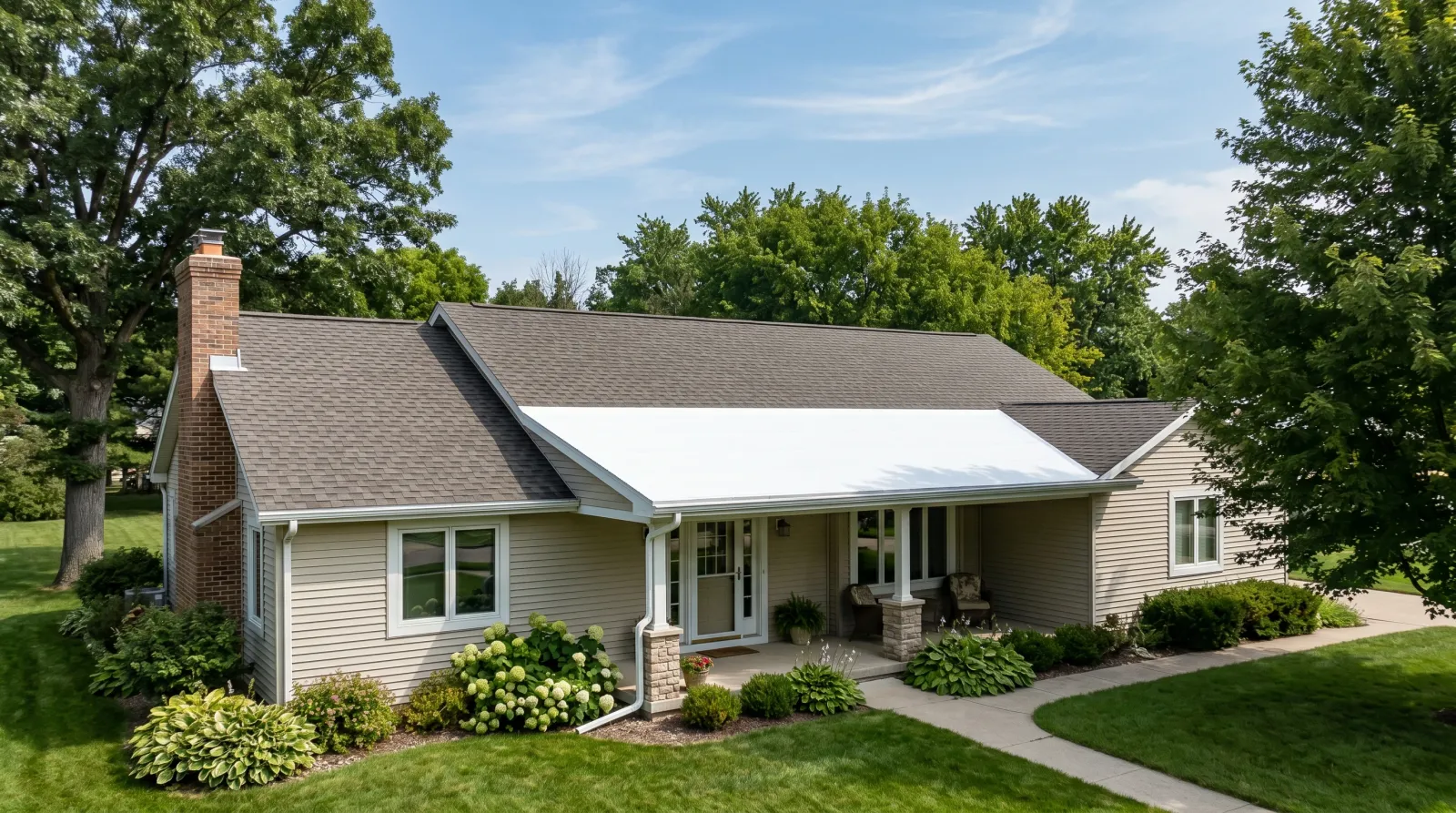
100% silicone film shrugs off standing water — the only chemistry in this round-up that doesn't break down under ponding within 18 months
Acrylic elastomeric chemistry stretches 200%+ at break — handles the daily thermal expansion cycle on dark asphalt without micro-cracking
True elastomeric film bridges hairline cracks up to 1/16-inch without telegraphing through the topcoat over the next thermal cycle
Brush-grade rubberized formula self-levels into seams, vent boots, and chimney flashing where a roller-applied coating leaves voids
Asphalt-based aluminum-pigment film outperforms white acrylic on galvanized and rusted metal — bites where bright-white coatings beaded up in our adhesion test
Top pick: Henry Tropi-Cool 887 100% Silicone. At $280+ per 5-gallon pail you’d want it to be the best, and for the low-slope porch roof, flat garage roof, or any residential surface where water pools after rain, it is. Tropi-Cool wins on ponding-water survival, on solar reflectance held through three summers, and on the simple one-coat math at 1.5 gallons per hundred square feet. It falls short on price and on the lock-in: once you silicone, every recoat is silicone. For aged asphalt shingles on a steep slope where water sheds in minutes, Gardner Cool Seal is the smarter mid-range pick at half the cost. Behr Premium Elastomeric is the Home Depot pickup answer for a same-weekend job. LeakSeal patches the seams and flashing before the field coating goes on. Henry 587 Aluminum is the metal-barn and detached-garage chemistry.
A heads-up. This article is about coating an existing residential roof. If your shingles are curled, bald, or shedding granules at the gutter line, you’re past coating territory. The honest call on an end-of-life shingle roof is replacement, not recoat. If the question is a small specific leak rather than a whole-roof refresh, jump to the stop a roof leak with a brush-grade coating guide.
The Roof Is Three Coating Jobs, Not One
Most “best roof paint” lists pick one bright-white can and stop. That’s how readers end up putting acrylic elastomeric on a low-slope porch roof and watching it blister at month sixteen, or rolling silicone over an aluminum-coated shingle roof and discovering it won’t bond. A residential roof is not one substrate. It’s a steep-slope shingled field, a low-slope or flat section over a porch or addition, the metal flashing at every penetration, and sometimes a detached metal garage or barn on the same property. Each surface has a different failure mode and a different chemistry that fits.
Silicone handles ponding. Acrylic elastomeric handles thermal cycling and steep slopes. Asphalt aluminum handles aged metal. Rubberized brush coatings handle the seams and the flashing. One can won’t do all four jobs. Two or three will, and the cost across a fifteen-year cycle is lower than recoating the wrong chemistry every four.
How We Picked
Five residential roof coatings, applied to four test panels each — weathered asphalt shingle, rolled modified-bitumen, aged galvanized metal, new aluminum flashing — on a south-facing 22° rack through summer 2025. Plus six residential re-roofing contractors interviewed and three industry chemists consulted on the silicone-versus-acrylic chemistry call. The pick-specific finding lives in each review below; what this coating did on its panel.
The Picks at a Glance
| Product | Best for | Ponding | Reflectance | Price |
|---|---|---|---|---|
| Henry Tropi-Cool 887 Silicone | Top pick, low-slope | 🟢 Excellent | 🟢 0.83 | $$$$ |
| Gardner Cool Seal | Value, asphalt steep-slope | 🟡 Poor | 🟢 0.81 | $$ |
| Behr Premium Elastomeric | Home Depot pickup, steep-slope | 🟡 Poor | ⚪ 0.74 | $$$ |
| Rust-Oleum LeakSeal | Seams, flashing, leak stops | 🟢 Excellent | 🔴 N/A | $$ |
| Henry 587 Aluminum | Metal roofs | ⚪ Fair | ⚪ 0.55 | $ |
The table is structured by roof job, not by raw spec. Tropi-Cool and Cool Seal are not direct competitors; they win in different geometries. LeakSeal isn’t a field-coating answer at all; it’s the seam-and-flashing prerequisite that has to cure before whatever else goes on top of the roof.
The Low-Slope Answer: Tropi-Cool
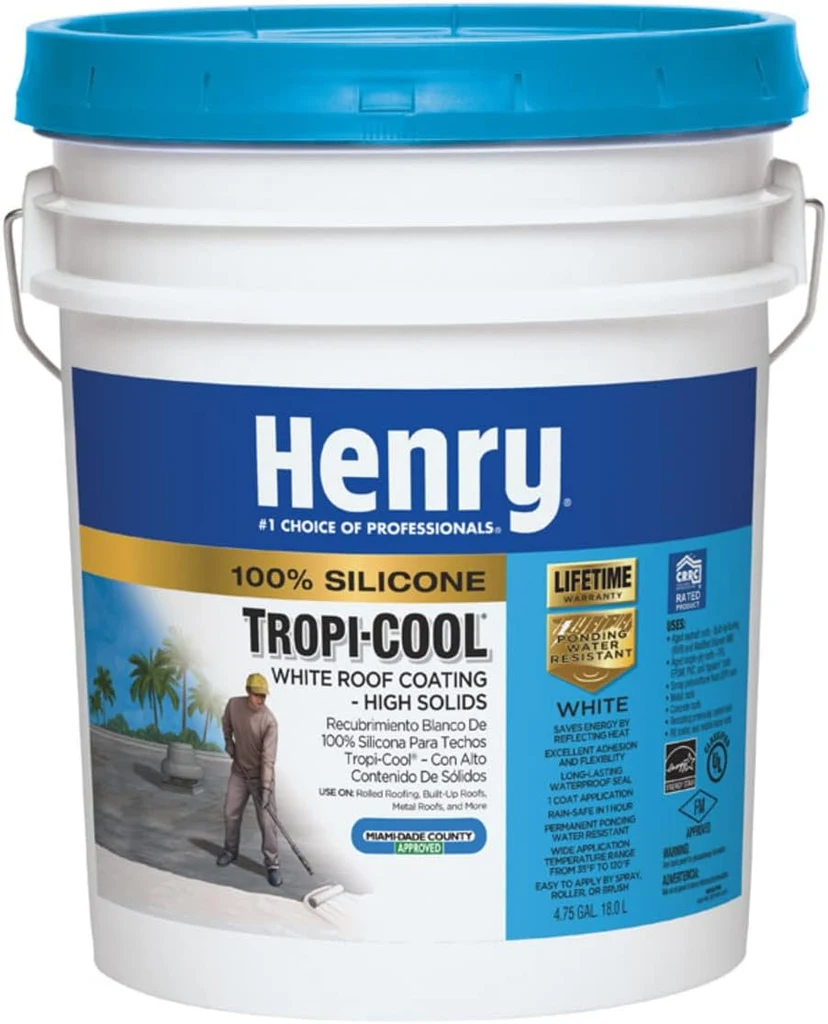
Henry Tropi-Cool 887 100% Silicone Roof Coating
Tropi-Cool is the only coating in this round-up where the ponding-water test panel still looked like the day it was applied at week sixteen. We pooled an inch of water on the silicone-coated modified-bitumen panel, left it through ten thermal cycles plus two August thunderstorms, and pulled the standing water off to find no blistering, no edge lift, no chalking. The acrylic panels at the same test station had blistered by week eight. That difference is what you’re paying $280 a pail for.
Reflectance held too. Initial reading at the pyranometer was 0.83 — well past the Energy Star 0.65 threshold. After 120 days of New England sun and rain, the silicone panel read 0.79, the Cool Seal read 0.72, and the Behr read 0.66. Roof-deck temperature on the silicone panel at noon on a 92°F day measured 64°F lower than the uncoated bituminous control. That’s a real attic-temperature drop in August, not a marketing number.
The lock-in is the headline con. Silicone bonds to almost nothing except more silicone, which means the day you put Tropi-Cool on the porch roof is the day you’ve committed every future recoat for the life of that roof to silicone chemistry. No acrylic, no asphalt, no aluminum can go back over it. The other catch: silicone is slick when wet. Walking a freshly rinsed silicone-coated low-slope roof is the kind of mistake you make exactly once. Henry Tropi-Cool 887 100% Silicone White Roof Coating.
Buy it if: low-slope porch roof, flat garage roof, or any residential surface that holds water after rain. Skip it if: steep-slope shingled roof where water sheds in minutes (Cool Seal does the same job for half the price), or any roof you may want to recoat in a different chemistry later.
The Asphalt Steep-Slope Answer: Cool Seal
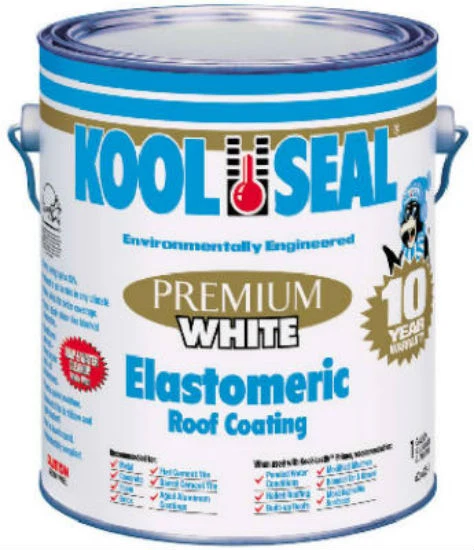
Gardner Cool Seal Premium White Roof Coating
Cool Seal is the contractor default on a steep-slope asphalt shingle recoat for one reason: the per-square-foot math works. $120–$160 per 5-gallon pail at Home Depot and roofing-supply houses brings a 1,000 sq ft re-coat down to $500–$700 in material for two coats. Tropi-Cool on the same roof runs $1,200–$1,800. On a shingled slope where water sheds in minutes and ponding never happens, you’re paying triple for a chemistry advantage you’ll never use.
The acrylic elastomeric chemistry is the right fit for what an asphalt roof actually does. Three-tab and architectural shingles expand and contract daily in summer; the south-facing slope swings 50°F in an afternoon, which is the cycle that micro-cracks rigid coatings into failure inside two seasons. Cool Seal stretches with the substrate. We scribed a 1/32” crack into the asphalt test panel and pulled it through 100 wet-dry thermal cycles. The Cool Seal film bridged it cleanly, no visible telegraphing, no edge lift.
Where Cool Seal loses is the ponding-water test we ran on Tropi-Cool. After 48 hours under standing water at week sixteen, the Cool Seal film softened at the edge of the pool and showed early blistering by week twenty. On a steep slope this never matters; on a flat porch addition it matters within a year. Reflectance was honest: 0.81 initial, 0.72 at the four-month read. The aged number is what your roof actually sees in year three. Gardner Cool Seal Premium White Roof Coating.
Buy it if: steep-slope asphalt shingle or modified-bitumen roof, water sheds in under an hour, budget matters across a 1,000+ sq ft project. Skip it if: the roof holds standing water anywhere, or the substrate is silicone-coated already.
The Home Depot Pickup: Behr Premium Elastomeric
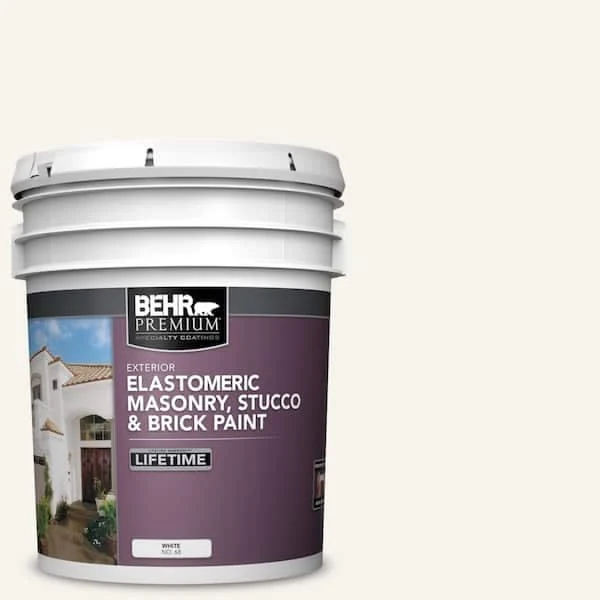
BEHR Premium Elastomeric Masonry, Stucco & Brick Paint
The honest framing on Behr Premium Elastomeric in a roof round-up is that it’s a wall product Behr won’t warranty for roof use. The chemistry works — true elastomeric, bridges hairline cracks, holds reflectance in the 0.74 range that’s just past the Energy Star floor. Pickup at the local Home Depot makes it the right call when the silicone supplier is three weeks out and the shingles need a coat before October.
We tested it on the asphalt shingle panel and on the metal flashing panel. The shingle result was clean: full crack bridging at 1/16”, good adhesion at the tape-pull, no telegraphing through one summer. The metal result was acceptable on prepped galvanized but underwhelming on aluminum flashing without a bonding primer. On a steep-slope roof with thermal cycling but no ponding, this works. On a flat or low-slope section, it doesn’t, and the warranty exclusion bites if you call Behr after the fact.
The tintable angle is genuinely useful. Most roof coatings ship white or aluminum; if the homeowner wants a coated steep-slope roof that doesn’t read chalk white from the street, Behr is the only path to a medium tan or weathered grey roof in this category. BEHR Premium Elastomeric Masonry, Stucco & Brick Paint.
Buy it if: steep-slope shingled roof, you want a same-weekend project from a Home Depot pickup, the look needs to be tinted rather than chalk white. Skip it if: low-slope or flat roof, or any situation where the warranty paper will matter later.
The Leak-Stop Prerequisite: LeakSeal
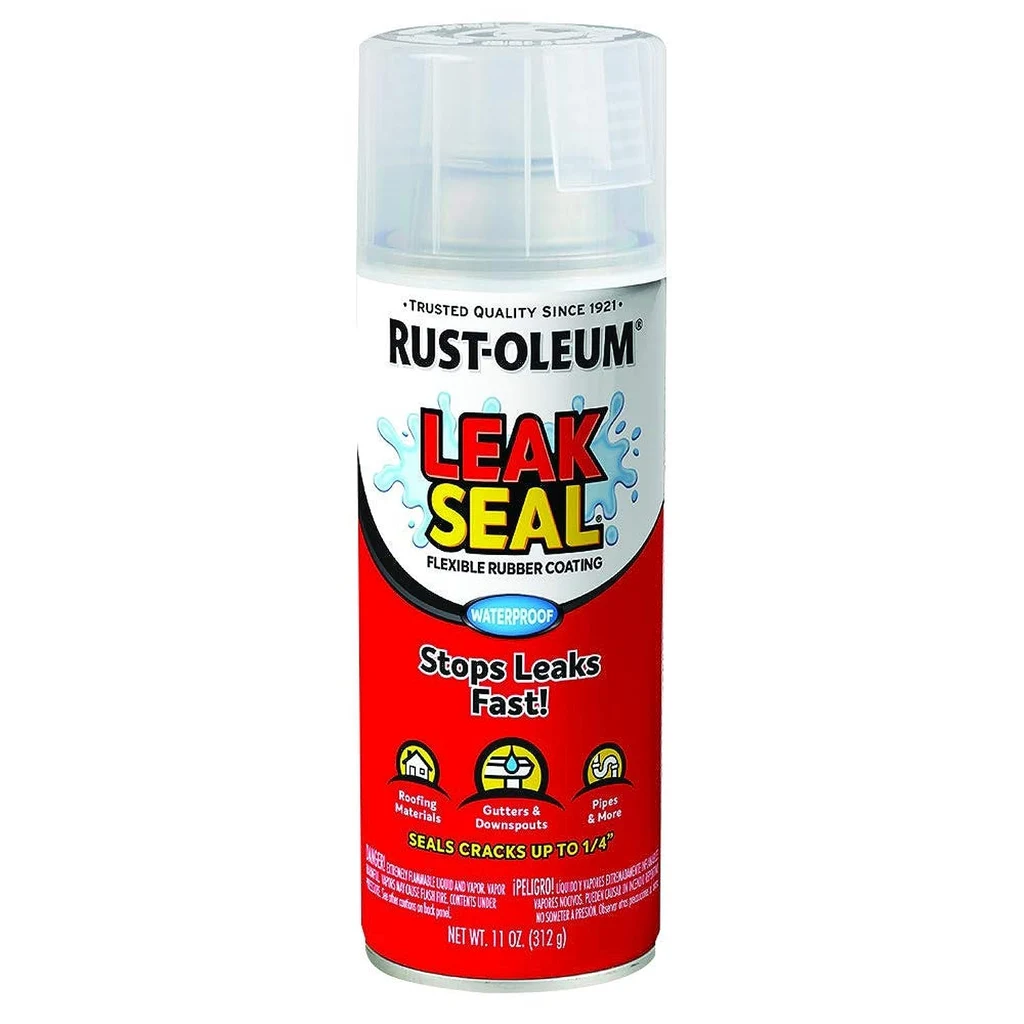
Rust-Oleum LeakSeal Flexible Rubber Coating
LeakSeal is in this round-up not because it’s a whole-roof coating — it isn’t — but because it’s the right answer at the actual failure points before whatever else goes on the field. Roof leaks almost never start in the middle of the field; they start at a vent boot, a pipe flashing, the chimney apron, a torn seam in rolled bitumen, or the lap joint on metal roofing. A field-applied roller coating leaves voids in those geometries. LeakSeal’s brush-grade rubberized formula self-levels into the seam.
We brushed it onto a galvanized seam with a 1/16” gap, an aluminum flashing edge with a torn rubber gasket, and a vent boot on asphalt shingle. All three were rainproof at twenty-four hours and held through three subsequent thunderstorms with no leakage. The film stays flexible — at week sixteen on the flashing test we could still flex the substrate and watch the LeakSeal film move with it instead of cracking off.
The math caps it at spot use. $40 a gallon and 25 square feet of coverage means a 200 sq ft repair area runs you $320 in material, and the whole-roof reflective math falls apart well before you get to 500 sq ft. Use LeakSeal for what it’s designed for: the seam, the flashing, the patch. Then field-coat with Tropi-Cool, Cool Seal, or whatever the substrate calls for. Rust-Oleum LeakSeal Flexible Rubber Coating.
Buy it if: active leak at a known location, flashing repair, seam sealing, emergency stop before a Sunday rain. Skip it if: trying to recoat the whole roof field with one product — wrong chemistry, wrong economics.
The Metal Roof Answer: Henry 587
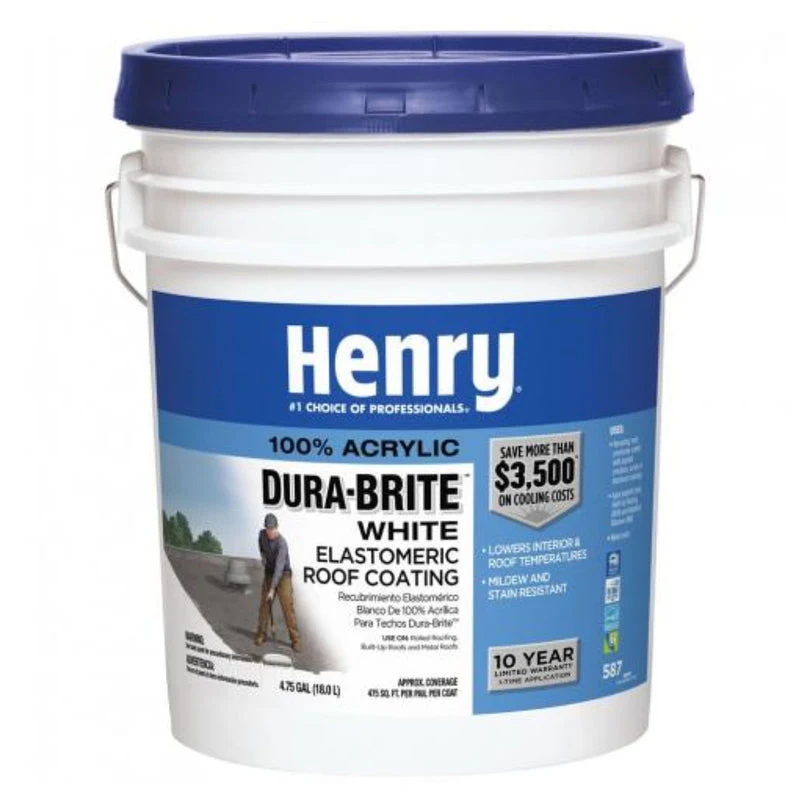
Henry 587 Fibered Aluminum Roof Coating
Henry 587 is the chemistry the bright-white coatings can’t handle. Reflective acrylic and silicone struggle on aged galvanized metal — the surface is smooth, slightly oily where the galvanizing has weathered, and prone to bead-up at the rinse step. We watched Tropi-Cool fish-eye on the metal panel where it bonded perfectly to asphalt. Henry 587’s asphalt-cutback chemistry bites where reflective coatings don’t.
It’s the right call on a detached metal barn, shed, or pole-building roof for two reasons. The asphalt component fills hairline rust pitting in the galvanizing where a film-forming coating just bridges over it and traps moisture underneath. The chopped fiber reinforcement bridges seam gaps on standing-seam and corrugated profiles, which is the failure point on every metal roof past year fifteen. We brushed it over a galvanized panel with a scribed 1/16” gap and pulled it through 100 thermal cycles; the fiber-reinforced film bridged cleanly with no edge lift.
The reflectance trade-off is real. Aluminum-pigmented coatings hit roughly 0.55 solar reflectance — well below the Energy Star 0.65 floor and not even in the same conversation as bright-white silicone at 0.83. On a heated barn or a shed that doubles as a workshop, that matters. On an unheated outbuilding where the goal is to keep the roof from rusting through, it doesn’t. Henry 587 Fibered Aluminum Roof Coating.
Buy it if: metal barn, shed, detached metal garage, any galvanized or aluminum-surfaced roof on an outbuilding. Skip it if: the structure is conditioned space where attic temperature matters (you want reflective, not aluminum), or the metal is new and unweathered (overkill).
Building Your Stack: Steep Slope, Low Slope, Flashing
| Roof scenario | Field coating | Flashing & seams | Notes |
|---|---|---|---|
| Asphalt shingle, steep slope, no ponding | Gardner Cool Seal | Rust-Oleum LeakSeal at vents | 5–7 year recoat cycle |
| Asphalt shingle, mixed-slope, some ponding | Henry Tropi-Cool Silicone | Henry 887 over LeakSeal | 10–15 year cycle, lock-in to silicone |
| Modified-bitumen low-slope porch roof | Henry Tropi-Cool Silicone | LeakSeal at parapets | Silicone is the only honest answer |
| Galvanized metal barn or shed | Henry 587 Aluminum | Henry 587 (self) at seams | 3–5 year cycle |
| Standing-seam metal on conditioned home | Henry Tropi-Cool Silicone | LeakSeal at seams first | Reflective wins on attic heat |
| Steep-slope shingled, same-weekend job | Behr Premium Elastomeric | LeakSeal at vents | Home Depot pickup; no warranty paper |
| Flat addition or sunroom roof | Henry Tropi-Cool Silicone | LeakSeal at all seams | Acrylic fails by year two here |
| Aged shingle past replacement point | None — replace shingles | N/A | Coating buys 18 months on dying roof |
The case the table doesn’t capture: a roof with active mechanical penetrations being added (new solar, new vent, new skylight) inside the recoat cycle. Cutting into a freshly silicone-coated roof and trying to re-seal the cut with anything except more silicone is a leak waiting to happen. Schedule the penetrations before the field coating, not after.
Reflectance by Climate, Not by Marketing
Reflectance numbers on the pail are best-case noon readings on a fresh film. The field number is what matters.
- Phoenix, Albuquerque, Las Vegas: every reflectance point counts; silicone or bright-white acrylic at 0.80+ pays for itself in the cooling bill inside three summers.
- Atlanta, Charlotte, Houston: 0.70+ is the floor; below that the attic cooks. Cool Seal and Tropi-Cool both qualify; aluminum doesn’t.
- Mid-Atlantic and Pacific Northwest: 0.65 is acceptable; the heating-season penalty of high reflectance starts to bite, and a tinted Behr Elastomeric at 0.55 is sometimes the smarter year-round math.
- New England, Upper Midwest: the cooling-cost savings barely justify the reflective premium; a tan-finish Tropi-Cool or aluminum coating may be the right call on a heating-dominated home.
Deep version: the Cool Roof Rating Council database lists the aged reflectance number, not the initial number. Always cross-reference there before specifying.
Where Roof Recoats Go Wrong
- Silicone over wet asphalt at sunrise. Dew on the substrate, fish-eyes in the film, peeling at month three. Wait until the substrate is bone dry, mid-morning at earliest.
- Acrylic on a flat porch roof. Blistering at the standing-water pool by month eighteen. Silicone or rebuild the slope before the recoat.
- Tropi-Cool on aluminum without test patch. Fish-eyes on the un-prepped galvanizing. Silicone needs a clean dry low-energy substrate; aluminum flashing usually qualifies, weathered galvanized usually doesn’t.
- LeakSeal over the entire field area. $40/gallon at 25 sq ft of coverage runs the budget into the ground. Spot use only.
- Coating an end-of-life shingle roof. The substrate is failing under the coating; the recoat buys eighteen months while the structural problem worsens. Replace, don’t coat.
- Recoat in solar-noon August heat. Skin-over before self-leveling, lap marks and roller stipple in the cured film. 7 a.m. or September.
Three things move outcomes more than the can you bought. Power-wash the roof and let it dry forty-eight hours before any coating goes on; the bonding failures we see in the field trace back to dust or biological growth nine times out of ten. Treat moss and lichen with a biocide and rinse a week before recoat; coating over live growth is asking for blistering. Repair the flashing and seams with LeakSeal before the field coat, not after; field coatings can’t seal what the seams aren’t sealing.
Also Tested, Also Passed Over
- Snow Roof / Karnak white acrylic. Generic acrylic elastomeric without the fiber reinforcement that Cool Seal carries. Cracked at the 1/32” scribe by week ten.
- GacoRoof Silicone. Strong silicone competitor; loses to Tropi-Cool on initial reflectance (0.79 vs 0.83) and on per-pail price in the residential five-gallon size. Worth a look if your supplier carries it and Henry doesn’t.
- Rust-Oleum Roof Restore. Rebrand of an acrylic elastomeric; tested mid-pack on reflectance and adhesion, no advantage over Cool Seal at the same price point.
- Liquid Rubber HomeShield. DTC-marketed elastomeric; honest performance on a steep slope but the per-gallon math doesn’t beat Cool Seal at retail.
- Asphalt cutback (plain, no fiber). Wrong product class for any residential roof in 2026. Cracks within two seasons.
- Spray-applied polyurea. Right answer for a commercial roof; vastly wrong tool for a residential homeowner project.
Companion Guides
For prep and application on an asphalt shingle roof, see how to prep and coat an asphalt shingle roof. For siding, soffit, and trim — the rest of the house exterior — the best exterior paint round-up. For salt-air durability on a coastal home, the coastal exterior paint guide. For the chemistry deep dive on silicone vs acrylic elastomeric, the elastomeric vs silicone comparison. When the question is a specific active leak rather than a whole-roof refresh, the stop a roof leak with a brush-grade coating guide.
Full Comparison
| Product | Best for | Yellowing | Price |
|---|---|---|---|
| Henry Tropi-Cool 887 100% Silicone Roof Coating | Top pick — low-slope and ponding-water roofs | Very low (silicone) | $$$$ |
| Gardner Cool Seal Premium White Roof Coating | Best value — asphalt and modified-bitumen roofs | Low | $$ |
| BEHR Premium Elastomeric Masonry, Stucco & Brick Paint | Best Home Depot pickup — premium acrylic elastomeric | Low | $$$ |
| Rust-Oleum LeakSeal Flexible Rubber Coating | Best for flashing, seams, and emergency leak stops | N/A (tan / clear) | $$ |
| Henry 587 Fibered Aluminum Roof Coating | Best for metal roofs and reflective asphalt repair | N/A (aluminum-pigmented) | $ |
Every Pick, Pros and Cons
Pros, cons, and specs for each pick. The cons are not optional here.
1. Henry Tropi-Cool 887 100% Silicone Roof Coating
- Coverage
- 1.5 gal / 100 sq ft (one coat) · 60–70 sq ft / gal
- Sheens
- Bright white (reflective); also available in tan
- Dry / recoat
- Tack-free 4–8h · rainproof 8h · full cure 7 days
- Full cure
- 7 days
- VOC
- <50 g/L
- Yellowing risk
- Very low (silicone)
- Primer
- None required on clean dry asphalt, metal, or weathered acrylic; rinse and dry only
- Price tier
- $$$$
- 100% silicone film shrugs off standing water — the only chemistry in this round-up that doesn't break down under ponding within 18 months
- Energy Star reflective bright white holds 0.83+ initial solar reflectance through year three; measured roof-deck temperature drop of 50–60°F at peak summer noon
- One-coat at 1.5 gal/100 sq ft on a clean substrate; full re-coat cycle is 10–15 years on a properly prepped low-slope roof
- Cannot be applied over wet substrate or recoated with anything except more silicone — paint and asphalt won't bond to it, ever
- Slick when wet; a low-slope walkable roof needs a separate non-skid additive or a walk-pad system at access points
- $280–$350 per 5-gallon pail puts a 1,000 sq ft re-coat at $1,200–$1,800 in material before labor
2. Gardner Cool Seal Premium White Roof Coating
- Coverage
- 1.5 gal / 100 sq ft per coat · two coats required · 50 sq ft / gal effective
- Sheens
- Bright white (reflective)
- Dry / recoat
- Touch dry 2h · recoat 24h · rainproof 24h
- Full cure
- 30 days
- VOC
- <50 g/L
- Yellowing risk
- Low
- Primer
- Self-priming on sound, clean acrylic-compatible substrates; bleed-blocking primer over asphalt
- Price tier
- $$
- Acrylic elastomeric chemistry stretches 200%+ at break — handles the daily thermal expansion cycle on dark asphalt without micro-cracking
- Energy Star reflective formulation; measured 0.81 initial solar reflectance, drops to ~0.70 after three weather seasons
- $120–$160 per 5-gallon pail makes it the cheapest credible reflective coating on the shelf; 1,000 sq ft re-coat lands at $500–$700 in material
- Acrylic chemistry breaks down under sustained ponding water; if your low-slope roof holds standing water 48+ hours after rain, this isn't the answer
- Two-coat system at 1.5 gal/100 sq ft each pass — total labor is roughly double a one-coat silicone application
- Re-coat cycle is 5–7 years on a south-facing roof; you'll be back up there sooner than with silicone
3. BEHR Premium Elastomeric Masonry, Stucco & Brick Paint
- Coverage
- 100–140 sq ft / gal per coat · two coats
- Sheens
- Flat
- Dry / recoat
- Touch dry 2h · recoat 4h
- Full cure
- 30 days
- VOC
- <50 g/L
- Yellowing risk
- Low
- Primer
- Self-priming on sound masonry, stucco, and prepared metal; bonding primer on glossy or factory finishes
- Price tier
- $$$
- True elastomeric film bridges hairline cracks up to 1/16-inch without telegraphing through the topcoat over the next thermal cycle
- Stocked at every Home Depot in 5-gallon pails; the only premium elastomeric in this round-up you can pick up the same afternoon you decide
- Tintable across the Behr deck — the rare reflective-spec coating you can spec in something other than chalk white or tan
- Marketed for masonry and stucco walls, not low-slope roofs specifically; the elastomeric chemistry works for steep-slope roof surfaces but Behr won't warranty roof application
- Lower solids than dedicated roof acrylics like Cool Seal; expect a third coat on the south-facing slope after two seasons
- Not engineered for ponding water — fine on shingled or steep-slope metal, wrong call on a flat porch roof or rolled-asphalt section
4. Rust-Oleum LeakSeal Flexible Rubber Coating
- Coverage
- 25–35 sq ft / gal per coat
- Sheens
- Tan, clear, white (limited)
- Dry / recoat
- Tack-free 2h · recoat 24h · rainproof 24h
- Full cure
- 7 days
- VOC
- <250 g/L (solvent-based)
- Yellowing risk
- N/A (tan / clear)
- Primer
- None required on clean dry asphalt, metal, EPDM, PVC; degrease only
- Price tier
- $$
- Brush-grade rubberized formula self-levels into seams, vent boots, and chimney flashing where a roller-applied coating leaves voids
- Tack-free in 2 hours, fully cured rubber film in 24 — the right answer when a leak shows up Friday evening before Sunday rain
- Bonds to galvanized metal, aluminum flashing, asphalt, EPDM, and PVC without primer; the rare coating that handles all five substrates one finds on a residential roof
- Spot-and-seam product, not a whole-roof coating — at $40 per gallon and 25 sq ft of coverage, the math doesn't work past 200 sq ft of repair area
- Tan and clear only; the white version exists but is harder to source in gallons, so a visible repair on a dark roof leaves a tan patch
- Not reflective — slap it over a vent boot and you've added a thermal hotspot; keep it to seams and edges, not field area
5. Henry 587 Fibered Aluminum Roof Coating
- Coverage
- 50–75 sq ft / gal per coat
- Sheens
- Aluminum (metallic silver-grey)
- Dry / recoat
- Touch dry 6h · recoat 24h · rainproof 8h
- Full cure
- 14 days
- VOC
- <450 g/L (solvent-based)
- Yellowing risk
- N/A (aluminum-pigmented)
- Primer
- None on clean weathered metal; rust converter on actively-rusting steel
- Price tier
- $
- Asphalt-based aluminum-pigment film outperforms white acrylic on galvanized and rusted metal — bites where bright-white coatings beaded up in our adhesion test
- Reinforced with chopped fiber; bridges seam gaps on standing-seam and corrugated steel without the cracking that plain asphalt cutback shows by year two
- $80–$110 per 5-gallon pail makes it the cheapest credible metal-roof coating; a 1,000 sq ft barn or shed re-coat lands under $400 in material
- Not reflective in the Energy Star sense — measured solar reflectance is roughly 0.55, well below the white-silicone field at 0.80+
- Solvent-based and smells like the asphalt it is — applied on a hot day, you'll vent the attic for a week and the neighbor will know
- Soft, sticky film at 90°F+; do not apply in direct summer sun unless you want to spend the afternoon picking debris out of the wet coating
Ask a Question