Product review · Glidden · Updated August 7, 2026
Kitchen & Bath Paint + PrimerGlidden paint review
7.4/10A real mildew-fighting, humidity-handling bathroom wall for about half what a premium bath paint costs.
You know that bathroom — the mirror fogs solid every morning and a grey shadow keeps creeping along the ceiling. This is the roughly $30 answer to that room, sold at Home Depot and Walmart.

Emily Roberts · DIY Editor & First-Timer's Guide · Updated August 7, 2026
Emily painted her first room at 24, hated every minute of it, and got better. She writes the guides she wishes she had, which means explaining what mildew-resistant actually promises before you spend the $30. About the testing process →
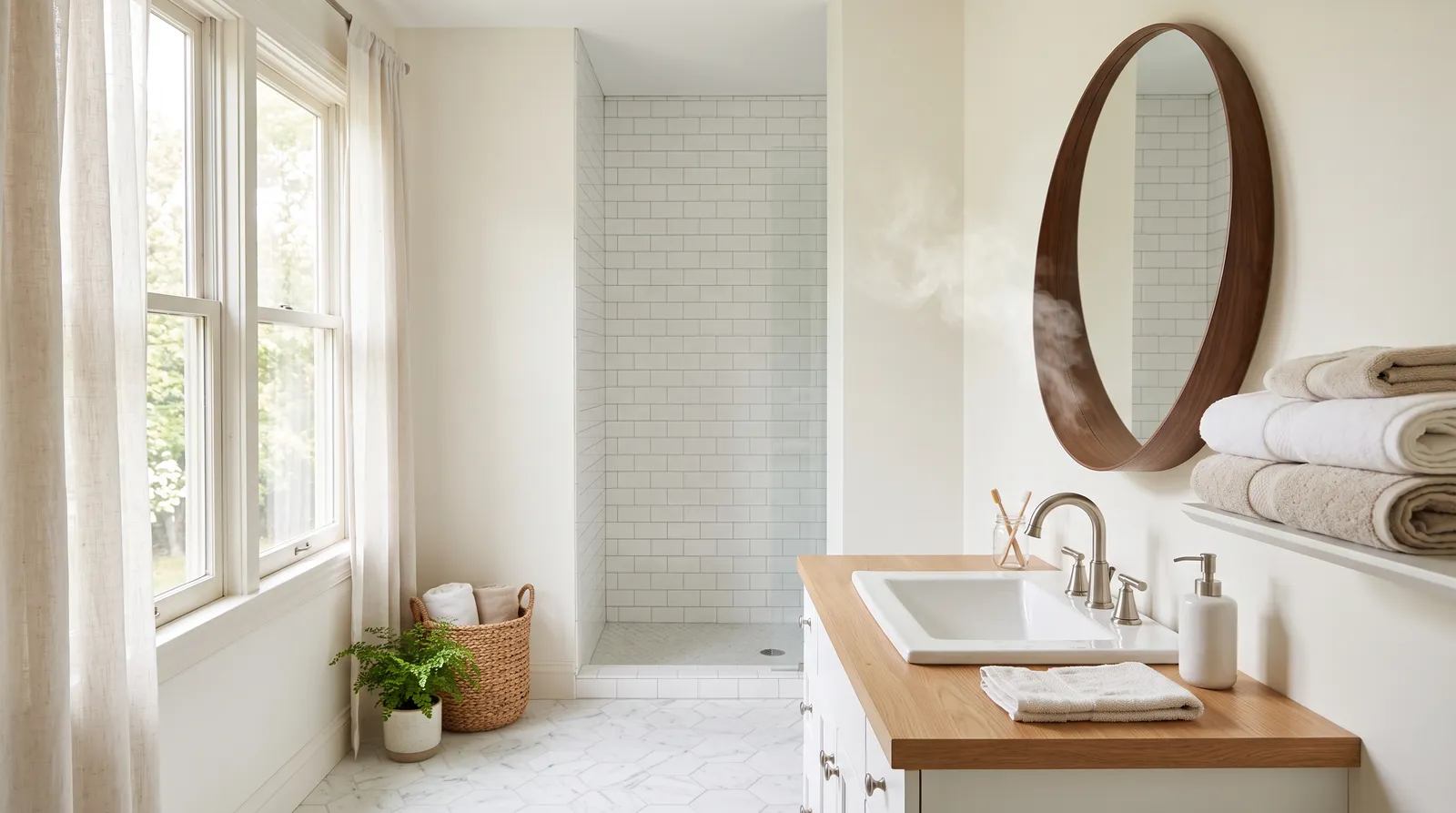
Glidden Kitchen & Bath Paint + Primer1 sheen
CoverageUp to 400 sq ft / gal claimed
Recoat2–4 hr
Full cureAbout 2 weeks
Sheens Eggshell
Read this first
The Fast Verdict
For an everyday wet room, yes. Roughly $30 to $36 a gallon buys a mildew-resistant, humidity-handling eggshell with Glidden's Steam Shield formula, and the stain-release surface wipes toothpaste, soap film, and splatter off without a fight. The budget shows up in three places: eggshell is the only sheen, deep colors need three coats over a tinted grey primer, and a stiff sponge will burnish it. If your primary bathroom steams hard every single day, a top-tier humidity paint is the better spend.
Best for
Guest and kid bathrooms · Splash-heavy kitchen walls · Humid laundry rooms · Steamy bathroom ceilings · Soft whites, pale greys, and light greens · Weekend refreshes on a budget
Skip if
You want a glossy wet-look shine · Charcoal, navy, or true red walls · A primary bathroom that steams hard every day · You clean walls with a stiff sponge or a Magic Eraser
What it's good at
- Moisture protection on a budget — a genuine wet-room paint for roughly half a premium bath paint
- Fighting mildew where it actually grows, at the steam line and above the shower
- Wiping clean — toothpaste, soap film, hairspray haze, and splatter come off with a damp cloth
- Self-priming on a clean, previously painted wall, so first-timers skip a step and a can
- Eggshell forgiveness, hiding minor roller texture and small wall flaws
- Being stocked and tinted at Home Depot and Walmart, so a weekend refresh needs no special trip
What it's not good at
- Sheen choice — eggshell is the only option, so no glossy wet-look tub surround or vanity
- Replacing a fan; a room with no airflow still grows mildew eventually
- Deep colors, which go on thin and want three coats over a tinted grey primer
- Hard scrubbing — a stiff sponge or Magic Eraser burnishes a shiny spot into the film
- Touch-ups, where a fresh dab can flash until it dries down
Numbers, not adjectives
Spec Sheet
- Chemistry
- 100% acrylic, low-VOC and low-odor
- Coverage
- Up to 400 sq ft / gal claimed; 300–350 realistic on a color change
- Sheens
- Eggshell — the line's only sheen
- Touch dry
- 30–60 min
- Recoat
- 2–4 hr
- Full cure
- About 2 weeks
- Mildew / humidity
- Mildew-resistant coating plus Steam Shield high-humidity technology
- Primer
- Self-priming on clean, previously painted walls; bonding primer on glossy or bare surfaces, stain-blocker over water rings
- Surfaces
- Bathroom, kitchen, and laundry walls and ceilings; high-humidity rooms
- Sizes
- Gallon (1 gal / 3.78 L)
- Price
- Roughly $30–36 / gal at Home Depot and Walmart
Application Settings That Work
- Brush
- It rolls and brushes easily, and eggshell is forgiving — it hides small roller texture and minor wall flaws better than a glossier paint would. Cut in the edges first, then roll the wall corner to corner. Plan two coats for any real color change, three if you went dark.
- Primer
- Self-priming on a clean, previously painted wall in decent shape, so most bathroom refreshes need no separate primer. Glossy surfaces and bare drywall want a real bonding primer first, and a water ring wants a stain-blocker or it ghosts through. On a ceiling that already has mildew on it, clean with a mildew cleaner and let it dry completely before anything else.
Mid-project panic
When It Goes Wrong, and How to Fix It
Mildew keeps coming back on the ceiling above the shower
Why it happens. Here is the thing — paint can slow mildew, not ban it. The treated film makes the surface an unfriendly place for those black and pink spots to grow, but a room with a broken fan and a window that never opens stays damp, and steam wins eventually no matter what you painted.
The fix. Run the fan and crack the window. If there is already a grey or black shadow up there, wipe it down with a mildew cleaner and let it dry fully before you paint, because painting over live mildew just traps it. Then two coats. The paint buys you margin; it does not replace airflow.
A deep color goes on thin and patchy
Why it happens. This is a budget tint base. Charcoal, deep navy, true red, and moody greens have a hard time landing evenly out of it — you will see the roller pattern through the color on the second coat.
The fix. Three coats, usually over a tinted grey primer, gets there. Honestly, if you want a dramatic dark bathroom, this is the wrong tier of paint and no amount of coats fixes that. For soft whites, pale greys, and light greens you will never notice the limit.
A shiny spot where you scrubbed a mark off
Why it happens. That is burnishing — you polished the eggshell. Ultra-scrubbable is a real claim but it has a budget ceiling, and a stiff sponge or a Magic Eraser is more abrasive than the film wants.
The fix. A damp cloth and mild soap is the right touch for everyday grime, and the stain-release surface handles toothpaste, soap film, and splatter that way. Save the scouring pad for the tile.
A touch-up dab looks different from the rest of the wall
Why it happens. It is flashing — a fresh dab dries at a slightly different look than the paint around it. Eggshell touches up better than semi-gloss, but it still shows until the new paint dries all the way down.
The fix. Keep the can, and when a fix is needed, re-roll the whole wall corner to corner rather than dabbing the spot. Corner to corner means you never leave a visible edge in the middle of a wall.
Side by side
Glidden Kitchen & Bath vs Aura Bath & Spa vs Perma-White
Three ways to paint a wet room, at three very different prices. Which one is right depends on how hard your bathroom actually steams.
| Glidden Kitchen & Bath | Benjamin Moore Aura Bath & Spa | Zinsser Perma-White | |
|---|---|---|---|
| Price per gallon | $30–36 | $95–110 | $30–38 |
| Sheen options | Eggshell only | Matte only | Satin and semi-gloss |
| Mildew and humidity | Mildew-resistant coating plus Steam Shield. Far fewer spots at the steam line than ordinary paint. | Benjamin Moore's best-proven humidity film. Holds the ceiling line above a hot shower longer than almost anything. | A written 5-year mold-and-mildew guarantee on the film. |
| Where you buy it | Home Depot and Walmart, tinted at the counter | A Benjamin Moore dealer | Widely stocked, including online |
| Best room for it | Guest bath, kid's bathroom, splash-heavy kitchen, humid laundry. | A heavy-use primary bathroom that steams every day. | A damp basement bath, a windowless laundry, a chronically wet ceiling. |
| The trade-off | Budget tint base — deep colors need three coats, and a stiff sponge burnishes it. | Roughly triple the price, matte only, and a special trip to buy it. | Thinner and more utilitarian, with flatter color than the Glidden. |
Sheen options
Glidden Kitchen & BathEggshell only
Benjamin Moore Aura Bath & SpaMatte only
Zinsser Perma-WhiteSatin and semi-gloss
Mildew and humidity
Glidden Kitchen & BathMildew-resistant coating plus Steam Shield. Far fewer spots at the steam line than ordinary paint.
Benjamin Moore Aura Bath & SpaBenjamin Moore's best-proven humidity film. Holds the ceiling line above a hot shower longer than almost anything.
Zinsser Perma-WhiteA written 5-year mold-and-mildew guarantee on the film.
Where you buy it
Glidden Kitchen & BathHome Depot and Walmart, tinted at the counter
Benjamin Moore Aura Bath & SpaA Benjamin Moore dealer
Zinsser Perma-WhiteWidely stocked, including online
Best room for it
Glidden Kitchen & BathGuest bath, kid's bathroom, splash-heavy kitchen, humid laundry.
Benjamin Moore Aura Bath & SpaA heavy-use primary bathroom that steams every day.
Zinsser Perma-WhiteA damp basement bath, a windowless laundry, a chronically wet ceiling.
The trade-off
Glidden Kitchen & BathBudget tint base — deep colors need three coats, and a stiff sponge burnishes it.
Benjamin Moore Aura Bath & SpaRoughly triple the price, matte only, and a special trip to buy it.
Zinsser Perma-WhiteThinner and more utilitarian, with flatter color than the Glidden.
For most bathrooms — a guest bath, a kid's bathroom, a kitchen wall behind the stove, a laundry room — the Glidden is the sensible spend, and it is right there at the store you were already going to. Pay up for Aura Bath & Spa when the room genuinely steams every single day and you want the ceiling line to hold for years. Go Perma-White when mildew is your one and only worry and you want a promise on paper plus a scrubbable satin.
If not this one
Honest Alternatives
BM
Benjamin Moore Aura Bath & Spa$95–110 / gal
The step up when the room genuinely steams every day. Zero-VOC, with Benjamin Moore's best-proven humidity film, and it holds the ceiling line above a hot shower longer than almost anything else. It is matte only, roughly triple the Glidden, and a dealer trip.
Full review →BP
Behr Premium Plus Bath$35–42 / gal
Home Depot's own bathroom paint, mildew-resistant, and it comes in satin — so a slightly tougher, shinier wipe-down surface than Glidden's eggshell for a few dollars more. The most direct rival on the same big-box shelf. Price them side by side and pick on color.
Full review →ZP
Zinsser Perma-White$30–38 / gal
For when mildew is the only thing you care about — a damp basement bath, a windowless laundry, a chronically wet ceiling. It ships with a written 5-year mold-and-mildew guarantee and comes in satin and semi-gloss. Thinner and more utilitarian, with flatter color.
Full review →Questions people actually ask
Kitchen & Bath Paint + Primer Questions, Answered
Is Glidden Kitchen & Bath worth it?
For an everyday wet room, yes. Roughly $30 to $36 a gallon buys a mildew-resistant, humidity-handling eggshell with Glidden's Steam Shield formula, which is about half what a premium-brand bath paint costs, and the stain-release surface wipes toothpaste, soap film, and splatter off without a fight. The budget shows in three places: eggshell is the only sheen, deep colors need three coats over a tinted grey primer, and a stiff sponge will burnish it.
Will it stop mildew in my bathroom?
It really helps, but paint can slow mildew, not ban it. The dried film is treated to fight the black and pink spots that love a damp bathroom, so you will see far fewer of them above the shower than with ordinary wall paint. What it cannot do is fix a room with no airflow. If the fan is broken and the window never opens, steam wins eventually. Run the fan, crack the window, and the paint does its job for years.
Do I need special kitchen and bath paint at all?
If the room actually steams, yes. A regular flat or eggshell wall paint soaks up moisture, marks the first time you wipe a splash, and grows mildew at the steam line. A kitchen-and-bath paint shrugs off humidity, wipes clean, and resists mildew. For a powder room that never sees a shower, a normal washable paint is fine. For a full bathroom, a busy kitchen wall, or a laundry room, the moisture formula earns its keep.
Can I use it on the bathroom ceiling above the shower?
Yes, and that is where it does its best work. The ceiling over a shower is ground zero for mildew because hot steam rises and sits there. The trick is prep: if there is already a grey or black shadow up there, wipe it down with a mildew cleaner and let it dry fully first, because painting over live mildew just traps it. Once the ceiling is clean and dry, two coats gives that spot real protection.
Does it need a primer?
Usually not. It is a paint-and-primer, so on a clean, previously painted wall in decent shape you can skip the separate primer coat — one less step and one less can. You do still want a bonding primer on glossy or bare surfaces, and a stain-blocker over a water ring, or the stain ghosts back through your new paint.
How many coats will I need?
Two for any real color change, and the honest coverage on that is more like 300 to 350 square feet a gallon than the 400 on the can. A same-color refresh can get away with less. Deep colors are the exception — charcoal, navy, true red, and moody greens want three coats over a tinted grey primer, which is a sign you are pushing this paint out of its lane.
Can I use it in a laundry room?
Yes, and it is one of the best uses for it. A laundry room is a humid room with splashes, which is exactly what the formula is built for — Walmart even sells it as Kitchen, Bath & Laundry. Same routine as a bathroom: clean walls, two coats, and let the room air out.
How do I clean the walls without ruining the finish?
A damp cloth and mild soap. The stain-release surface lets everyday grime — splatter, soap film, hairspray haze, the grey buildup near the toilet — come off without soaking in. What you want to avoid is a stiff sponge or a Magic Eraser, which polishes a shiny spot into the eggshell that you then have to repaint.
Keep exploring
Glidden brand overview and product linesGlidden Premium Interior reviewBest bathroom paint — full round-up
We may earn a commission when you buy through the retailer link above. It never changes the score or the verdict.
Ask a Question