Can You Use Exterior Paint Inside?
Can you use exterior paint indoors? The short answer is no. Here is the binder and biocide chemistry that makes it a bad idea, plus the safer interior swap.

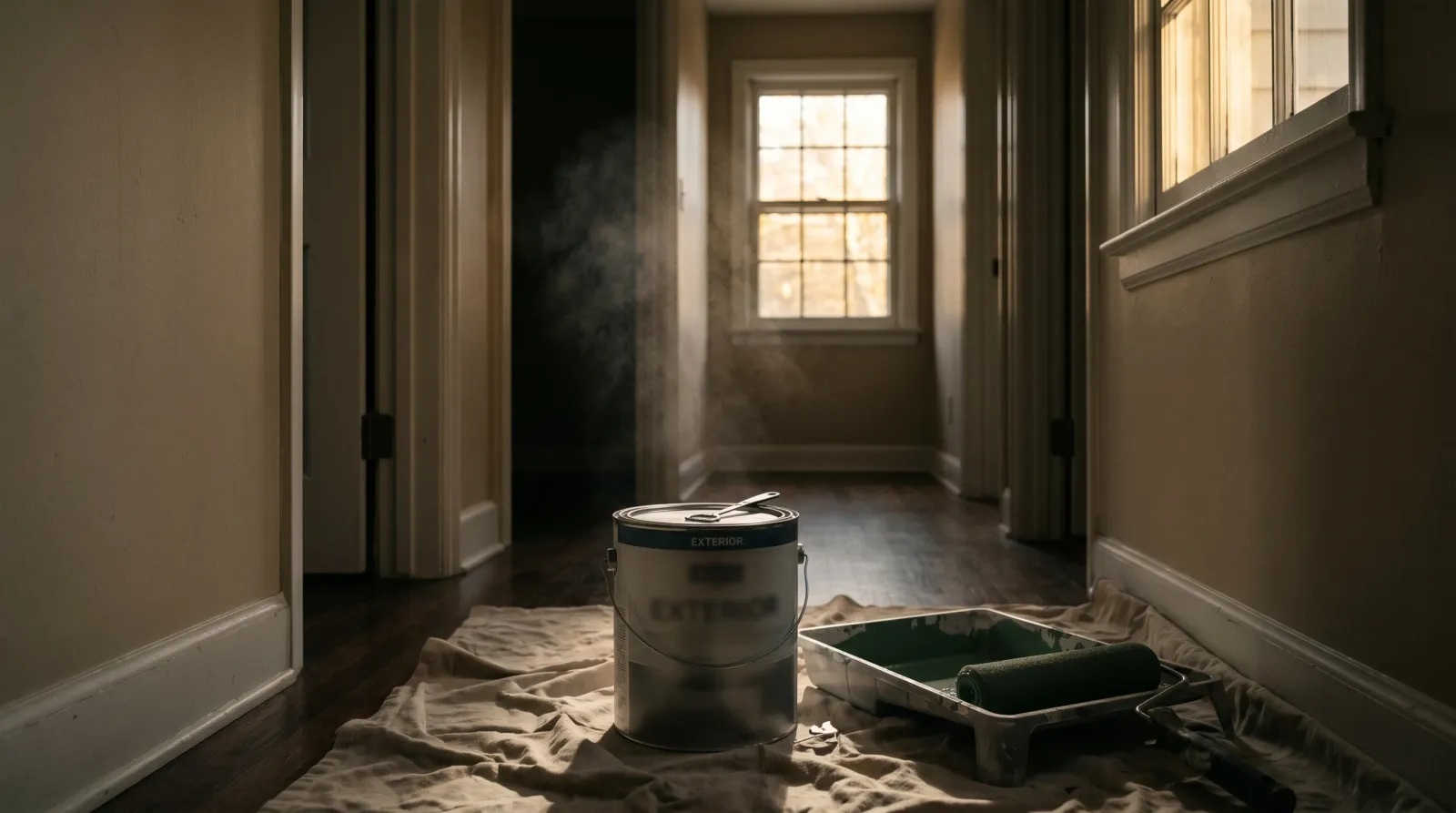
Most people who ask this have a half-gallon of exterior paint left over from doing the siding, and a hallway that needs a coat. The instinct makes sense: it is good paint, it is right there, and it is rated tougher than anything on the interior shelf. The short answer is still no. The longer answer is that exterior paint is engineered for a job your living room does not have, and the same chemistry that makes it survive a winter on your siding makes it a poor neighbor in a closed room. Indoor air exchange runs an order of magnitude lower than outdoors, so anything the film releases stays with you longer.
TL;DR
- Exterior paint is built for UV, rain, and mildew. It carries higher VOCs, mildewcides, and UV stabilizers that keep off-gassing for weeks indoors.
- The film stays softer on purpose. It flexes with siding through temperature swings. Indoors that means a tacky, dust-grabbing, blocking-prone surface.
- A closed room has poor air exchange. The same can that airs out in a day outside can scent a hallway for weeks.
- Use it where it belongs: garages, sheds, porch ceilings, fences. Conditioned interiors get interior paint.
- The fix indoors: a quality interior wall paint in the sheen the room needs, plus a waterborne alkyd enamel for trim and doors.
Why Exterior Paint Is Built Differently
The visible difference is durability. The chemical difference is what that durability costs.
Exterior latex carries a lower pigment volume concentration and a higher, more flexible binder load than interior wall paint. The reason for that is mechanical. Wood siding, fiber cement, and stucco all move with heat and cold, sometimes a noticeable fraction of an inch across a wall over a single day. A brittle film would crack at the first hard freeze. So the resin chemistry is tuned soft and elastic, and the film formation is designed to stay pliable for years rather than harden to a tight, scrubbable shell.
On top of that, exterior paint carries two additives interior paint mostly skips. The first is a UV-stable pigment and stabilizer package, because sunlight breaks down the binder from the surface down. The second, and the one that matters most indoors, is a mildewcide. Outdoor films sit wet for hours at a time and grow mold without a biocide that slowly migrates to the surface and keeps releasing. That release does not stop when you bring the can inside.
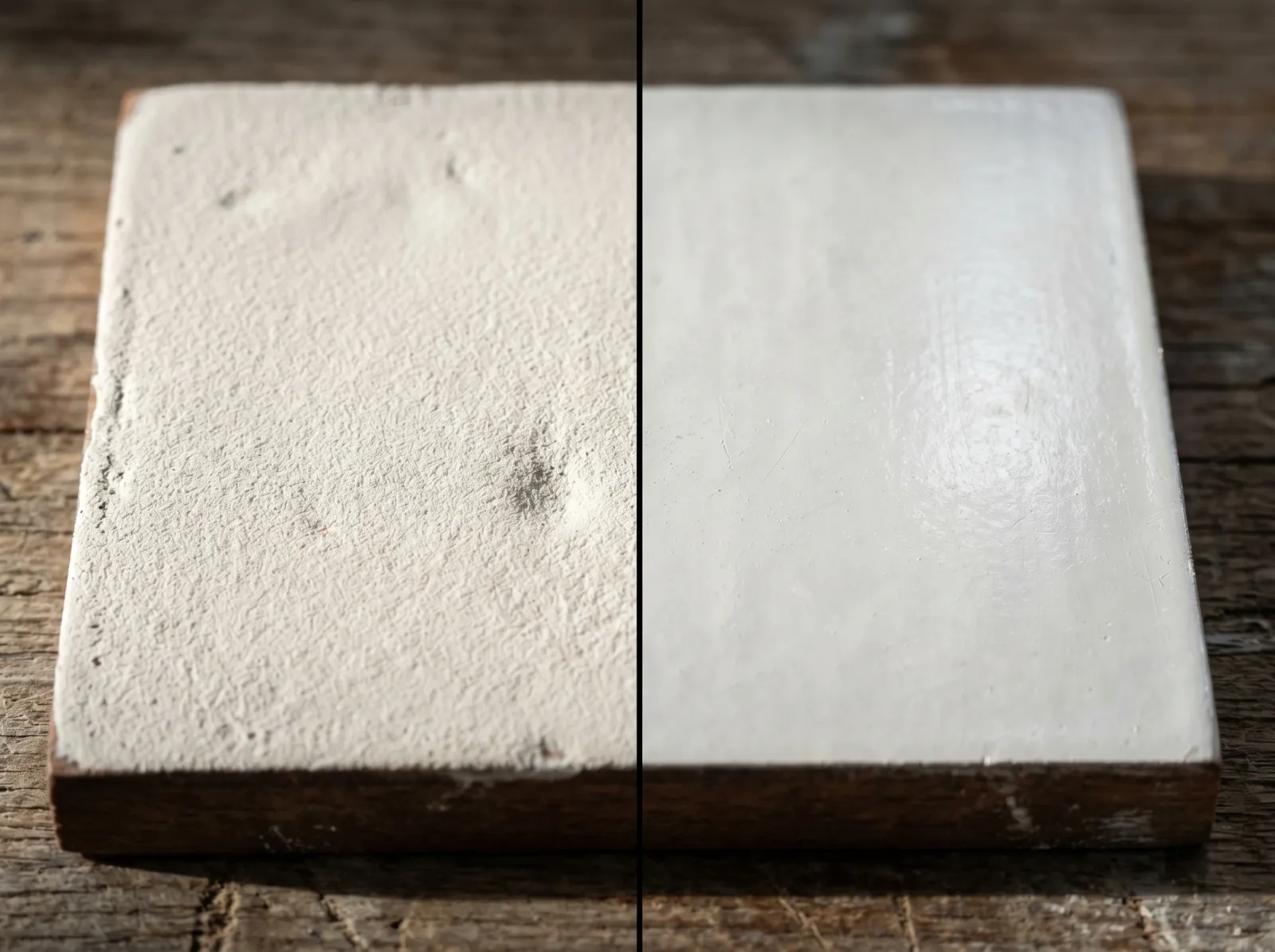 Left, an interior wall film cures to a firm, chalky-matte surface. Right, an exterior film stays slightly rubbery so it can flex with siding, and holds a faint surface haze from its biocide and stabilizer package.
When You Can Use Exterior Paint “Inside”
There are interior-adjacent spaces where exterior paint is the right call, because they share the conditions it was built for.
Use it for:
- Garages and carports. Unconditioned, ventilated, and exposed to damp and temperature swing. Exterior paint or a dedicated masonry coating both work here.
- Detached sheds and workshops. Same logic. You are not sleeping in them, and they breathe.
- Porch and soffit ceilings. Technically overhead and outdoors, and exterior paint shrugs off the humidity.
- Basement masonry that stays damp. A breathable exterior masonry paint tolerates moisture an interior wall paint will blister over.
- Utility rooms with strong ventilation that you occupy briefly. A well-vented mechanical room is closer to outdoor air than to a bedroom.
When NOT to Use Exterior Paint Inside
The line is about two things: how long you breathe the air, and how much that air turns over.
Don’t use it for:
- Bedrooms, nurseries, and any sleeping room. Long occupancy plus low air exchange is the worst case for the biocide and high-boiling solvent release. See what VOCs actually off-gas and when for the dose-response curve.
- Living rooms, kitchens, and dining rooms. Conditioned space you spend hours in daily. The film also stays softer than you want on a wall you lean furniture against.
- Bathrooms. People reach for exterior paint here for the mildewcide. Use a true interior bathroom paint instead, which carries an interior-safe biocide tuned for the exposure.
- Interior trim, doors, and baseboards. The soft exterior film blocks. Two painted surfaces pressed together (a door against its stop, a window sash in its track) bond and tear when you open them.
- Closets and small enclosed rooms. The least ventilation in the house, and you do not want a slow-release biocide concentrating there.
How Exterior Paint Compares to Interior Paint
| Exterior latex | Interior wall paint | Interior trim enamel | |
|---|---|---|---|
| Binder | Soft, flexible, UV-stable | Firmer, scrubbable | Hard, blocking-resistant |
| Biocide | Mildewcide, surface-releasing | Minimal or interior-safe | Minimal |
| VOC profile | Higher, longer off-gas | Lower, GreenGuard options | Low, waterborne alkyd |
| Cure indoors | Stays tacky, blocks | Cures firm | Cures hard |
| Best place | Siding, fences, garages | Walls, ceilings | Doors, trim, cabinets |
For the binder difference in more depth, the oil versus water-based breakdown covers how each film type cures and where each belongs.
Common Mistakes
- Using exterior paint for its mildewcide in a bathroom. The logic is sound, the product is wrong. Buy an interior paint formulated with an interior-safe biocide rather than the surface-leaching kind built for siding. The round-ups in the mold-resistant paint guide name the interior products that actually hold up over a shower.
- Painting a closed room and reoccupying it the next day. Exterior paint releases solvent and biocide for weeks. If you ignore the rule and use it anyway, ventilate hard for far longer than you would with interior paint, and do not sleep in the room early.
- Coating interior doors and trim “for toughness.” You get a softer, slower-curing film that blocks against itself and grabs dust. Hard interior enamel is the tougher choice here, not the exterior can.
- Assuming “self-priming exterior” needs no interior prep. It does not change the chemistry problem, and on bare interior wood you still want a real primer. See what a primer actually does before you skip it.
What to Use Instead
For interior walls, a quality interior latex in the right sheen does everything you actually need: it cures firm, scrubs clean, and off-gasses for days instead of weeks. Benjamin Moore Regal Select, Sherwin-Williams Cashmere, and Behr Premium Plus all sit in this lane. Pick the sheen by room, not by toughness.
For interior trim and doors, reach for a waterborne alkyd enamel. Benjamin Moore Advance and Sherwin-Williams Emerald Urethane Trim Enamel both cure to a hard, non-blocking film that takes daily fingerprints without the softness problem. That is the finish you want on a front door’s interior face or a window stool.
And keep the leftover exterior paint. Seal the can, store it above freezing, and save it for the garage, the fence, or the next coat on the siding it was made for. If you are repainting the outside of the house, the exterior paint round-up covers which lines hold their flex and color longest, and the exterior wood guide covers prep so the film actually adheres.
Where to Buy
For interior wall and trim picks by use case, see the best exterior paint round-up for outdoor work and the interior trim paint round-up for the hard enamel a door needs.
Ask a Question