Gray Paint Undertones: Blue, Green, Violet, and Taupe
Gray paint undertones explained. How to spot blue, green, violet, and taupe under your light, why your gray looks purple, and which undertone fits each room.

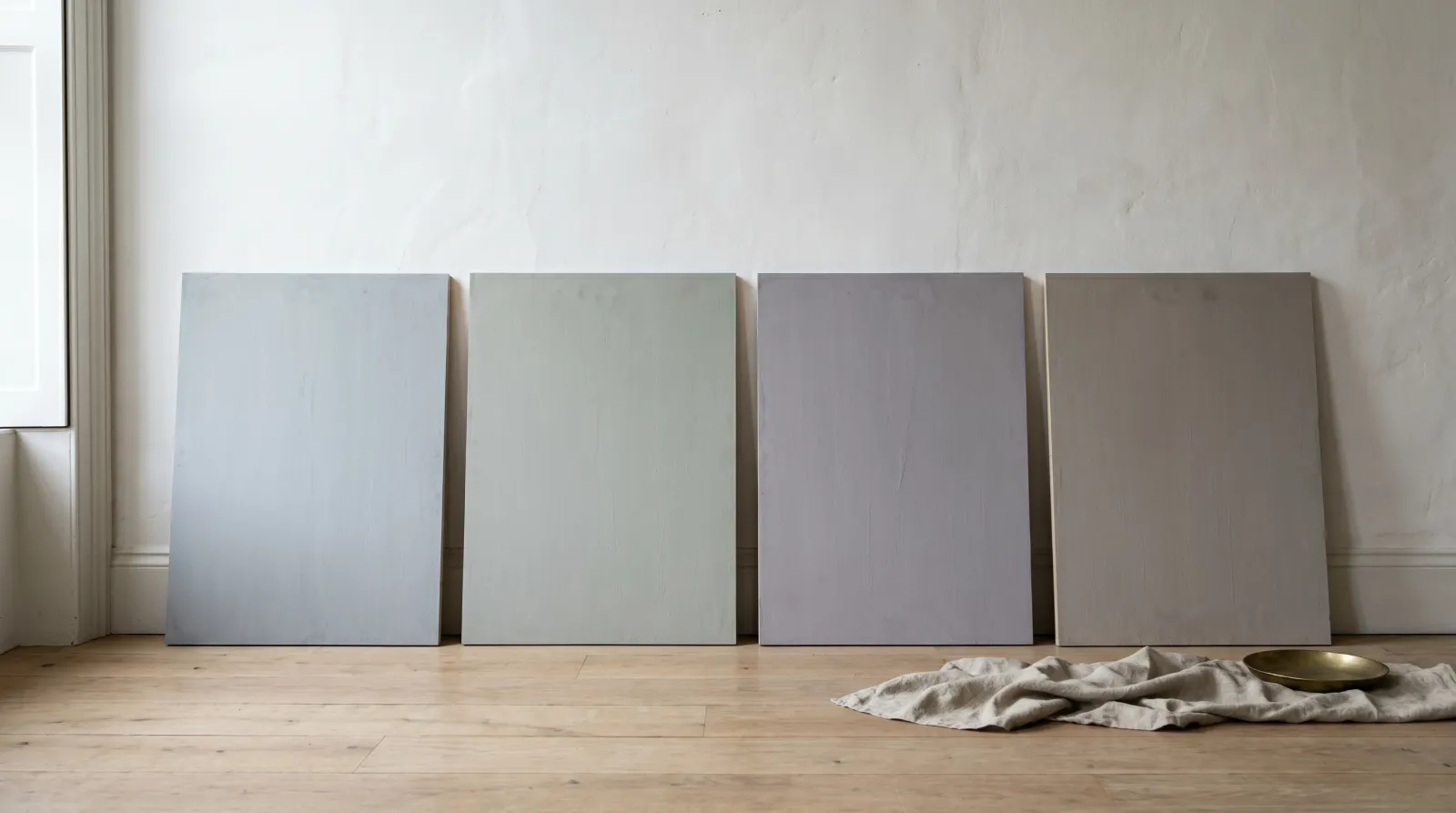
A gray I picked for a north-facing bedroom last winter looked like soft pewter on the chip. Calm, neutral, expensive. On the wall by 8am it read lavender. Not a little — a clear cool violet that the homeowner saw before I did. The paint was exactly what the can said. The light was the problem, and so was the undertone hiding underneath the gray.
Gray is never just gray. Every gray on the shelf is built from colored pigment, and that pigment leaves a quiet lean toward blue, green, violet, or taupe. The undertone is the second color you can’t quite name at the store, the one that shows up once the gray is on a full wall and your room’s light gets hold of it. Most grays sit between LRV 45 and 65, light enough to bounce the undertone right back at you.
Once you learn to read the four undertones, gray stops surprising you.
The Four Gray Undertones
There are dozens of gray formulas, but they sort into four leans you’ll actually feel in a room.
Blue-gray reads cool, crisp, and a little formal. It stays clean in bright light and turns icy in north-facing or LED light. Lovely in a sunny bathroom, risky in a dim study where it can drift toward periwinkle.
Green-gray is the soft, mossy, sage-leaning gray. It feels organic and quiet, sits beautifully against wood and stone, and rarely flashes anything ugly. The most forgiving of the four.
Violet-gray is the trap. It hides a touch of red and blue, so it reads as a pretty neutral on the chip and goes purple in cool, indirect light. This is the source of nearly every “why is my gray purple” panic.
Taupe-gray (greige) leans warm and brown. It’s the cozy one, the whole-house neutral that plays with warm wood floors and cream trim. It reads calm rather than cold, which is why it’s been the default for years.
How to Spot a Gray’s Undertone
Use it for the test, every time:
- Hold the chip flat against a sheet of pure white printer paper. The white strips away the gray and the undertone separates — you’ll see the faint blue, green, violet, or brown.
- Set three gray chips side by side. Against each other, the warm one looks warmer and the cool one looks cooler. Undertones reveal themselves in comparison, not in isolation.
- Paint a 2-foot board with two coats and stand it against your floor and trim, in the room, at the hours you live there. The board is the only honest test.
Don’t trust:
- The chip under store fluorescents. Retail lighting flattens grays and hides the violet lean completely.
- The color name. “Warm gray” on the label tells you what the brand wants you to feel, not what the pigment will do in your light.
When NOT to Trust the Gray You Picked
A gray that’s right in one room can be wrong two doors down. Be careful when:
- The room faces north. North light is cool, soft, and flat, and it pulls every gray toward its coolest reading. Violet-grays go purple here, blue-grays go cold. Lean a half-step warmer than you think you need.
- You use cool LED bulbs (4000K and up). They do the same thing north light does, after dark. A greige that warmed up beautifully by day can turn gray and clinical under cool LEDs at night.
- The gray sits against a strong fixed color you can’t change. A blue-gray next to a warm oak floor will fight the wood; a green-gray will settle into it. Choose the undertone that drapes with the floor, not against it.
- You’re matching gray across an open floor plan. The same can reads differently in the sunny kitchen and the shaded hall. Sample in the darkest spot first.
How the Undertones Compare
| Blue-gray | Green-gray | Violet-gray | Taupe-gray (greige) | |
|---|---|---|---|---|
| Reads as | Cool, crisp | Soft, organic | Pretty, risky | Warm, cozy |
| North light | Goes icy | Stays calm | Goes purple | Stays neutral |
| Best room | Sunny bath, laundry | Living room, bedroom | South-facing only | Whole house, open plan |
| Pairs with | White trim, chrome | Wood, stone, brass | Cool whites, nickel | Warm wood, cream trim |
| Risk level | Medium | Low | High | Low |
For the warm-versus-cool basics underneath all of this, see paint undertones explained. For how light direction changes the reading, the LRV guide covers why the same gray reflects differently room to room.
Why Gray Goes Purple (and How to Stop It)
Violet is the undertone that catches people, so it earns its own paragraph. A neutral gray is built by graying down a color, and many formulas land on a base that carries a little red and a little blue. In warm light those balance into a true gray. Remove the warmth — north window, overcast sky, cool bulb — and the red-blue lean reads as violet. The fix isn’t a different finish or a second coat. It’s a different gray. Step toward a greige with a touch of green or brown, which has no red to flash purple, and the problem disappears.
Common Mistakes
- Choosing gray from the chip alone. A 2-inch square under store light hides the undertone. Sample a board and look at it in your room, morning and lamp-lit.
- Ignoring your trim and floor. A cool blue-gray over a warm wood floor reads off, even when the gray is “right.” Match the undertone to the fixed finishes you’re keeping.
- Painting a north room cool. North light already runs cold. A cool gray on top of it reads cheerless. Push warm in north rooms, cool only where you have strong sun.
- Forgetting the bulbs. You chose the gray by day and live in it by night. Check it under your actual bulbs before you buy the gallons.
- Skipping primer over a strong old color. A dark or saturated wall bleeds through two coats of gray and warps the undertone. A bonding or tinted primer keeps the gray honest.
Where to Buy and What to Look For
Every major brand publishes the LRV per color, and many list the undertone family on the product page. Benjamin Moore, Sherwin-Williams, and Behr all carry deep gray ranges sorted by warmth. Sherwin-Williams Repose Gray and Agreeable Gray are the famous greiges (both can flash violet in poor light, so test them); Benjamin Moore Stonington Gray and Coventry Gray are reliable cooler neutrals. To browse grays grouped by their lean, see our grays and greiges by undertone. For room-specific picks, the living room paint walkthrough covers how undertone choices play out across a whole space.
Pick three grays you like, write the LRV on the front of each chip, and stand them against your floor at the hour the room matters most. The cool one will look cooler, the warm one warmer, and the violet one will finally show its hand. That’s the gray to sample at full size.
Ask a Question