Product review · Krylon · Updated August 7, 2026
Chalky FinishKrylon paint review
8.0/10The easiest way to get the chalk-paint look on a small piece — as long as you seal it afterward.
The soft matte chalk look with no sanding, no brush marks, and a small piece back in the room the same evening. The catch is the can runs out fast and the paint is not finished until you seal it.

Emily Roberts · DIY Editor & First-Timer's Guide · Updated August 7, 2026
Emily painted her first room at 24, hated every minute of it, and got better. She writes the guides she wishes she'd had, which means defining every term and never assuming you know what a topcoat is for. About the testing process →
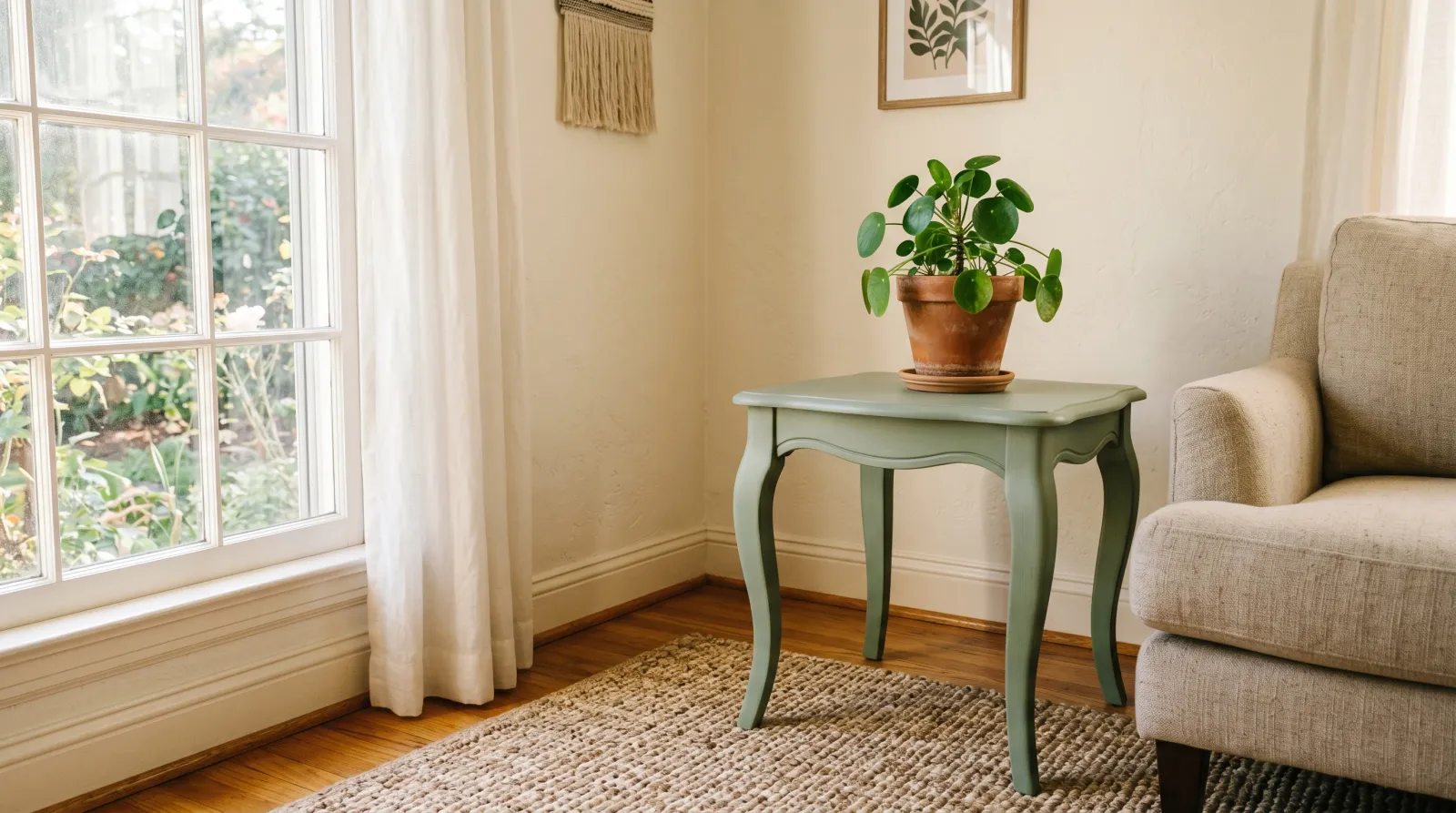
Krylon Chalky Finish1 sheen
Coverage20–25 sq ft per 12-oz can
Dry / RecoatTouch dry about 20 min
VOCSolvent-based aerosol
Sheens Flat matte only
Read this first
The Fast Verdict
Buy it for small pieces. A frame, a stool, a lamp base, a thrifted nightstand — you get the soft matte chalk look with no sanding, no brush marks, and a one-hour turnaround for $8 to $11 a can. It sticks to clean, dull wood, metal, plastic, wicker, and ceramic without a primer, and it gets into wicker weave and spindle legs where a brush fights you. It stops being worth it on a dresser or a dining set, because one can covers only 20 to 25 sq ft, and the bare film stays soft until you seal it.
Best for
Small thrifted furniture · Picture frames and lamp bases · Wicker and spindle legs · Beginners who hate sanding · Same-day décor projects
Skip if
Big dressers or dining sets · Kitchen cabinets · Anything left out in weather · You do not want to buy a separate topcoat · Fume-sensitive indoor spaces
What it's good at
- Skipping the sanding on clean, dull wood, metal, matte plastic, wicker, and ceramic
- Giving a real chalk-paint look — flat, soft, slightly velvety, and it photographs well
- Getting into wicker weave and spindle legs where a brush fights you
- Speed: touch dry in about 20 minutes, handleable in an hour, back in the room that evening
- Touch-ups that vanish, because matte hides a re-spray with no shiny halo
- Leaving no brush marks at all, which is the whole reason first-timers pick a can
What it's not good at
- Covering ground — 20 to 25 sq ft a can, and a dresser can quietly cost $40 in paint
- Standing up to use before you seal it; bare chalk scuffs and shows water rings
- Being a one-purchase job, since the Finishing Wax is a separate can
- Indoor air — it is a solvent aerosol, so you need a door open and no water cleanup
- Overspray control; the drift lands on the floor, the bench, and sometimes the car
- Weather, without an exterior clear coat and a refresh every couple of seasons
- Sheen options, because flat matte is the only one
Same shelf, different cans
Which Krylon Spray Are You Buying?
Krylon's shelf at the hardware store is a wall of similar-looking cans, and it is easy to grab the wrong one. This review covers Chalky Finish Paint only. Here is how it lines up against the cousins so you do not paint a chair with the wrong can.
Chalky Finish Paint
SheensFlat matte (chalky) only — no gloss option
Buy it if
You want the no-sand chalk look on furniture or décor.
Avoid if
You want shine, or a surface that is durable straight out of the can.
Chalky Finish Finishing Wax
SheensClear, stays matte under your hand
Buy it if
You are buying the paint. This is the protective topcoat that makes it wipeable, and it is a separate can.
Avoid if
Nothing — buy it alongside the paint, not instead of it. It is not a color coat.
Fusion All-In-One
SheensGloss and satin
Buy it if
You are painting plastic or resin, or the piece lives outdoors. It bonds hard and has built-in primer.
Avoid if
You want the matte chalk look. Grab this by mistake and you get a shiny chair.
COLORmaxx
SheensGloss and satin
Buy it if
You want a general-purpose spray paint in a shiny finish.
Avoid if
You are after the chalk look. Different product entirely.
Numbers, not adjectives
Spec Sheet
- Coverage
- 20–25 sq ft per 12-oz can
- Sheen
- Flat matte (chalky) only
- Colors
- 12 matte colors, including Classic White, Misty Gray, Slate, Mink, Antique Ivory, Black Peppercorn
- Dry / Recoat
- Touch dry about 20 min · recoat anytime · handle in about 1 hr
- Primer
- Self-priming on clean, dull surfaces; glossy laminate wants a scuff or bonding primer
- Surfaces
- Wood, metal, plastic, laminate, wicker, ceramic, glass
- Sealer
- Krylon Chalky Finish Finishing Wax, sold separately
- VOC
- Solvent-based aerosol; not low-VOC, no GREENGUARD
- Cleanup
- Solvent — drips will not rinse off with water
- Sizes
- 12-oz aerosol can
- Price
- $8–11 per 12-oz can
Application Settings That Work
- Primer
- No primer needed on most clean, dull surfaces — raw or previously painted wood, primed metal, matte plastic, wicker, ceramic. Just wipe the piece down first so you are not spraying over dust or grease. Glossy laminate is the exception: give it a light scuff with sandpaper or lay down a bonding primer, or the chalk paint can peel at the edges later. And remember the other end of the job — the Finishing Wax or a matte water-based poly is a separate can and it is what makes the piece usable.
The Topcoat Reality
Okay, here is the thing about the drying times: they are fast and they are honest, and they still are not the whole picture. Touch dry is about 20 minutes, you can recoat anytime, and the piece is handleable in an hour — so a small nightstand gets two coats in an afternoon and goes back in the room that evening. What nobody tells you is that dry does not mean finished. Chalk paint dries to a porous matte film, and that softness is exactly what makes it look vintage. It is also what makes it fragile. Bare, it scuffs with a fingernail, shows water rings, and picks up dirt off your hands. Krylon's Finishing Wax is the intended partner — you wipe or spray it on, let it haze, and buff it, and you get a wipeable, water-resistant surface that still feels matte. A clear water-based polyurethane in a matte sheen works too and is tougher for a tabletop or a tray. One warning: some clear coats darken or slightly yellow a pale chalk color, so do a test patch on a hidden corner and let it dry before you commit. For a frame or a décor box nobody touches, you can skip sealing and accept that it is delicate. For anything you actually use, sealing is not optional.
Mid-project panic
When It Goes Wrong, and How to Fix It
The paint peels at the edges on a shiny piece
Why it happens. It is self-priming on clean, dull surfaces, but glossy laminate — that shiny IKEA-style finish — gives it nothing to grab. The paint sits on top of the sheen instead of biting into it, and it lifts at corners and edges later.
The fix. Give shiny surfaces a light scuff with sandpaper first, or spray a bonding primer (a primer made to stick to slick surfaces). Wipe the dust off, then paint. On raw or previously painted wood, primed metal, or matte plastic you can skip all of this and go straight to color.
A water ring or a scuff mark on the finished piece
Why it happens. The bare chalk surface is porous and soft. Somebody set a glass on it, or a fingernail caught it, and the mark went right into the film. This is the single most common regret with this paint, and it is not a defect.
The fix. Seal it. Krylon's matching Finishing Wax or a matte water-based poly turns the surface wipeable. Test your topcoat on a hidden spot first, because some clear coats darken the color slightly. If damage is already there, matte hides a re-spray beautifully — mist the spot, let it dry, then seal the whole piece.
Running out of paint halfway through the second coat
Why it happens. One can covers 20 to 25 sq ft, and that assumes a thin, even pass. A dresser, a bookshelf, or a set of dining chairs burns through three or four cans, which people find out with a half-sprayed chair in front of them.
The fix. Buy one more can than you think you need. A small nightstand is about one can for two coats; anything bigger than an end table, count on two to four. If the piece is genuinely large, brush-on chalk paint costs far less per square foot.
A fine matte dust on the garage floor, the workbench, and the car
Why it happens. Spray paint drifts. That is just what an aerosol does, and it is the trade-off for skipping the brush.
The fix. Work outside or in an open garage on a drop cloth, and mask off a wider area than feels necessary. Move the car. This is also a solvent-based aerosol, so the smell is real — open the door, keep kids and pets out of the space, and remember drips will not rinse off with water.
Side by side
Krylon Chalky Finish vs Rust-Oleum Chalked vs Annie Sloan
Three ways to get the chalk look, and the honest answer depends almost entirely on how big your piece is. Here is what you actually trade.
| Krylon Chalky Finish | Rust-Oleum Chalked (brush-on) | Annie Sloan Chalk Paint | |
|---|---|---|---|
| How you apply it | Spray can. No brush marks, no learning curve. | Brush-on from a quart. | Brush-on from a quart. |
| Coverage per dollar | Weakest — 20 to 25 sq ft per $8–11 can. | Strongest — a quart covers far more than a stack of cans. | A quart goes a long way, but you pay a lot for it. |
| Hide in one coat | Thin passes; plan on two coats. | Goes on thicker and hides better than the spray. | Thick and deeply pigmented — one-coat coverage on most pieces. |
| Tricky shapes | Wins outright. Wicker, spindles, and curves are where the can beats a brush. | A brush fights you on weave and spindles. | Same brush problem on fiddly shapes. |
| Color range | 12 matte colors. | More colors and more control than the spray. | A huge color range — the widest of the three. |
| Needs a topcoat | Yes on anything handled — Finishing Wax or a matte poly. | Yes, chalk paint is porous by nature. | Yes, chalk paint is porous by nature. |
| Price | $8–11 per 12-oz can | About $17 per quart | About $40 per quart |
How you apply it
Krylon Chalky FinishSpray can. No brush marks, no learning curve.
Rust-Oleum Chalked (brush-on)Brush-on from a quart.
Annie Sloan Chalk PaintBrush-on from a quart.
Coverage per dollar
Krylon Chalky FinishWeakest — 20 to 25 sq ft per $8–11 can.
Rust-Oleum Chalked (brush-on)Strongest — a quart covers far more than a stack of cans.
Annie Sloan Chalk PaintA quart goes a long way, but you pay a lot for it.
Hide in one coat
Krylon Chalky FinishThin passes; plan on two coats.
Rust-Oleum Chalked (brush-on)Goes on thicker and hides better than the spray.
Annie Sloan Chalk PaintThick and deeply pigmented — one-coat coverage on most pieces.
Tricky shapes
Krylon Chalky FinishWins outright. Wicker, spindles, and curves are where the can beats a brush.
Rust-Oleum Chalked (brush-on)A brush fights you on weave and spindles.
Annie Sloan Chalk PaintSame brush problem on fiddly shapes.
Color range
Krylon Chalky Finish12 matte colors.
Rust-Oleum Chalked (brush-on)More colors and more control than the spray.
Annie Sloan Chalk PaintA huge color range — the widest of the three.
Needs a topcoat
Krylon Chalky FinishYes on anything handled — Finishing Wax or a matte poly.
Rust-Oleum Chalked (brush-on)Yes, chalk paint is porous by nature.
Annie Sloan Chalk PaintYes, chalk paint is porous by nature.
Price
Krylon Chalky Finish$8–11 per 12-oz can
Rust-Oleum Chalked (brush-on)About $17 per quart
Annie Sloan Chalk PaintAbout $40 per quart
Small piece, weird shape, and you have never brushed furniture before? Krylon Chalky Finish, easily — that is what it is for, and the wicker-and-spindle advantage is real. Whole dresser or a dining table? Go brush-on with Rust-Oleum Chalked, because the cans drain too fast and cost too much per square foot at that size. And when the piece really matters and you want the deepest color and the best one-coat hide, Annie Sloan is worth the $40. All three still need sealing, so budget for a topcoat no matter which one you pick.
If not this one
Honest Alternatives
RO
Rust-Oleum Chalked (brush-on)About $17 per quart
Cheaper per square foot by a wide margin. A quart covers far more than a stack of spray cans, so it is the right call for a whole dresser or a table. You trade the speed and the no-brush-marks finish for coverage and your money going further.
Full review →AS
Annie Sloan Chalk PaintAbout $40 per quart
The original boutique chalk paint — thick, deeply pigmented, one-coat coverage on most pieces, and a huge color range. It costs a lot more and you brush it on, but the color depth and hide are a real step up. Choose it when the piece matters and you want it to look custom.
Full review →KF
Krylon Fusion All-In-OneAbout $8 per can
Same spray format, but it bonds hard to plastic and resin, has built-in primer, and holds up outdoors far better than the chalk line. It is glossier, so you lose the matte look. For an outdoor plastic chair or a resin planter, durability beats the vibe.
Full review →Questions people actually ask
Chalky Finish Questions, Answered
Is Krylon Chalky Finish worth it?
On small pieces, yes. A frame, a stool, a lamp base, or a thrifted nightstand gets the soft matte chalk look with no sanding, no brush marks, and a one-hour turnaround for $8 to $11 a can. It stops being worth it on big furniture, because 20 to 25 sq ft per can means a dresser or a dining set can eat $40 in paint, and the bare film stays soft and marks easily until you seal it with the matching Finishing Wax or a matte water-based poly.
Do you have to seal Krylon Chalky Finish?
On a décor piece nobody touches much, no. On anything that gets handled, wiped, or set drinks on, yes. The matte chalk surface is porous and marks easily. Krylon sells a matching Finishing Wax, or you can brush on a clear water-based polyurethane. Test your topcoat on a hidden spot first, because some clear coats darken the color slightly.
How many cans do I need for a piece of furniture?
More than you would guess. One 12-oz can covers about 20 to 25 sq ft, and that is a thin pass. A small nightstand usually takes one can for two light coats. A dresser or a set of dining chairs will eat two to four cans fast. For anything bigger than an end table, buy an extra can so you do not run dry halfway through.
Do I need to sand first?
Usually not. On a clean, dull surface — raw or previously painted wood, primed metal, matte plastic, wicker, ceramic — it grabs without a primer, and a wipe-down is enough prep. Glossy laminate is the exception. A shiny finish wants a light scuff with sandpaper or a bonding primer first, or the paint can peel at the edges later.
Can I use it outdoors?
You can paint outdoor pieces with it and the label allows exterior use, but the matte chalk look is not weatherproof on its own. Rain, sun, and sprinklers will dull and wear it. If a piece lives outside, seal it with an exterior clear coat, and even then expect to refresh it every couple of seasons. For a porch chair, fine. For a deck rail in full sun, pick a real exterior paint.
Is the spray version as good as brush-on chalk paint?
It is faster and leaves no brush marks, which is the whole appeal. Brush-on chalk paint goes on thicker, hides better in one coat, and gives you more colors and control. The spray wins on speed and on tricky shapes like wicker and spindles. The brush wins on coverage, on big flat tops, and on cost per square foot.
What colors does it come in?
Twelve, all matte, with names like Classic White, Misty Gray, Slate, Mink, Antique Ivory, and Black Peppercorn. There is no gloss option and no sheen choice at all. Chalk paint is matte by definition, so that is not really a knock — just something to know before you buy. If you want shine, you are in the wrong product.
Will a clear topcoat change the color?
It can, a little. The Finishing Wax deepens the color a touch, and some clear polyurethanes darken or slightly yellow a pale chalk color. That is why you do a test patch: spray or wipe your topcoat on a hidden corner, let it dry all the way, and look at it in daylight before you commit to the whole piece.
Can I use it on kitchen cabinets?
I would not. Cabinets are a big surface, so the cans drain fast and the cost climbs, and cabinet doors get handled constantly — which is exactly what a soft chalk film is worst at, even sealed. Use it on the small stuff and pick a brush-and-roll furniture or cabinet paint for a kitchen.
Keep exploring
We may earn a commission when you buy through the retailer link above. It never changes the score or the verdict.
Ask a Question