Cure Time vs Dry Time, Explained
Cure time vs dry time, explained in hours and days. Why fresh paint feels dry in an hour but isn't washable for two weeks, and what that means for your project.

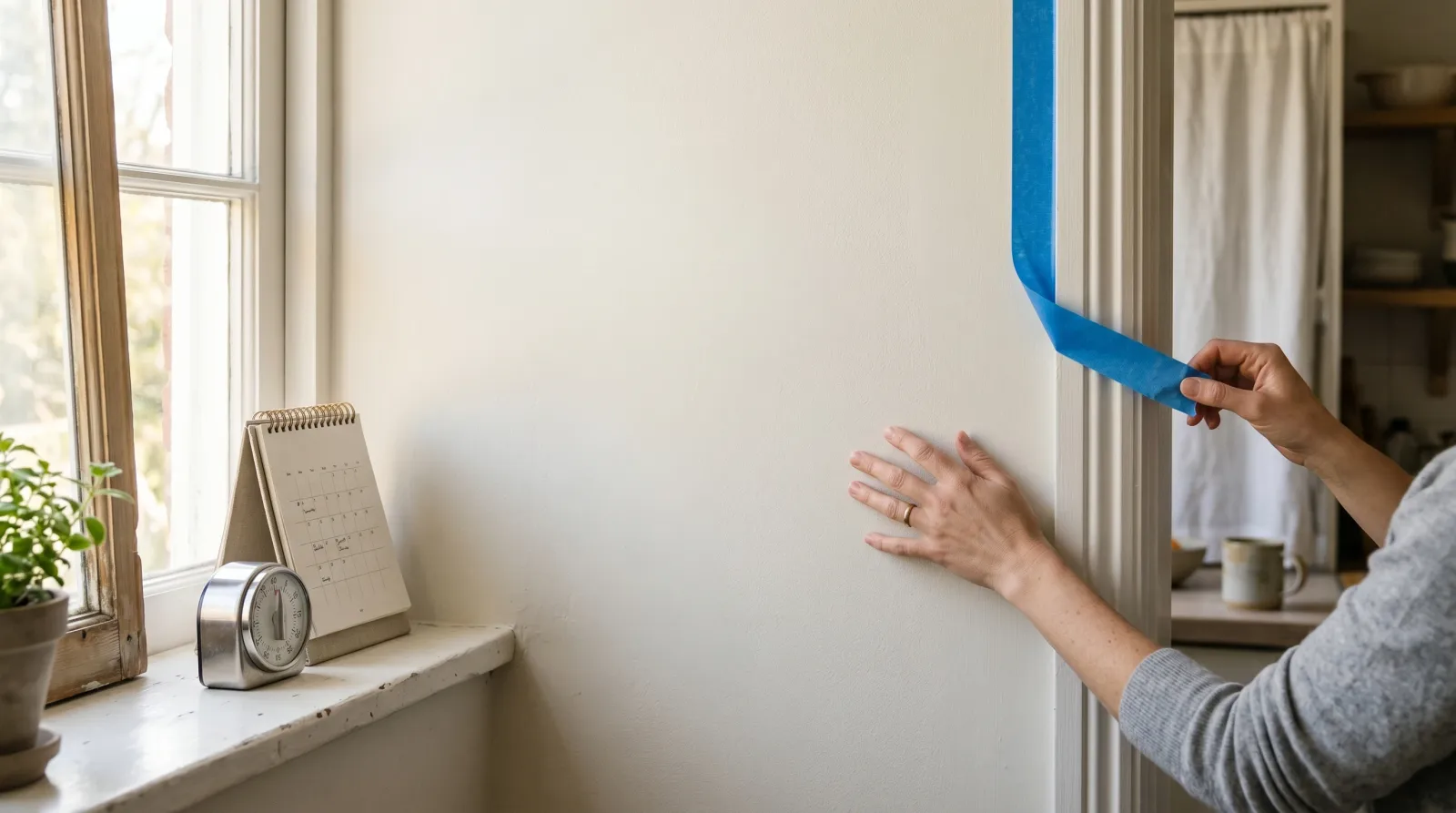
You painted a wall on Saturday, it felt dry by lunch, and on Sunday you leaned a ladder against it and pulled away a shiny dent. Dry and cured are two different things, and the gap between them is where most ruined finishes happen. Dry means the surface no longer transfers to your finger, usually 1 to 2 hours for latex. Cured means the film has reached full hardness and chemical stability, which takes 14 to 30 days for the same paint. The wall was dry. It was nowhere near cured.
TL;DR
- Dry to the touch: 1–2 hours for latex, 6–8 hours for oil-based. The surface stops transferring.
- Recoat: about 4 hours for latex, 16–24 hours for oil-based.
- Cured (full hardness): 14–30 days for latex, 7–30 days for oil-based depending on film thickness.
- Until cured: no scrubbing, no leaning furniture, no taping over the new film, no hanging anything against it.
- Cold and humid air stalls curing. Below 50°F a latex film may never form properly.
What Is the Difference Between Drying and Curing?
Drying is physics. Curing is chemistry. They overlap in time, which is why people conflate them, but they are not the same process.
A latex film forms in two stages. First the water evaporates, and as it leaves, the binder particles (the acrylic resin that holds everything together) get pulled closer and closer until they touch. That is drying. The surface feels dry because there is no more free water at the top to transfer. Then the second stage begins: those touching binder particles slowly fuse into one continuous film, a process called coalescence, and the polymer chains keep ordering and tightening for weeks. That is curing. The reason for that long tail is that the slow, higher-boiling coalescing solvents have to finish leaving the film, and the resin has to finish knitting itself together at a molecular level.
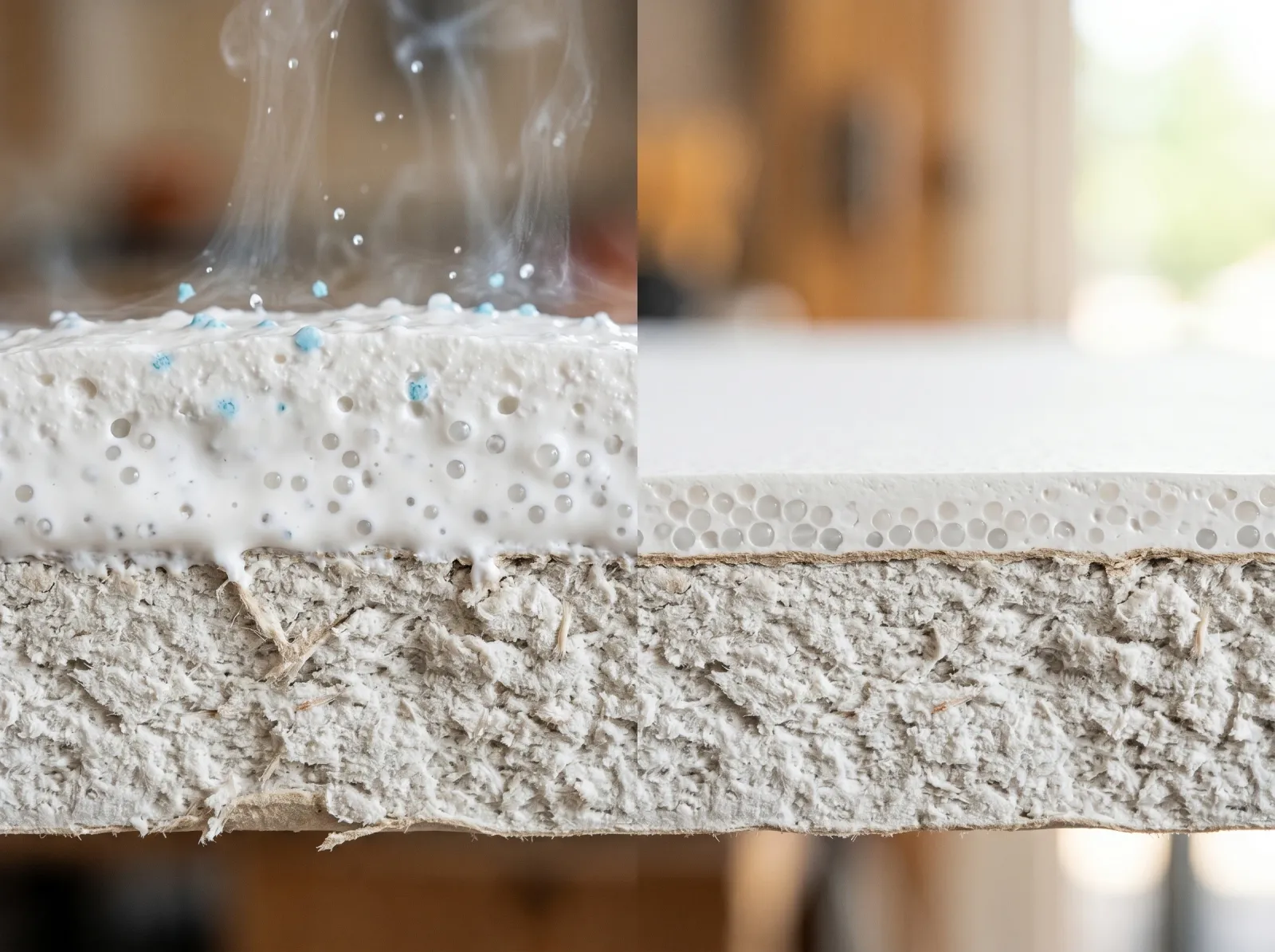 Drying is the water leaving. Curing is the binder finishing the job long after the surface feels dry.
Oil-based paint works differently. It does not dry by evaporation alone. The alkyd binder cures by oxidation, pulling oxygen out of the air and cross-linking the oil molecules into a hard network. That is why an oil-based film keeps getting harder and yellower for months, and why a rag soaked in oil paint can heat up on its own as it oxidizes. For the deeper split between the two chemistries, see oil vs water-based paint.
Typical Dry and Cure Times
These assume 70°F and roughly 50% relative humidity. Cold or damp air stretches every number.
| Stage | Latex / acrylic | Oil-based / alkyd |
|---|---|---|
| Dry to the touch | 1–2 hours | 6–8 hours |
| Recoat | ~4 hours | 16–24 hours |
| Dry enough for light use | 1–3 days | 3–5 days |
| Fully cured | 14–30 days | 7–30 days |
The recoat window matters more than people think. Put the second latex coat on too soon and the solvent from the first coat is still leaving; you trap it, and the film stays soft underneath for far longer than the can promised. Wait past the window on oil-based and the first coat has cured so hard the second one cannot bite into it, so you get poor adhesion between coats.
When Cure Time Actually Matters
You can ignore the cure clock for most of a normal repaint. It bites in specific situations:
- Washing a wall. A kitchen or bathroom wall gets touched and wiped. Scrub it before it cures and you burnish the soft film into a shiny patch. Wait the full two to four weeks.
- Floors and high-traffic surfaces. Garage floors, porch decks, and stair treads need the longest cure. Walking on a coating that feels dry but is not cured tracks footprints into the film. The best garage floor paint round-up covers products built for fast, hard cures.
- Cabinets, doors, and trim. These touch each other and get handled constantly. A cabinet door closed against its frame before the paint cures will stick and tear when you open it.
- Reinstalling hardware or weatherstripping. Hinges, door sweeps, and gaskets pressed against fresh paint will print and bond into it.
- Cold-season exterior work. A film applied on a 55°F afternoon that drops to 38°F overnight may stop curing before it ever forms. The film is at the mercy of the air for the whole cure window, not just the hour you brushed it on.
When You Do Not Need to Wait for a Full Cure
- Recoating. You only need the recoat window (about 4 hours for latex), not a full cure, between coats.
- Light contact. Once a wall is dry to the touch, brushing past it or resting a hand on it briefly is fine.
- An empty room. If nothing touches the wall and nobody cleans it, the cure happens quietly on its own. You just leave it alone.
- Moving back in. You can occupy a room before paint cures. Off-gassing and curing are related but separate; ventilation is the thing to manage there, which the VOC explainer walks through.
What Slows a Cure Down
Three things govern how fast a film forms: temperature, humidity, and how thick you laid it on.
Latex paint has a minimum film-formation temperature, usually around 50°F. Below it, the binder particles are too stiff to coalesce, so the water leaves but the particles never fuse. You get a powdery, weak film that may look fine for a week and then crack or wash off. The can says 50°F for a reason; that is not a comfort recommendation.
Humidity stalls the first stage. Water cannot evaporate into air that is already saturated, so a humid bathroom or a damp basement keeps the film wet at the surface far longer. High humidity plus low temperature is the worst combination, and it is exactly the condition of an unheated house in spring.
Thickness is the one homeowners control and underrate. A coat applied twice as thick does not take twice as long to cure; the skin forms on top, seals the surface, and traps the lower solvent for weeks. Two thin coats cure faster and harder than one heavy one, every time.
Common Mistakes
- Scrubbing a wall too early. The film burnishes into a glossy spot that flashes in raking light and never blends back. Wait two to four weeks before any real cleaning.
- Leaning or stacking against fresh paint. Furniture, ladders, and boxes print into a dry-but-uncured film and leave permanent marks. Keep a few inches of air gap for two weeks.
- Taping over a new coat for a second color. Painter’s tape pressed onto a film that has not cured pulls the paint off when you remove it. Let the first color cure, or use a low-tack tape and pull it within the hour.
- Closing doors and drawers too soon. Painted edges that touch each other bond as they cure. Prop doors open and leave drawers cracked for several days.
- Trusting “dry to the touch” on a floor. A garage or deck coating feels dry hours before it can take traffic. Footprints in a fresh epoxy floor are a cure-time mistake, not a product defect.
How to Speed Things Up Safely
You cannot force a cure, but you can give the chemistry good conditions. Hold the room between 65°F and 75°F. Keep relative humidity under 50% with a dehumidifier if the space is damp. Move air across the surface with a fan, which helps both evaporation and the oxygen supply an oil film needs. And lay the paint on in thin, even coats rather than one heavy pass; thin coats are the single biggest lever you have.
What does not work is heat alone. A space heater aimed at one wall dries the surface fast and traps solvent underneath, which slows the real cure and can wrinkle the film. Warm the whole room evenly instead.
Where to Buy
Cure speed is a formulation choice, so it shows up most in products built for surfaces that need to be back in service quickly. Fast-cure floor coatings, quick-recoat trim enamels, and high-traffic wall paints all advertise it. For surface-specific picks, start with the best garage floor paint for floors and the best interior trim paint for doors and baseboards that get handled.
Ask a Question