Best Spray Shields and Edgers
Five spray shields and paint edgers tested on trim, ceilings, and sprayer cut-ins. Top pick: Warner 36-inch aluminum spray shield for clean lines without tape.

Disclosure: Some links below are affiliate links. We earn a commission if you buy through them, at no extra cost to you.
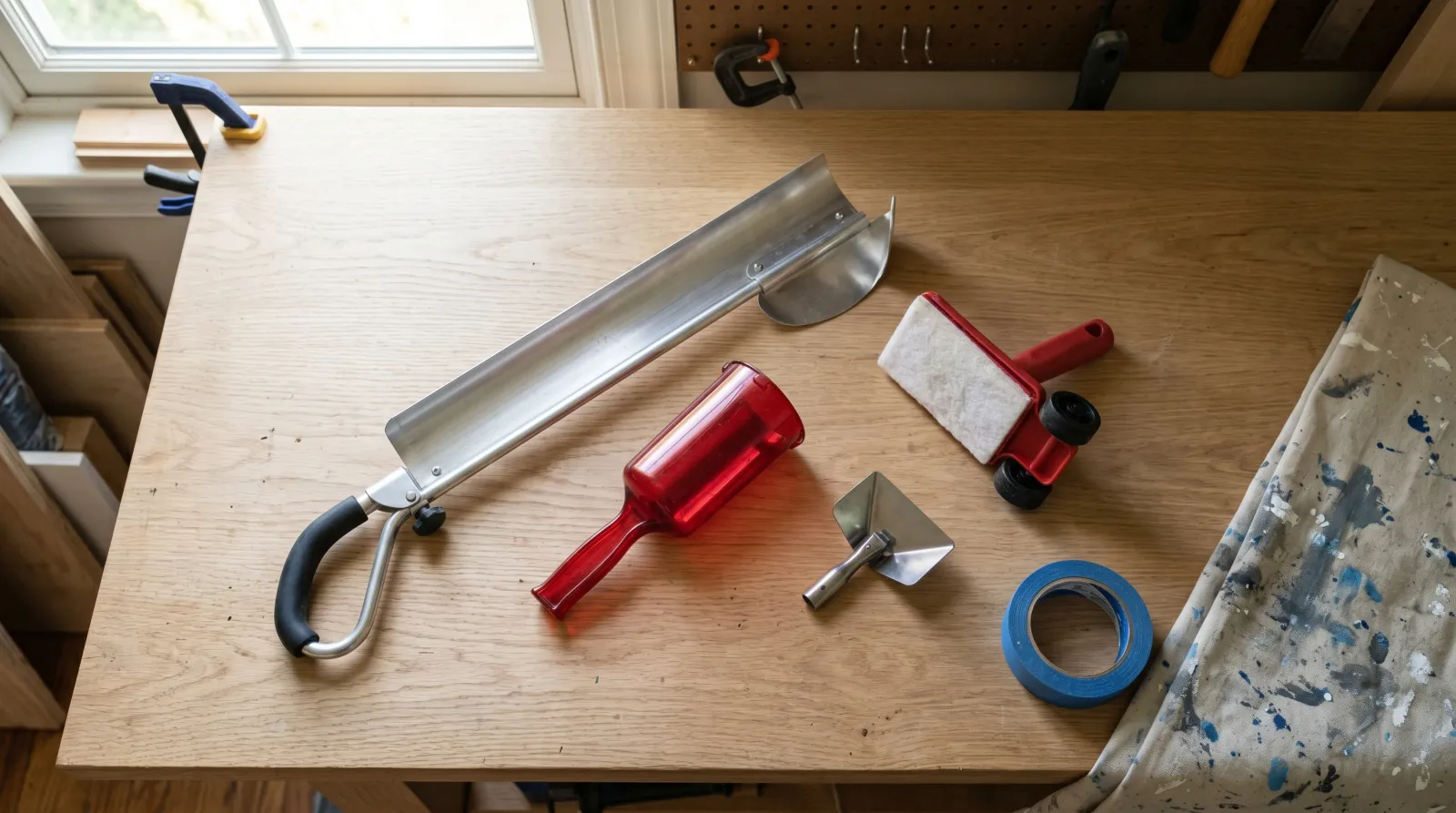
Top pick: the Warner 36-inch aluminum spray shield. It’s the long, rigid blade that keeps overspray and paint off the next surface, and the aluminum stays dead straight under a loaded sprayer where cheaper plastic bows in the middle and lets paint creep under the lip. It wins on edge straightness, durability, and cleanup. It falls short on weight. Your off-hand feels 36 inches of aluminum on a long ceiling session. For solo sprayer cut-ins where you don’t have a second pair of hands, the gun-mounted Wagner SpeedShield is the smarter pick. For tape-free hand cut-ins along trim and ceilings, the Shur-Line Edger Pro rolls a straight line on guide wheels. For long baseboard runs, the Accubrush MX edges 5–8 feet per load. And if you’re shielding a single room on a budget, the Warner plastic shield does the same job for less.
There’s no single right tool here, because shields and edgers do two different jobs.
A shield blocks paint. An edger applies it. Most homeowners doing a full repaint want one of each.
The Shortlist and Why These Five
I bought these off the shelf through the channels a homeowner would actually use, then ran them through three real jobs over four weeks. An interior repaint where I sprayed baseboard, door casing, and ceiling lines with a Wagner airless. A hand cut-in around windows and crown molding in Benjamin Moore Regal Select eggshell. A garage trim job in semi-gloss, the kind of rough, low-stakes work where a tool either saves time or it doesn’t.
The split fell out fast. Two of these are spray shields, flat blades that block paint. Three are edgers or guides that lay the line. I judged the shields on edge straightness and how cleanly they kept overspray off the protected surface. I judged the edgers on whether they actually beat a brush-and-tape cut-in on time without giving up the clean line.
Three axes anchored every pick: edge straightness under load, paint creep at the wet edge, and cleanup time after each gallon. The use case sets the role. A 36-inch shield and a 4-inch pad edger aren’t competitors. They’re teammates.
How the Testing Ran
Same protocol per tool. For the shields, I sprayed a 12-foot baseboard run with the airless at a fixed tip pressure, holding the shield against the floor line, then pulled blue tape off an adjacent control section and compared the two edges under raking LED at 24 hours. Paint creep got checked at the wet edge every few feet. That’s where a bowed blade fails.
For the edgers, I cut in the same window-and-ceiling perimeter with each tool and timed it against a brush-and-tape baseline. Coverage got photographed at 30 minutes and again at 24 hours under raking light, because a pad edger lays a thinner film than a brush and I wanted to see where that mattered.
Cleanup got timed too. A tool that saves ten minutes at the wall and costs ten minutes at the sink is a wash.
Picking a Shield or Edger, in Three Decisions
Shield or Edger: Which Job Are You Doing
Start here, because buying the wrong category is the most common mistake. A spray shield is a flat blade with no paint on it. You hold it against a surface to keep overspray, roller splatter, or brush paint off the surface behind it. It’s a blocker. An edger has a pad or a brush and small guide wheels. It applies paint and walks a straight line at the same time. It’s an applicator.
If you’re spraying and you want to keep paint off the floor, the ceiling, or a window, you want a shield. If you’re hand-painting and you want a clean cut line without taping, you want an edger. A whole-room repaint usually needs both.
Length and Rigidity for a Shield
Match blade length to the run. A 36-inch shield is right for long floor and ceiling lines you sweep along with a sprayer or roller. A shorter shield (or a gun-mounted guide) handles window and door trim where 36 inches is unwieldy.
Rigidity matters more than length. A blade that bows in the middle lets paint wick under the lip and smear onto the surface you were protecting. Aluminum holds its line under a loaded gun. Thin plastic flexes, and the flex is where clean jobs go wrong. For anything beyond a single room, the rigid blade pays for itself the first time it doesn’t let paint creep.
Guide Wheels and Pole-Threading for an Edger
A good edger rides on guide wheels that roll along the trim or ceiling and hold the line for you. The wheels are the whole point. They’re what let you cut in freehand without a wandering edge. Keep them clean. Dried paint on a wheel tracks onto the wall.
Pole-threading is the other spec worth checking. An edger that threads onto a standard extension pole lets you do high ceiling lines from the floor instead of off a ladder. The Shur-Line Edger Pro threads; the handheld Accubrush MX doesn’t. If your ceilings are nine feet or higher, that distinction is the buying decision.
Comparison at a Glance
| Brand / Model | Type | Key spec | Best for | Price tier |
|---|---|---|---|---|
| Warner 36-inch Aluminum Shield | Spray shield | 36-inch rigid aluminum blade | Long sprayer floor and ceiling lines | Mid |
| Wagner SpeedShield | Gun-mounted guide | Threads to 7/8-inch airless guns | Solo sprayer cut-ins, no helper | Mid |
| Shur-Line Edger Pro | Pad edger | Guide wheels, pole-threaded | Tape-free hand cut-ins | Budget |
| Accubrush MX Jumbo Kit | Roller-shield-brush edger | 5–8 ft per paint load | Long baseboard and trim runs | Mid |
| Warner 36-inch Plastic Shield | Spray shield | 36-inch polypropylene blade | One-room budget shielding | Budget |
1. Warner 36-inch Aluminum Spray Shield, Best Overall
This is the shield I reach for first on any sprayer job with a long edge. The 36-inch aluminum blade stays straight under a loaded airless, which is the spec that actually matters. I held it against a baseboard line and swept the gun along the top edge, and when I pulled the tape off the control section next to it, the shielded edge was just as crisp. No creep, no bow, no smear. Aluminum doesn’t flex in the middle the way plastic does, so there’s no gap for paint to wick under.
The pivoting 18-inch handle is a small thing that turns out to matter. It folds flat for storage, and the pivot lets you angle the blade into a corner instead of fighting a fixed handle. Cleanup is the other win. Dried latex wipes off the aluminum face, and the metal shrugs off the mineral spirits that would haze or warp a thin plastic shield over time.
The weight is the trade-off. Thirty-six inches of aluminum loads your off-hand, and on a long ceiling session you’ll feel it before the sprayer arm gives out. The rigid edge can also mar fresh latex if you lean it into a wall that hasn’t cured, so give a fresh first coat its dry time before you shield against it.
| Spec | Value |
|---|---|
| Blade | 36-inch aluminum |
| Handle | 18-inch pivoting polypropylene, folds flat |
| Best for | Long sprayed floor and ceiling lines |
| Cleanup | Wipe the face; clean while wet |
Buy it if: you spray, you want one shield that lasts years, and you have a clean long edge to protect. Skip it if: all you’re doing is hand cut-ins around windows. Get an edger instead.
2. Wagner SpeedShield, Best for Sprayer Cut-Ins
The SpeedShield solves the problem the hand shield can’t: cutting in by yourself. It threads onto any 7/8-inch G-thread airless gun, so the shield travels with the tip. You don’t need a helper holding a blade against the ceiling while you spray. The guard moves with the spray, and you cut in windows, doors, and ceiling lines without masking and without a separate deflector.
On the interior job I ran it around window casing and crown, and the time savings over taping were real. No masking, no peel-up, just spray and move. It spins to follow trim direction, so you keep one steady gun angle through a whole run instead of twisting your wrist to chase the corners.
It only works with an airless gun. This is a sprayer accessory, full stop, and if you don’t own an airless it’s not the tool for you. The edge guard is also short by design, so for long straight floor and ceiling lines a 36-inch hand shield still moves faster. The smart setup is both: the SpeedShield for detail cut-ins, a long hand shield for the straight runs. For the sprayer itself, our paint sprayer round-up covers which airless guns this threads onto.
Buy it if: you spray solo and spend your time cutting in trim, windows, and ceiling lines. Skip it if: you don’t own an airless gun. There’s nothing here for you without one.
3. Shur-Line Edger Pro, Best Edger for Tape-Free Cut-Ins
Different category, different rules. The Edger Pro isn’t a shield. It’s a pad applicator with guide wheels that roll along the ceiling or trim and hold a straight line for you. I cut in a full room perimeter freehand with it and the line stayed clean without a foot of tape. The wheels do the work your hand can’t — they keep the pad a fixed distance off the edge so the line doesn’t wander.
The retractable guide is the detail that makes it usable. It flips up so you can load the pad with paint without smearing the wheels, then drops back down to ride the edge. And it threads onto an extension pole, so the nine-foot ceiling lines I’d normally need a ladder for got done from the floor.
The pad lays a thinner film than a loaded brush. On a mid-tone eggshell that’s fine in one pass; on a deep or hard-to-cover color, plan on a second light pass. Keep the wheels clean, too. Let dried paint build up on a wheel and it tracks onto the wall on the next pass. Wipe them at every refill and the line stays clean. For the broader pad-and-wheel field, our paint edger comparison goes deeper on the category.
Buy it if: you hate taping and want a clean cut line along ceilings and trim. The pole thread is the bonus.
4. Accubrush MX Paint Edger, Best for Long Trim Runs
The Accubrush is its own thing: a roller, a shield, and a brush in one head. The roller holds enough paint to edge 5–8 feet per load, which is the speed story. On a long baseboard run I loaded it once and walked most of a wall before re-dipping, and the built-in shield kept the paint off the floor while the brush laid the line. For straight production cut-in along baseboard, casing, and chair rail, it’s faster than a brush and tape by a wide margin.
The Jumbo Kit ships with spare rollers and brushes, so one purchase covers a whole-house cut-in without running out of pad.
The handheld MX can’t mount on a pole. That’s the limitation. High ceiling lines mean a ladder, where the pole-threaded Shur-Line lets you stay on the floor. And there are more parts to rinse than a simple pad edger. The roller, the brush, and the shield all need cleaning, so budget a few extra minutes at the sink. For the straight long runs, the speed earns those minutes back.
Verdict: the trim-run specialist. Buy it for baseboard and casing, not for ceilings.
5. Warner 36-inch Plastic Spray Shield, Best Budget
The plastic Warner does the same job as the aluminum for less money. Same 36-inch blade, same 18-inch handle, polypropylene instead of metal. For shielding a single room (one floor line, one ceiling line, done) it’s the cheaper answer and it works. It’s lighter than the aluminum, so your off-hand lasts longer on a long spray session, and dried latex peels off the polypropylene face in a sheet instead of needing a scraper.
The flex is the catch. Press the plastic blade too hard against a surface and the middle bows, and the bow is exactly where paint creeps under the lip and smears. You learn to hold it flat with even pressure. The aluminum forgives a heavier hand; the plastic doesn’t. It’s also the wrong tool for solvent-based finishes. Strong solvents can soften the plastic over a few jobs.
Buy it if: you’re shielding one room, you want the cheapest full-length blade, and you’ll keep an even hand on it.
Tools I Tried and Dropped
- Universal 7/8-inch sprayer guide clones. The generic gun-mounted guides fit Wagner and Titan guns and cost less than the SpeedShield. Fit and seal vary between production runs, and a leaky seal at the tip sprays where you don’t want it. The Wagner is the one I’d trust on my own gun.
- Cardboard and scrap shields. Free, and fine for one quick edge. They go soggy the second they get wet and bow worse than the cheapest plastic. Not a real recommendation.
- Foam-edge “paint pad” trim kits. The bargain-bin pad edgers without guide wheels. Without wheels there’s nothing holding your line, so you’re back to freehand with a worse applicator. Skip to the Shur-Line.
- 24-inch shields. Useful in tight spots, but most cut-in runs are long enough that the 36-inch blade is the better default. Buy the long one first.
Care, Cleanup, and How Long They Last
The shields outlast everything else in the kit because there’s nothing to wear out. Clean them and they last years.
Aluminum and plastic shields. Wipe the working edge clean every few feet while you work — dried buildup on the lip is what smears onto your protected surface. At the end of the job, rinse wet latex off with water. Dried latex peels off the plastic face in a sheet; on aluminum it wipes off with a damp rag. Don’t store a shield leaned on its edge where the blade can take a bend; a bent blade lets paint creep forever after. The aluminum Warner should last a decade of normal use. The plastic one lasts until you crack it or a solvent hazes the face.
Pad edgers. Eject the pad and rinse it under warm water until the runoff is clear. The wheels are the part people forget. Wipe dried paint off them or they track onto the next wall. A pad is a consumable; expect to replace it every few rooms once the foam mats down. The frame and wheels last for years.
The Accubrush head. More parts, more rinsing. Pull the roller and brush, rinse both until clear, wipe the shield. The Jumbo Kit’s spare rollers and brushes mean you swap a fresh one in rather than fighting a matted one. Toss a roller once the nap won’t fluff back.
The SpeedShield. Flush it with the gun when you flush the sprayer, then wipe the guard. It’s part of the gun’s cleanup, not a separate chore.
Mistakes I Still See
- Buying a shield when you needed an edger. A flat blade blocks paint; it doesn’t apply it. If you wanted a clean cut line without a brush, you needed the pad edger. Know which job you’re doing before you buy.
- Pressing a plastic shield too hard. The blade bows, paint creeps under the middle, and the edge you were protecting gets smeared. Hold it flat with even pressure, or buy the aluminum that won’t flex.
- Letting paint dry on the working edge. Dried buildup on a shield lip or an edger wheel transfers onto the surface on the next pass. Wipe the edge every few feet.
- Sliding a hand shield off the wet line. Lift it straight off. Slide it and you drag wet paint along the line you just cut. Up, not sideways.
- Expecting one pad pass to cover a deep color. A pad edger lays a thin film. Reds, deep blues, and bright whites over a dark base want two light passes. For the deep-color coverage math, see the coverage and gallons guide.
- Using a plastic shield with solvent finishes. Strong solvents soften polypropylene over a few jobs. Use the aluminum for oil-based and lacquer work.
A Cut-In Kit That Earns Its Keep
For a homeowner doing a full interior repaint: the Warner 36-inch aluminum shield for floor and ceiling lines, the Shur-Line Edger Pro for tape-free hand cut-ins, and a roll of quality tape for the windows and tight corners a blade can’t follow. That covers every edge in a typical house.
For a sprayer owner working solo, swap in the Wagner SpeedShield for the cut-ins and keep the long aluminum shield for the straight runs.
The shields are the cheap, permanent part of the kit. Don’t economize on the blade and then smear the wall you spent two coats getting right. Get the rigid one, keep its edge clean, and it’ll cut a tape-free line on a hundred jobs.
Ask a Question