Best Painter's Gloves
Five painting gloves tested across latex, oil, and solvent cleanup. Top pick: Grease Monkey Disposable Nitrile, the cheap box that fits, grips, and doesn't tear.

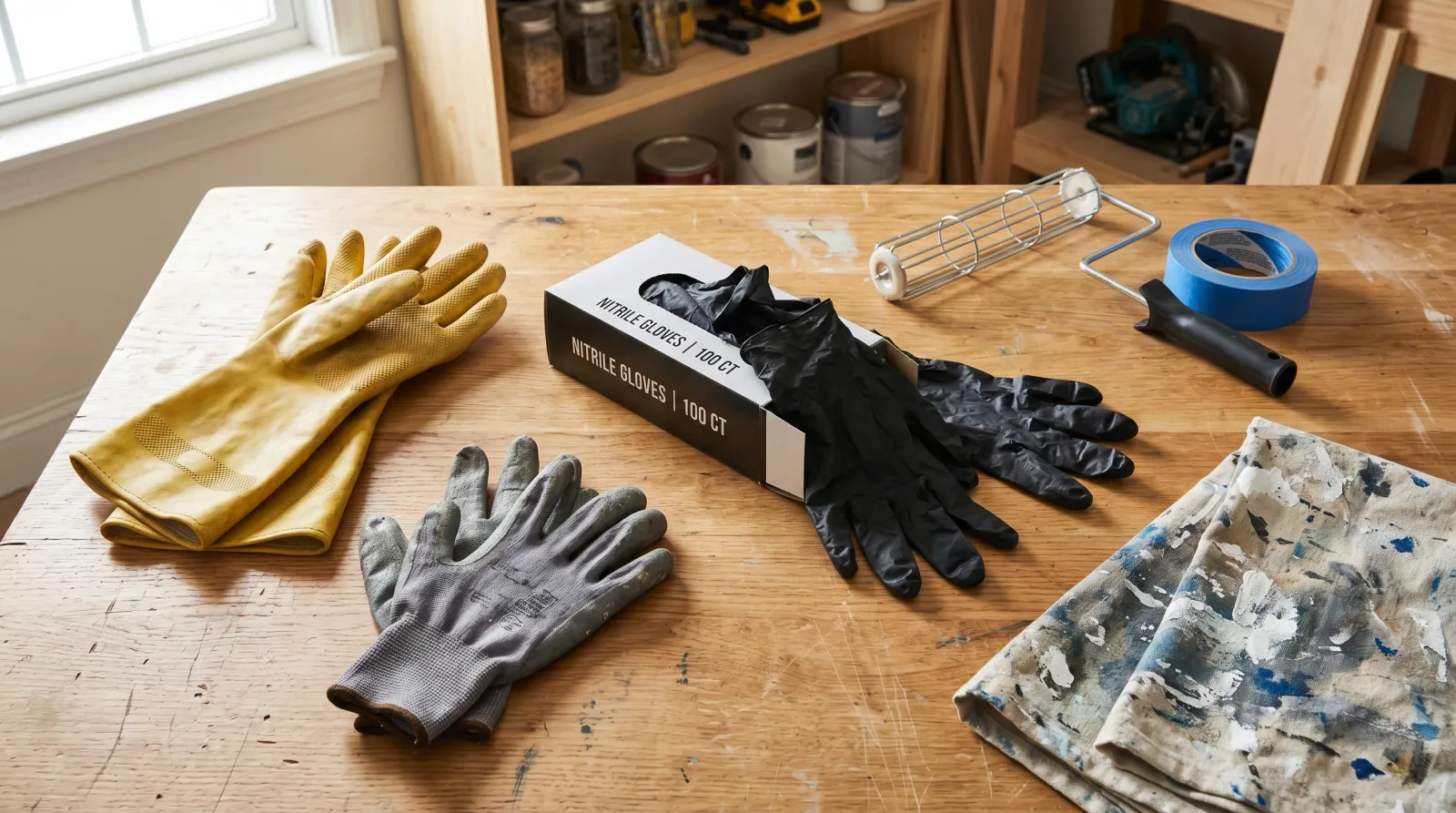
Disclosure: Some links below are affiliate links. We earn a commission if you buy through them, at no extra cost to you.
Top pick: Grease Monkey Disposable Nitrile. A cheap box, sized in real S-XL instead of one-size, that grips a wet roller handle and shrugs off latex and primer. It wins on price, fit, and stocking. It falls short on tear resistance: the standard 4-mil build splits if you grab a scraper edge. For that work, Venom Steel Rip Resistant is the 6-mil glove that takes the abuse. For the best grip on a slick wet handle, Gorilla Grip’s diamond texture is the one. For paint stripper, lacquer thinner, and long oil cleanups, neither thin disposable belongs anywhere near it. Reach for the long-cuff SHOWA 772. For prep, sanding, and hauling, the reusable SHOWA 370B is the glove you wash and keep.
Most people need exactly two things: a box of disposable nitrile and the sense to switch to a real chemical glove when the can says stripper.
Gloves are the cheapest insurance on a paint job. Skip them and you spend the next three days scrubbing eggshell out of your knuckles.
The Shortlist and Why These Five
I bought these the same way a homeowner would: a box off the hardware aisle, a pair off the rack, the kind of thing you grab without thinking. Then I ran them through three real jobs over a month. An interior repaint in Benjamin Moore Regal Select eggshell. A twelve-door cabinet refinish in waterborne enamel. An exterior stain pass on a cedar fence that ate gloves for breakfast.
Painting gloves split into two camps, and the mistake people make is buying one camp for both jobs.
Disposables are the everyday answer. Nitrile, single-use, cheap by the box. You wear them for the paint, peel them off, toss them. Three of my five picks live here.
Reusables are for the jobs disposables can’t survive: solvents, strippers, and the rough prep work that shreds a thin glove. Long-cuff chemical gauntlets and nitrile-coated work gloves. The other two picks.
I judged them on four things, weighted in this order: does the material survive the chemical I’m putting on it, does it survive the physical abuse of the job, does it grip a wet handle, and how long does one glove last before it fails. Fit is the tiebreaker. A glove that bunches at the fingertips makes you clumsy, and a clumsy hand near wet trim is how you smear a cut line.
How the Testing Actually Ran
Same protocol per glove, per job. For the interior repaint, I wore one glove through a full wall (cut-in, roll, second coat) and checked for pinholes by filling it with water afterward. For the cabinet job, I tracked how the glove handled the constant pickup of small hardware and a loaded mini-roller. For the exterior stain, I went looking for the failure point: I grabbed rough cedar, dragged a hand along a splintered rail, and held a scraper, counting how long until the glove tore.
Solvent survival got its own bench test. I soaked a fingertip of each disposable in mineral spirits for ten minutes and watched for the nitrile going tacky, swelling, or thinning. The 4-mil gloves held up to brief contact and started feeling soft past five minutes. That’s the line: nitrile is fine for the splash of solvent you get cleaning a brush, not for a glove you keep dunking.
I also checked grip the cheap way. A roller frame, rinsed wet, picked up and set down twenty times per glove. The ones that slid got marked down hard.
How to Choose a Painting Glove
Material: Nitrile, Not Vinyl or Latex
Nitrile is the answer for paint. It resists the solvents in oil-based paint and the chemistry in waterborne paint without swelling, and it doesn’t trigger the latex allergy that a meaningful share of people carry. Vinyl gloves are cheaper and they’re false economy. They swell, split, and react with thinner. Latex gloves degrade in solvent within minutes.
The only time another material wins is heavy stripper. Some paint strippers eat nitrile and need butyl or neoprene gloves. Read the stripper label. For everything short of that, nitrile.
Thickness: Mil Is the Dexterity Trade-off
Glove thickness is measured in mil. Thin gloves let you feel the brush; thick gloves take the abuse.
4 mil is the everyday paint glove. Thin enough to feel a brush handle and pick up a screw, thick enough to last a wall. The Grease Monkey and Gorilla Grip both live here.
6 to 8 mil is for the rough stuff: scrapers, wire brushes, splintered trim, rough siding. The Venom Steel is a two-ply 6 mil, which is why it survives a cedar fence that shreds a 4-mil glove in an hour.
Past 8 mil you’re into industrial gauntlets, and only solvent and stripper work needs that much glove.
Fit and Grip: The Part People Skip
A glove that bunches at the fingertips makes you clumsy. A glove that slides on a wet handle is worse than a bare hand. Buy your real size, not the bargain one-size box, and favor a textured surface over a smooth one. Smooth nitrile on a rinsed roller frame slips; raised texture grips. This is the whole reason the Gorilla Grip earns a slot over a generic box.
At-A-Glance Comparison
| Brand / Model | Type | Thickness | Best paint type | Best for | Price tier |
|---|---|---|---|---|---|
| Grease Monkey Disposable Nitrile | Disposable | 4 mil | Latex, acrylic, primer | Everyday paint days | $ |
| Venom Steel Rip Resistant | Disposable | 6 mil, 2-ply | Latex, oil, stain | Scraping, rough prep | $$ |
| Gorilla Grip Disposable Nitrile | Disposable | 4 mil textured | Latex, acrylic, primer | Grip on wet handles | $ |
| SHOWA 772 | Reusable gauntlet | 26-inch coated | Strippers, solvents, oil | Stripper and solvent jobs | $$ |
| SHOWA 370B | Reusable coated | Nitrile-coated knit | Prep, dry handling | Sanding, scraping, hauling | $ |
1. Grease Monkey Disposable Nitrile, Best Overall
The Grease Monkey box is the one you reach for without thinking. Standard 4-mil nitrile, sized in actual small-through-extra-large instead of the floppy one-size box, sold in every hardware aisle for the price of a sandwich. On the interior eggshell job, one glove took a full wall (cut-in, roll, and a second coat) and passed the water-fill test afterward with no pinholes. The textured fingertips held a rinsed roller frame and twisted a paint can lid off without slipping.
Nitrile is the reason this works. Latex paint, acrylic, primer, the splash of mineral spirits when you wipe a brush: none of it swells or splits the glove the way it would a vinyl one. For the everyday paint day, this is the floor and the ceiling. You don’t need more glove than this.
Two real cons. The standard 4-mil build is not armor. Grab a scraper edge or drag your hand along rough siding and it tears, which is exactly why the Venom Steel exists. And the black color hides a leak. A pinhole you can’t see means paint on your hand before you notice, so I fill-test a glove after the messy jobs.
| Spec | Value |
|---|---|
| Material | 4-mil disposable nitrile, ambidextrous |
| Sizing | S, M, L, XL (real glove sizes) |
| Best for | Latex, acrylic, primer, everyday paint |
| Reusable | Single-use |
Buy it if: you want the cheap box that fits, grips, and survives a normal paint day. Skip it if: the job is rough prep with tools that bite. Step up to the Venom Steel.
2. Venom Steel Rip Resistant Industrial Nitrile, Best for Heavy Work
The cedar fence is where every thin glove in my kit died, and the Venom Steel is the one that didn’t. It’s a two-ply 6-mil nitrile, about 70% thicker than a standard disposable, and that extra material is the whole point. I dragged a gloved hand along a splintered rail, gripped a scraper through a full afternoon of prep, and held rough cedar without a tear. A 4-mil glove gives up inside an hour on that work.
The thickness buys you more than tear resistance. It survives a longer solvent contact before going tacky, so it’s the disposable I’d reach for on an oil-based door or a stain cleanup where my hand keeps touching thinner. Fully textured, top and bottom, which grips a putty knife and a loaded brush.
The trade is feel. You lose fingertip sensitivity on fine cut-in and small hardware, and it runs about three times the per-glove cost of a basic box. That’s the right call when the job is tools, not the wrong call on a normal wall.
| Spec | Value |
|---|---|
| Material | 2-layer 6-mil disposable nitrile |
| Length | 9.5-inch cuff |
| Best for | Scraping, rough prep, oil and stain cleanup |
| Reusable | Single-use, but survives a careful second session |
Buy it if: you scrape, sand, or handle anything with an edge, or you’re doing oil-based cleanup.
3. Gorilla Grip Disposable Nitrile, Best Grip
Same 4-mil disposable category as the Grease Monkey, with one thing it does better: it holds onto a wet handle. The raised diamond texture is the most aggressive grip of any glove I tested, and on a rinsed roller frame picked up twenty times, it didn’t slide once. A loaded brush, a sprayer trigger, a slick can lid: the texture earns its keep on every one.
The snug fit is the other reason it’s here. Less bunching at the fingertips means you can pick up a screw or thumb a piece of cabinet hardware without fumbling. They’re touchscreen-friendly too, so you can pull up the coverage math without peeling a glove off, which sounds like a gimmick until you’re three coats deep and don’t want bare hands near wet trim.
It’s still a 4-mil glove. Grippy, not armored. It tears on rough edges the same as the Grease Monkey, so this isn’t your scraping glove. And the snug fit runs small. If you’re between sizes, go up.
Buy it if: you keep losing your grip on wet roller frames and sprayer triggers. The texture fixes it.
4. SHOWA 772, Best for Solvents and Strippers
The moment the can says paint stripper or lacquer thinner, every disposable in this article becomes a bad idea. Thin nitrile soaks through fast, and the failure is silent. The glove looks fine while the chemical reaches your skin. The SHOWA 772 is the answer: a fully-coated nitrile gauntlet with a 26-inch sleeve that keeps stripper and solvent off your forearm, not just your palm.
The cotton liner is what makes it wearable. Bare-rubber chemical gloves turn into a sweat bath in ten minutes; the liner lets you work an hour without your hand swimming. It’s reusable and washable, so one pair outlasts a whole case of disposables on a stripping job. I keep a pair hung in the shop for exactly this work.
It is far too much glove for a normal latex repaint. The sleeve gets in your way and the thick nitrile kills any fine dexterity. This isn’t a paint glove. It’s a chemical glove, and it’s the right one for the chemical jobs. Check your stripper’s label first. A few aggressive strippers need butyl over nitrile.
| Spec | Value |
|---|---|
| Material | Double-coated nitrile, cotton liner |
| Length | 26-inch gauntlet |
| Best for | Strippers, solvents, oil-based, harsh cleanup |
| Reusable | Yes, rinse and air-dry |
Buy it if: you strip furniture, refinish doors with oil, or do any real solvent work. One pair, kept for years.
5. SHOWA 370B, Best Reusable
Not every glove on a paint job touches paint. Prep is half the work (sanding, scraping, hauling ladders and poles, moving furniture) and burning a disposable on it is waste. The SHOWA 370B is the reusable for that: a nitrile-coated knit glove with a breathable back, dark enough that it doesn’t look trashed after one dusty afternoon.
The nitrile palm grips a ladder rung, an extension pole, and a sanding block with real confidence, while the knit back lets your hand breathe through a long prep session. It’s washable, so it lives in the kit and gets used job after job. For the dry, abrasive half of painting, this is the glove.
Know its limit. The coating is palm-only. Grab a dripping roller and the knit back wets right through, and it’s not a solvent glove. Thinner and stripper soak straight in. Keep it on prep and handling, hand the wet-paint work to the disposables.
Verdict: the reusable you wash and keep for everything around the paint, not the paint itself.
Gloves I Tried and Dropped
- Cheap vinyl boxes. Swell and split on solvent, react with oil paint. False economy. Skip.
- Latex exam gloves. Fine for a thirty-second water-based touch-up, useless for a real paint day, and a latex-allergy risk. Buy nitrile.
- One-size-fits-all disposable boxes. They fit nobody. The floppy fingertips make you clumsy near wet trim. Spend the same money on a sized box.
- Thin 3-mil “economy” nitrile. Tears looking at it. The few cents you save vanish the first time one fails mid-wall.
- Knit cotton work gloves with no coating. Soak up paint and stay wet. Useless once anything liquid touches them.
Care, Cleanup, and How Long They Last
Disposables are disposable, but you can stretch the better ones. A 6-mil Venom Steel survives a careful second short session if you peel it off inside-out before the latex dries inside. A 4-mil glove usually tears coming off, so plan to toss it. Never reuse any glove that touched solvent, stripper, or oil. The nitrile degrades from the inside, and the next leak puts the chemical straight on your skin.
The reusables earn their keep on cleanup. Rinse the SHOWA 772 under running water after a stripping job, hang it to dry, and it’s ready for the next one; one pair lasts years. The 370B goes in the wash with shop rags. Don’t put either away wet. Trapped moisture in a coated glove breeds the smell that makes you throw it out early.
Realistic life across jobs: a 4-mil disposable lasts one wall to one room before a leak or tear. The Venom Steel gives you an afternoon of rough prep per glove. The 772 and 370B last years if you wash them and hang them dry.
Mistakes I Still See
- Vinyl gloves for an oil-based job. They swell, split, and react. Nitrile or nothing on solvent work.
- A 4-mil disposable for scraping and wire-brushing. It shreds in the first hour. Step up to a 6-mil for anything with an edge.
- Smooth gloves on a wet roller handle. Slick nitrile on a rinsed frame is worse than bare skin. Buy textured.
- One-size boxes. Floppy fingertips make you clumsy near a wet cut line. Buy your size.
- Reusing a solvent-soaked glove. The nitrile’s already breaking down inside. The next leak is on your skin. Toss it.
- No gloves at all on “just a quick touch-up.” Quick touch-ups are how you spend three days scrubbing paint out of your knuckles. The glove costs pennies.
A Glove Kit That Covers the Whole Job
For a homeowner who paints a few weekends a year: one box of Grease Monkey or Gorilla Grip 4-mil nitrile in your size (about $10-15), a handful of Venom Steel 6-mil for prep day (a few dollars), and one pair of SHOWA 772 gauntlets ($15-25) hung in the garage for the day you strip a piece of furniture. Add the 370B if you do a lot of sanding and hauling.
That’s under $40 and it covers paint, prep, and the solvent jobs that actually hurt you.
The gloves are the cheap part. Don’t paint bare-handed and don’t reach for the wrong glove when the can says stripper.
FAQ
What kind of gloves should I wear for painting? Disposable nitrile for almost everything. It resists latex, acrylic, primer, and short solvent contact without swelling. Grab a 4-mil box for normal work, a 6-mil for scraping and rough prep, and a long-cuff chemical glove for stripper and thinner.
Are nitrile or latex gloves better for painting? Nitrile. Latex reacts with solvents and oil paint, swells, and tears within minutes, plus the allergy risk. Nitrile shrugs off paint chemistry and grips wet handles. Latex is only worth it for a quick water-based touch-up.
How thick should painting gloves be? 4 mil for brush and roller work, 6 to 8 mil when you handle scrapers, wire brushes, or rough siding. Mil trades dexterity for durability. Most people want a 4-mil box for paint and a few 6-mil gloves for prep.
What gloves protect against paint stripper? Not disposables. Use a fully-coated long-cuff glove like the SHOWA 772, and read the stripper label. Some aggressive strippers need butyl, not nitrile.
Ask a Question