How Long Paint Lasts in the Can (Shelf Life)
Paint shelf life, explained: latex lasts 2 to 10 years sealed, oil-based up to 15. How to tell if a can has gone bad, and when to throw it out.

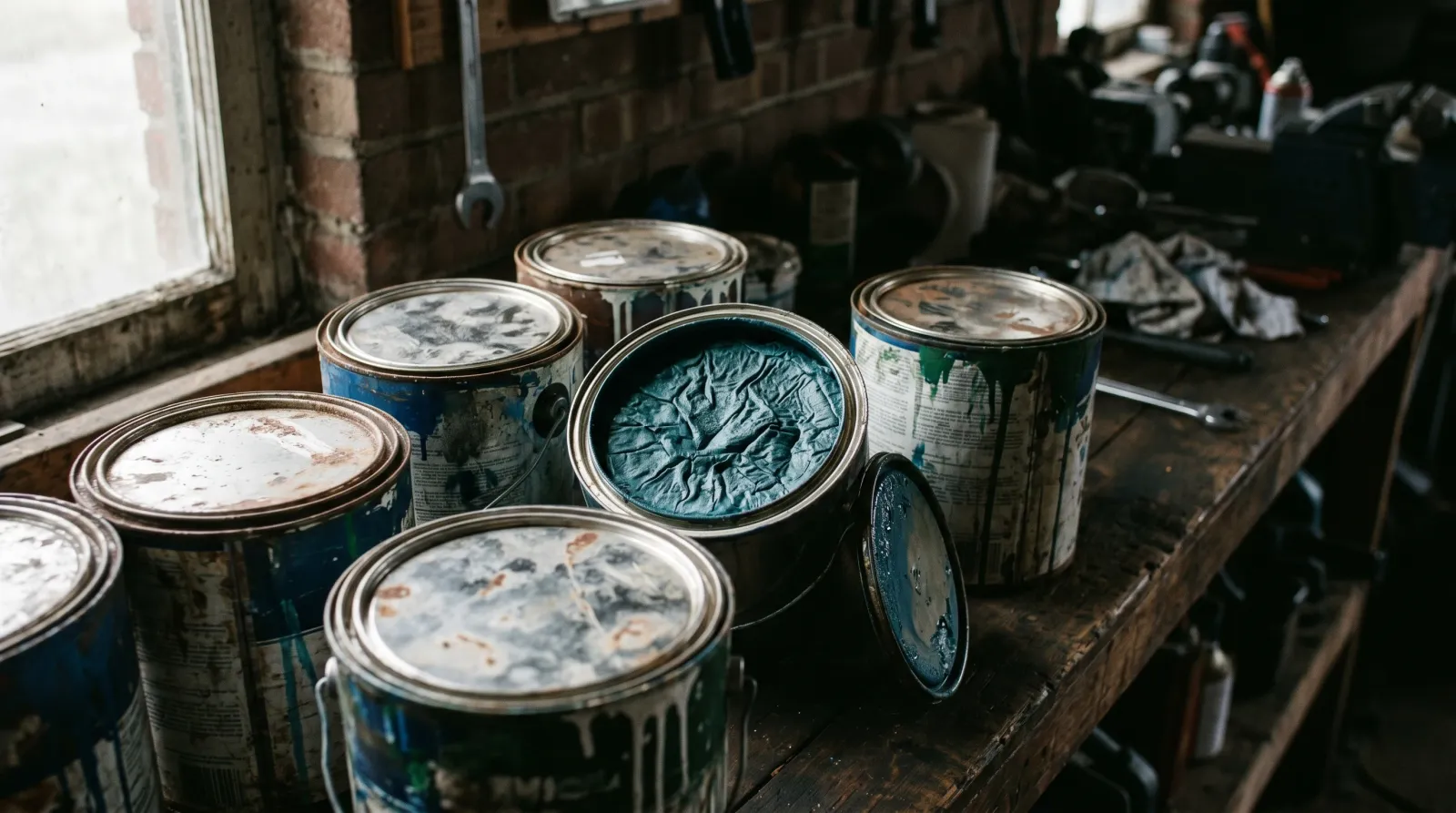
Most people have done this: you pull a half-used gallon off the garage shelf, pry the lid, and find a leathery skin floating on top with clear-ish liquid underneath. The question is always the same. Is this still paint, or is it trash that happens to be the right color? Unopened, factory-sealed latex paint holds for 2 to 10 years. Oil-based and alkyd paints go up to 15. Once the seal is broken, latex drops to roughly 2 to 5 years, because the can was engineered to keep one specific thing out, and you just let it in.
That one thing is air. Latex paint is an emulsion: solid binder particles and pigment suspended in water, held apart by surfactants so they stay liquid in the can and only fuse into a film after you spread them thin and the water leaves. Air does two things to that system. Oxygen slowly starts the cross-linking reaction early, and evaporation pulls water out, concentrating the solids until they begin to coalesce against their will. The skin on top is exactly that, a small sheet of paint that cured in the can.
TL;DR
- Unopened latex: 2 to 10 years at room temperature. Oil-based/alkyd: up to 15 years.
- Opened latex: roughly 2 to 5 years if resealed well. Opened chalk/milk paint: 1 to 3 years.
- The kill switches: freezing (breaks the latex emulsion), a loose lid (air dries and skins it), and a sour smell (bacteria ate the water phase).
- The test: stir for five minutes. If it returns to a smooth, lump-free liquid and smells like paint, it is fine. Strain it and use it.
- Throw it out if: it smells rancid, stays gritty or rubbery after stirring, or has set into a solid block.
How Long Each Type Lasts
Shelf life tracks the chemistry of what holds the paint together. Water-based formulas depend on a fragile emulsion; solvent-based ones don’t, so they age slower in the can.
| Paint type | Unopened, sealed | Opened, resealed well |
|---|---|---|
| Latex / acrylic (water-based) | 2–10 years | 2–5 years |
| Oil-based / alkyd | up to 15 years | 2–5 years |
| Chalk paint | 1–5 years | 1–3 years |
| Milk paint (powder) | 1+ year dry; mix as needed | use within days once mixed |
| Primer (water-based) | 1–3 years | under 1 year |
Primer is the short-lived one most people don’t expect. The reason for that is the higher pigment volume concentration and the resins primers use for adhesion, which destabilize faster than a finish coat’s binder. An old can of primer that still looks fine can lay down a chalky, poorly-bonding base. If you’re priming bare drywall or doing real prep, buy fresh. The primer explainer covers why that base layer carries the whole system.
How to Tell If Paint Has Gone Bad
You can diagnose a can in about five minutes with your nose and a stir stick. Run the checks in this order.
Smell it first. Fresh latex smells faintly of ammonia and not much else. A sour, rancid, or rotten-eggs note means bacteria have colonized the water phase and eaten the thickeners. That paint is done. No amount of stirring brings back a film that smells like spoiled milk on the wall for three weeks.
Then stir. A skin on top is normal and not a death sentence. Peel it off in one piece, discard it, and stir the rest hard for five full minutes. Good paint reincorporates into a smooth, uniform liquid. Bad paint stays lumpy, stringy, or grainy no matter how long you work it. Those lumps are coalesced binder that will never re-dissolve.
Check the texture. If the paint has separated into a thin watery layer over a dense rubbery mass that won’t blend back in, the emulsion has broken, usually from freezing. Cottage-cheese curds are the classic freeze signature.
Last, test a patch. If it passes smell and stir, brush a little on cardboard and let it dry. A sound film means go. A film that stays tacky, cracks, or dries gritty means the binder has aged past the point of forming a continuous layer, and you’ll get the kind of peeling and adhesion failure that shows up months later.
What Actually Kills Paint in the Can
Three things end a can’s life early, and all three are about storage, not age.
Freezing. This is the big one for anyone storing paint in an unheated garage. Latex is a water emulsion, and water expands when it freezes. The ice crystals physically shove the binder particles together until they fuse. One mild freeze a quality paint might survive; repeated freeze-thaw cycles ruin it. Oil-based paint shrugs off cold because there’s no water emulsion to rupture, which is one of several real differences laid out in the oil vs water-based comparison.
Air. A lid that doesn’t seat fully lets water evaporate and oxygen creep in. You get skinning, thickening, and eventually a can of solids with a puddle on top.
Heat. Storing paint above about 90°F speeds every aging reaction. Attics and sun-baked sheds cook a can over a single summer.
The biocide package matters here too. Modern cans carry preservatives to hold off the bacteria that cause souring, but those additives deplete over years, and a contaminated brush or stir stick dipped back into the can introduces the bugs directly. That’s the same chemistry behind the low-odor and VOC tradeoffs in newer formulas, where reduced solvent levels can leave less margin against microbial growth.
How to Store Paint So It Lasts
- Wipe the rim before sealing. Dried paint in the lid groove keeps the lid from seating, and that gap is where air gets in.
- Lay plastic wrap over the opening, then press the lid down with a rubber mallet. A steel hammer dents the rim and breaks the seal you’re trying to make.
- Store cans upside down. The paint itself forms an airtight gasket against the lid, and any skin that forms develops on the bottom where you won’t fight it.
- Keep it between 50°F and 80°F. A conditioned closet or basement, not the garage in zone 5.
- Decant small amounts. If you’ve got a quarter-gallon left, move it to a smaller jar so there’s less air headspace above the paint.
Common Mistakes
- Trusting the date on the lid over the stir test. A 7-year-old can stored in a basement can beat a 2-year-old can that froze twice. Age is a guideline; the smell-and-stir test is the verdict.
- Stirring in a skin instead of removing it. Those cured bits never re-dissolve. They turn into seeds that drag streaks across your wall and clog the roller.
- Skipping the strainer on old paint. Even good aged paint carries fine partial-cure particles. A cheap paper cone filter catches them before they ruin a finish coat.
- Storing leftover primer “for next time.” It’s the shortest-lived product in the can. Most of the half-gallons people save are dead before the next project.
- Saving every leftover. A clean inch of paint in a gallon can has a lot of air above it. Decant or accept it won’t last.
When to Just Buy New
Run the math. A good gallon of interior latex runs $40 to $70. If the can predates your memory, froze in the garage, or fails the smell test, the few dollars you save reusing it aren’t worth a wall that flashes, peels, or stays tacky. Reuse leftover paint for touch-ups and primer coats where a small flaw won’t show. For a full room or any surface you’ll look at every day, start with a fresh can and known chemistry.
If you do reuse an old can: peel the skin, stir five minutes, strain through a paper filter, and brush a test patch before you commit a whole wall. The can will tell you the truth in about ten minutes. Listen to it.
Ask a Question