Mass Tone vs Undertone
Mass tone vs undertone, explained in plain words. What each one is, how to see the difference, and why the color you swatched isn't the color on the wall.

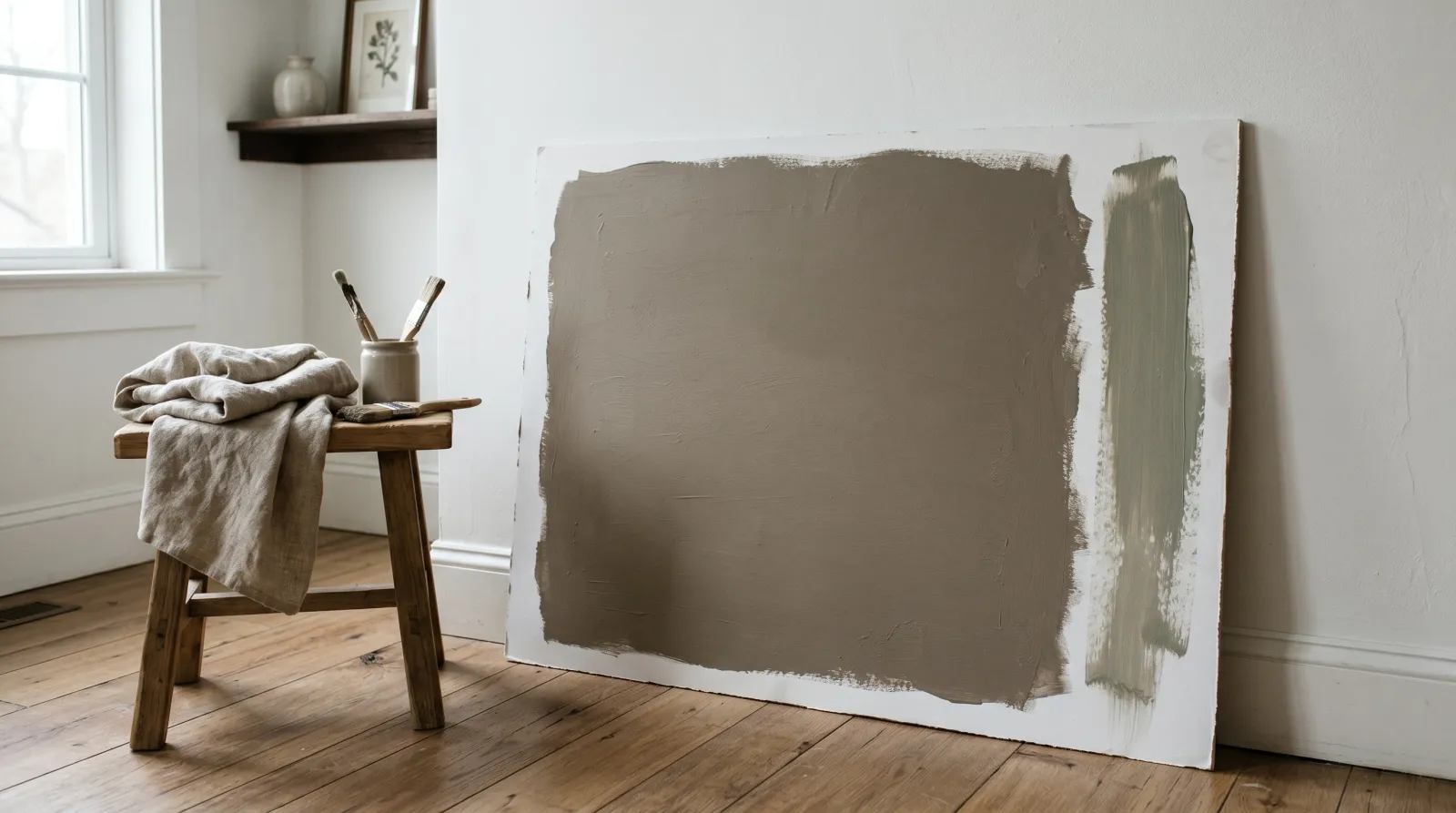
The same can of paint can show you two colors. Roll it out thick across a wall and you see one thing, a warm taupe, say. Smear a thin edge of the leftover on a scrap of white trim and let it dry, and a faint green creeps in that wasn’t there a minute ago. You didn’t change the paint. You changed how much of it the light had to travel through. The bold color is the mass tone. The quiet one underneath is the undertone, and learning to see both is the difference between a color that reads the way you imagined and one that goes strange on the wall.
Mass tone is the color a paint shows at full strength, opaque, the way it looks rolled out two coats deep. Undertone is the subtler color bias that surfaces when the paint is thinned, viewed against another color, or seen in weak or cool light. A single paint carries both at once. A greige with a brown mass tone can hold a green undertone that only shows up next to your oak floor at 4pm.
TL;DR
- Mass tone is the dominant color you see when paint is thick and solid across a wall.
- Undertone is the secondary color that shows when the same paint is thin, in shadow, or sitting against another color.
- Both live in almost every can, because mixers blend pigments to keep colors from looking flat.
- You pick a color for its mass tone on the chip. You live with its undertone on the wall.
- To see the undertone, thin the paint or hold the swatch against pure white paper in daylight.
What Mass Tone Is
Mass tone is the easy one. It’s the color you point at. When you say “I painted the bedroom sage,” you’re naming the mass tone, the color the paint gives back when it’s layered thick enough to fully cover what’s underneath. Designers sometimes call it the body color or the masstone. On a fan deck, it’s what the chip is trying to show you.
The mass tone is honest about one thing only: what the paint looks like in mass. It does not warn you about anything quieter happening inside the mix.
What Undertone Is
Undertone is the second color hiding in the formula. Almost every house paint is a blend of pigments, because a single pure pigment reads dead and flat on a wall. Mixers add a trace of warm or cool color to give the main hue some life, and that trace is the undertone. A “warm white” is usually a touch of yellow or a whisper of pink doing the warming. A “cool gray” has blue or green quietly in the mix.
You don’t see it on the chip. You see it when the conditions change. The undertone steps forward in north-facing light, at a thin film edge, in the shadow under a cabinet, and most reliably when the color sits against another color that contrasts with it. For the full how-to-spot-it walkthrough, see the paint undertones guide.
Why The Same Paint Reads Two Ways
It comes down to how much pigment the light has to pass through.
Lay the paint on thick and light bounces off the dense top layer before it can travel far into the film. You see the mass tone, the dominant pigment winning by sheer volume. Thin the film and light pushes deeper, reflects off the surface beneath, and on the way back out it picks up the bias of the underlying pigments. That bias is the undertone. The thinner the paint, the more it talks.
This is also why a first coat and a third coat of the same color don’t always match. The single coat is closer to the undertone; the built-up coats settle into the mass tone. It’s worth letting a test patch dry to full coverage before you judge a color, because a thin sample swatch can read more like the undertone than the wall ever will.
How To See The Undertone Behind The Mass Tone
The trick painters and stylists use is to remove the mass tone’s advantage. Two ways:
- Thin the film. Smear a thin edge of the wet paint on a white card and let it dry next to a solid patch. The solid patch is the mass tone. The thin edge leans toward the undertone.
- Force a comparison. Hold the swatch flat against a sheet of pure printer-white paper in daylight. True white has no undertone to compete, so the paint’s bias jumps out. A warm undertone goes creamy or muddy against the white; a cool one goes crisp, steely, or faintly grey.
 The same swatch that looks neutral on its own reads visibly warm the moment it sits against true white.
Do both at the time of day you actually use the room. North-facing light pulls cool undertones forward; west light at sunset warms everything and amplifies yellow and red.
How The Two Compare
| Mass tone | Undertone | |
|---|---|---|
| What it is | The dominant, full-strength color | The quiet secondary color bias |
| When you see it | Thick film, two coats, full coverage | Thin film, shadow, against other colors |
| Where you notice it | The chip, the open wall | The trim line, the corner, the floor edge |
| What it does | Names the color | Decides whether it works in the room |
| When it matters | Choosing on the chip | Living with it on the wall |
For how the undertone splits warm from cool across whites specifically, the white undertones breakdown goes color by color. To see how brightness sits separately from undertone, the LRV explainer covers the number that controls how much light a color throws back.
Common Mistakes
- Judging from a thin sample swatch. A single thin coat reads closer to the undertone than the finished wall will. Paint a 2x2 board to full coverage and let it dry before you decide.
- Choosing the mass tone, ignoring the undertone. The taupe you loved on the chip can clash with a yellow-oak floor because its green undertone fights the wood. Check the undertone against your fixed finishes before you buy a gallon.
- Matching two colors by mass tone alone. Two grays at the same brightness can read the same on paper and clash on the wall if one has a blue undertone and the other a brown one. Match the undertones, not just the mass tones.
- Testing under store light. Fluorescent and daylight LED strip out warm undertones and add cool ones. The color you approve in the aisle is not the color you’ll get at home.
Where This Shows Up When You Shop
Most major brands print enough to work with. The chip shows you the mass tone. Some fan decks group colors by undertone family, and the better color tools let you sort that way. If you’re choosing grays or greiges, where the undertone does the most damage, our grays and greiges collection is sorted so you can compare the undertone bias side by side instead of guessing from a chip.
Pull three to five colors you like for their mass tone. Then thin a sample of each, stand the boards against your floor and trim, and look at the time of day you live in the room. The mass tone got you to the shortlist. The undertone tells you which one to buy.
Ask a Question