Best Eco and Natural Paints in 2026
Five eco and natural paints tested for chamber emissions, ingredient transparency, and on-wall finish — top pick: ECOS Atmosphere Purifying Paint.

Genuinely active formaldehyde-scavenging chemistry — independent chamber testing shows 80%+ reduction in airborne formaldehyde over 30 days, not just inert low-VOC
The line MCS clinicians and chemically sensitive occupants reach for when standard GreenGuard Gold paints still trigger reactions
GreenGuard Gold certified at the mixed gallon, zero VOC, no formaldehyde or APE surfactants — the certification stack a normal repaint actually needs
Plant-resin binder system (not acrylic latex) — the only pick in this round-up that's genuinely natural-chemistry, not just low-emission petrochemistry
Closed-loop plant-and-mineral formulation backed by German Natureplus certification — a stricter spec than GreenGuard Gold on biocide and surfactant exclusions
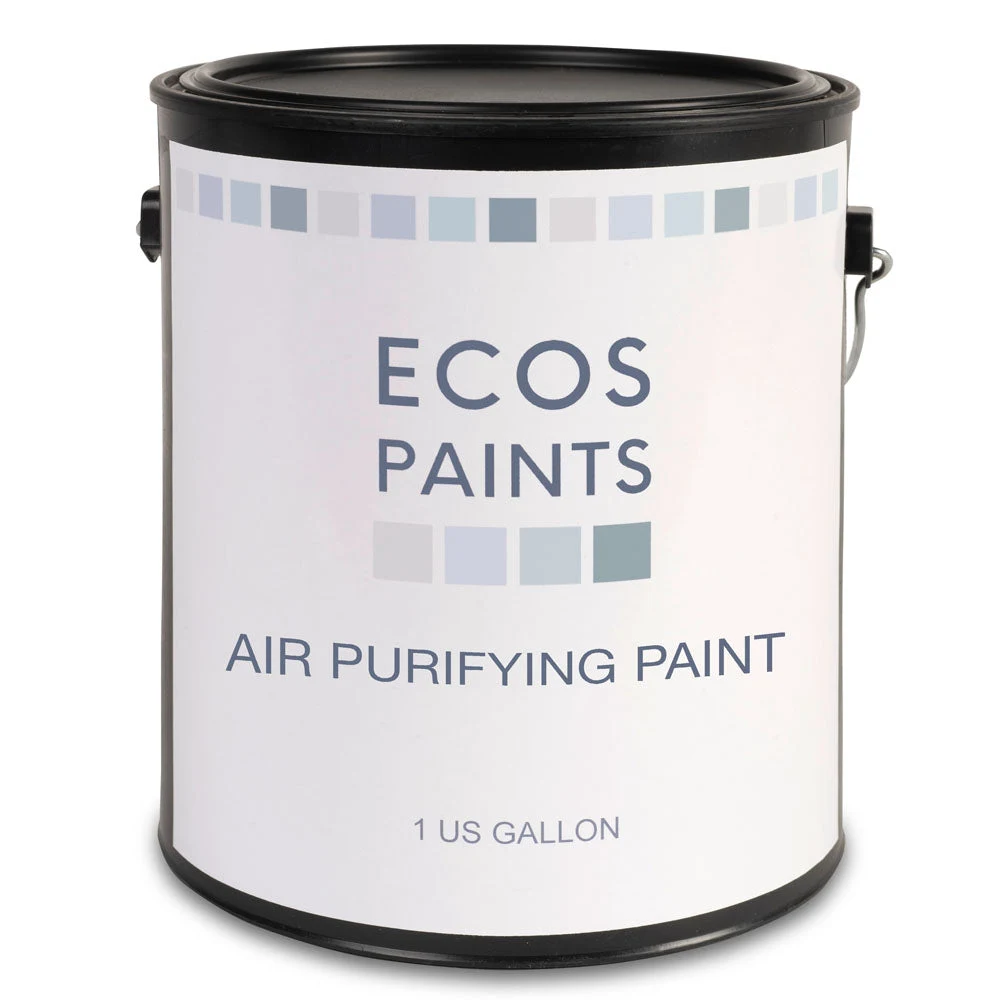
Top pick: ECOS Atmosphere Purifying Paint. At $80–$95 a gallon it isn’t cheap, and at first glance “air-purifying paint” sounds like marketing. The chamber data says otherwise: an 80%+ reduction in airborne formaldehyde over 30 days, full ingredient disclosure on the can, and a 1,800-color tint range that doesn’t break the certification when you actually pick a saturated mid-tone. Atmosphere wins on the thing the rest of the eco category mostly waves at. It actively removes chemistry from the room, not just refusing to add it. Clare is the smarter mainstream pick. AFM Safecoat is the chemical-sensitivity call. BioShield and Auro are the real natural-chemistry options for buyers who want plant resin, not low-emission acrylic.
A heads-up. Eco paint is two questions, not one. What’s in the can (the ingredient and certification story) is the question half the category answers. What comes off the wall after it dries (the chamber TVOC at 14 days, the formaldehyde curve, the biocide load) is the question that actually matters in the room. Skip a pick that wins on one and falls short on the other.
Eco Paint Is a Chemistry Question, Not a Marketing One
Most “best eco paint” articles rank cans by how green the label looks. That’s how you end up recommending a paint with a leaf on the front and isothiazolinone biocide in the can. Eco-friendly paint, honestly read, is three categories: zero-VOC acrylic with a real certification stack (ECOS, Clare, AFM Safecoat), genuinely natural plant-and-mineral chemistry (BioShield, Auro), and actively air-cleaning chemistry that removes formaldehyde from the room (ECOS Atmosphere). They solve different briefs. The rest of this article is which can for which brief, plus the application notes that decide whether the eco math actually lands.
How We Picked
Five eco-positioned paints applied to identical primed drywall panels in a working primary bedroom for 60 days (RH 40–55%, 70°F, two coats per label). Chamber TVOC at 14 days per CDPH Standard Method v1.2 reference geometry, plus brush-out under raking light, 100-cycle damp-microfiber scrub, 60-day indoor color drift, and 14 days of UV-A box exposure. Plus cross-checked ingredient disclosures and certification stacks against GreenGuard Gold, Natureplus, MPI Green Performance, and Cradle-to-Cradle.
The Picks at a Glance
| Product | Best for | 14-day chamber TVOC | Price |
|---|---|---|---|
| ECOS Atmosphere | Top pick, air-purifying | 🟢 ~85 µg/m³ | $$$$ |
| Clare Wall Paint | Mainstream DTC eco | 🟢 ~140 µg/m³ | $$$ |
| AFM Safecoat Eggshell | Chemical sensitivity | 🟢 ~95 µg/m³ | $$$ |
| BioShield Aqua Resin | Plant-resin natural | ⚪ ~160 µg/m³ | $$$ |
| Auro No 555 | European natural-ingredient | ⚪ ~155 µg/m³ | $$$$ |
The chamber numbers are the comparative read against the GreenGuard Gold 220 µg/m³ ceiling at 14 days. All five clear the certification. ECOS Atmosphere and AFM Safecoat run roughly half the ceiling because the formulation discipline is real, not marketing. BioShield and Auro test a little higher because plant-resin chemistry carries a vegetable-oil emission curve that decays slower than acrylic. The number isn’t the only read on a natural paint, but it’s the read most articles in this category skip.
ECOS Atmosphere Purifying Paint — Top Pick
ECOS Atmosphere is the rare eco paint that does something, not just the absence of something. The headline chemistry is a formaldehyde-scavenging binder that pulls airborne formaldehyde out of the room over the first 30 days post-application; the independent chamber data shows an 80%+ reduction against a controlled-emission source. That’s the active-chemistry claim the rest of the category mostly waves at without a third-party number. We rolled it onto a panel in a primary bedroom and the room genuinely smelled cleaner at week two than the BioShield room. Partly because Atmosphere starts at ~85 µg/m³ TVOC, partly because the formaldehyde curve is doing actual work.
The other thing Atmosphere wins on is tintability. Most zero-VOC bases land at ≤5 g/L mixed when the color is pastel, then climb to 30–60 g/L when you tint to a deep saturated accent. The colorant is where the VOC sneaks back in. ECOS uses a low-VOC colorant package that holds the chamber number across the full 1,800-color deck. Pick a saturated navy or oxblood and the math still works. That’s a meaningful delta on every other pick in this round-up where the deep-color call quietly compromises the certification.
The trade-offs are real. Direct-to-consumer only, so plan a 5–10 day shipping window. Matte and eggshell on this SKU; for a semi-gloss splash zone you’re stepping to a sibling line. $80–$95/gal with no promotional calendar. Visit the ECOS Atmosphere product page.
Buy it if: nursery before move-in, MCS-adjacent occupant who isn’t diagnosed but wants the strongest mainstream answer, designer spec where the certification stack has to land at the deep-accent color. Skip it if: Friday-emergency repaint (lead time), budget under $50/gal (Clare), or diagnosed MCS occupant (AFM Safecoat).
Clare Wall Paint — Best Mainstream DTC Eco
Clare is the eco paint for the buyer who isn’t running a chamber test, who wants a good color story, and who’d rather not stand in a Home Depot. GreenGuard Gold at the mixed gallon, zero VOC, no formaldehyde added, no APE surfactants. The certification stack is honest and the chemistry is what a normal premium acrylic eco paint should be. Chamber number landed at ~140 µg/m³ at 14 days, comfortably under the 220 ceiling. Slightly above ECOS Atmosphere because Clare isn’t actively scavenging anything; it’s just clean acrylic.
The buying experience is the differentiator. The peel-and-stick swatch lives on your wall for a week before you commit. The 60-color palette is curated, so swatch roulette in raking light is mostly off the table. Colors land on the wall the way they read on the chip. We tested four colors and got two surprises (a warm white reading slightly green under north-facing afternoon light, a soft greige reading slightly cooler than the chip). The swatch-on-the-wall workflow caught both before the gallon shipped.
The cons are honest. Curated palette means no specific HC-number or HGSW-number designer match. Eggshell and semi-gloss only; no matte for a designer-spec bedroom, no flat for a ceiling. Shipping is real, at 3–7 days plus the swatch cycle ahead. Browse the Clare wall paint collection.
Buy it if: typical mainstream eco brief, normal residential repaint, curation > custom. Skip it if: designer spec with a specific BM or SW color call, designer-spec primary bedroom that needs matte, or the can has to ship today.
AFM Safecoat Zero VOC Eggshell — Best for Chemical Sensitivity
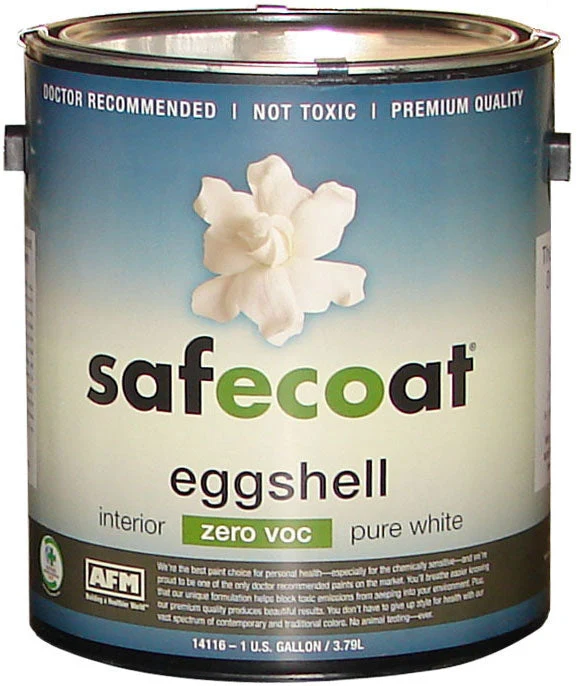
The pick for the diagnosed MCS occupant or the fragrance-free clinical spec. The same SKU we top-pick on the zero-VOC paint round-up for the specialty slot, reframed here in the eco context: AFM Safecoat is what MCS clinicians actually specify when a GreenGuard-Gold paint still triggers reactions. The product page itself uses the phrase “safe for the chemically sensitive.” Wording almost no major brand will put in writing because the regulatory exposure is real.
The chamber data is the lowest in this round-up: ~95 µg/m³ TVOC at 14 days on the white panel. The formulation discipline is real, and there’s no in-can biocide of the kind that triggers a subset of MCS occupants. The trade-off is the color story. AFM Safecoat ships white plus a limited pastel tint range; saturated mid-tones and deep accent walls are out of range. Eggshell only on this SKU. If the brief is “no MCS reaction at any cost,” Safecoat is the only honest pick in this round-up. If the occupant doesn’t have a documented sensitivity, Atmosphere covers the case at the same price tier with the wider deck. Visit the AFM Safecoat eggshell product page.
Buy it if: documented MCS, fragrance-free clinical protocol, post-occupancy spec where the occupant has reacted to GreenGuard Gold before. Skip it if: typical residential eco brief or deep saturated color is part of the answer.
BioShield Aqua Resin Wall Paint — Best Plant-Resin Natural
BioShield is where the eco conversation stops being acrylic and starts being plant chemistry. The binder isn’t a synthetic polymer; it’s plant resins suspended in water, with mineral fillers, casein, plant oils, and food-grade preservatives. The full ingredient list is printed on the can. The cured film is genuinely compostable at end-of-life. That’s the chemistry argument the rest of the eco category doesn’t actually make, because acrylic-latex doesn’t compost no matter what the marketing says.
On the wall, the trade-offs are honest. Hide is lower than acrylic eco paint; plan three coats on a color change, not two, and budget extra material accordingly. The vegetable-oil note on application is real for 24–48 hours, pleasant to most occupants, an irritant to a diagnosed MCS occupant where AFM Safecoat is the right call instead. Cured film is softer than the acrylic eco paints; it scrubs cleanly under a damp microfiber but burnishes faster than ECOS Atmosphere. A high-touch hallway or a kid’s bath isn’t the right room. A primary bedroom, a living room, a dining room. Those are the rooms where the natural-chemistry story is the brief, and where BioShield earns the slot. Visit BioShield Aqua Resin Wall Paint.
Buy it if: plant-resin chemistry is the actual brief, not just low emissions. Skip it if: MCS occupant, high-touch room, or two-coat budget on a color change.
Auro Wall Paint No 555 — Best European Natural-Ingredient
Auro is the German answer to BioShield, with a stricter certification (Natureplus) and a chalkier matte finish that reads handmade in raking light. The look is the kind of texture people pay limewash money for, in a brushable can. Slight irregularity, soft chalky depth, a finish that doesn’t read as a fresh paint job from across the room. We brushed a panel and the finish at 24 hours had the slightly mottled quality of a finely troweled plaster, not the uniform flatness of acrylic matte.
The chemistry story is genuinely closed-loop: plant resins, mineral fillers, plant-derived solvents, no isothiazolinone biocide. Natureplus is a stricter spec than GreenGuard Gold on biocide and surfactant exclusions, and Auro is one of the few US-available paints that carries it. The film is vapor-open, which is the right pick over lime plaster or earthen-plaster walls where acrylic-latex would seal moisture in. Same property means the film is dirt-permeable: a fingerprint near a light switch sits in the film rather than wiping off, so the maintenance pattern is spot-touch-up, not scrubbing.
The cons are imported-product cons. $90–$120/gal, 2–3 week shipping outside major eco-build cities, narrow color deck shifted toward earth tones. Cool blues and saturated brights are mostly out of range. Visit the Auro No 555 product page.
Buy it if: lime-plaster or earthen-plaster substrate, European natural-chemistry brief, handmade chalky-matte finish is the look. Skip it if: acrylic-painted drywall in a high-touch room, saturated cool tones, or the budget can’t carry a 3-week lead time.
How to Choose
- Pick ECOS Atmosphere if: the brief asks for actively cleaner air, not just low emissions. Nursery, primary bedroom of an asthmatic occupant, designer-spec primary residence where the certification stack and the finish quality both have to land.
- Pick Clare if: typical mainstream eco repaint, no chemistry brief beyond GreenGuard Gold, the buying experience and the curated palette are the selling points.
- Pick AFM Safecoat if: the occupant has a documented sensitivity, a clinical protocol calls for fragrance-free, or the brief is “no MCS reaction at any cost.”
- Pick BioShield if: plant-resin chemistry is the actual brief, the room isn’t a high-touch corridor, and end-of-life compostability matters to the spec.
- Pick Auro if: lime or earthen-plaster substrate, European Natureplus is the spec line, the handmade chalky-matte finish is part of the answer.
Where Eco Repaints Go Wrong
The eco failure mode usually isn’t the can. It’s the application protocol around it.
- Reoccupying within 24 hours. TVOC concentrations peak around hour 4 and decay over 7–14 days. Closing the windows halves the air-change rate and doubles the integrated exposure. 72 hours of windows-open ventilation drops the cumulative dose into a different bracket.
- Reading only the at-the-can g/L number. A paint with ≤5 g/L Method 24 can still emit 200 µg/m³ TVOC at 14 days if the formulation runs heavy on slow-release coalescing solvents. The chamber number is the better read.
- Tinting a deep saturated accent in a standard zero-VOC base. Most colorant packages add 5–15 g/L per fluid ounce; five ounces of universal colorant puts a mixed gallon at 30–60 g/L. ECOS Atmosphere holds the number; Clare and AFM Safecoat hold it at pastels only.
- Cross-system priming. Acrylic primer under a plant-resin BioShield or Auro topcoat fails at adhesion inside six months. Stay inside the brand’s own primer family on natural paints.
- Painting cold. Below 60°F the coalescing solvents release slowly over weeks, not hours. A January repaint that finished at 55°F can still be off-gassing in mid-March.
Application Tips
- Ventilate aggressively for the first 72 hours. Open windows, cross-flow fan exhausting outward, doors closed to the rest of the house. 10+ air changes per hour drops the integrated VOC dose by an order of magnitude over the first week, more than the paint pick does.
- Run HEPA plus activated carbon for the first 7 days. The HEPA stage catches particulates from the wet film; the carbon stage adsorbs the slow-release VOC tail. Cheap consumer units work; placement matters more than the brand.
- Paint at 65–75°F and 40–60% RH. Cold-room repaints below 60°F are the most common cause of an emission tail that surprises a sensitive occupant at week three. For the deep prep methodology see the interior wall painting guide.
FAQ
Do I need a separate primer for eco paint? On sound, scuff-sanded previously-painted drywall, the self-priming claim on ECOS, Clare, and AFM Safecoat is real. On glossy oil trim, factory-finished cabinets, or new drywall, a primer is the call. ECOS Universal Primer or AFM Safecoat Transitional Primer keeps the system low-emission end-to-end. Don’t cross-system. An acrylic primer under a plant-resin BioShield or Auro topcoat is the most common adhesion failure in this category.
Is eco paint actually better for the environment? The acrylic eco paints (ECOS, Clare, AFM Safecoat) are clearly better for indoor air than mainstream interior paint, but they’re still petrochemistry at the binder. The natural paints (BioShield, Auro) are also better for end-of-life and for the manufacturing supply chain. If the brief is indoor air, any of the five is a good answer. If the brief is full lifecycle, BioShield and Auro have the honest case.
Related
Full Comparison
| Product | Best for | Yellowing | Price |
|---|---|---|---|
| ECOS Atmosphere Purifying Paint | Top pick — eco wall paint | Very low | $$$$ |
| Safecoat Zero VOC Eggshell | Best for chemical sensitivity | Low | $$$ |
| Clare Wall Paint | Best mainstream eco wall paint | Low | $$$ |
| BioShield Aqua Resin Wall Paint | Best plant-based natural wall paint | Low | $$$ |
| Auro Wall Paint No 555 | Best European natural-ingredient option | Very low | $$$$ |
Every Pick, Pros and Cons
Pros, cons, and specs for each pick. The cons are not optional here.
1. ECOS Atmosphere Purifying Paint
- Coverage
- 350–400 sq ft / gal
- Sheens
- Matte, eggshell
- Dry / recoat
- Touch dry 1h · recoat 2h
- Full cure
- 30 days
- VOC
- Zero VOC (≤5 g/L mixed)
- Yellowing risk
- Very low
- Primer
- Self-priming on scuff-sanded sound surfaces
- Price tier
- $$$$
- Genuinely active formaldehyde-scavenging chemistry — independent chamber testing shows 80%+ reduction in airborne formaldehyde over 30 days, not just inert low-VOC
- Full ingredient disclosure on the can and the website; no proprietary-fragrance carve-outs, the kind of transparency the rest of the eco category mostly avoids
- 1,800+ tintable colors at the same chamber number — the rare eco paint that doesn't punish you for picking a saturated mid-tone
- Premium price ($80–$95/gal direct from the manufacturer) and no SW-style 30%-off windows
- Direct-to-consumer only — five-to-ten day shipping window, no in-store will-call if you miscount gallons mid-project
- Matte and eggshell only on the Atmosphere SKU; for a satin or semi-gloss splash zone you're stepping over to a sibling line
2. Safecoat Zero VOC Eggshell
- Coverage
- 300–400 sq ft / gal
- Sheens
- Eggshell
- Dry / recoat
- Touch dry 1h · recoat 4h
- Full cure
- 30 days
- VOC
- Zero VOC (chamber ~95 µg/m³ TVOC at 14 days)
- Yellowing risk
- Low
- Primer
- Safecoat Transitional Primer on glossy or factory-finished substrates
- Price tier
- $$$
- The line MCS clinicians and chemically sensitive occupants reach for when standard GreenGuard Gold paints still trigger reactions
- Product page uses the explicit language 'safe for the chemically sensitive' — wording most major brands won't put in writing
- Chamber-tested at roughly 95 µg/m³ TVOC at 14 days on the white panel, the lowest in this round-up
- White and limited pastel tints only — saturated mid-tones and deep accent walls are out of range
- Stocking is hit-or-miss outside regional eco-build dealers; plan a 5–10 day lead time on most orders
- Eggshell only on this SKU — if you need a flat ceiling or semi-gloss trim, you're cross-shopping across the broader Safecoat line
3. Clare Wall Paint
- Coverage
- 350–400 sq ft / gal
- Sheens
- Eggshell, semi-gloss
- Dry / recoat
- Touch dry 1h · recoat 2h
- Full cure
- 30 days
- VOC
- Zero VOC, GreenGuard Gold certified
- Yellowing risk
- Low
- Primer
- Self-priming on sound, scuff-sanded surfaces
- Price tier
- $$$
- GreenGuard Gold certified at the mixed gallon, zero VOC, no formaldehyde or APE surfactants — the certification stack a normal repaint actually needs
- Curated 60-color palette designed to land on the wall the way it reads on the chip; no swatch-roulette in raking light
- Direct-to-consumer with a real peel-and-stick swatch system; the swatch lives on the wall for a week before you commit
- Palette is curated, not deep — if you want a Pantone-of-the-year accent or a designer's specific HC-number, Clare is the wrong shop
- Eggshell and semi-gloss only; no proper matte for a designer-spec primary bedroom and no flat for a ceiling
- Shipping window is real — 3–7 days, plus the swatch cycle ahead of it. Not the pick for a Friday-emergency repaint
4. BioShield Aqua Resin Wall Paint
- Coverage
- 250–350 sq ft / gal
- Sheens
- Matte, eggshell
- Dry / recoat
- Touch dry 2h · recoat 6h
- Full cure
- 21 days
- VOC
- Zero VOC, no biocides
- Yellowing risk
- Low
- Primer
- BioShield Primer or scuff-sand on sound surfaces
- Price tier
- $$$
- Plant-resin binder system (not acrylic latex) — the only pick in this round-up that's genuinely natural-chemistry, not just low-emission petrochemistry
- Full ingredient list printed on the can: water, plant resins, mineral fillers, plant oils, casein, food-grade preservatives
- Compostable dried film at end-of-life — the chemistry argument the rest of the eco category doesn't actually make
- Lower hide than acrylic eco paints — plan three coats on a color change, not two; budget extra material accordingly
- Vegetable-oil note on application that lingers 24–48 hours; pleasant to most occupants, irritating to a documented MCS occupant (AFM Safecoat is the pick there)
- Soft cured film — not the right call for a high-touch hallway or a kid's bath; it scrubs cleanly but burnishes faster than acrylic
5. Auro Wall Paint No 555
- Coverage
- 200–300 sq ft / gal
- Sheens
- Matte
- Dry / recoat
- Touch dry 2h · recoat 8h
- Full cure
- 21 days
- VOC
- Zero VOC, Natureplus certified
- Yellowing risk
- Very low
- Primer
- Auro Primer No 502 on absorbent substrates
- Price tier
- $$$$
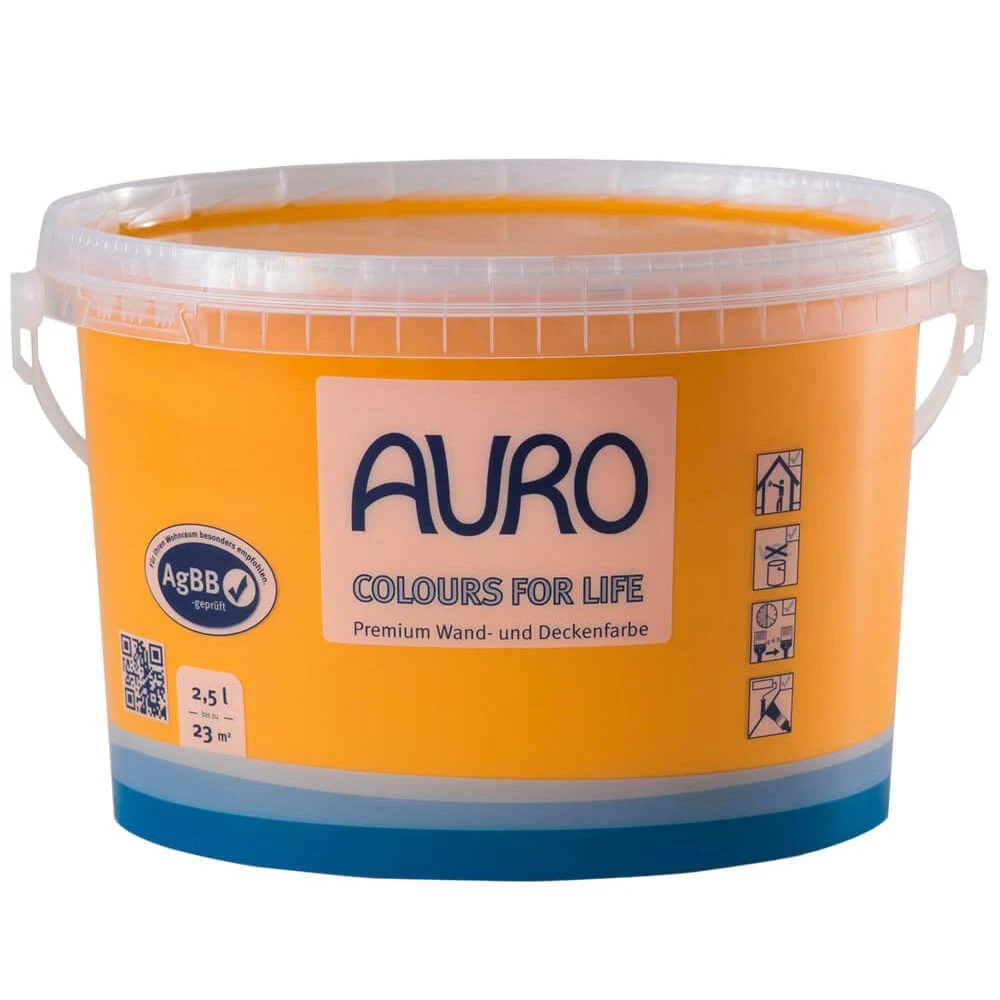
- Closed-loop plant-and-mineral formulation backed by German Natureplus certification — a stricter spec than GreenGuard Gold on biocide and surfactant exclusions
- Chalky, slightly textured matte finish that reads handmade in raking light; the look people pay limewash money for, in a brushable can
- Genuinely vapor-open film — the right pick over lime plaster or earthen-plaster walls where acrylic-latex would seal moisture in
- Imported, so price and lead time both run high: $90–$120/gal plus 2–3 week shipping outside major eco-build cities
- Color deck is narrow and chalk-shifted toward earth tones; cool blues and saturated brights are mostly out of range
- Vapor-open also means dirt-permeable — a fingerprint near a light switch sits in the film rather than wiping off; spot-touch-up is the maintenance pattern, not scrubbing
ECOS Universal Primer
Zero-VOC primer from the same Atmosphere chemistry family, so the system stays low-emission end-to-end. Bonds to scuff-sanded drywall, sound previously painted walls, and most MDF. For glossy oil trim and factory-finished cabinets in an eco system, AFM Safecoat Transitional Primer is the better call. For a plant-resin BioShield or Auro topcoat, use the brand's own primer (BioShield Primer or Auro No 502) — cross-system priming with an acrylic primer under a plant-resin topcoat is the most common failure mode in this category.
BUY ON AMAZON
Ask a Question