Best Tack Cloths in 2026: 5 We Actually Use
Five tack cloths tested across stained wood, primed MDF, sanded drywall, and waterborne enamel. Top pick: 3M Hand-Masker — and where each one falls short.

Disclosure: Some links below are affiliate links. We earn a commission if you buy through them, at no extra cost to you.
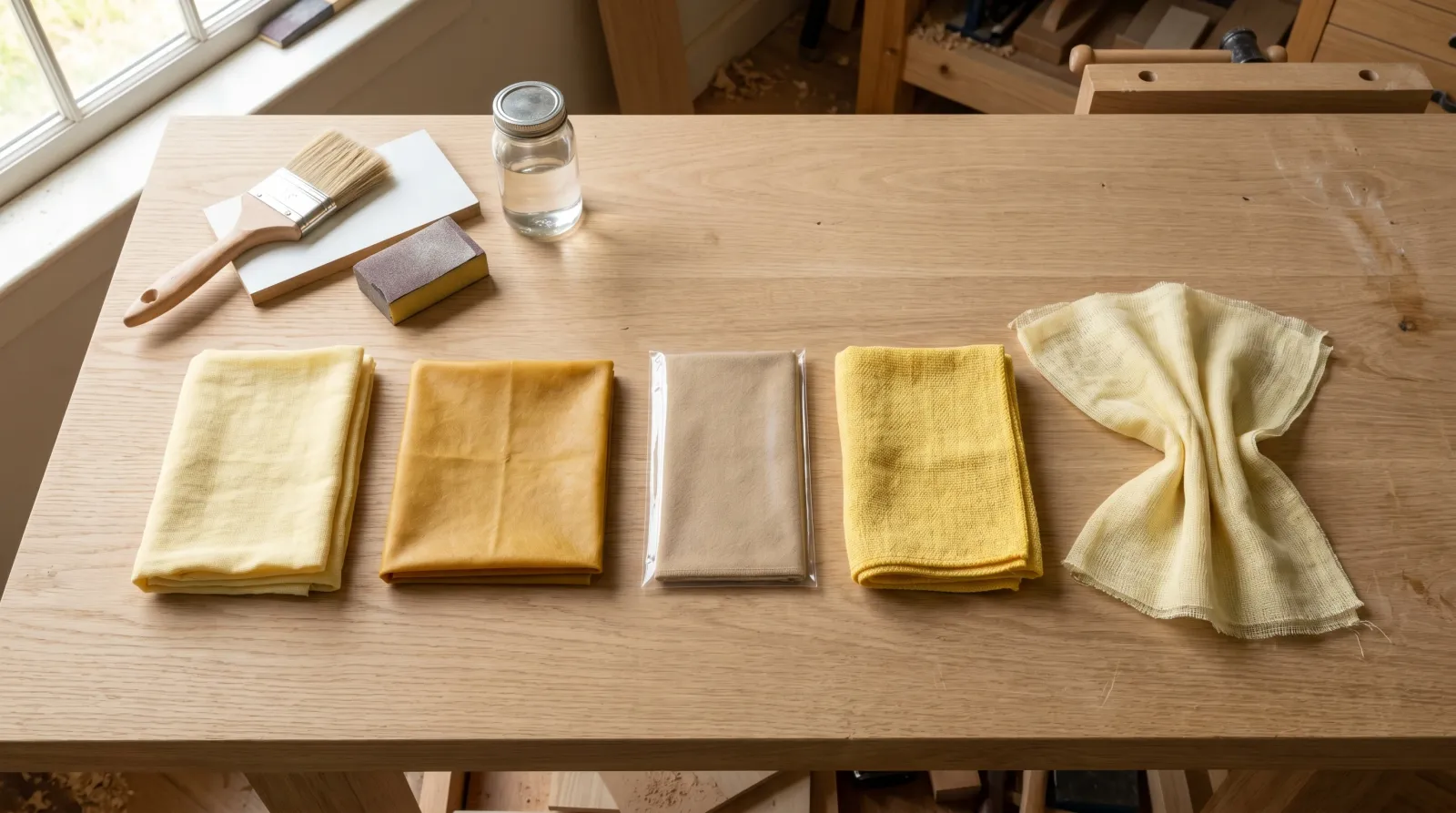
Top pick: 3M Hand-Masker Tack Cloth. About $2 a cloth in a six-pack, loose-weave yellow cheesecloth in a foil pouch that holds its tack for weeks. It wins on the cabinet-door job most readers actually face — fine sanding dust on primed MDF, going under a waterborne urethane enamel — and leaves nothing behind that the next coat will tell on you for. It falls short on price per cloth at retail, and on availability at smaller home centers. For stained oak under oil-based wipe-on poly, Klingspor’s beeswax cloth is the smarter chemistry. For sanded drywall and trim prep, Trimaco Easy Mask is the easiest find on a Saturday. For whole-house and cabinet-shop work, Jen Manufacturing’s bulk box is the math. Norton rounds out the field as the budget cloth on the home center shelf.
A heads-up. The right tack cloth depends on the topcoat, not the dust. Beeswax cloths grab the most dust and also leave the most residue; choose the cloth by what’s going on next, not by what you sanded last.
The Cloth You Use Decides How the Topcoat Lays
Tack cloth is the prep step before the brush touches the panel. It pulls the fine sanding dust off the surface that vacuum and microfiber miss, the particles small enough to lift back into a wet film and ruin a semi-gloss finish from two feet away. Most homeowners reach for whatever’s on the shelf at the home center and move on. That works on walls. On cabinet doors and trim it doesn’t — the wrong cloth either misses the fine stuff or leaves a faint resin smear that the next coat refuses to wet out cleanly. The five picks below are the cloths we’d actually keep in the drawer, matched to the job.
How We Picked
Five tack cloths tested over four weeks across four real prep jobs: a six-piece red-oak dining table under oil-based wipe-on poly, eight primed MDF cabinet doors under SW Emerald Urethane waterborne, a 14-foot run of sanded drywall, and finish-grade poplar trim sanded to 220. Scored on dust pickup, lint shed under raking light, residue under the topcoat at 24 hours, and per-cloth cost.
The Picks at a Glance
| Product | Best for | Tack level | Pack | Price |
|---|---|---|---|---|
| 3M Hand-Masker | Cabinet doors, fine waterborne | 🟢 Resin, balanced | Single foil pouch or 12-ct | $$ |
| Klingspor | Stained wood, oil-based | 🟡 Beeswax, aggressive | 12-pack | $$ |
| Trimaco Easy Mask | Primed drywall, trim | 🟢 Light resin | 12-count | $ |
| Jen Cheesecloth | Bulk, whole-house, cabinet shop | 🟢 Resin, balanced | 12-ct, case-of-144 | $ |
| Norton | Budget, on-the-shelf | 🟡 Resin, heavier | 3-pack | $ |
3M and Jen are the same chemistry at different package sizes; the choice between them is how many cloths you’ll use. Klingspor and Norton both run heavier on tack, which helps on coarse-sanded oak and hurts on white-painted MDF. Trimaco sits in the middle on tack and at the top on availability — it’s the easiest of the five to walk in and buy.
The Cabinet-Door Pick: 3M Hand-Masker
The Hand-Masker is the cloth most cabinet shops in the US run when they’re brushing a waterborne urethane on a primed MDF door. Loose-weave yellow cheesecloth, sealed singly in a foil pouch, resin-impregnated at a level that grabs fine sanding dust without leaving a film. We ran it across eight primed MDF cabinet doors prepped for SW Emerald Urethane. Dust pickup was even across each panel; the cloth loaded up gradually rather than skating once it hit the resin. At 24 hours under the topcoat, the surface was clean under a raking light at 18 inches — no fisheyes, no smears, no halos.
The 9x18 open size is right for a 24x30 cabinet door. You can fold it in quarters, get four fresh faces, and cover the door without re-folding mid-wipe. The foil pouch holds tack longer than the plastic bags the cheaper cloths come in; we opened a pouch that had been sitting in the shop for six months and the cloth was still fresh.
Cons are real but mostly economic. The six-pack at the hardware store costs more per cloth than Jen Manufacturing’s bulk box. Once you open the pouch, the cloth dries out in a day or so; use it that session or write it off. Stock at smaller home centers is hit-or-miss; Amazon is the reliable channel. 3M Hand-Masker Tack Cloth.
Buy it if: you’re prepping cabinet doors, fine trim, or any panel going under waterborne enamel. Skip it if: you’re buying by the case for a cabinet shop — Jen is the same chemistry for less.
The Oak-and-Oil Pick: Klingspor
Klingspor’s tack cloth is a different chemistry. Beeswax and resin instead of resin alone, deep amber color, sold mostly through woodworking specialty channels. The aggressive tackiness is the feature. On red oak prepped for an oil-based wipe-on poly, Klingspor pulled the fine oak dust the other four cloths left in the open grain. We covered six pieces of a dining table set with one folded cloth before it loaded up.
The same property that wins on oak is the trade-off on MDF. Run a Klingspor across a primed white cabinet door and at the right angle you’ll see a faint amber smear on the surface, especially in the prep dust. Under a clear oil poly, invisible. Under a white waterborne urethane, you’ll spot it on the cured film. The cabinet shops we talked to keep beeswax cloths and resin cloths in two different drawers and don’t mix them.
Storage matters with this cloth more than with the resin-only options. Beeswax tack will stick to itself if you fold it tight on a hot day, and the resealable plastic bag is part of the product — keep it. Klingspor Tack Cloth.
Buy it if: you’re finishing stained wood under oil-based or shellac. Skip it if: the topcoat is a white waterborne enamel.
The Drywall-and-Trim Pick: Trimaco Easy Mask
Trimaco’s Easy Mask is the cloth on the shelf at the local paint store next to the masking film and the drop cloths. Light tack, looser cheesecloth than the 3M, sized at 9x17 — close enough to interchangeable on a cabinet door, slightly better suited to a long run of sanded drywall or a baseboard. We pulled it across a 14-foot drywall run sanded to 150 and it picked up joint-compound dust without lifting the primer.
The tack is genuinely lighter than the 3M’s, which is why it works on drywall and why it doesn’t on oak. Open-grain wood dust shrugs the cloth off; you’ll need two passes on a sanded oak panel to get what the Klingspor pulls in one. On primed trim and drywall, that lower tack is the right call — leaves no residue, no streak, nothing under the topcoat.
Availability is the actual win here. Sherwin-Williams, Benjamin Moore, and most Ace Hardware locations stock Trimaco Easy Mask alongside the rest of the line. If your project starts Saturday morning and you’re standing in front of a paint-store aisle without an order in for the 3M, this is the cloth on the shelf. Trimaco Easy Mask Tack Cloth.
Buy it if: you’re prepping sanded drywall, primed trim, or a project starting today. Skip it if: you’re sanding hardwood for a stain job.
The Bulk Pick: Jen Manufacturing Cheesecloth
Same chemistry as the 3M, sold in larger packs at a lower per-cloth cost. The Jen Manufacturing cheesecloth tack rag is the cloth production cabinet shops actually buy — 12-count boxes, case-of-144 for the high-volume guys, generous 18x36 open size so you can quarter-fold and still get four fresh faces. On the test panel of primed MDF cabinet doors we ran a Jen cloth and a 3M cloth side by side. Pickup was identical; residue under the topcoat was identical. The math difference is the package.
Cons land on storage and consistency. The plastic resealable bag isn’t a foil pouch; cloths dry out faster on the shelf if you’re not using the box within a couple of months. Tackiness varies batch to batch by a noticeable margin — one box we opened was tackier than the previous order, which doesn’t ruin the cloth but it changes how hard you wipe. Cheesecloth is a loose weave, which is what makes it work; scrub instead of wipe and you’ll see tiny lint flecks where you didn’t want them.
A box runs about $15 for 12 cloths, roughly a third the per-cloth cost of the 3M six-pack at the hardware store. On a whole-house repaint with trim and a kitchen worth of cabinet doors, that’s real money. Jen Manufacturing Tack Rags.
Verdict: the right buy for cabinet shops, whole-house repaints, and anyone going through more than ten cloths a year.
The Home-Center Pick: Norton
Norton’s tack cloth is the bright yellow three-pack hanging in the abrasives aisle at most Home Depot stores. Coarser cheesecloth weave than the 3M, heavier resin loading, cheapest single-cloth pickup on the shelf at about a dollar each. The coarser weave actually helps on rough-sanded poplar trim where finer cloths skate over the dust — there’s enough texture to grab the larger particles before the fine ones.
The trade-off is everywhere else. On a primed MDF cabinet door under white waterborne enamel, the heavier resin leaves a faint print you can see under raking light. On finish-grade sanding for a piano-finish piece, the coarser weave sheds lint flecks that the 3M doesn’t. Quality control varies by pack — we opened one three-pack where the cloths were noticeably drier than the previous one.
For utility prep — a porch trim repaint, a workshop bench, a project where “good enough” is the bar — Norton is the right call at the right price. Norton Tack Cloth.
Buy it if: the project is utility-grade and the home center is across the parking lot. Skip it if: you’re prepping for a finish anyone will look at closely.
Tack Cloths We Tried and Dropped
- Random Amazon “premium tack cloth” multi-packs. Tackiness is inconsistent across the box; some panels grabbed dust, some left smears. Skip the unbranded options.
- Cheap auto-body tack cloths. Engineered for solvent automotive paints; the resin chemistry is heavier than what waterborne enamel wants. They work, but they leave more residue than the 3M does.
- Reusable microfiber “tack cloths.” Microfiber doesn’t have the resin tack that grabs fine sanding dust; the cloth is a dust cloth, not a tack cloth. Different tool, different job. Use both in sequence on real finish work.
How to Use a Tack Cloth Right
Three rules that decide whether the cloth helps or hurts.
Light pressure, no scrub. A tack cloth grabs dust on contact. Press hard or rub and you redistribute the dust back into the surface and leave a smear. Unfold a fresh face, wipe in the direction of the grain, and let the cloth do the work.
Fresh face, every pass. A loaded cloth stops picking up. Cloths come pre-folded for a reason — unfold, use one face, refold to a clean side, move on. On a kitchen worth of cabinet doors you’ll go through three or four cloths even with careful refolding.
Right after sanding, right before the coat. Sand, vacuum, microfiber if you want, then tack cloth. The cloth is the last thing before the brush. If you tack and then walk away to mix paint for ten minutes, the panel reloads with airborne dust from the room and you’ve wasted the wipe. Order matters.
Storage and Disposal
Foil pouches hold tack for weeks. Resealable plastic bags hold tack for days once opened. Loose in a drawer holds tack for nothing — the resin evaporates and the cloth stiffens. Keep the bag closed between wipes.
Disposal is the part nobody talks about and that finish shops have learned the hard way. Used tack cloths soaked in oil-based finish or solvent can self-heat in a pile the same way oily rags do. Spontaneous combustion isn’t a myth in this category; it’s a recurring insurance claim. Dispose of used tack cloths in a metal can with a tight lid, or soak them in water before they go in the regular trash. Don’t ball them up in a kitchen bag full of paper sanding waste.
Where Tack Cloth Prep Goes Wrong
- Skipping the cloth on cabinet doors. Vacuum and microfiber leave the fine particles that semi-gloss enamel telegraphs from two feet away. Tack the panel.
- Wrong cloth for the topcoat. Beeswax under white waterborne; resin-only under oil. Match the chemistry. The amber smear on a white cabinet door is the give-away.
- Wiping in circles. Circular motion grinds dust into the surface and pulls fibers free of the weave. Wipe with the grain or in long straight passes.
- Reusing a loaded cloth. Once the cloth stops grabbing, it starts depositing. Toss it.
- Tacking, then sanding again. Final tack comes after all sanding. Sanding after tacking re-loads the panel and wastes the wipe.
- Tacking, then waiting. Airborne dust reloads the panel in minutes. Tack the door right before the brush touches it, not first thing in the morning before you mix paint.
A Starter Kit That Earns Its Keep
For a homeowner doing one cabinet job and a couple of trim runs a year: one 3M Hand-Masker six-pack ($12), one Trimaco Easy Mask 12-count ($10). About $22, enough cloths for the kitchen and the trim around it.
For an oak refinish project: add a Klingspor 12-pack ($18). The beeswax chemistry on stained wood is worth its own slot in the drawer.
For a cabinet shop or whole-house painter: skip the small packs. Jen Manufacturing 12-count boxes at $15 each, ordered three at a time. The 3M is the cloth in the truck for the rare waterborne job you didn’t plan for.
The cloths are cheap. The finish on the cabinet door is the expensive part. Don’t economize on the cloth and waste the door.
Ask a Question