Best Painter's Rags and Microfiber Cloths
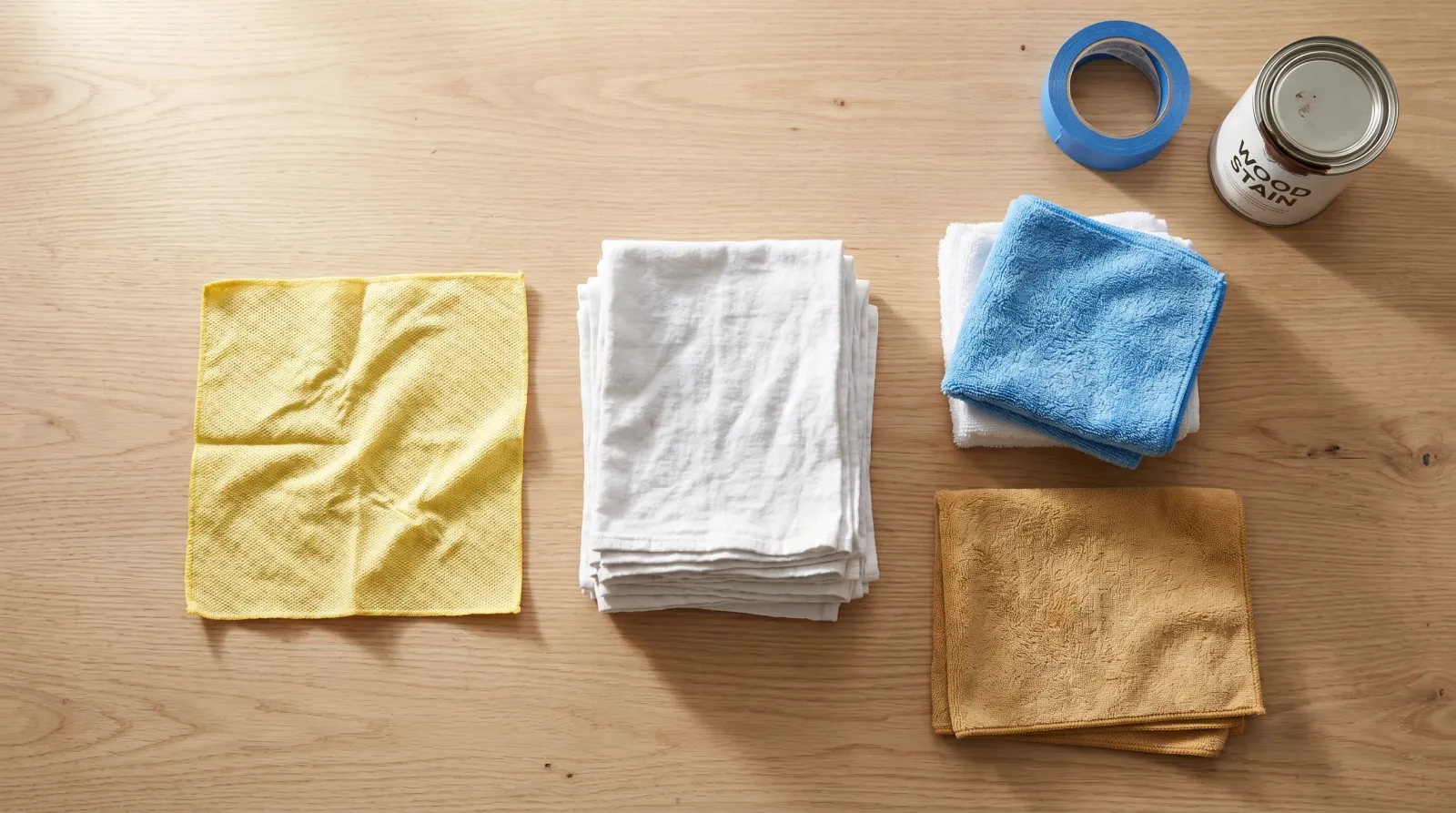
Painters microfiber and cotton rags tested on spills, staining, and prep. Top pick: Trimaco Wonder Rags for lint-free wiping that doesn't fuzz a 2.5-inch trim line.

Disclosure: Some links below are affiliate links. We earn a commission if you buy through them, at no extra cost to you.
Top pick: Trimaco Microfiber Wonder Rags. They wipe stain, glaze, and dust without leaving a fuzz, they don’t bleed dye in mineral spirits, and they survive 20-plus washes in a dispenser box that keeps the stack clean. They win on lint and on solvent durability. They fall short on raw absorbency for a big latex spill, where the Buffalo Industries cotton painter’s rags soak up more per wipe at a fraction of the cost. For dry sanding-dust prep, the Trimaco SuperTuff microfiber towels grab more than cotton. For a dead-clean final wipe before a clear coat, nothing beats a 3M tack cloth. For a cheap bulk pile you don’t mind tossing, the Zwipes 924 24-pack is the budget answer. For wiping back stain on a finish job, the low-lint ProPerfect cotton rags are cut to a usable size.
There is no single right rag.
Most painters carry two: a box of cotton for spills and washdown, a stack of microfiber for prep and finish wiping.
The Shortlist and Why These Six
I ran six rags and cloths through three real jobs over four weeks, the same way a homeowner buys them off the shelf. A red oak bookcase that got a coat of oil-based stain wiped back by hand. A bedroom repaint in Benjamin Moore Regal Select where latex spatter, tray spills, and tool washdown were the cleanup. And a set of pine shelves sanded and dusted before a wipe-on poly clear coat. Every rag saw all three jobs where it made sense.
Microfiber and cotton are not interchangeable, and pretending they are is how people end up disappointed in both. So I split the scoring by what each material is actually for. Microfiber got judged on lint and dust grab. Cotton got judged on absorbency and solvent safety. Everything got a wash test.
Four axes, weighted by the job: lint left under raking light, dye bleed in mineral spirits, absorbency per wipe, and survival after one machine wash. The use case anchors the role.
I tested the rags that show up over and over on paint store shelves, in contractor vans, and in the staining tutorials people actually follow.
How to Choose a Painter’s Rag
Microfiber or Cotton
This is the first decision and it settles most of the others.
Microfiber is split synthetic fiber — each strand is wedged into smaller fibers that physically grab dust and hold it. That’s why microfiber wins for prep wiping and final passes before a finish coat. It doesn’t shed if the weave is good, and it cleans up in the wash. The trade is absorbency. Microfiber holds liquid, but a tight cotton knit holds more per wipe and lets go of it faster into a wrung-out rag.
Cotton, specifically recycled or new t-shirt knit, is the spill-and-cleanup material. It soaks up a tray spill, wipes down a roller frame, and washes a brush handle without complaint. Good cotton rags are colorfast, so they won’t bleed dye into your work when you hit them with solvent. The downside is lint. Even low-lint cotton sheds a little, which is fine for cleanup and acceptable for wiping stain, but wrong for the last wipe before a clear coat.
The rule I use: if the job is prep, dust, or final wipe, reach for microfiber. If the job is spill, washdown, or soaking something up, reach for cotton.
Lint Behavior
Lint is the spec that separates a rag you trust near wet finish from one you keep for the garage floor.
Test it before you trust it. Fold the rag, drag it across a piece of scrap that’s still tacky, and look under a raking light. A lint-free microfiber leaves nothing. A cheap one leaves a trail of fuzz that you’ll be picking out of the finish for the next hour. New microfiber sometimes sheds on its first use, so wash a fresh pack once and the problem usually disappears.
For cotton, “low-lint” and “lint-free” are not the same claim. Pre-washed new cotton like the ProPerfect rags lints far less than a raw recycled box, but neither is truly lint-free. That’s why even the best cotton rag is a wiping rag, not a tack rag.
Solvent Safety
If you ever wipe with mineral spirits, lacquer thinner, or denatured alcohol, the rag has to survive it.
Two failure modes. A dyed or printed cloth bleeds its color into the solvent, and that color ends up in your wood or your finish. And a poorly bonded synthetic can break down or pill in strong solvent. Plain white cotton knit and quality microfiber both pass; novelty-colored bargain cloths are the ones that bleed. When in doubt, white is the safe color for solvent work.
Comparison at a Glance
| Brand / Model | Material | Size | Best for | Reusable | Price tier |
|---|---|---|---|---|---|
| Trimaco Wonder Rags | Microfiber shammy | 14” x 17” | Stain, glaze, all-around wiping | Yes (20+ washes) | Mid |
| Buffalo Industries Painter’s Rags | Recycled cotton knit | Mixed | Spills, washdown, solvent cleanup | Limited | Budget |
| Trimaco SuperTuff Towels | Microfiber | 16” x 16” | Sanding-dust prep, final wipe | Yes | Budget |
| Zwipes 924 (24-pack) | Microfiber | 12” x 16” | High-volume general use | Yes | Budget |
| Trimaco ProPerfect Rags | New cotton knit | 18” x 18” | Wiping stain and finishes | Limited | Mid |
| 3M Tack Cloth 10132NA | Tacky resin cloth | 17” x 36” | Dust-free pass before clear coat | No | Budget |
1. Trimaco Microfiber Wonder Rags, Best Overall
The Wonder Rag is the cloth I reach for when I don’t want to think about which cloth. It’s a shammy-style microfiber, soft and dense, and it does the one thing that matters most on a finish job: it wipes without leaving fuzz. On the red oak bookcase, I wiped back oil stain with a folded Wonder Rag and checked the surface under a raking LED. Nothing. No threads pulled out of the cloth, no lint stuck in the grain.
The solvent test is where it pulled ahead of the cotton. I soaked one in mineral spirits and wrung it out over a white panel. No dye, no breakdown, no pilling. It came out of the wash soft and ready for the next job, and the dispenser box kept the unused stack clean on a dusty bench instead of collecting grit.
At 14 by 17 it’s a generous size for detail work, so I fold it into quarters and get four clean faces before it needs a flip to a fresh side. For tight trim and corners you fold smaller or cut one in half. It costs more per cloth than a bag of t-shirt rags, which is the only real knock. You’re paying for a cloth you’ll still be using after 20 washes.
| Spec | Value |
|---|---|
| Material | Shammy-style microfiber |
| Size | 14” x 17” |
| Packs | 25 or 50 per dispenser box |
| Best for | Stain wiping, glaze, all-around finish work |
Buy it if: you want one reusable cloth that handles stain, prep, and cleanup without shedding. Skip it if: all you need is a cheap pile of rags to soak up spills and toss.
2. Buffalo Industries Painter’s Rags, Best for Spills and Cleanup
When a tray tips or a roller drips, you want cotton, and Buffalo’s recycled knit is the cotton I keep a box of. It’s soft white t-shirt material, and it soaks up latex spatter faster than any microfiber in the test. On the bedroom repaint, one of these handled a spilled cut bucket that would have smeared across three Wonder Rags.
It’s colorfast white, so it won’t bleed when you wipe with solvent or clean an oil brush. Sherwin-Williams sells it by weight, from a 1-pound bag for a single room up to a 40-pound box for a crew, which is the right way to buy a consumable you go through fast.
It sheds light lint, so keep it off your final-wipe duty. And because it’s recycled knit, the piece sizes vary; most are a good usable size, but you’ll pull the occasional small scrap out of the box. For cleanup and washdown, none of that matters.
Buy it if: you want a cheap, absorbent, solvent-safe cotton rag for spills and tool cleanup. A 1-pound box runs a few dollars.
3. Trimaco SuperTuff Microfiber Towels, Best for Surface Prep
Dust is the enemy of a clean finish, and a dry SuperTuff towel grabs more of it than a cotton rag does. The dense split-fiber weave holds sanding dust instead of pushing it around the way a dry t-shirt rag tends to. On the pine shelves, I wiped the sanded surface with a SuperTuff before the clear coat and the towel came away gray with dust the cotton had been smearing.
The face is scratch-free, so it’s safe to wipe a glossy cabinet door or a finished surface between coats without marring it. Bulk pricing in 24-packs and 100-packs brings the per-towel cost way down, which matters because you go through several per room on a heavy sanding job.
That fast loading is the trade. On a big prep job, a single towel fills with dust and stops grabbing, so you rotate to a fresh one. And these aren’t your spill cloth; for a liquid mess, the cotton holds far more. This is a dry-prep and final-wipe tool.
Buy it if: you sand and need to pull dust off trim, cabinets, or drywall before painting. The 24-pack is the value buy.
4. Zwipes 924 Microfiber Cloths, Best Budget Bulk Pack
The pack I hand someone painting their first apartment. Twenty-four 12-by-16 microfiber cloths for the price of a few specialty rags. They’re color-coded, which is more useful than it sounds: orange for stain, blue for prep, white for cleanup keeps you from dragging stain residue onto a surface you’re trying to keep clean.
They wash clean and come back soft, so one pack outlasts a project or two. The weave is thinner and looser than a Wonder Rag, and a fresh one sheds a little on its first use. Run the pack through the wash once before you trust them near wet finish and they settle down.
The edges are stitched rather than laser-cut, so a stray thread turns up now and then. For general wiping, dusting, and cleanup at this price, that’s an easy trade.
Verdict: the budget pile. Wash before first use, keep the white ones for clean work.
5. Trimaco ProPerfect Premium Rags, Best for Staining and Finishes
Wiping back stain is a job that rewards a consistent rag, and ProPerfect is cut to solve exactly that. Every rag is 18 by 18, cut from new cotton t-shirt stock, so you’re not fishing through a box for one the right size. They’re pre-washed and low-linting, which is what you want dragging stain off oak or pulling back a glaze.
On the bookcase, the ProPerfect cotton held more stain per wipe than the Wonder Rag did, which let me cover a panel in fewer passes. The Wonder Rag left less lint; the ProPerfect held more stain. That’s the honest trade between good cotton and good microfiber on a staining job, and it’s why I keep both.
It’s low-lint, not lint-free, so for a dust-free pass right before a clear coat I still switch to microfiber or a tack cloth. New cotton also costs more per rag than a recycled-knit box. You’re paying for the consistent size and the cleaner cotton.
Buy it if: you stain or wipe finishes and want a uniform, low-lint cotton rag. Boxes come in 25 or 50 count.
6. 3M Tack Cloth 10132NA, Best for a Dust-Free Final Wipe
The last pass before a finish coat is where a tack cloth earns its keep. After you’ve sanded and wiped with microfiber, a fine layer of dust is still sitting on the surface, and a dry cloth mostly relocates it. The 3M tack cloth’s light resin grabs that dust and holds it. On the pine shelves, a microfiber wipe followed by a tack-cloth pass gave me a clean surface that the clear coat laid down on without nibs.
It leaves no residue and no drag marks, so you can use it right up to the moment you brush or spray. One folded cloth covered all the shelf surfaces before it loaded up. Open it, shake it out, fold it loosely, and drag it light. Pressing hard just smears the tack.
It’s single-use. Once it’s full of dust, it’s done. And the tack means you never use it for liquid cleanup or solvent wiping; it’s a finishing tool, full stop.
Buy it if: you’re clear-coating or laying a glossy enamel where dust nibs would show. A pack is a few dollars and lasts several jobs.
Cloths I Tried and Dropped
- Generic bagged shop rags. Fine for the garage floor and brush cleanup. Too linty and inconsistent for finish work.
- Paper shop towels. Useful for quick spatter and disposable solvent wiping. They fall apart wet and leave paper lint; not a finish wipe.
- Old household towels. Terry loops shed and snag. People reach for them because they’re free; they cost you in lint.
- Colored novelty microfiber. The dyed bargain cloths that bleed in solvent. White or known-colorfast only for solvent work.
Care, Cleanup, and Safety
Microfiber is reusable and worth reusing. Wash it separately from cotton and anything that sheds, because microfiber grabs loose lint in the wash and carries it to your next surface. Skip fabric softener; it coats the fiber and kills the grab. Hot water, mild detergent, low heat or air dry. A good microfiber survives dozens of cycles before it mats and stops grabbing.
Cotton stain rags are usually a toss after one job. And this is the one safety point on this page that matters more than any product choice: oil-based stain and finish rags can spontaneously combust as they cure. The oils oxidize, the rag heats up, and a balled-up pile in a trash can has started real fires. Never crumple oily rags into a closed container. Lay them flat outdoors, weighted down, until they’re bone dry. Or drop them in a sealed metal can filled with water until you can dispose of them properly. Take this seriously every single time.
Water-based and latex cleanup rags don’t carry the combustion risk. Wring them out, let them dry, wash or toss.
Mistakes I Still See
- Using a cheap rag for the final wipe. A linty cloth before a clear coat means picking fuzz out of wet finish. Use washed microfiber or a tack cloth for the last pass.
- One rag for everything. Stain residue dragged onto a clean surface ruins it. Color-code or label: one rag for stain, one for prep, one for cleanup.
- Skipping the first wash on new microfiber. Fresh microfiber sheds. Wash a new pack once before you trust it near wet finish.
- Fabric softener on microfiber. Coats the fiber and kills the dust grab. Never use it.
- Balling up oily rags. The fire risk. Lay them flat to dry or drown them in a sealed metal can. Don’t toss them in the trash wet.
- Pressing a tack cloth hard. Smears the resin onto the surface. Drag it light; that’s all it needs.
A Rag Kit That Earns Its Keep
For a homeowner doing a couple of weekend projects a year: a box of Trimaco Wonder Rags for stain and finish wiping, a 1-pound box of Buffalo cotton painter’s rags for spills and cleanup, a 24-pack of Zwipes or SuperTuff microfiber for general prep, and a pack of 3M tack cloths for any clear-coat job. About $30 to $40 total, and the microfiber half of it lasts for years.
For staining furniture, add the ProPerfect cotton for the consistent size.
The rags are the cheap part of any paint job. Don’t ruin a $200 finish to save two dollars on a clean cloth.
FAQ
Are microfiber cloths better than cotton rags for painting? Each beats the other at half the job. Microfiber wins for dust prep and lint-free final wipes. Cotton wins for soaking up spills and solvent cleanup. Carry both.
Will microfiber leave lint when I paint? A good one won’t. Wash a new pack once before using it near wet finish; cheap microfiber sheds on its first use until it’s been through the laundry.
Can I reuse rags after staining? Wash and reuse microfiber. Toss oily cotton stain rags, and never ball them up wet. Oil-based rags can spontaneously combust; dry them flat outdoors or soak them in a sealed metal can.
Do I need a tack cloth? For most repaints, a clean microfiber is enough. For a clear coat or glossy enamel where dust shows, use microfiber first, then a tack cloth as the final pass.
Ask a Question