How to Paint or Stain a Fence (Honest Answer: Stain Wins)
How to refinish a wood fence — pickets, cedar privacy, or stockade. Honest answer: stain almost always beats paint. Here's prep, sprayer route, and the mistakes.

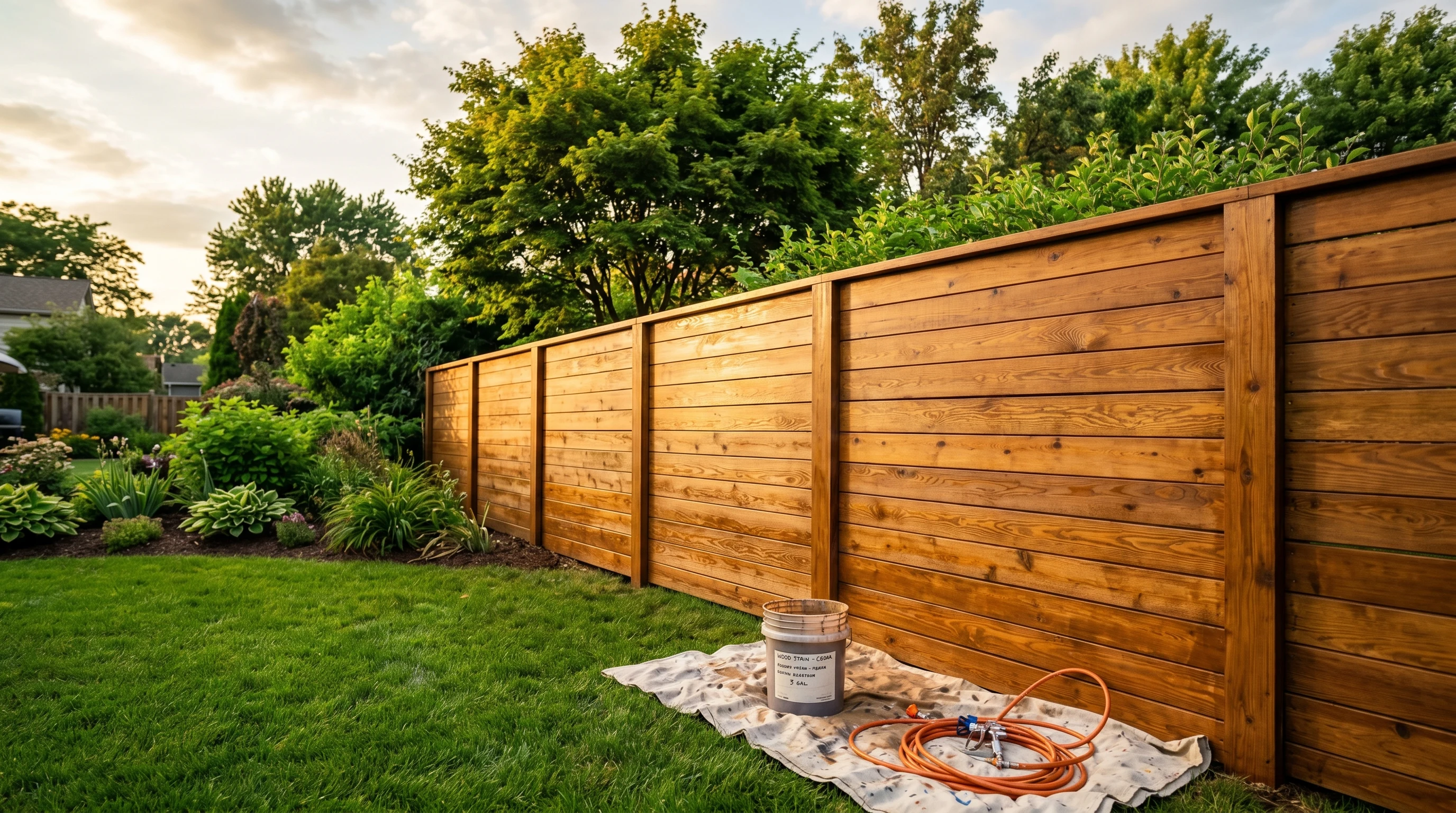
Okay, so you want to paint your fence.
Here’s the thing nobody at the paint counter is going to tell you: don’t paint it. Stain it. A fence is the worst possible candidate for a paint film. The top rails are horizontal and hold rain. The pickets bake on the south face and stay damp on the shaded north face. The posts sit in soil that’s wet half the year. A coat of paint is a continuous skin sitting on top of all that, and the top rails are the first place it cracks. By year three they’ve peeled in horizontal strips and the fence looks worse than if you’d left it bare.
Stain doesn’t form a skin. It penetrates the top layer of wood fiber. When it weathers, it fades and erodes instead of peeling. When you recoat, you wash, brighten, and put another coat down. No scraping, no scuffing, no patching. That’s the finish you want on a fence.
If you want full opacity and zero visible grain, the answer still isn’t paint. It’s solid-color stain. Solid stain looks like paint from any reasonable distance and behaves like stain mechanically. SW SuperDeck Solid and BM Arborcoat Solid are the two I reach for on old weathered fences that have lost their character (boards too gray and beat-up to be worth keeping the grain visible).
For cedar that still has good color, semi-transparent is the right pick. You’ll see the grain through the finish, the fence glows warm in late afternoon light, and the next refresh is a one-day job.
What You’ll Get
A 100–150 linear foot wood fence refinished in stain. Total cost around $120–$320, two days of weekend work with a 48-hour dry-down in between. The fence holds for three to six years before the next refresh, depending on sun exposure and which stain you picked.
Honest Take on Time and Difficulty
Easy project. Easy doesn’t mean fast.
The application itself is forgiving. Stain on a fence doesn’t show lap marks the way paint does on a wall, and you can’t really mess up the color. Time is the part people underestimate.
A realistic schedule for 100–150 linear feet:
| Day | Activity | Hours |
|---|---|---|
| Sat | Clean, brighten, pressure wash | 3–4 |
| Sun–Mon | Dry down (no work) | 0 |
| Tue | Repairs, replace pickets, mask | 2–3 |
| Wed | Spray and back-roll first coat | 2–3 |
| Thu | Second coat where needed | 1–2 |
Weekends only stretches it to two or three calendar weeks. You can’t shortcut the dry-down. Wood that looks dry on the surface is still releasing moisture inside for two full days after a pressure rinse. Stain that goes onto damp wood blisters within the first month, and there’s no fix except stripping it back and starting over.
Method: Spray with Back-Roll, or Brush Plus Roller
For any fence over 50 linear feet, the right answer is an airless sprayer.
A Graco Magnum X5 ($350 new, less used; see our paint sprayer picks) lays stain down four to six times faster than brushing. On a 150 ft fence, that’s the difference between a long afternoon and most of a Saturday. The catch: spray alone leaves stain sitting on top of the wood instead of penetrating. You have to back-roll behind the spray. One pass with the gun, follow with a 9-inch roller on a pole, push the stain into the grain. The roller doesn’t add coating; it works the wet film into the fiber.
For shorter runs (a 30-foot side gate fence, a corner section), brush and roller. A 4-inch stain brush for cut-in around posts and rails, a 9-inch roller with a 1/2-inch nap for the picket field. Slower, but the tool cost is twenty bucks instead of three hundred.
Don’t skip the back-roll because the spray “looks great.” Sprayer-only finishes look great for the first summer and start shedding the next.
What You’ll Need
Stain. For cedar with good color, semi-transparent: Cabot Australian Timber Oil, Ready Seal, or BM Arborcoat Semi-Transparent. For weathered fences past saving the grain, solid color: SW SuperDeck Solid or BM Arborcoat Solid. One gallon covers about 200 sq ft on bare wood. A typical 100 ft privacy fence painted both sides needs 4–5 gallons. See our exterior stain round-up for the full list.
Cleaner and brightener. Sodium percarbonate cleaner (“oxygen bleach”) for the wash. Oxalic-acid brightener for the second pass. Together about $45, and they do more for the finish life than spending an extra $20/gallon on stain.
Tools. A pressure washer (rental, electric 1,500 PSI is plenty; back it down to 1,200 with a wider tip if it’s set higher). A 4-inch stain brush, a 9-inch roller frame with 1/2-inch nap covers, an extension pole. For the sprayer route, an airless like the Graco Magnum X5. Drop cloths, painter’s tape for the section where the fence meets the house, eye protection, gloves.
Hardware. Walk the fence first and count rusted brackets, broken post caps, split pickets. Painting around rusted hardware looks tacked-on, like you painted around the problem. Replace it now while the boards are bare. Galvanized brackets are $2–4 each. New post caps run $5–8. The hour spent swapping hardware is the hour that makes the finished fence look professional instead of patched.
Step 1: Clean and Strip
Wet the fence first with a hose. Mix the deck cleaner per the bottle (most are sodium-percarbonate-based) and apply with a pump-up garden sprayer. Work it into the grain with a stiff-bristle brush, top to bottom. Let it dwell 15 minutes — don’t let it dry on the wood, mist with the hose if it starts looking dry.
Pressure-rinse with a 25-degree fan tip at 1,200 PSI. Hold the tip 12 inches off the boards and keep it moving. Rinse top to bottom so the dirty water runs down the unwashed sections instead of stripes back across cleaned wood.
Watch out for: pressure-washing wood that’s still wet from spring rain. The boards have to start dry. Wet wood under high pressure fuzzes the surface — the soft summerwood between grain lines blows out and you get permanent ridges that telegraph through any finish. If it rained yesterday, wait three sunny days before you wash.
Step 2: Brighten
This is the step almost everyone skips, and it’s the difference between a stain job that holds for five years and one that goes patchy at year two.
After cleaning, the wood looks darker than it should — the cleaner raised tannins to the surface and the old gray weathering glazed up. Wood brightener is dilute oxalic acid. It neutralizes the alkaline cleaner, dissolves the tannin film, restores cedar’s natural reddish-warm tone, and opens the pores so stain can soak in instead of beading.
Apply with the same pump sprayer, brush in lightly, wait 10 minutes, rinse. The fence should look noticeably lighter and more uniform. Cedar that looked dingy gray after the wash will go warm pink-tan after the brightener. That’s the color you want under your stain.
Watch out for: skipping brightener on a recoat (re-staining a fence three or four years in). Old stain glazes the wood and acts like a sealer. A fresh coat over an unbrightened glaze sits on top instead of bonding through to fresh fiber. That’s how a fence that lasted five years the first time peels at year three the second time.
After brightening, wait 48 hours of dry weather. 72 if it’s humid or the fence is in the shade most of the day. Drop a few water drops on a board — if they bead and sit, you’re ready; if they soak in within 30 seconds, the wood is still too wet inside.
Step 3: Repair and Mask
Walk the whole fence with a screwdriver. Probe the bottom 6 inches of every post and the bottom rail. If the screwdriver sinks past the tip into soft wood, that post is rotting from the soil up and stain won’t fix it. Plan a post replacement separately, or stain the rest of the fence and live with the bad post until you can swap it.
Replace any pickets that are split, cupped, or splintered. Pre-stain new pickets on all sides before you screw them in — front face, back face, edges, top, bottom. Bare-wood ends and edges absorb moisture and rot the new picket from inside within five years if you don’t seal them.
Swap rusted brackets and screws now. Rust bleeds through stain within one season and you’ll get orange streaks on every cleaned-up board.
Mask anywhere the fence meets the house, a deck, an AC unit, or fixtures you don’t want stained. Drop cloths along the lawn at the base. If you’re spraying, mask wider than feels necessary — overspray drifts six to eight feet on a still day, more if there’s any breeze.
Step 4: Apply Stain
Pick a calm overcast day, or work in the fence’s afternoon shade. Stain on hot sun-baked boards flashes dry before you can keep a wet edge.
Sprayer route. Load the airless with stain (most semi-transparent and solid stains spray straight without thinning; check the can). Spray top to bottom, one picket-and-a-half wide, in steady passes. Keep the gun 10–12 inches off the boards. Right behind you, follow with a 9-inch roller on a pole and push the stain into the grain — one or two passes per board face. Don’t add stain at the roller; the roller is just working what’s already there.
Brush-and-roller route. Cut in around posts, rails, and the top of each picket with a 4-inch stain brush. Roll the picket faces with a 1/2-inch nap roller, top to bottom, one picket at a time. End-to-end on each board so any lap marks fall at the picket gaps where they don’t show.
One coat is enough on cedar that’s been brightened and is taking stain hungrily. Solid stain on bare wood usually needs two thin coats. The recoat window is on the can — typically 4 hours.
Watch out for: one coat of stain to “save time” on solid stain. Year two you’re back staining again because the first coat went on too thin. Two thin coats cover better and last twice as long as one heavy one.
Common Mistakes That Ruin the Job
- Painting a fence instead of staining it. Looks great in October, peeling along the top rails by August two years later. Solid-color stain if you want full opacity. Semi-transparent if you want grain. Never paint.
- Pressure-washing wood that’s still wet from spring rain. The fibers fuzz under pressure and you get permanent ridges. Wait three dry days before the wash.
- Skipping the brightener. Especially on cedar. The fence will go on patchy and shed early. Twenty bucks of oxalic acid buys two extra years of finish life.
- One coat of stain on solid stain. Solid stain wants two thin coats over one heavy one, every time. The “I’ll do another coat next year” plan ends with you doing another coat next year, on top of a coat that’s already failed.
- Ignoring the post bottoms. Rot starts at the soil line and works up. Probe every post. Stain over rotting wood is good money after bad.
- Spray-only with no back-roll. Looks great for one summer. The stain sits on the surface and sheds with the first hard rain in spring. Always back-roll behind the spray pass.
- Painting around rusted hardware. Rust bleeds orange streaks within a season. Swap brackets and screws while the fence is bare.
Cure Schedule
| Time after final coat | What’s safe |
|---|---|
| 2 hours | Touch dry, no rain |
| 24 hours | Light rain fine, no scrubbing |
| 7 days | Normal weather, lean a ladder against it |
| 30 days | Full cure, scrub-clean as needed |
Don’t pressure-wash a freshly stained fence for the first month. The film is still hardening and high-pressure water lifts it.
Maintenance
Semi-transparent stain on cedar holds three to five years on a well-prepped fence. Solid color holds four to six. South-facing runs and the tops of pickets fade first; shaded north sides hold the longest, sometimes eight years on a privacy fence with mature trees on one side.
Walk the fence every spring with a cup of coffee. Look for: faded spots where the grain is starting to go gray again, peeling on the top rails (early sign that the cleaner step got skipped), any picket that flexes when you push on it (rotting from the back), and rust streaks below brackets you forgot to swap.
When the fence needs a refresh, it’s a one-day job: wash with percarbonate cleaner, brighten, light rinse, one coat of stain. Two of those mid-cycle refreshes buy you another four to six years on the original prep work.
Cost Breakdown: 100 Linear Feet of Cedar Privacy Fence
| Item | Cost |
|---|---|
| Deck cleaner (1 gal) | $20 |
| Wood brightener (1 gal) | $25 |
| Semi-transparent stain (4 gal) | $140–$200 |
| Replacement pickets (3–4 typical) | $20–$40 |
| Galvanized brackets and screws | $20 |
| Drop cloths, brush, roller, tape | $40 |
| Pressure washer rental (1 day) | $40 |
| Total | $305–$385 |
Already own the sprayer and pressure washer? Drop $80. Solid stain instead of semi-transparent runs $20–$40 cheaper per gallon and holds longer, so a solid-stain job on a weathered fence comes in closer to $250 total.
A pro will quote $1,200–$2,500 for the same fence. The savings are real if you’ve got a free Saturday and the patience to wait two days for the wood to dry.
Ask a Question