Painting Exterior Brick: Honest Guide to Prep, Primer, and What Fails
Painting exterior brick — masonry primer, efflorescence, and the breathability rule. A pro's prep-grounded guide to the work most homeowners underestimate.

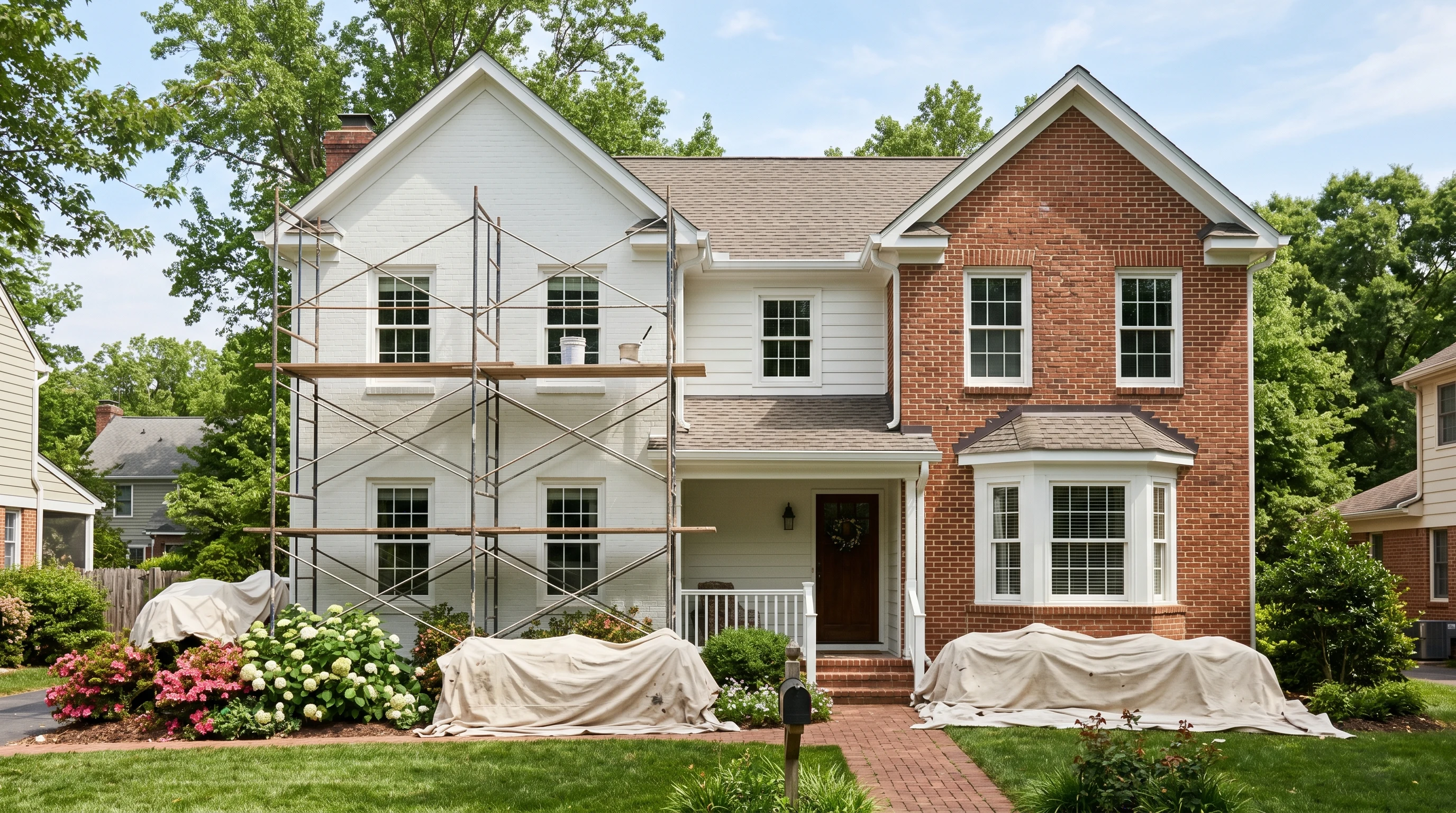
Painted brick is a one-way door. Once you paint it, you don’t get to unpaint it without destructive media blasting that takes weeks and chews up half the brick face. The homeowners who don’t regret the call did the prep right.
TL;DR
- Wash: pressure wash to bare brick, then 72 hours of dry weather
- Repair: repoint cracked joints, kill mildew, wire-brush efflorescence
- Cure: new mortar cures 30 days before primer
- Primer: alkali-resistant masonry primer (Sherwin-Williams Loxon or equivalent)
- Paint: breathable 100% acrylic masonry paint, two coats
- Method: brush the joints, roll the field, 3/4-inch nap minimum
- Skill: hard. Wrong primer and wrong sequencing both kill the job
Should you paint exterior brick at all?
If the brick is structurally sound and looks reasonable, leave it alone. Paint is permanent maintenance: every 7–10 years forever, plus the prep that goes with each repaint. Paint makes sense when the brick is already painted, when it’s mismatched patch brick that won’t blend, when efflorescence has stained it past saving, or when you can’t live with 1970s salmon pink. “It looks dated” is not on that list. Trends turn over faster than brick. Limewash is reversible; paint isn’t.
Why brick is harder than wood siding
Three things make this substrate trickier than fiber-cement or lap siding.
Alkalinity. Fresh portland-cement mortar runs pH 11–13. Even decades-old walls have alkaline joints. Standard latex primer reacts with that alkalinity in a process called saponification. The binder breaks down, the primer turns soapy, adhesion fails. You need an alkali-resistant masonry primer. Loxon is the common spec. Don’t substitute.
Efflorescence. That white salt bloom on the brick face is the visible end of a moisture path. Water moves through the wall, dissolves salts in the mortar and brick, deposits them on the surface as it evaporates. Paint over it and you trap the path. The salts keep moving. The paint blisters off in sheets within a year. Wire-brush off dry, find the moisture source (leaking gutter, failed flashing, missing weep holes), fix it, then paint.
Breathability. Brick walls manage moisture by breathing. Vapor moves out through brick and mortar in dry weather. Seal that with the wrong film and trapped moisture freezes in winter, expands, and pops the brick face off in chunks. That’s spalling. A spalled brick is structurally compromised: the fired outer skin is gone, the soft interior exposed. Use a vapor-permeable masonry paint. Standard exterior latex over a proper primer breathes enough. Heavy elastomeric coatings don’t, and that’s a tradeoff with consequences.
Materials
- Alkali-resistant masonry primer (Sherwin-Williams Loxon, Benjamin Moore Ultra Spec Masonry, or Behr Masonry, Stucco & Brick Bonding Primer)
- 100% acrylic masonry paint (Benjamin Moore Aura Exterior, Sherwin-Williams Emerald Exterior, Behr Masonry, Stucco & Brick)
- Type-N mortar mix for repointing
- TSP or masonry detergent
- Bleach (3:1 water-to-bleach for mildew)
- Urethane or polyurethane caulk rated for masonry
- Drop cloths heavy enough for plant cover
Tools
- Pressure washer, 3,000 PSI with adjustable wand
- Stiff hand-held wire brush
- Tuckpointing tool and joint trowel
- 3/4-inch to 1-inch synthetic nap roller (not lambswool)
- 4-inch masonry brush (China bristle holds up to brick)
- Extension pole, scaffolding or ladder rated for the wall height
- N95 and eye pro. Efflorescence is silica-bearing dust; mortar work kicks up worse.
Step 1: Pressure wash and dry the wall
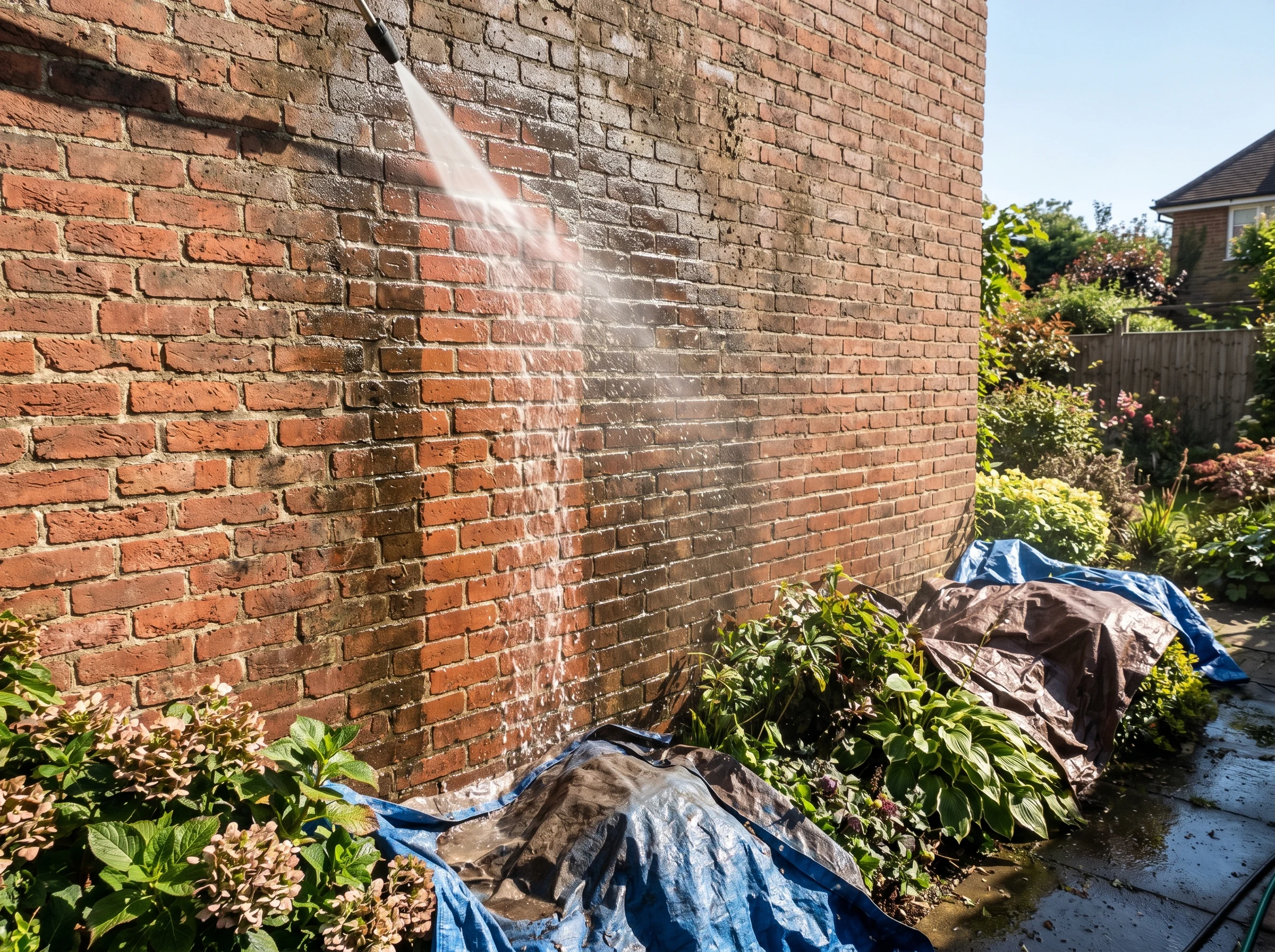
3,000 PSI down to 1,500 for soft brick. Then 72 hours of dry weather before anything else touches the wall.
Cover plants with heavy drop cloths. Mask windows and doors. Start at 1,500 PSI on a 25-degree tip and work up. Soft brick (pre-1900) chips at higher pressures. Modern hard-fired brick takes 3,000 PSI fine.
Work top down. Hold the wand 12–18 inches off the wall. Don’t drive the spray straight into mortar joints; angle it so it skims across the joint instead of into it.
For mildew or algae, mix 3 parts water to 1 part household bleach with a splash of dish soap. Brush on, dwell 15 minutes, rinse. Don’t let bleach mix sit on plants.
Then walk away for 72 hours of dry weather. Brick that looks dry on the surface is still wet inside. Primer over wet brick blisters off in three weeks.
Step 2: Repair mortar and remove efflorescence
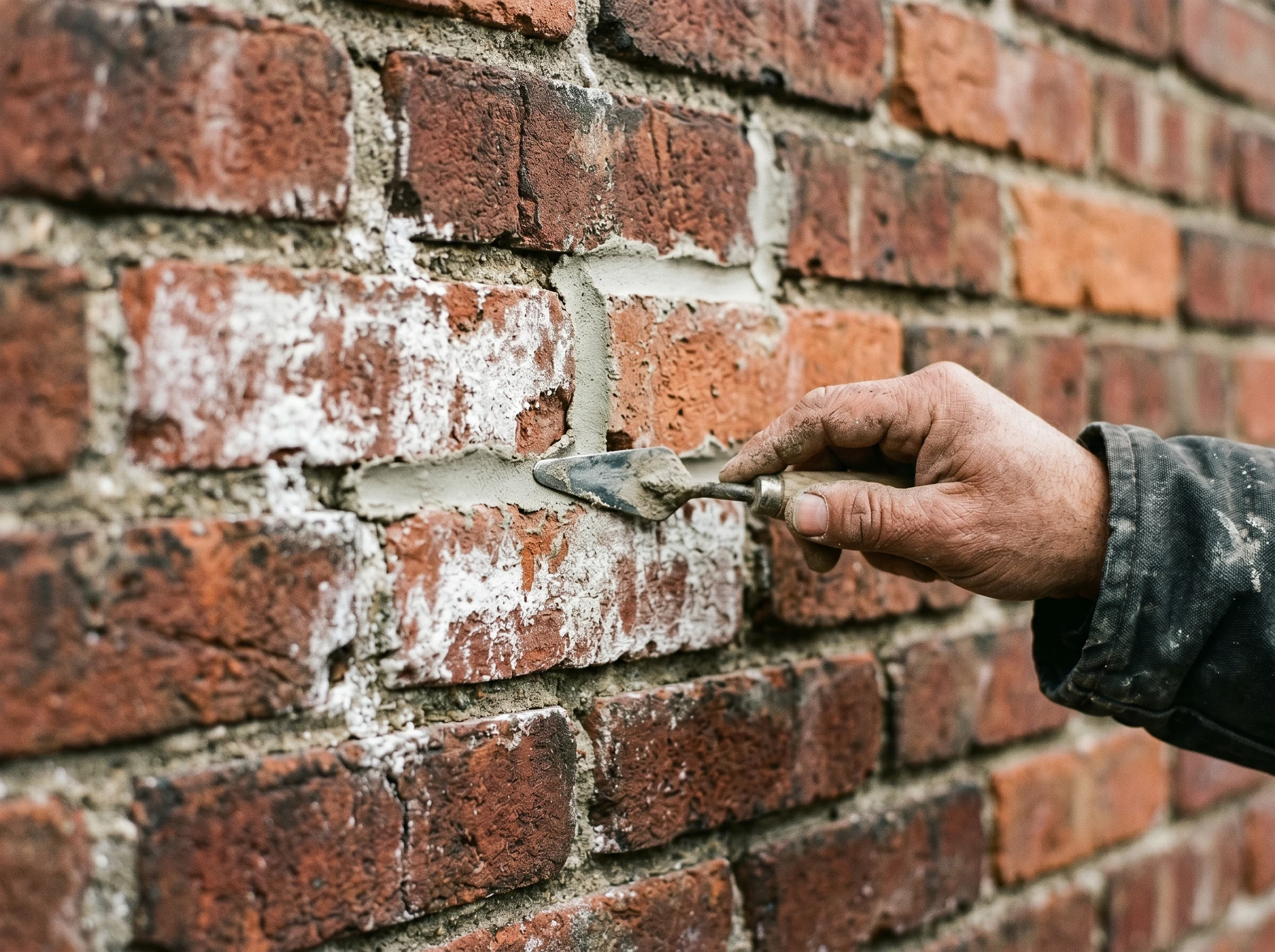
Repoint cracked joints with type-N mortar. Wire-brush off any white salt bloom. Don’t paint over either.
Walk the wall. Joints that have lost more than an eighth-inch of depth, or any crack you can fit a fingernail into, need repointing. Type-N is the standard residential mix (1 part portland, 1 part lime, 6 parts sand).
Rake the failed joint out to half an inch deep with a tuckpointing tool. Brush out dust. Mist lightly. Pack new mortar in tight. Strike to match the surrounding profile.
Then the efflorescence. Wire-brush dry. Don’t wash it off with water. Water dissolves the salts and pushes them back into the brick to bloom again next month. Heavy efflorescence means the wall has a moisture problem to find and fix. Common culprits: leaking gutters, missing kick-out flashing, failed weep holes, sprinklers hitting the brick. Painting over an active moisture path is throwing money at a wall that’s going to fail.
Safety callout. Masonry dust and efflorescence both carry crystalline silica. N95 minimum, P100 if you’re cutting out a lot of mortar. Eye pro for the wire-brushing. Those bristles snap and fly.
Now wait. New mortar cures 30 days before primer. The surrounding brick can be primed earlier, but wait the full 30. The wall paints uniformly that way, no visible patch line where the new mortar absorbed primer differently.
Step 3: Caulk gaps and prime
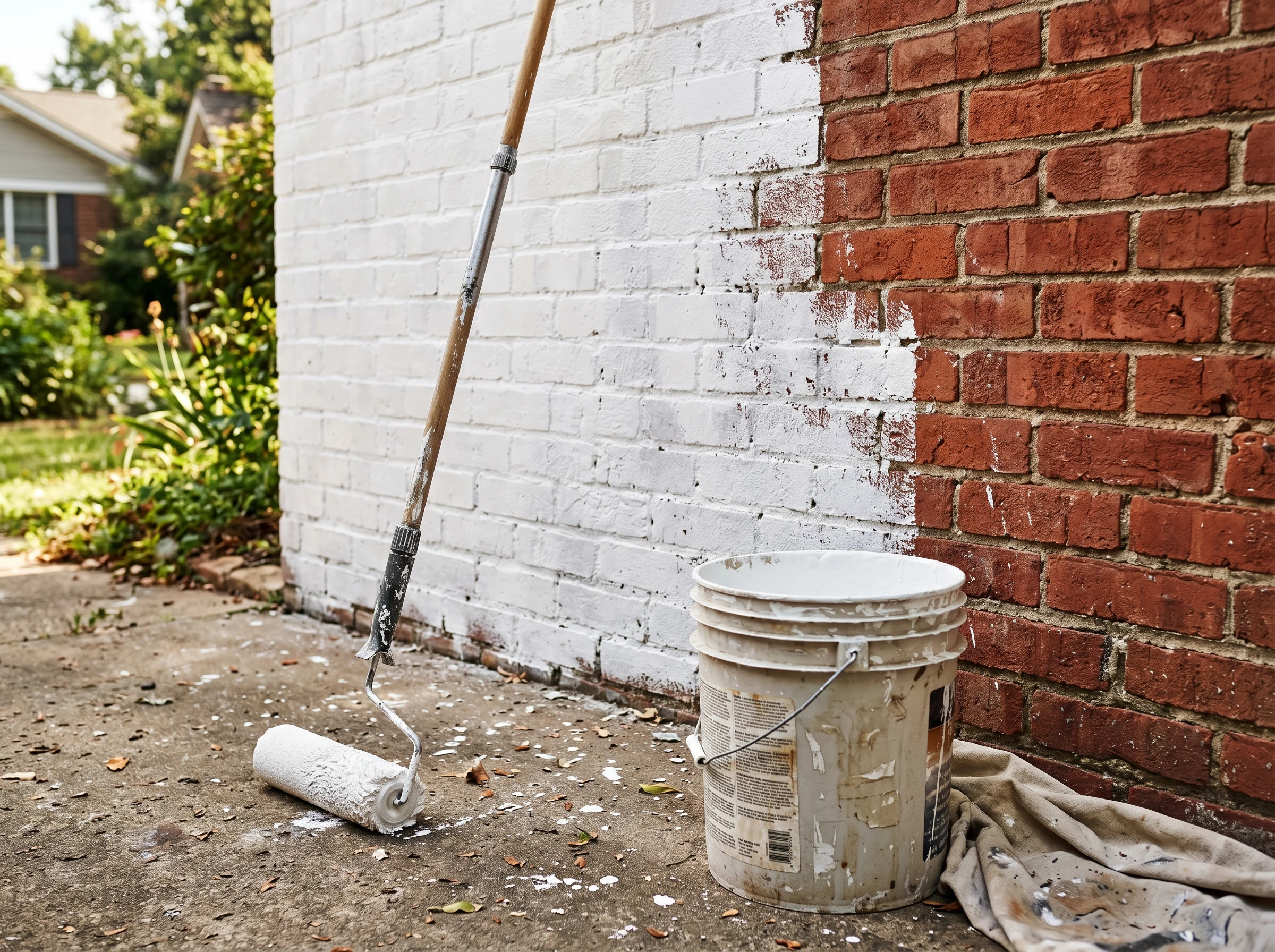
Loxon or equivalent alkali-resistant primer, full saturation coat, worked into mortar joints with a brush.
Caulk gaps where brick meets window frames, door frames, soffit boards, or any other dissimilar material. Urethane or polyurethane caulk rated for masonry. Standard interior acrylic caulk pulls away in a year.
Then prime. Sherwin-Williams Loxon Concrete & Masonry Primer is the standard spec: alkali-resistant up to pH 13, formulated for porous masonry. Behr Masonry, Stucco & Brick Bonding Primer is the big-box equivalent. Benjamin Moore Ultra Spec Masonry also works. Whatever you use, the can has to say “masonry” and “alkali-resistant.” Generic latex primer fails on this substrate. So does wood primer. So does metal primer.
Roll the field with a 3/4-inch synthetic nap. Brick has deep texture; short nap leaves mortar joints uncoated, and uncoated joints are exactly where the next coat fails. Brush the joints first with a 4-inch masonry brush, working primer into the recessed mortar. Then roll the faces. Don’t worry about lap marks on primer; the topcoat covers them.
One coat is enough on properly prepped brick. If it’s extremely porous and the primer disappears in, two thin coats beat one thick one. Cure per the can: usually 4 hours touch-dry, 24 hours recoat.
Step 4: First finish coat
Brush the joints, roll the field. Same drill as primer but with the topcoat. 100% acrylic masonry paint: Benjamin Moore Aura Exterior, Sherwin-Williams Emerald Exterior, Behr Masonry Stucco & Brick. All three are vapor-permeable enough for sound walls.
Don’t overload the roller. Wet the brick with a moderate paint load, then back-roll dry to push paint into the texture. Heavy single-pass coats sag in the joints and skin over before they level. You get a glossy patch in a flat field.
Watch temperature. Most acrylic masonry paints want 50°F minimum, 90°F maximum, and that’s air, not surface. Brick in direct sun runs 30°F hotter than air. South-facing walls in summer get painted early morning or late afternoon, never noon.
Sixteen hours between coats. Some products say four. Eat the extra cure time on a job this expensive to redo.
Step 5: Second finish coat
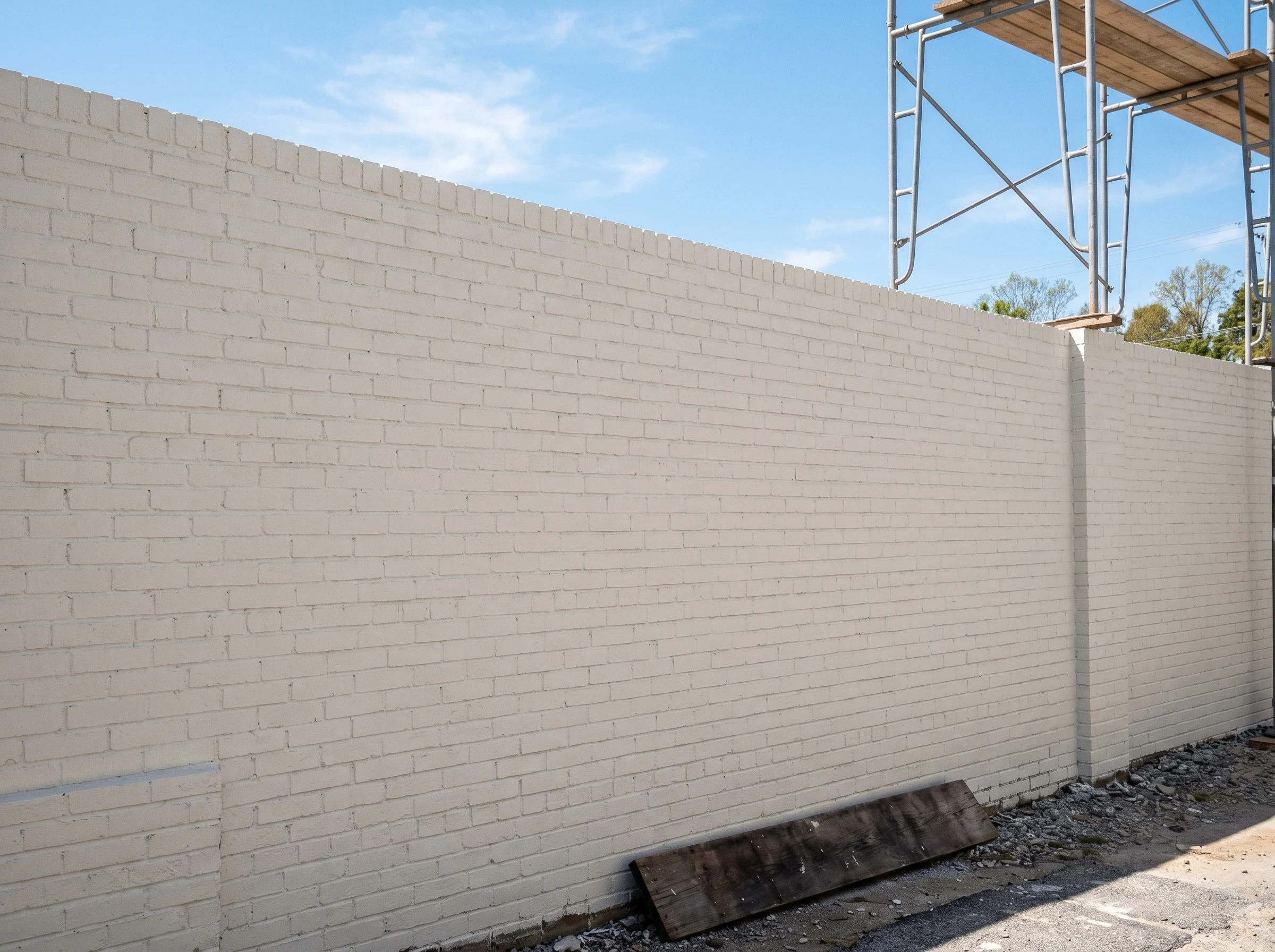
Acrylic elastomeric or 100% acrylic masonry paint. Two coats. Brush the joints, roll the field.
Same method. The second coat fills any holidays from the first and brings the color to spec. Look at the wall in raking morning sun before you call it done. That’s when missed spots show. Touch up with a brush.
Step 6: Cure
Touch-dry in 4–6 hours. Recoat-dry in 16–24. Full cure runs 30 days. During cure, don’t pressure-wash the wall, don’t lean ladders against it, don’t run sprinklers onto it. The film is hardening through that whole window, and a soft film picks up dirt and damage that locks in permanently.
Common mistakes
- Painting over efflorescence. Salts keep migrating. Paint blisters off in sheets within a year. Wire-brush dry, fix the moisture source, wait for the wall to stay dry, then prime.
- Standard latex primer. Saponification. The latex binder breaks down on contact with alkaline mortar, paint turns soapy, adhesion fails. Use Loxon or equivalent.
- Painting fresh mortar. New mortar runs pH 11–13 for weeks. Even alkali-resistant primer wants 7 days minimum; 30 is the safe number. Wait.
- Sealing a wall with rising damp. Elastomeric coating on bottom-up moisture traps water inside the brick. Freeze-thaw spalls the face off in two winters. Find the moisture source first.
- Short-nap roller. 3/8-inch nap doesn’t reach into the mortar joints, and the joints are where the next failure starts. 3/4-inch minimum, 1-inch on rough or older brick.
- Painting in direct summer sun. Brick stores heat. Surface temp on a south face at noon hits 130°F. Acrylic flashes off solvent before it levels and you get a chalky, under-bonded film. Work the shaded face.
- Skipping back-rolling on a sprayed coat. Spray alone doesn’t drive paint into the texture. If you spray, back-roll while wet. Brick eats sprayed-only coats in three years.
Maintenance and longevity
Properly painted brick lasts 7–10 years before a full repaint. Watch the bottom three feet of the wall. That’s where ground moisture wicks up and where the first peeling shows. Inspect annually after heavy weather.
Touch up small failures with a brush from the same can. Systemic peeling at the base means the moisture path needs work before any repaint will hold. South faces fade faster and may want a refresh only on the south face at year 5–6.
Don’t pressure-wash painted brick at full power. 1,500 PSI on a 40-degree tip is the ceiling. Anything stronger drives the paint film off the brick.
What I’d do on my own house
If the brick is sound, I’d leave it. If I had to change the look, I’d limewash. Limewash is reversible and breathes naturally. If I had to paint, I’d paint a test section in fall, watch it through a winter, commit to the full wall the following spring. Will it bite you in two years? Only if you skipped the wash, skipped the cure on fresh mortar, used the wrong primer, or painted over an active moisture path.