How to Paint Bathroom Walls: Prep, Primer, and the Mistakes That Bubble in a Year
Bathroom paint prep done right — degrease, kill mildew, recaulk, prime, paint. A pro's guide to the substrate that fails differently than every other room in the house.

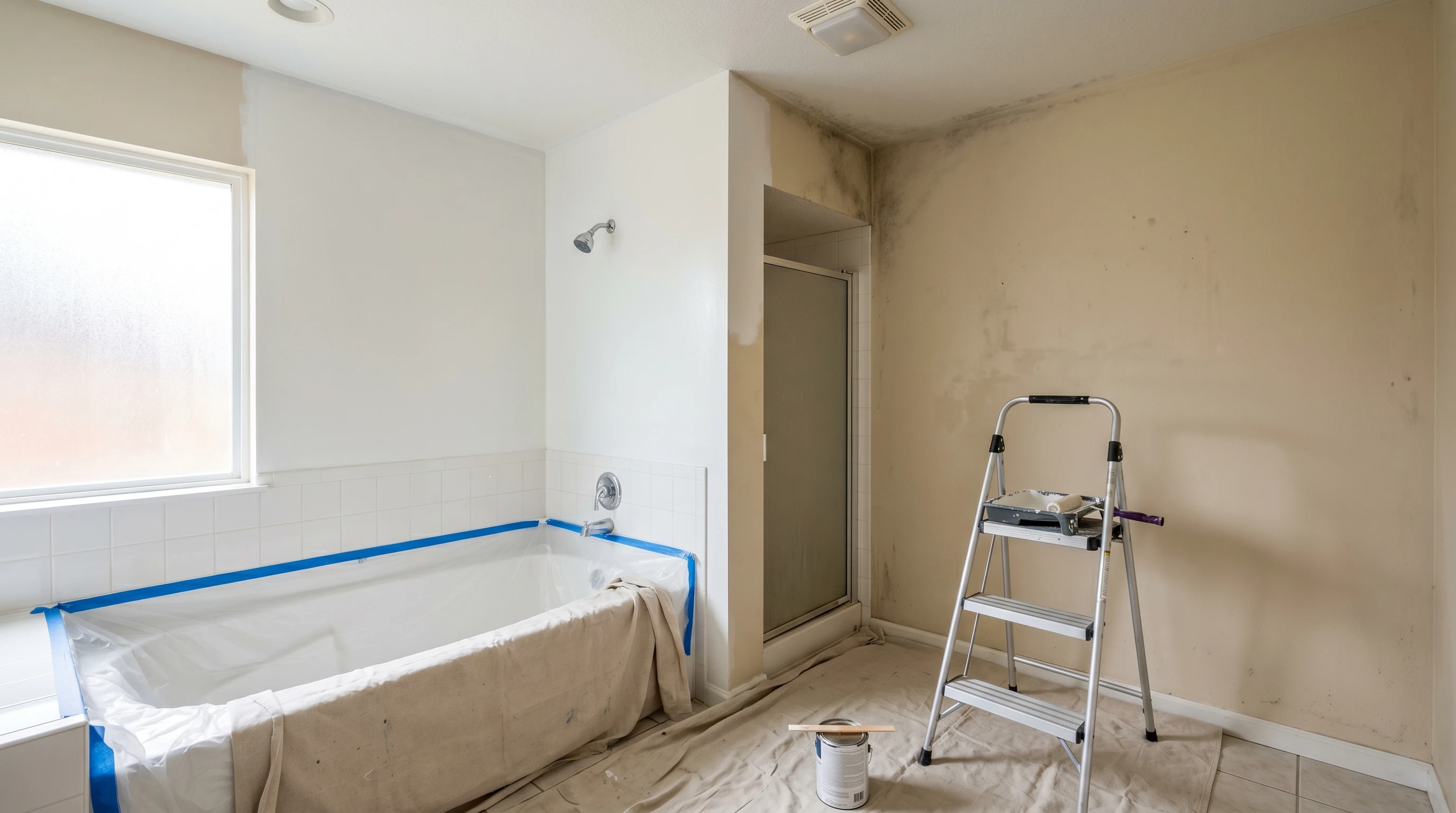
A bathroom wall isn’t drywall. It’s drywall wearing a film of body oil, soap scum, and skincare residue, under a humidity cycle that hits 90% twice a day. Paint it like a bedroom and you’re back in a year with bubbling and mildew under fresh satin.
TL;DR
- Degrease the whole room with TSP substitute, top to bottom.
- Kill mildew with Concrobium or 1:10 bleach. Dwell, rinse, dry.
- Recaulk every transition. Paintable silicone, 24 hours before paint.
- Spot prime: Zinsser BIN over stains; Mold Killing Primer over treated mildew.
- Paint with bathroom-rated satin (BM Aura Bath & Spa, Zinsser Perma-White, SW Emerald). Two coats, sixteen hours apart.
- Cure: no showers for 48 hours. Vent fan during and 20 minutes after every shower, forever.
Why bathroom walls fail differently
A bedroom wall sits at 30–50% RH year-round. A bathroom wall cycles from 40% to 85–90% during a shower, twice a day. The cycling is the killer. Paint film expands and contracts with the moisture, and any weak bond gets pried open a thousand times a year.
Three other things no other room delivers:
- Soap and skincare film. Shower aerosol, body lotion, hairspray, deodorant overspray. Invisible on the wall, kills adhesion.
- Caulk and tile transitions. Every joint moves. Caulk fails before paint, and the paint at the edge fails with it.
- Vapor pressure inside the wall. Drywall carries moisture from the room side and from cold sheathing on exterior walls. A too-tight film traps it and pops off in blisters.
Nine times out of ten the paint isn’t the problem. The prep skipped one of those three.
Diagnosis: what the existing paint tells you
Walk the room with a flashlight at low angle before you buy anything.
- Tight paint, maybe mildew shadow at the corners. Easy job. Clean, treat spots, scuff sand, two coats.
- Bubbling along the ceiling above the tub. Moisture problem. Sort the fan before you paint.
- Mildew that doesn’t wipe off. Colony has roots. Treat, dry, prime with Mold Killing Primer.
- Peeling around the vanity, toilet, or tub. Water exposure. Prime with BIN.
- Chalky surface that powders off your fingers. Old flat paint burnished out. Wash, scuff, prime with INSL-X Stix.
Materials and tools
- TSP substitute (Krud Kutter, Simple Green Pro HD, Savogran TSP-PF)
- Concrobium Mold Control or RMR-86; 1:10 bleach as alternative
- Zinsser BIN shellac; Zinsser Mold Killing Primer; Kilz Restoration for heavy water staining or odor
- Bathroom-rated finish paint: Benjamin Moore Aura Bath & Spa, Zinsser Perma-White, Sherwin-Williams Emerald, or Behr Premium Plus Bath
- Paintable silicone or siliconized acrylic kitchen-and-bath caulk
- Spackle, lightweight joint compound, painter’s tape (FrogTape or 3M ScotchBlue), drop cloths
- 2-inch angled sash brush (Wooster Silver Tip or Purdy XL Glide), 9-inch roller frame, 3/8-inch nap synthetic covers, 4-inch mini foam roller
- Dripless ratchet caulk gun. Cheap ones bleed and you’ll hate them.
- Putty knife, 5-in-1, 120-grit sanding sponge, microfiber cloths, N95, step ladder
Step 1: Strip the room and degrease
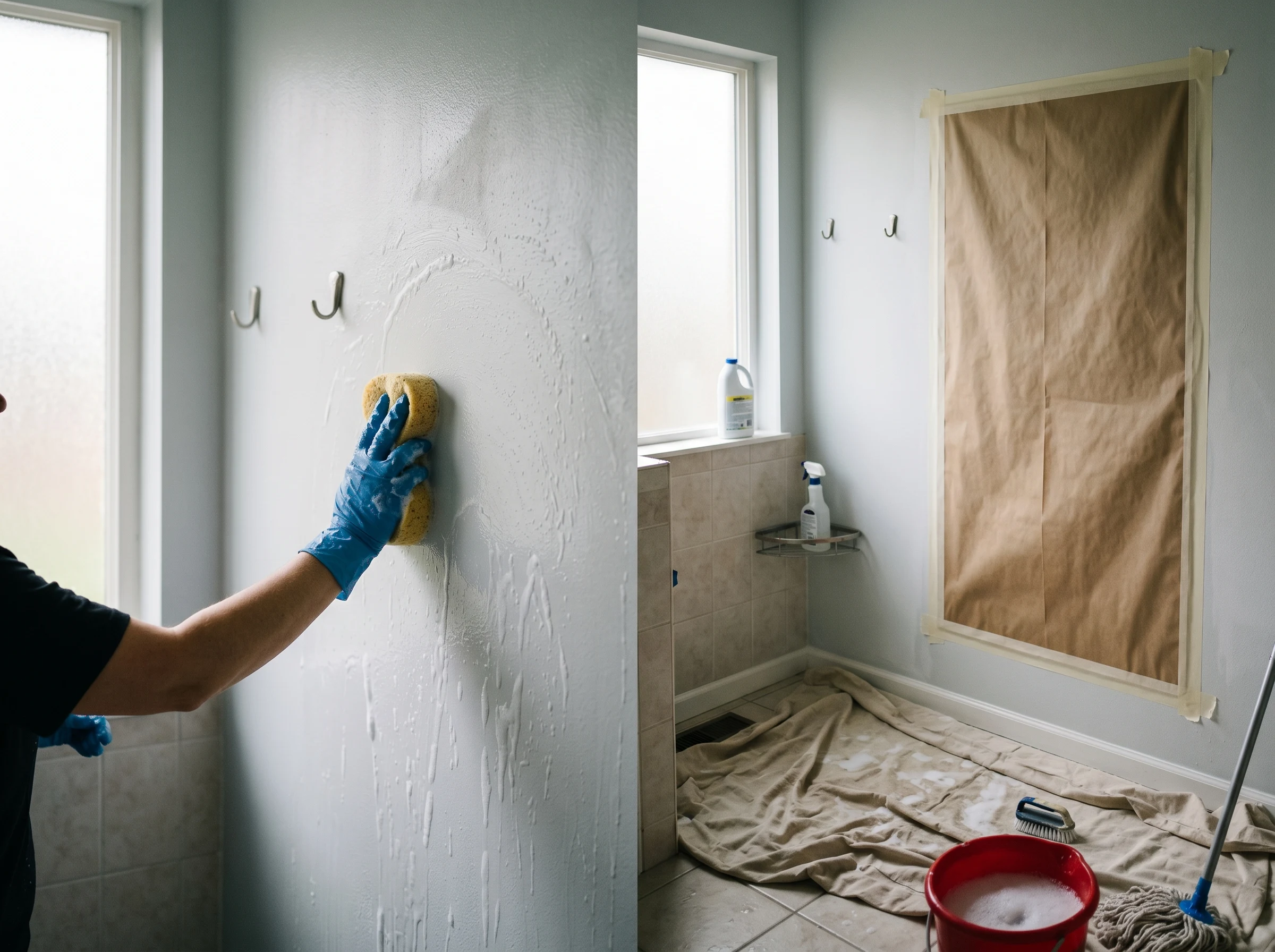
TSP substitute or a strong household degreaser. Wall, ceiling, behind the toilet, around the vanity.
Take everything off the walls. Mask the mirror, vanity top, toilet seat, tub edge, and floor. Mix TSP substitute per label (about 1/4 cup per gallon warm water). Gloves and eye pro. Even the phosphate-free stuff burns. Sponge top down, dwell two minutes, rinse.
Hit the high-residue zones twice: above the shower, around the vanity backsplash, behind the toilet, around the towel bar. Skip them and they’ll reject paint. Dry the room overnight with the fan running. Next morning, hand on the wall. Squeaky, you’re ready. Still slick, hit it again.
Step 2: Kill mildew, then dry
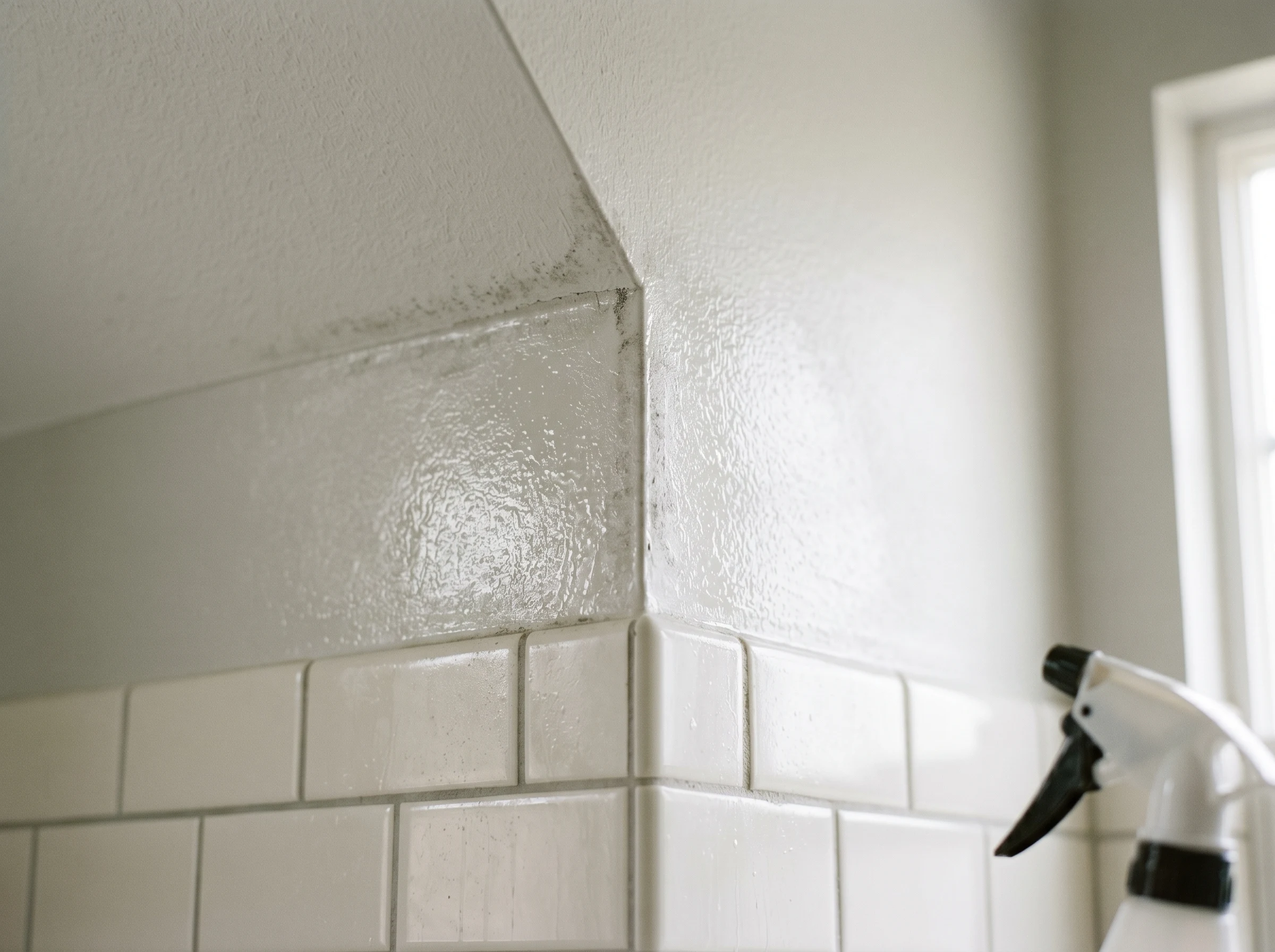
Concrobium or 1:10 bleach. Dwell 10 minutes. Dry the wall fully.
If you spotted mildew in the diagnosis, treat it now. Concrobium Mold Control is the no-rinse option, EPA-registered. RMR-86 is faster but the fumes are no joke. Household alternative: 1 part bleach to 10 parts water. Spray, dwell ten minutes, rinse.
Never mix bleach with vinegar, ammonia, or peroxide. Toxic gas. People die from that mistake every year.
The wall has to be bone-dry before primer. Run the fan 24 hours. No fan in the bathroom? That’s the actual fix, not paint. See the mold fix guide. Affected area bigger than ten square feet, stop. EPA threshold for DIY. Call a pro.
Step 3: Recaulk every transition
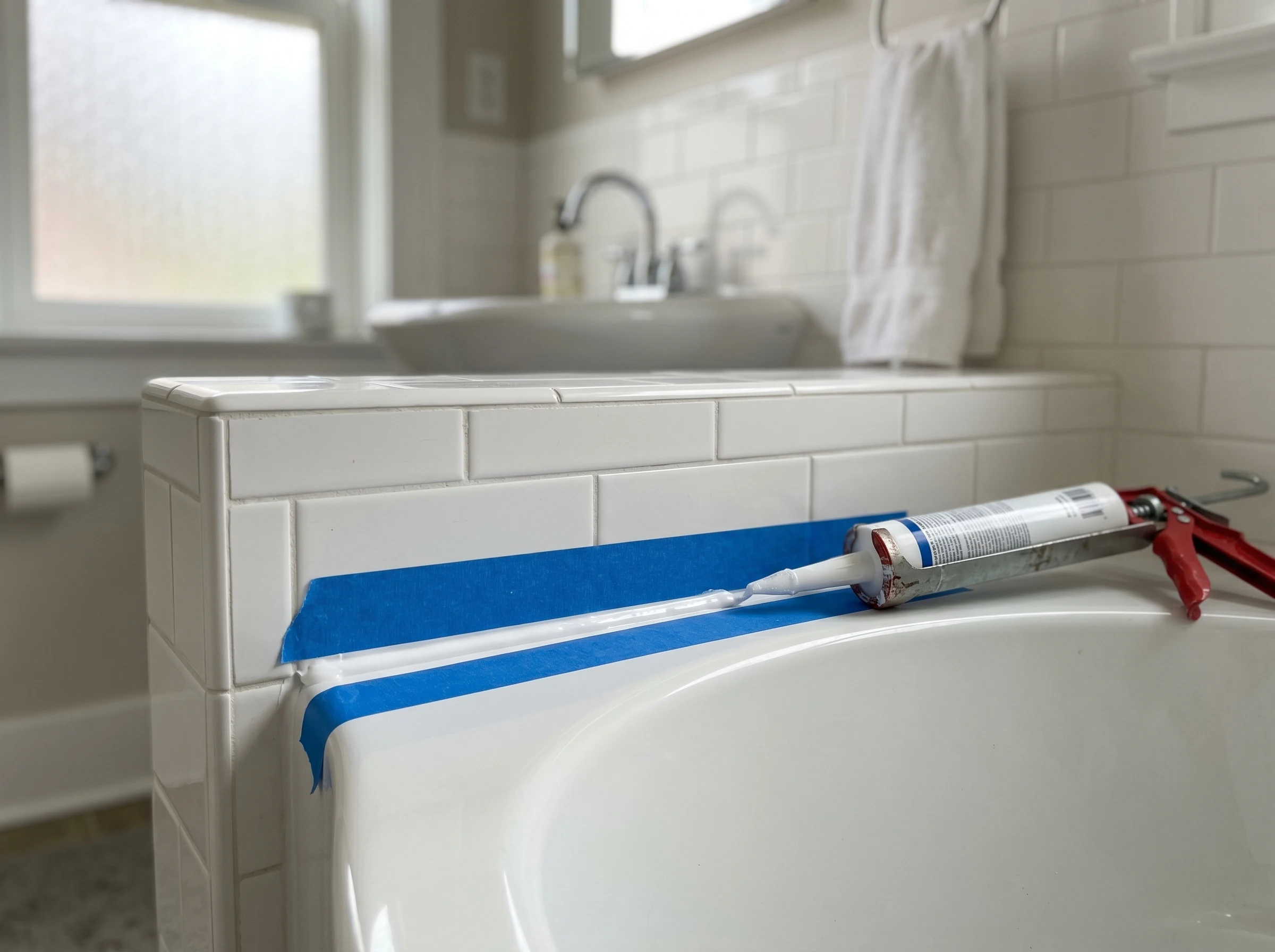
Pull old caulk, clean the joint, lay a new bead of paintable kitchen-and-bath silicone.
Walk every transition: tub-to-wall, shower-to-wall, vanity backsplash, baseboard, wall-to-ceiling corners. Cracked, peeling, mildewed, or pulling away from one side, it comes out. Run a 5-in-1 along the joint, pry the bead loose, pull it in strips. Wipe the residue with denatured alcohol. Silicone leaves a film next-round caulk won’t bond to.
Tape both sides. Lay a new bead of paintable silicone or siliconized acrylic. Tool with a wet finger. Pull the tape while the caulk is still wet. Let it skin 30 minutes for handling, 24 hours before paint. Wet caulk under fresh paint cracks the paint as the caulk shrinks.
Tub-to-wall joint: fill the tub with water before caulking. The tub flexes down when full, and a bead laid against an empty tub tears when the tub loads. Fill, caulk, drain 24 hours later.
Step 4: Patch, sand, dust
Spackle for nail holes, lightweight joint compound for larger damage. Two thin coats beat one thick. Sand each patch flush at 24 hours. Scuff the whole wall with a 120-grit sponge to break the gloss. Dust off with a microfiber.
Pre-1978 house with failing paint: test for lead before sanding. RRP rule. A $15 swab kit saves a federal compliance problem.
Step 5: Spot prime, then full prime if needed
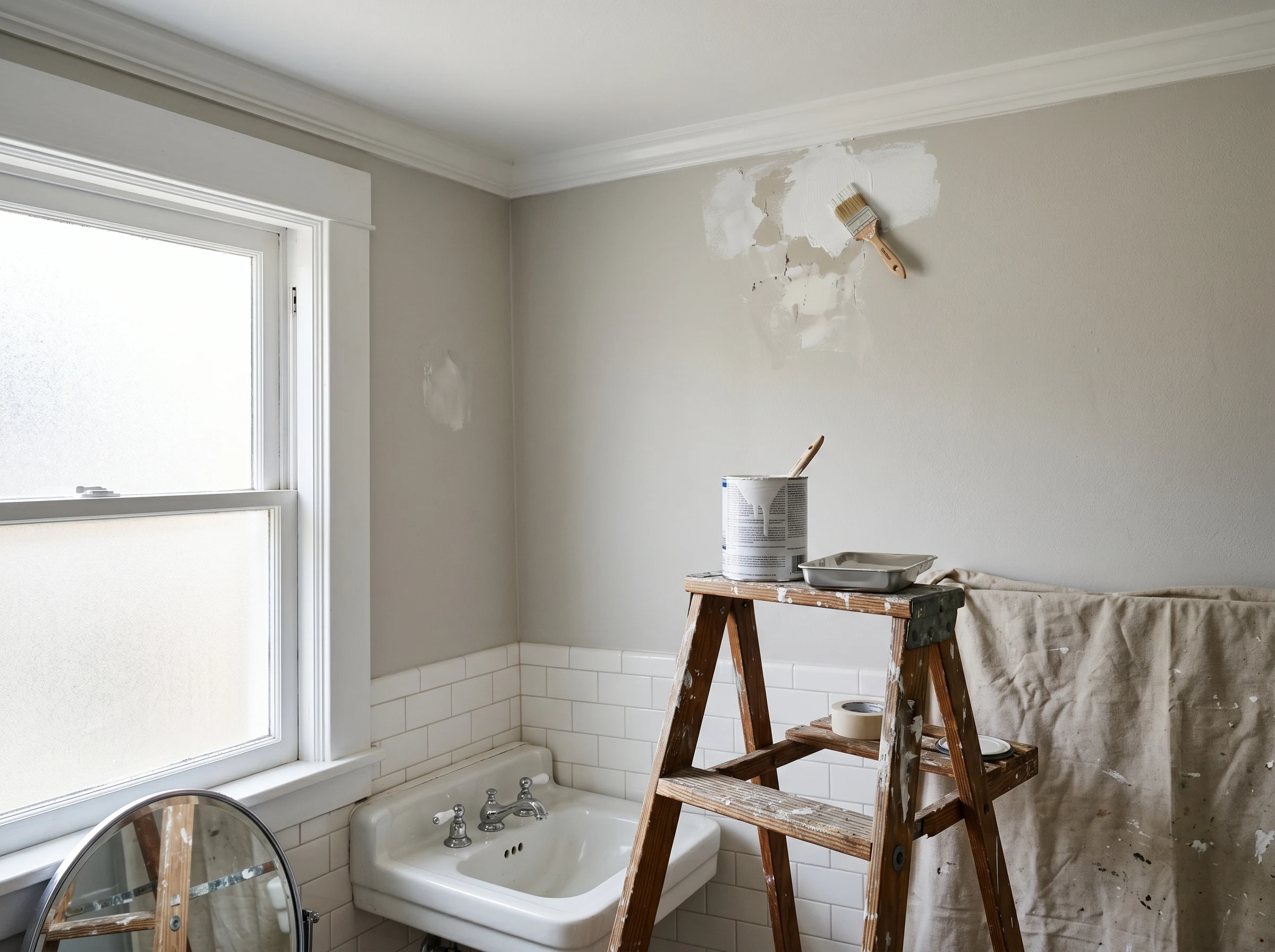
Zinsser BIN over water rings and ghost stains. Mold Killing Primer over treated mildew.
On a sound, clean wall you don’t need a full primer coat. Modern bathroom-rated paints carry enough hide and bond to recoat existing satin or semi-gloss after a scuff sand. Spot prime the trouble zones:
- Stains, water rings, ghost shadowing, ceiling drip lines. Zinsser BIN shellac. One thin brush coat.
- Treated mildew zones. Zinsser Mold Killing Primer.
- Heavy water damage or smoke odor. Kilz Restoration.
- Patched drywall and exposed gypsum. Water-based or PVA primer.
Full-prime the whole room only if you’re going oil-to-latex, covering a dark wall with a light one, the existing paint is chalky, or there’s heavy smoke history.
BIN handles in 45 minutes, recoats at 90. Mold Killing Primer wants 4 hours. Don’t push the recoat window.
Step 6: Two coats of bathroom-rated paint
Regular interior latex doesn’t carry the biocides or film tightness a bathroom needs. Bathroom-rated paints (Benjamin Moore Aura Bath & Spa, Zinsser Perma-White, Sherwin-Williams Emerald, Behr Premium Plus Bath) cost $15–$25 more per gallon and earn it in three to five extra years of clean, mildew-free finish. See best paint for bathrooms.
Sheen: satin on walls, semi-gloss on trim. Modern bathroom-rated satins clean as well as semi-gloss did ten years ago, and satin hides drywall imperfection that semi-gloss telegraphs in raking light. Full sheen guide.
Cut in tight to caulk lines, ceiling, trim, and tile. 2-inch angled brush, hold a wet edge for 12 inches. Roll the field while the cut-in is still wet. Stopping mid-wall is how you get lap marks, and lap marks in a bathroom show up under vanity light at night.
Don’t overload the roller. Medium load, even pressure. Heavy loads sag and skin over before they level.
Sixteen hours between coats on most bathroom-rated lines. Read the can. Some go four hours; I take the longer window every time.
Step 7: Cure and live with it
Touch-dry in 1–2 hours. Recoat at 4–16 depending on product. Full cure runs 30 days for most bathroom-rated latex.
During cure:
- No showers for 48 hours. Steam raises the soft film and traps moisture.
- Vent fan running with the door cracked the first week.
- Damp cloth only for 30 days. No abrasives.
- No towel bars or hooks for 24 hours. Fasteners pull a soft film and ring marks lock in.
After 30 days the room’s back to normal use. Wipe walls monthly, treat mildew shadow before it sets, run the fan during and 20 minutes after every shower. Forever. The paint does half the job; ventilation does the other half.
Common mistakes
- Flat or matte on bathroom walls. Too porous to clean, holds mildew, burnishes glossy wherever you scrub. Satin minimum.
- Undersized vent fan. Target 1 CFM per square foot. A 50 CFM fan in a 70 sq ft bathroom is too small. You’ll fight mildew forever no matter what paint you use.
- Painting over old silicone. Pure silicone rejects latex and you get fish-eyes. Pull it, clean with denatured alcohol, recaulk paintable.
Maintenance and longevity
Bathroom-rated paint plus an adequate fan runs 7–10 years before a refresh. Flat finish, no fan, long shower habit: repainting in 3.
Watch the early-warning zones. Ceiling above the tub (mildew shadow first). Exterior-wall corners (cold-spot condensation). Wall behind the toilet (splash). Strip above the vanity (skincare film). Treat mildew shadow with a dilute biocide before it darkens. Early mildew comes off cleanly; established mildew stains.
Keep a labeled quart of the original paint with the date on the lid. Matches for 18 months, drifts after that. If a wall starts bubbling, find the moisture source before repainting. Repainting over moisture failure hides it for a year.
What I’d actually do
Half-bath, sound walls: single weekend. Degrease, scuff sand, two coats of Aura Bath & Spa in satin.
Full bath with tub or shower: two weekends. One for degrease, mildew, recaulk. Two for spot prime and two coats.
Active peeling or recurring mildew: fix the moisture source before paint goes anywhere. Fan upgrade, duct check, possibly an HVAC dehumidifier.
Skip the degrease, paint over wet caulk, or never sort ventilation, and it bites you in two years. Do those three right and the room runs a full decade clean.